

Double Air Strikes Kill Nine in Southern Lebanon
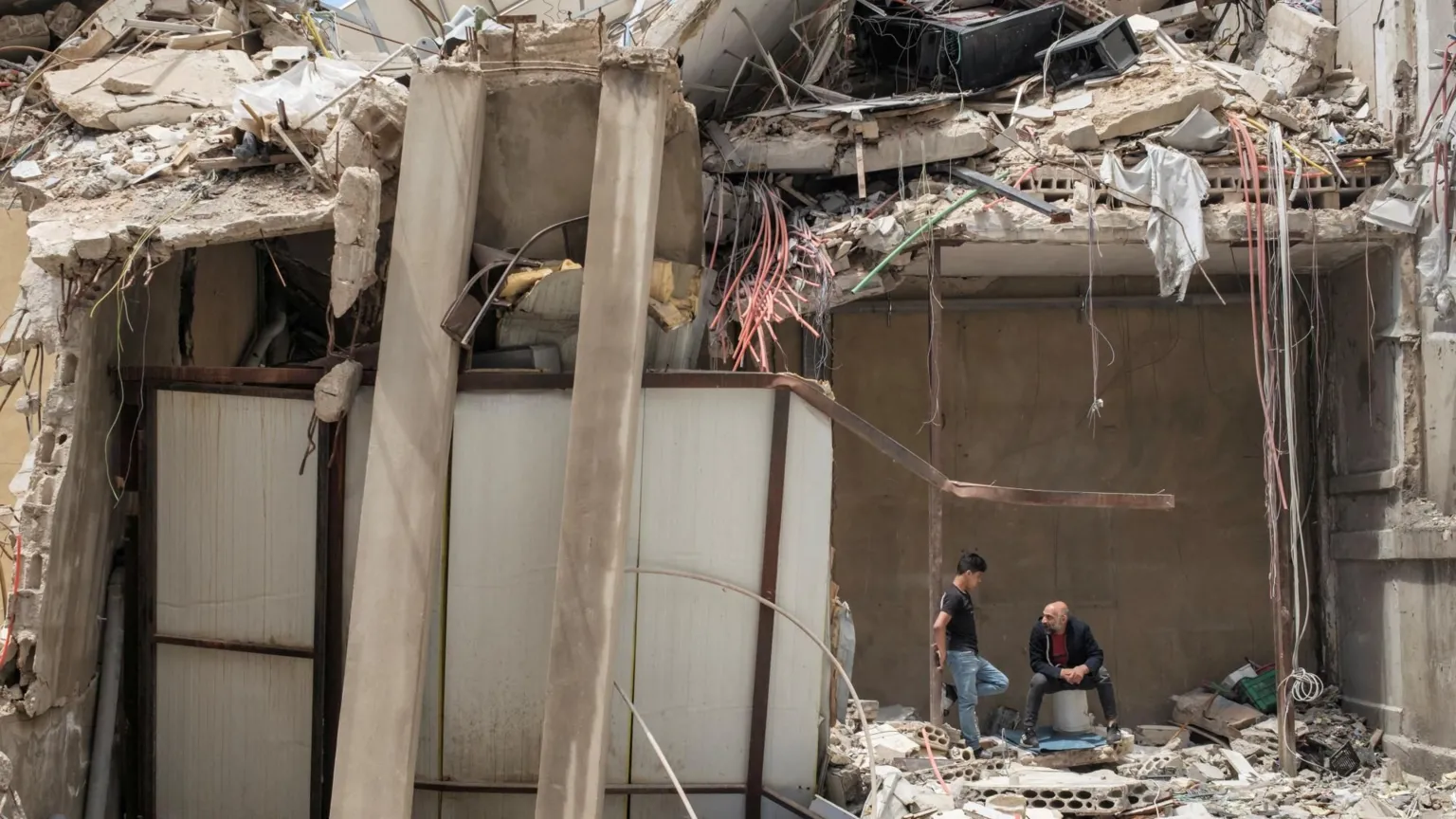
Two successive Israeli air strikes targeted a building in southern Lebanon on Tuesday, resulting in the deaths of nine individuals, including three emergency responders, according to Lebanese officials. Lebanon's Prime Minister described the incident as a "war crime."
The Lebanese health ministry reported that the three members of the Lebanese Civil Defense, a state-run emergency service, were dispatched to assist those injured in the initial strike in the town of Majdal Zoun. They became trapped under the rubble caused by the second strike and were later confirmed dead.
The ministry did not disclose the identities of the six other fatalities. Additionally, two Lebanese army soldiers sustained injuries during the attack.
The Israeli military has been contacted for comment but has not yet responded.
Use of 'Double Tap' Tactic and Its Implications
Israel has previously not provided explanations for attacks on health professionals during rescue missions. The tactic, known as "double tap," involves an initial strike followed by one or more subsequent strikes, often impacting civilians and rescuers. This method has been employed by Israel in both Lebanon and Gaza.
Human rights organizations assert that deliberate attacks on health workers may constitute war crimes.
Background of the Conflict
The latest hostilities between Israel and Hezbollah, the Lebanese militia and political party funded and armed by Iran, began on 2 March. Hezbollah fired rockets into Israel, prompting widespread Israeli air strikes and a ground invasion of southern Lebanon.
Since the conflict's onset, over 2,500 people have died in Lebanon, including 103 health professionals, according to the Lebanese health ministry. The ministry does not differentiate between combatants and civilians but notes that the toll includes at least 270 women and more than 170 children.
In Israel, two civilians have been killed by Hezbollah attacks, while Israeli authorities report 16 soldiers and one civilian killed in Lebanon.
Details of the Rescue Workers Killed
The three rescue workers killed on Tuesday were identified as Hussein Ghadbouni, Hussein Sati, and Hadi Daher. Last month, the BBC spent several days with their team, based in Tyre, to document the risks emergency teams face amid ongoing Israeli attacks.
Ceasefire and Ongoing Hostilities
The strike occurred during a US-brokered ceasefire between Israel and Lebanon, which has reduced hostilities but has not fully ended the war.

Israel states that its actions in Lebanon respond to what it describes as violations of the ceasefire agreement by Hezbollah. Although Hezbollah was not a party to the agreement, it indicated it would comply if Israel respected the ceasefire.
The ceasefire text grants the Israeli military the "right to take all necessary measures in self-defence, at any time, against planned, imminent, or ongoing attacks," language broad enough to justify various military actions.
Lebanese Prime Minister Condemns Attack
Lebanon's Prime Minister Nawaf Salam condemned the targeting of rescuers, labeling it a
"war crime perpetrated by Israel"and criticized Israel's
"ongoing violations of the ceasefire".
Territorial Occupation and Military Actions
A 5 to 10 km deep strip along the border, representing approximately 5% of Lebanon's territory, remains under Israeli occupation. Israeli officials state their objective is to establish a security buffer zone to protect northern Israeli communities.
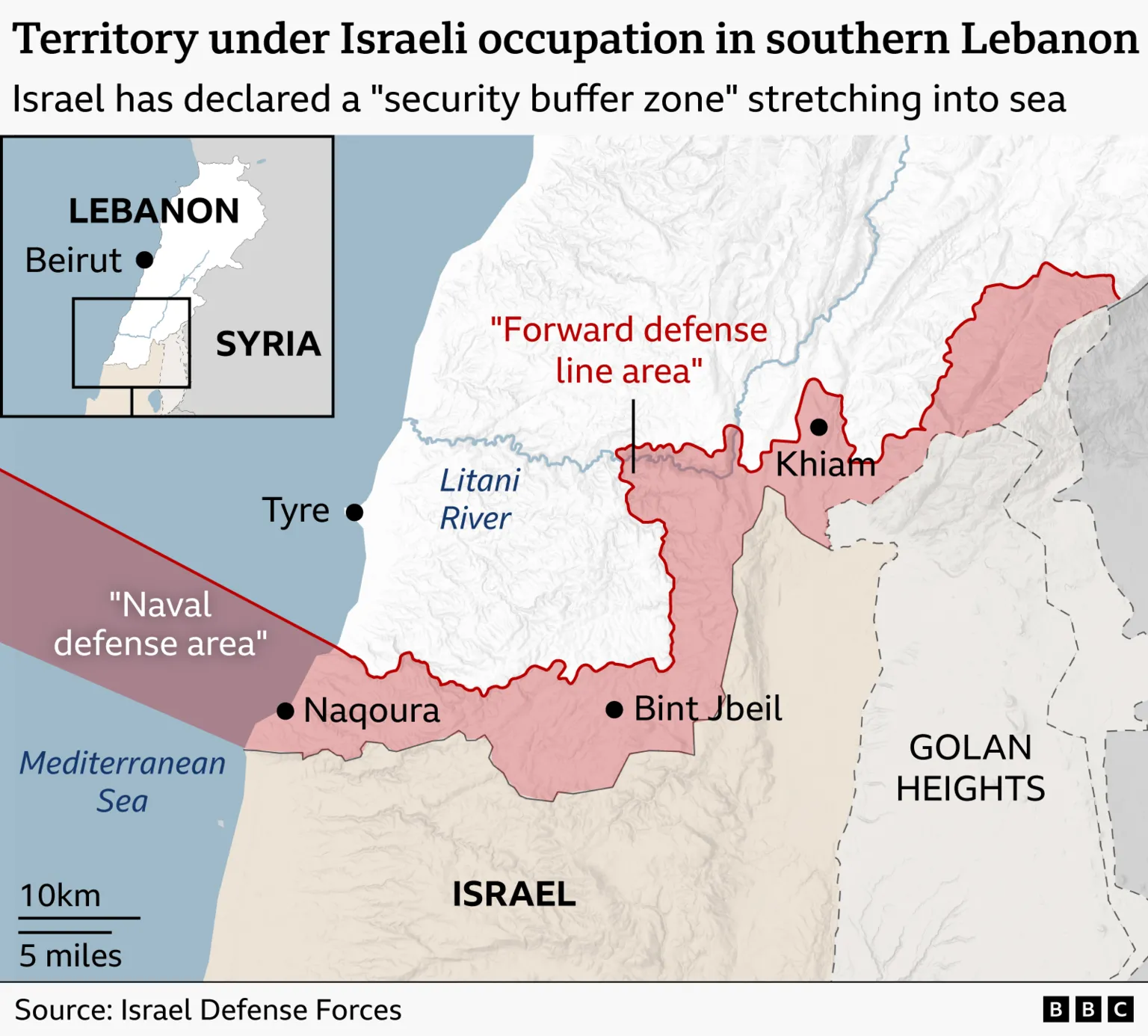
The Israeli military has continued air strikes, reporting strikes on Hezbollah infrastructure sites in southern Lebanon on Tuesday that killed "three Hezbollah terrorists" who had attacked Israeli soldiers. The previous day, Israeli forces targeted the eastern Bekaa Valley, a Hezbollah stronghold and arsenal location.
Hezbollah asserts it is responding to multiple Israeli ceasefire violations and has conducted rocket and drone attacks on Israeli troops in Lebanon and northern Israel.
Recent Drone Attacks and Casualties
An Israeli soldier was killed in southern Lebanon by a drone attack on Sunday, with another soldier severely wounded in a separate drone attack on Monday, according to the Israeli military. On Tuesday, an Israeli defense ministry civilian contractor was killed by a drone while operating an excavator in southern Lebanon.
Accusations of Targeting Health Workers
Lebanon has frequently accused the Israeli military of deliberately targeting health workers during the conflict.
Last week, Lebanese authorities reported that an Israeli strike prevented rescuers from reaching the site where journalist Amal Khalil was trapped under rubble. Upon arrival, rescuers found her deceased. Lebanese officials accused Israel of targeting Khalil, a claim denied by the Israeli military.
Earlier this month, the Israeli military conducted three successive attacks on paramedics responding to an earlier strike, killing four, according to Lebanese officials. One of the paramedics had been featured in a BBC report.
Human Rights Perspective
Kristine Beckerle, deputy Middle East and North Africa director at Amnesty International, stated in a report last month that
"deliberately striking medics performing their humanitarian functions is a serious violation of international humanitarian law and could constitute a war crime".


