

Iran’s New Supreme Leader Announces Strait of Hormuz Blockade
Iran has declared its intention to continue blocking the Strait of Hormuz, the world’s busiest oil shipping route, according to a statement attributed to Iran’s newly appointed Supreme Leader Mojtaba Khamenei.
The message was broadcast on Iranian state television, though Khamenei did not appear personally. Instead, a newsreader delivered the statement.
"We will avenge the blood"of Iranians killed in the conflict with the US and Israel, Khamenei stated, also cautioning neighboring countries against hosting US military bases.
He was appointed supreme leader on 8 March following the death of his father, Ayatollah Ali Khamenei, who was killed on the first day of the war.
Mojtaba Khamenei suffered personal losses in the US-Israeli strike on the supreme leader’s compound that killed his father; his wife and son were killed in the attack. Reports about his mother’s status have been conflicting, with one Iranian source initially reporting her death, while another later stated she is alive.
According to , citing an unnamed Iranian official, Khamenei was "lightly injured" during the attack, though no further details have been provided.
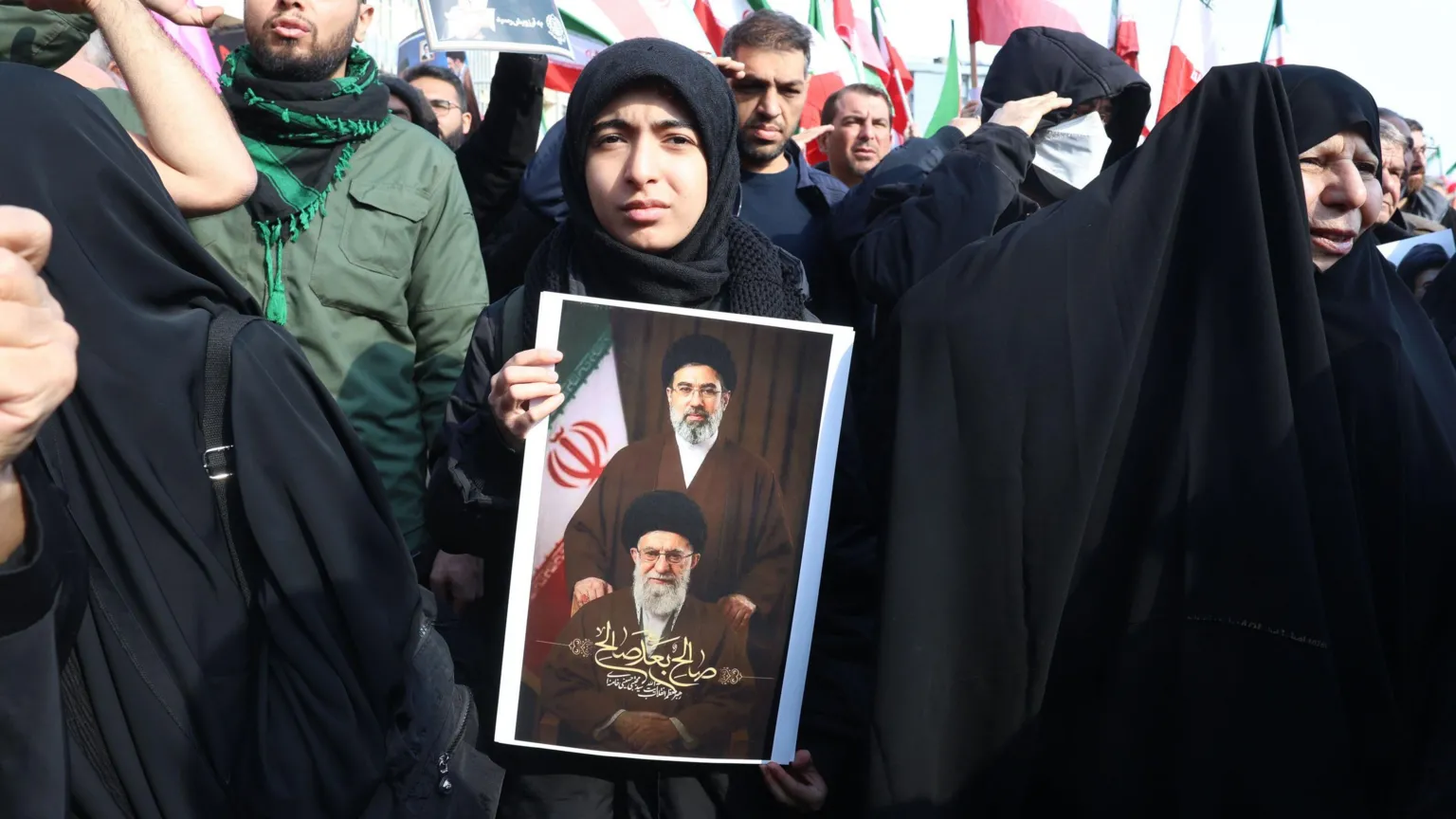
Since his appointment, Khamenei has not been seen publicly, and no photographs or videos of him have been released.
Iran’s state TV referred to him as a "veteran of the Ramadan war," without confirming any injuries.
Strategic Use of the Strait of Hormuz
In his first public message, Khamenei emphasized that Iran should leverage the blockade of the Strait of Hormuz, describing the channel as a point where "the enemy is highly vulnerable."
He reiterated Iran’s commitment to targeting US bases in the region.
While Tehran has maintained a policy of "friendship" with neighboring countries, Khamenei warned them to shut down American military installations.

"We share land or maritime borders with 15 neighbouring countries and have always sought warm and constructive relations with all of them,"he said.
"These countries must clarify their stance toward the aggressors against our homeland and the killers of our people."
"I advise them to close those bases as soon as possible."
Condemnation of Attacks on Civilians
Khamenei also referenced "the crimes against children, such as the deliberate crime at the Minab school." According to American media reports, US investigators believe American forces mistakenly struck a school in southern Iran near a military base.
Announcement of Leadership via State TV
Khamenei revealed that he learned of his appointment as supreme leader through the state television broadcast.
"I learned about the result of the vote of the esteemed Assembly of Experts at the same time as you and through the Islamic Republic's television."
International Reactions and Regional Tensions
Hours after Khamenei’s statement, Israeli Prime Minister Benjamin Netanyahu announced a new wave of strikes on Tehran. Netanyahu described Iran’s new leader as a "puppet" of the Islamic Revolutionary Guards who "can't show his face in public."
Regarding Khamenei and Hezbollah leader Naim Qassem, Netanyahu said,
"I wouldn't issue life insurance policies on any of the leaders of the terrorist organisation."reported these remarks.
Iran has threatened attacks on shipments passing through the Strait of Hormuz, a critical passageway for one-fifth of the world’s oil supply.
Efforts to block oil tankers in the Strait, along with Iranian strikes on tankers in the Gulf, have contributed to rising oil prices.
On Wednesday, Tehran warned the global community to prepare for oil prices reaching $200 per barrel and stated that any tanker destined for the US, Israel, or their allies would be considered a legitimate target.
The International Energy Agency has cautioned that oil markets are experiencing "the largest supply disruption in history."


