

Iran hits back at Trump ahead of Geneva talks
Comments made by former US President Donald Trump regarding Iran have elicited strong reactions from Tehran officials, raising concerns about the atmosphere surrounding upcoming negotiations.
The third round of indirect talks between the United States and Iran is scheduled to take place in Geneva, mediated by Oman. The US delegation includes special envoys Steve Witkoff and Jared Kushner, while the Iranian side is led by foreign minister Abbas Araqchi.
These discussions occur amid an increased US military presence in the Middle East. Trump has previously warned of "bad things" occurring if Iran does not agree to a nuclear deal.
Mohammad Bagher Qalibaf, speaker of Iran’s parliament, emphasized Iran’s commitment to negotiations but warned of retaliation if the US resorts to military threats.
"If you choose the table of diplomacy – a diplomacy in which the dignity of the Iranian nation and mutual interests are respected – we will also be at that table," he stated, according to Iranian media.
"But if you decide to repeat past experiences through deception, lies, flawed analysis and false information, and launch an attack in the midst of negotiations, you will undoubtedly taste the firm blow of the Iranian nation and the country’s defensive forces."
Earlier, Esmail Baghaei, spokesperson for the Iranian foreign ministry, compared the Trump administration to Joseph Goebbels, Adolf Hitler’s propaganda minister, accusing it of conducting a "disinformation and misinformation campaign" against Tehran.
"Whatever they’re alleging in regards to Iran’s nuclear programme, Iran’s ballistic missiles, and the number of casualties during January’s unrest is simply the repetition of ‘big lies’," he wrote on X.
Meanwhile, US House Speaker Mike Johnson revealed he nearly expelled Democratic representatives Ilhan Omar and Rashida Tlaib from the chamber during Trump’s State of the Union address due to their vocal protests.
During the speech, Trump criticized Democrats for not standing, to which Omar responded by shouting that he should be ashamed and accused him of killing Americans. Johnson described their behavior as "shameful."
"I came this close to stopping them. We could have probably ejected them from the floor. I thought, let their actions speak for themselves," Johnson said. "If they’d gone a step further, I probably would have ejected them."
He added that their actions provided a stark contrast to Republicans, who were standing, celebrating, and chanting throughout the speech.
"I think it was good for him to be there," Johnson said. "I think it’s good for the American people to see the shame that they brought upon their party and upon themselves."
More journalists and media workers killed in 2025 than any year since Committee to Protect Journalists began data collection
A report from the Committee to Protect Journalists (CPJ) reveals that 2025 saw the highest number of journalists and media workers killed globally since the organization began tracking such data over 30 years ago.
The committee documented 129 press members killed in 2025, with approximately two-thirds of these deaths attributed to Israel. Among those killed by Israel, over 60% were Palestinians reporting from Gaza.
"The Israel Defense Forces (IDF) has committed more targeted killings of journalists than any other government’s military since CPJ began documentation in 1992," the report stated.
At least 104 deaths occurred in conflict zones, including four journalists killed in Ukraine and nine in Sudan.
CPJ categorized 47 of these deaths as targeted killings, marking the highest number of journalists deliberately killed for their work in the past decade. The report attributes this rise to a persistent culture of impunity, with few transparent investigations into such attacks.
The report also notes a near-record number of journalists imprisoned in 2025.
"Journalists are being killed in record numbers at a time when access to information is more important than ever," said Jodie Ginsberg, CEO of CPJ. "Attacks on the media are a leading indicator of attacks on other freedoms, and much more needs to be done to prevent these killings and punish the perpetrators. We are all at risk when journalists are killed for reporting the news."
Cable urges US diplomats to oppose foreign data regulations on US tech firms
A recently disclosed diplomatic cable reveals directives for US diplomats to counter foreign nations' efforts to regulate how US technology companies manage their citizens’ data. These "data sovereignty initiatives" have gained momentum in Europe amid security concerns.
The Trump administration instructed US diplomats to lobby against such regulations, warning that they could disrupt artificial intelligence (AI) services.
Experts interpret this as a return to a more confrontational stance by the Trump administration, as some countries seek to impose restrictions on how Silicon Valley companies process and store personal information, often referred to as "data sovereignty" or "data localization."
The State Department cable, dated February 18 and signed by Secretary of State Marco Rubio, stated that such laws would "disrupt global data flows, increase costs and cybersecurity risks, limit Artificial Intelligence (AI) and cloud services, and expand government control in ways that can undermine civil liberties and enable censorship."
The cable emphasized the administration’s push for "a more assertive international data policy" and instructed diplomats to "counter unnecessarily burdensome regulations, such as data localization mandates."
US trade representative announces potential 15% tariffs for some countries
US Trade Representative Jamieson Greer announced on Fox Business Network that certain countries may face a 15% tariff, an increase from the current 10% tariff imposed by former President Trump following a Supreme Court ruling against some tariffs.
Greer did not specify which countries would be subject to the higher rate.
"Right now, we have the 10% tariff. It’ll go up to 15 (%) for some and then it may go higher for others, and I think it will be in line with the types of tariffs we’ve been seeing," Greer said.
He also mentioned recent trade discussions between US and Canadian officials, expressing openness to reaching an agreement.
"They have a few ideas on how they might want to have a deal with us. We’re obviously open to that," Greer stated.
Trump delivers longest State of the Union amid mixed reactions
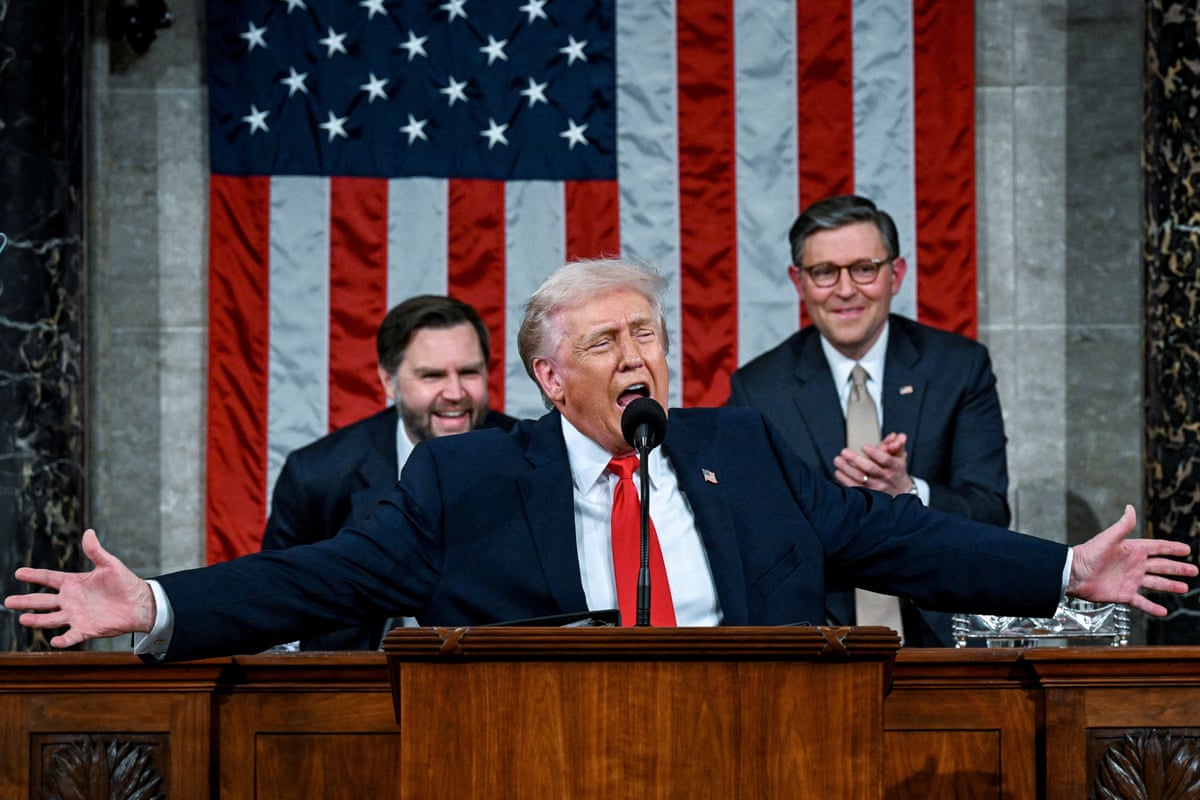
On Tuesday evening, Donald Trump delivered the longest State of the Union address on record, proclaiming a "golden age of America." However, many Democrats boycotted the event, criticizing Republicans for policies they say are making life harder for Americans.
’s Jenna Amatulli discussed with Rolling Stone’s Nikki McCann Ramírez the claims made by Trump, the Democratic rebuttal, and the speech’s reception in a divided nation.
Iran’s negotiating delegation, led by Abbas Araqchi, departed Tehran for Geneva to participate in the third round of nuclear talks, according to state media on Wednesday.
The United States has deployed a significant naval force near Iran’s coast amid potential military action. Trump indicated last week that Tehran had approximately 10 to 15 days to reach a deal.

The talks are scheduled for Thursday in Geneva, with US envoys Steve Witkoff and Jared Kushner set to meet the Iranian delegation.
Donald Trump claimed responsibility for the Mexican military operation that resulted in the death of the country’s most wanted drug lord, Nemesio Rubén Oseguera Cervantes, leader of the Jalisco New Generation cartel. The operation took place in the Mexican state of Jalisco on Sunday.
"We've … taken down one of the most sinister cartel kingpins of all," Trump stated during his speech on Tuesday.
Mexico’s government acknowledged that the US provided "complementary intelligence" leading to the cartel leader’s location. The New York Times reported that the CIA supplied information. However, no US troops were directly involved, and Mexico’s president denied that the operation resulted from US pressure, calling such claims "almost laughable."
Trump presented the killing as part of his administration’s efforts to restore security and dominance in the Western Hemisphere.
"For years, large swaths of territory in our region, including large parts of Mexico, really large parts of Mexico, have been controlled by murderous drug cartels. That’s why I designated these cartels as foreign terrorist organisations and I declared illicit fentanyl as a weapon of mass destruction," Trump said.
"With our new military campaign we have stopped record amounts of drugs coming into our country and virtually stopped it completely coming in by water or sea."
Trump also referenced the capture of Venezuela’s president Nicolás Maduro, whom he had labeled a "narco-terrorist," earlier in the year.
"In January, elite American warriors carried out one of the most complex spectacular feats of military competence and power in world history. No one’s seen anything like it. Foreign leaders – I won’t tell you – called me and they said, ‘Very impressive,’" Trump said, calling the operation "an absolutely colossal victory for the security of the United States."
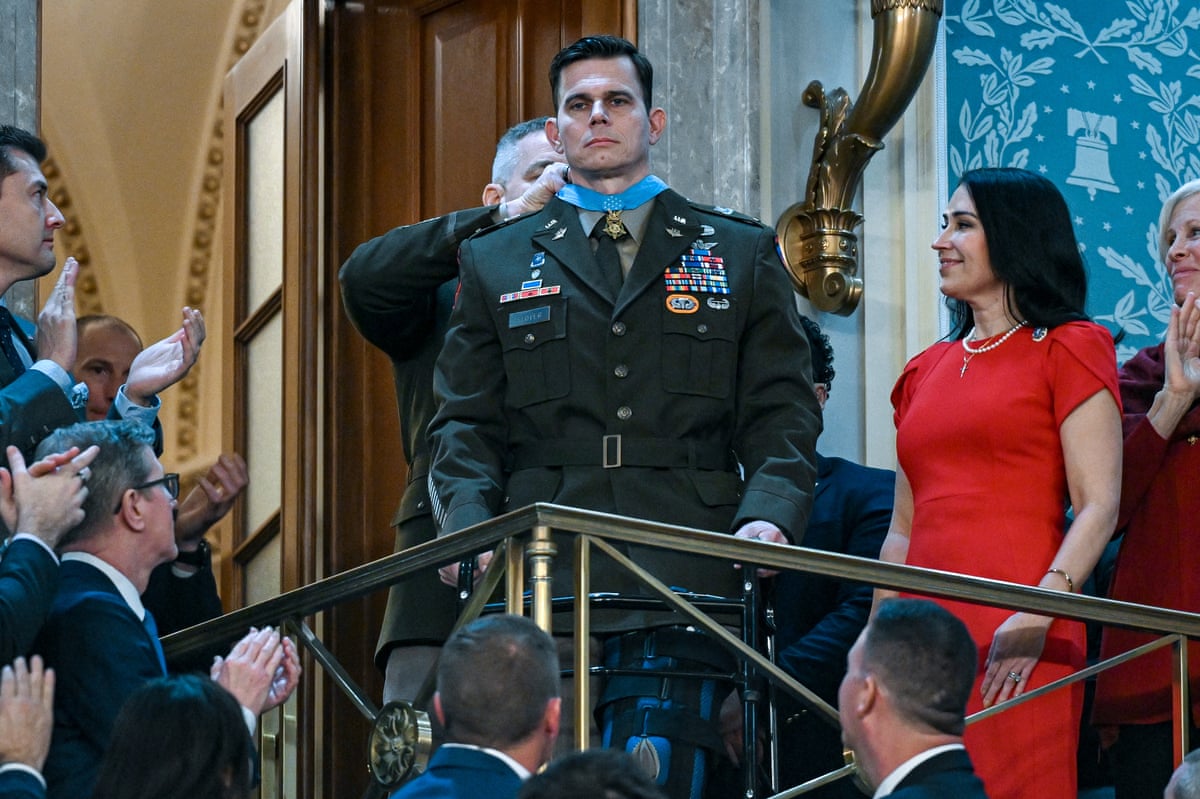
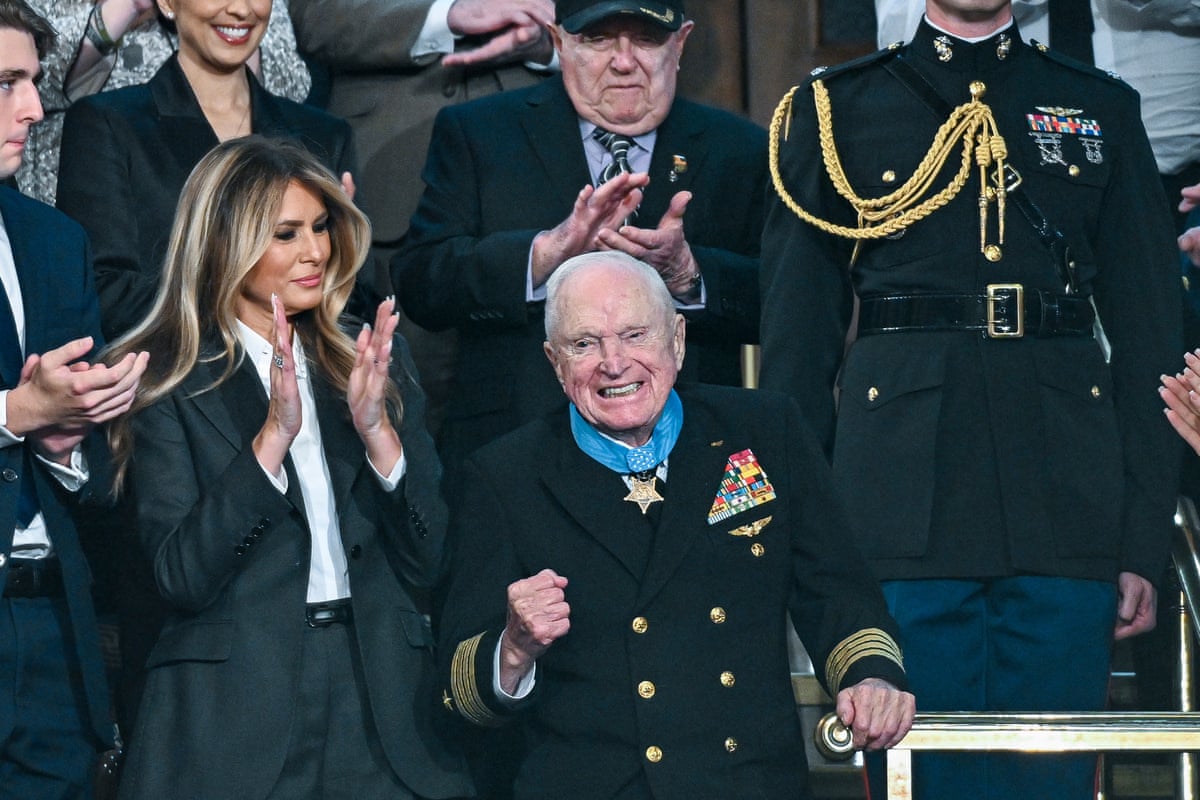
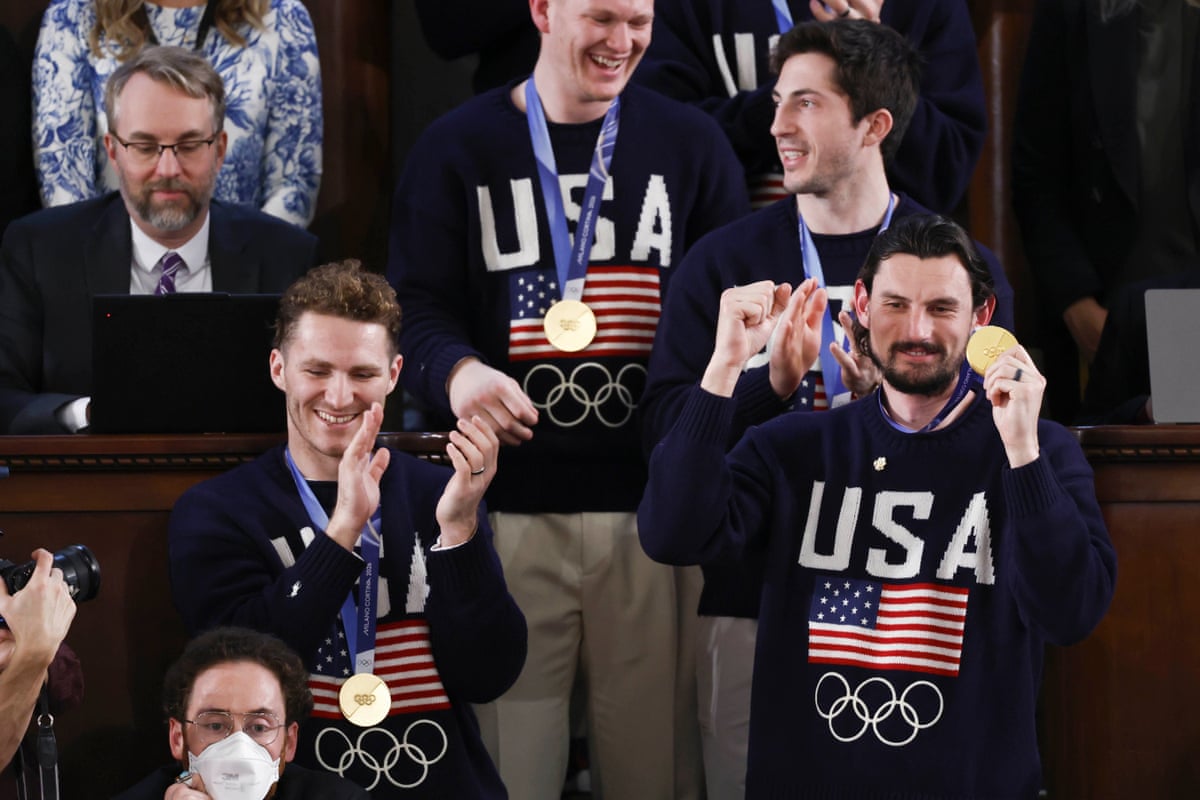
Numerous medals were awarded during Trump’s address to Congress, including to service members and an Olympic athlete. Trump also expressed interest in awarding himself the Medal of Honor but noted he was informed he could not do so.
Here are some of the honorees from the evening:
Why the longest-ever State of the Union was the most inconsequential
Trump entered the US House chamber on Tuesday with a regal demeanor, greeted enthusiastically by Republicans. However, the atmosphere shifted quickly when Democratic representative Al Green of Texas held a sign stating: "Black people aren’t apes!" This was in response to Trump sharing a controversial image depicting Barack and Michelle Obama.
Republicans attempted to remove the sign, but Green persisted until he was escorted out for the second consecutive year. As he left, tensions escalated with Republicans, some of whom attempted to start chants of "USA! USA!"
This was the first of several moments during Trump’s 107-minute speech where people of color took a stand, while others remained silent or cheered. The event was marked by Trump’s continued efforts to deepen divisions among Americans, particularly along racial lines.
Key takeaways from Trump’s State of the Union speech
During his 1 hour and 47 minute address—the longest State of the Union ever—Trump declared a "turnaround for the ages" in his first year back in office, despite low approval ratings and voter concerns about the economy.
Trump sought to downplay affordability issues central to upcoming midterm elections, asserting that "Inflation is plummeting. Incomes are rising fast. The roaring economy is roaring like never before." However, many voters remain skeptical, with recent polls indicating significant doubts about his priorities.
The president criticized Democrats as "crazy," unelectable, and anti-American. Several Democrats walked out early; Senator Mark Warner of Virginia posted on Bluesky that he "couldn’t sit through an hour of Trump’s lies."
Trump devoted approximately three minutes to discussing Iran, offering no clear explanation of his intentions regarding a potential attack. He expressed a preference to "solve this problem through diplomacy," though this did not clarify the rationale behind the largest US military deployment in the Middle East since 2003.
During the speech, Trump welcomed several guests who presented presidential medals to "extraordinary American patriots," including the men’s hockey team that won gold at the Winter Olympics and a National Guard soldier who survived a fatal shooting in Washington.
For fact-checking of Trump’s claims during the speech, readers are encouraged to consult linked resources.
Opening summary
Good morning and welcome to our US politics live blog.
Iran has accused the United States of spreading "big lies" about its missile program following Trump’s claims that Tehran is developing weapons capable of striking the US.
Trump stated that Iran has "already developed missiles that can threaten Europe and our bases overseas, and they’re working to build missiles that will soon reach" the US. He described Iran as "the world’s number one sponsor of terror" and claimed that at least 32,000 protesters were killed.
Iranian foreign ministry spokesperson Esmaeil Baqaei rejected these allegations without mentioning Trump directly.
"Whatever they’re alleging in regards to Iran’s nuclear programme, Iran’s ballistic missiles, and the number of casualties during January’s unrest, is simply the repetition of ‘big lies’," he posted on X.
These remarks were made a day before Iran and the US are scheduled to hold a third round of talks in Geneva. Trump expressed a preference for diplomacy but noted that the US has not heard Iran say "those secret words – we will never have a nuclear weapon."
Iran has consistently denied pursuing nuclear weapons and maintains uranium enrichment as a sovereign right, though evidence suggests testing of materials related to nuclear weapons development.
Trump did not clarify why he has assembled the largest US military force in the Middle East since the 2003 Iraq invasion. While reportedly considering military options, he only spent a brief portion of his speech addressing Tehran.
Read our full report on Trump’s State of the Union here.


