Wilma Spence’s Father’s Gaza War Grave Bulldozed by IDF
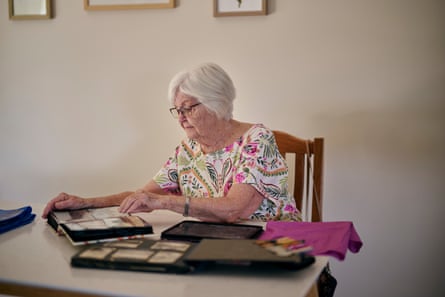
Wilma Spence’s father, Albert Kemp, an Anzac buried in the Gaza War Cemetery, has almost certainly had his grave destroyed amid recent bulldozing by the Israel Defense Forces (IDF).
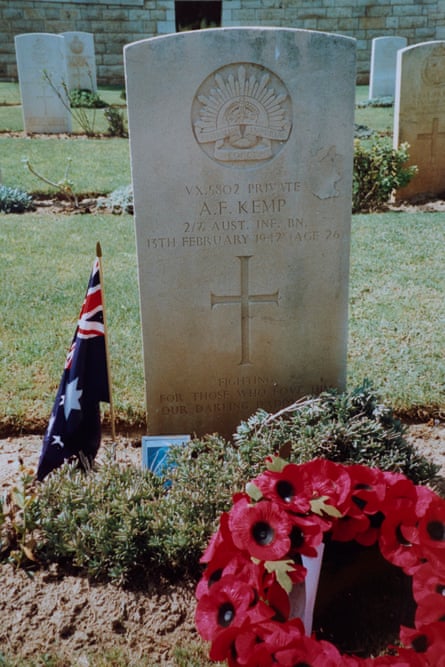
“Fighting for those who love him, our darling daddy died,”the inscription on Albert Kemp’s now-ruined tombstone read.
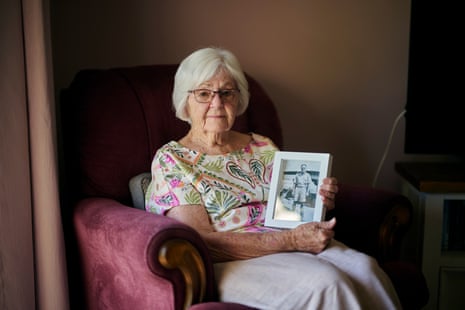
Wilma, overwhelmed with emotion, shared the inscription in her living room, tears welling in her eyes. The grave was located in a section of the cemetery dedicated to Australians who died during the Second World War.
She has received no official confirmation but knows the exact location of her father’s grave, in a corner of the cemetery where satellite imagery reveals extensive damage.
IDF Claims and Family Skepticism
An IDF spokesperson stated that the graves were destroyed to address “underground terrorist infrastructure … identified within the cemetery and in its surrounding area.” This explanation has been met with deep skepticism by families of the Anzac dead.
Wilma and her family are left uncertain about the whereabouts of Albert’s remains, engulfed in grief and anger.
“They have no respect for the living, so why would they respect the dead?”Wilma said, referring to the Israeli government.
Albert Kemp’s Military Service
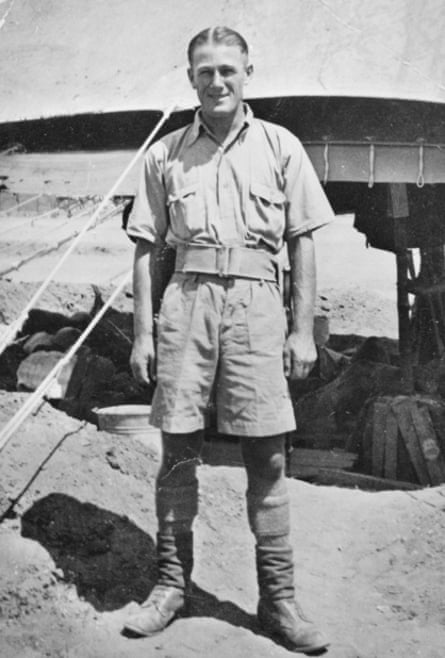
Wilma was too young to know her father personally. Albert Kemp enlisted in Dandenong, south-eastern Melbourne, in October 1939, joining the 2/7 Battalion of the Australian Infantry Force. He served across multiple theatres in Europe and the Middle East.
He earned the Africa Star and the 1939-45 Star among other campaign medals and was promoted to acting corporal in 1941. He died the following year at age 27.
Wilma learned about her father’s service secondhand through relatives and has traveled across Crete and the Middle East tracing his Anzac path. However, it was at his grave where she felt closest to him.
Wilma’s Visit to Gaza War Cemetery
In 1995, Wilma visited the Gaza War Cemetery alone, enduring a two-hour Mossad interrogation and armed checkpoints. She carried a wreath, a photo of her father, and an Australian flag.
She found her father’s tombstone at Grave 3, Row A, Section B, and was overcome with emotion.
“I just broke down, started crying,”she recalled.
“It was very emotional. I suppose, in some way, I’d like to go back, and take somebody else with me.”
Destruction of the Cemetery
Recent military earthmoving has occurred within the last year in the southern corner of the cemetery. Satellite images show rows of gravestones removed and soil disturbed across sections A and B, which contain mostly Australian Second World War soldiers’ graves.
A substantial earth berm runs through the middle of the disturbed area.

The IDF stated that during operations, terrorists attempted to attack troops and took cover near the cemetery. To ensure troop safety, operational measures were taken to neutralize threats.
Wilma’s Appeal to the Australian Government
Since October 2023, Wilma has been writing to Prime Minister Anthony Albanese, urging protection of the sites and investigation into the damage. She has been referred to the Department of Foreign Affairs or the Office of Australian War Graves.
“Your response referred me to the Dept.Foreign Affairs,”she wrote to the prime minister’s office.
“I consider this an abrogation of the responsibility of our national spokesperson, our PM. And to his responsibilities to those Australian Citizens so totally concerned at the genocide of Palestinians.”
“My father, a World War 2 soldier is buried in the Gaza War Cemetery along with some 200 other Australian soldiers. Perhaps the Prime Minister could find out whether the cemetery has been obliterated by nearby bombing and explain whether action will be taken to restore their gravesites or alternatively return their remains to Australia.”
Call for Government Leadership
With the impending visit of Israeli President Isaac Herzog to Australia, Wilma wants the Albanese government to demonstrate leadership by pressing Israel to allow Australian War Graves staff access to Gaza to assess the damage.
“I’d like them to raise it with the Israeli president,”she said.
“I think they’re passing the buck, continually referring it to the Australian war graves commission.”
The prime minister’s office has been contacted for comment.
Official Responses and Future Plans
Earlier this week, a spokesperson for Australia’s Department of Veterans’ Affairs confirmed there had been “significant damage” to the Gaza War Cemetery, including Australian graves.
“The Office of Australian War Graves is very concerned by the damage to the cemetery,”they said.
“The Commonwealth War Graves Commission plans to secure and repair the cemetery as soon as it is safe to do so, however, it is expected that full reconstruction will take some time as the immediate post-conflict priority for works will be directed to humanitarian efforts.”
On Friday, Acting Prime Minister Richard Marles expressed government concern over the destruction.
“We have clearly expressed our concern,”he said.
“As soon as the situation is one where we can safely repair those graves, obviously, we will do that, but that’s clearly not what the situation is on this day.”
Wilma’s Poem and Reflection
Wilma wrote a poem about her father, reflecting the emotional significance of his grave and the pain of its loss.
“I stood at your grave in the Gaza sun, the smell of Eucalypts filling the air. My tears fell in the dust, it seemed unjust to lose you, so young – unfair.”
“And I wished you home to comfort and love, and those who cared.”
Additional reporting by Seham Tantesh in Gaza and Julian Borger in London.