

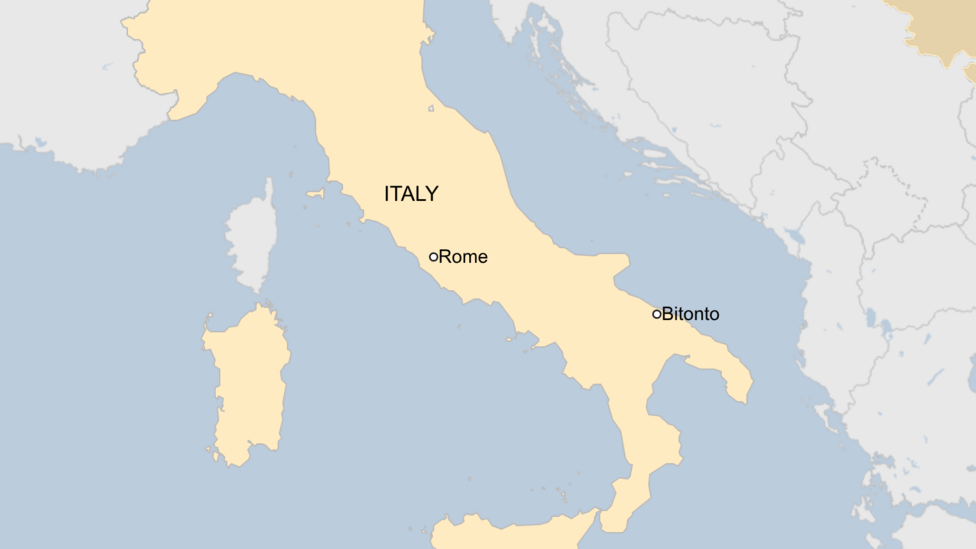
A lottery player who accidentally binned a €1m (£857,158) winning ticket may be the luckiest man in Italy after refuse workers found the missing slip. The anonymous player disposed of the ticket in a shop in Bitonto, southern Italy, after checking his numbers and being told it was "non-payable".
The man only realised he had thrown away a winning ticket after a relative pointed out that the numbers he always played had been drawn. It sparked a two-day search through a "mountain of waste" that had been collected by a bin lorry, the head of the refuse company, Roberto Nicola Toscano, told Italian news agency Ansa.
"This story is nothing short of miraculous,"
He added that the mix-up happened because the "non-payable" message appears when the prize is too high to be paid out by the shop.
When the player returned home, his family reportedly pointed out that his favourite numbers - 2, 4, 8, 10, and 51 - had been drawn.
"It was then that he realised the misunderstanding. So they all went to the shop together and discovered that the tickets had been thrown away and collected by one our operators,"
Toscano, director of SANB who handles waste collection in the area, said after the player made contact with the refuse company, the bin lorry was located before its contents were compacted for disposal.
"Luckily it was a Sunday, otherwise the load would have already ended up in landfill,"
The boss told Italian broadcaster TGCOM24 that the truck was then escorted to a special site where the search began to find the "small piece of paper hidden in a mountain of waste".
After a two-day search, the winning ticket was reportedly found by a waste worker on Tuesday morning. Toscano told Ansa that it was found "in a hole-ridden bag along with other damaged tickets: this was one of the few intact ones".

The cost of the recovery operation is set to be charged to the winner, who had previously signed a declaration promising to cover the costs associated with the search.
The luck even rubbed off when Toscano and his colleagues bought a scratch card as a joke. They won €50 (£43).
How did the ticket end up in the rubbish?
The ticket was thrown away in a shop in Bitonto after the player checked it and was told it was "non-payable". The phrase, Toscano explained, appears when the prize is too large to be paid out by the retailer rather than when the ticket is worthless.
When he got home, the winner's family noticed that the numbers he regularly played - 2, 4, 8, 10 and 51 - had actually been drawn. That is when the misunderstanding became clear, and the family returned to the shop together only to learn that the ticket had already been thrown away and collected by one of SANB's operators.
How was the search carried out?
After the player contacted the refuse company, staff traced the bin lorry before its contents were compacted and taken for disposal. Toscano said the timing mattered because it was Sunday; otherwise the waste would have already ended up in landfill.
The truck was escorted to a special site, where workers searched through the load for the "small piece of paper hidden in a mountain of waste". The search lasted two days before a waste worker found the winning ticket on Tuesday morning.
According to Toscano, the ticket was located "in a hole-ridden bag along with other damaged tickets: this was one of the few intact ones". The recovery operation will be billed to the winner, who had signed a declaration agreeing to cover the search costs.
Did anyone else get lucky?
The search team got a small bonus of its own when Toscano and his colleagues bought a scratch card as a joke. They won €50 (£43).


