

US Commitment to Transatlantic Alliance
US Secretary of State Marco Rubio reassured European leaders that the United States does not intend to abandon the transatlantic alliance, emphasizing that the destinies of the US and Europe "will always be intertwined." Speaking at the Munich Security Conference, Rubio stated:
"We do not seek to separate, but to revitalise an old friendship and renew the greatest civilisation in human history."
While Rubio offered critiques of European immigration, trade, and climate policies, the overall tone of his speech was notably more conciliatory than that of Vice-President JD Vance's address at the same event last year, which was marked by sharp admonishments of continental leaders.
European Commission President Ursula von der Leyen expressed her approval of Rubio's remarks, describing herself as "very much reassured."
Rubio's Address and Criticisms
As the Trump administration's most senior diplomat, Rubio declared that it was "neither our goal nor our wish" to end the transatlantic partnership. He added:
"For us Americans, our home may be in the Western Hemisphere, but we will always be a child of Europe.
And I am here today to leave it clear that America is charting the path for a new century of prosperity, and that once again we want to do it together with you, our cherished allies and our oldest friends."
Despite this affirmation, Rubio reiterated several criticisms frequently voiced by the Trump administration. He described European immigration policies as a threat to civilisation and referred to a "climate cult" dominating economic policy. Regarding trade, he stated that Europe and the US had "made mistakes together" by adopting a "dogmatic vision of free and unfettered trade."
He also emphasized the need for Europe to increase its defence spending, asserting:
"We want allies who can defend themselves so that no adversary will ever be tempted to test our collective strength."
In response, Von der Leyen affirmed:
"[Rubio is] a good friend, a strong ally. And this was, for me, very reassuring to listen to him.
We want a strong Europe. And this is, I think, the message of today."
International Cooperation and UN Criticism
During his half-hour speech, Rubio called for the rebuilding of the international cooperation system and singled out the United Nations for criticism. He stated that the UN had "played virtually no role" in resolving the conflicts in Gaza and Ukraine and was "powerless to constrain the nuclear programme" of Tehran.
In recent weeks, President Donald Trump has threatened military strikes on Iran if negotiations fail to curb its nuclear weapons programme. A second round of talks between the US and Iran is scheduled to be hosted by Oman in Geneva next week, according to the Swiss foreign ministry.
Outside the conference, local police reported that approximately 200,000 protesters gathered to rally against the Iranian government. The demonstrators condemned the country's leadership following a government crackdown on protests in January, during which thousands were killed.
US-Russia Relations and Ukraine's Position
Rubio also commented on the ongoing conflict involving Russia, stating that the US was uncertain whether "the Russians are serious about ending the war," but affirmed, "we're going to continue to test it."

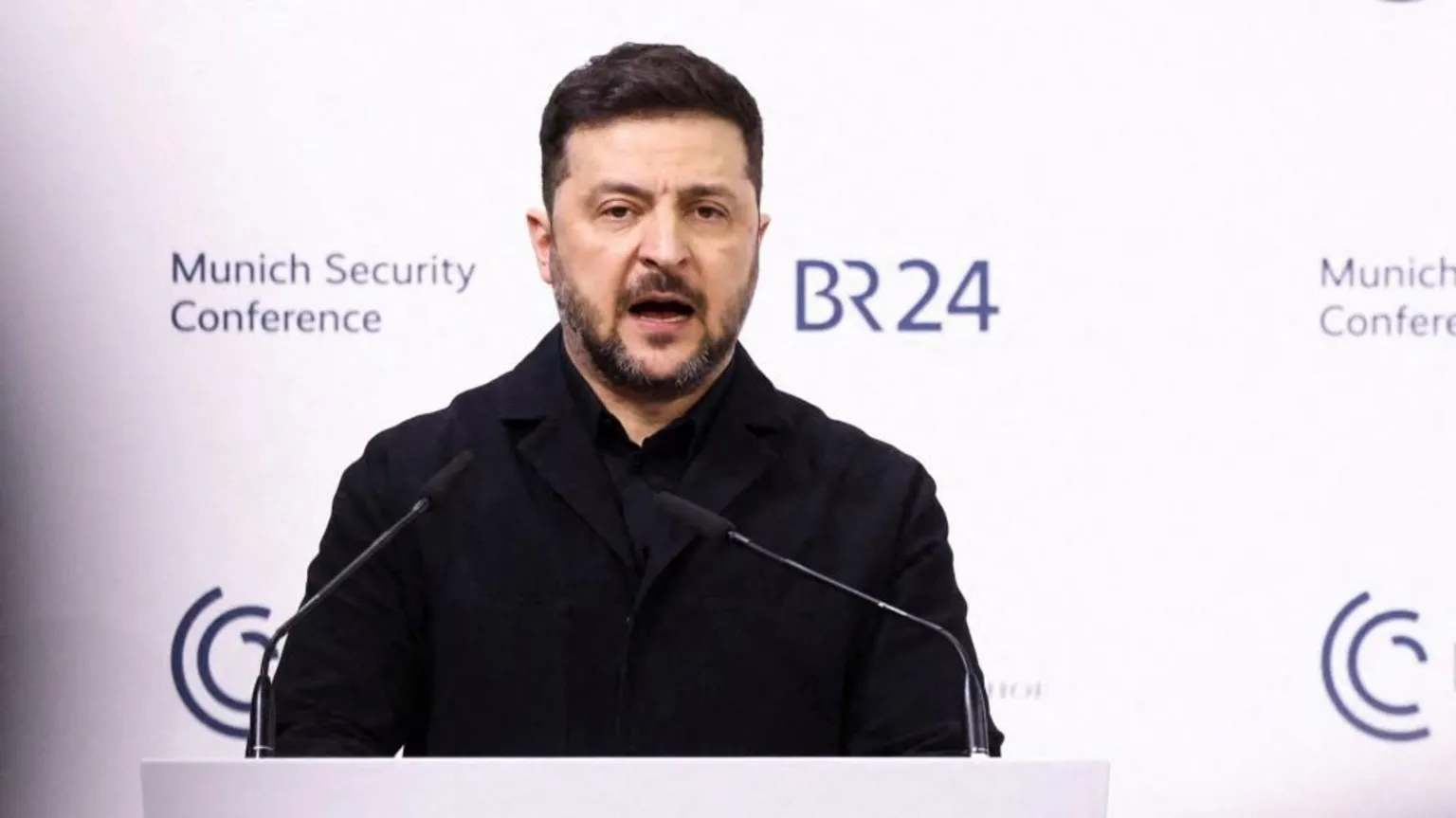
Later on Saturday, Ukraine's President Volodymyr Zelensky addressed the conference, expressing skepticism about Russian President Vladimir Putin's intentions. He described Putin as a "slave to war" and noted that no one in Ukraine believed Putin would leave the country alone.
Zelensky has faced pressure from the White House to hold presidential elections, which have been suspended due to martial law. When asked about a Financial Times report suggesting his administration plans to hold elections as early as May, Zelensky responded:
"The report had been something new to me,"
and reiterated, "nobody supports elections during the war."
He further stated that Ukraine would require "two months of ceasefire" and "security infrastructure" to conduct elections safely.
European Defence and Security Initiatives
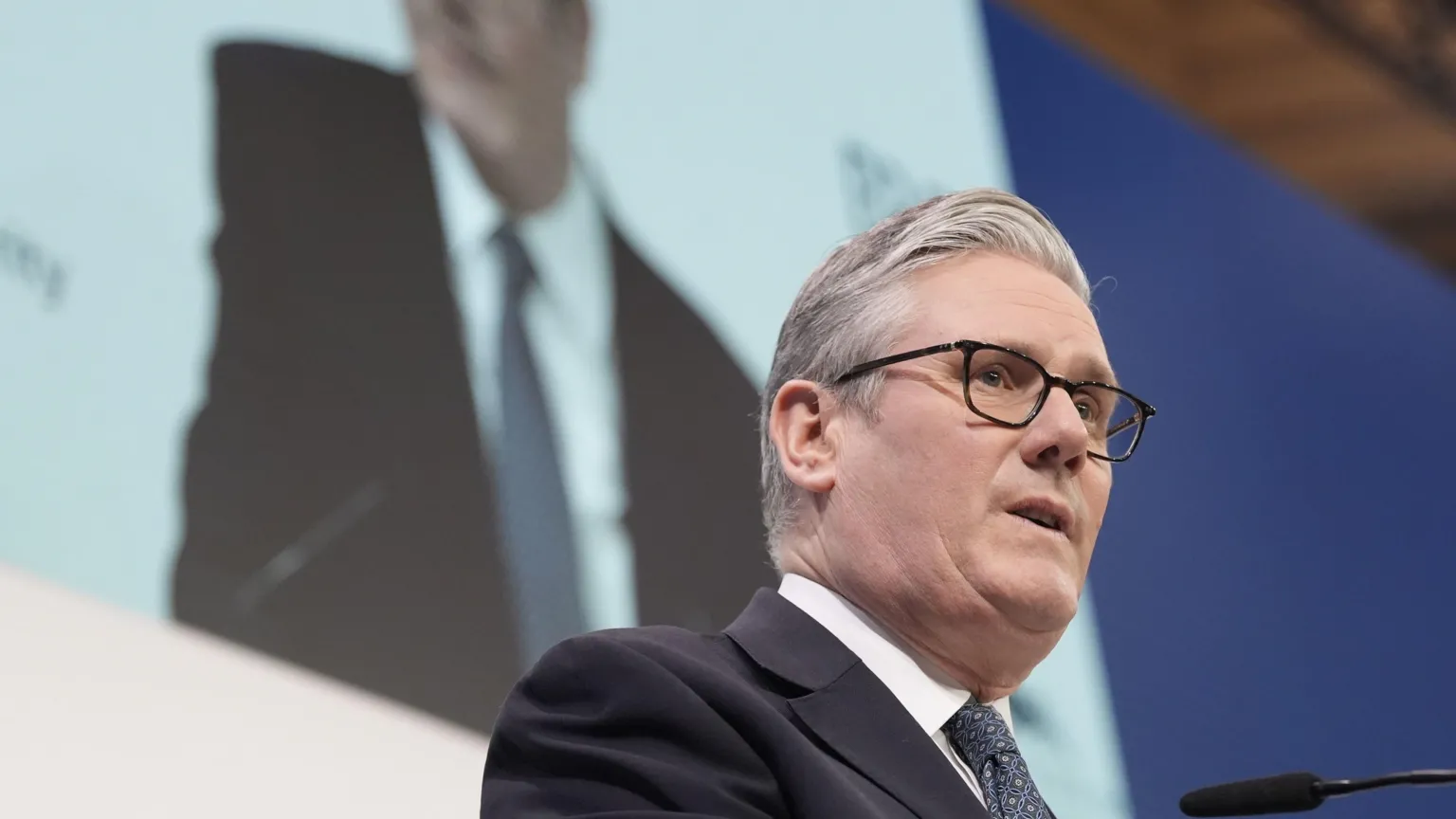
UK Prime Minister Sir Keir Starmer emphasized the necessity for Europe to be prepared to defend its citizens and to "stand on its own two feet" regarding defence commitments. Addressing Russian threats to the continent, he asserted:
"We must build our hard power, because that is the currency of the age."
As part of efforts to enhance security, Sir Keir announced a joint initiative with the US, Canada, and other NATO allies to deploy a fleet of warships, submarines, and aircraft to the Arctic and High North. NATO has recently acknowledged a significant increase in Russian military activity in the Arctic region.
The UK Prime Minister also called for deeper links and cooperation, including "a closer economic alignment," between the UK and the EU.
Calls for Unified European Response
Spanish Prime Minister Pedro Sánchez, Danish Prime Minister Mette Frederiksen, and Finland's President Alexander Stubb echoed calls for a unified response to Russia. Sánchez stressed the need to "stop Putin" and strengthen European defence capabilities, adding:
"Let's do it in a coordinated and targeted way."
He also advocated for building a "true European army, not in 10 years but now."
Frederiksen stated that Putin was not interested in peace and remarked:
"We have to recognise... that Russia will not change."
She noted that Europe "knows exactly what we need to deliver," referencing Ukraine's requests for additional air defences.
Stubb indicated that he did not perceive a "direct threat" from Russia to NATO at present but noted that an Arctic training exercise involving 20,000 NATO soldiers would help outline potential defence scenarios.


