

US Troop Withdrawal from Germany
Germany's defence minister has described the US decision to withdraw 5,000 troops from the country as "foreseeable," while NATO is actively seeking clarification from Washington regarding the move.
Speaking to the DPA news agency, Boris Pistorius emphasized the importance of the American military presence in Europe, particularly in Germany, stating that it serves both German and US interests.
"The presence of American soldiers in Europe, and particularly in Germany, is in our interest and in the interest of the US."
NATO spokeswoman Allison Hart confirmed that the alliance is collaborating with the US to understand the specifics of the decision.
"We are working with the US to understand the details of their decision."
Context of the Withdrawal
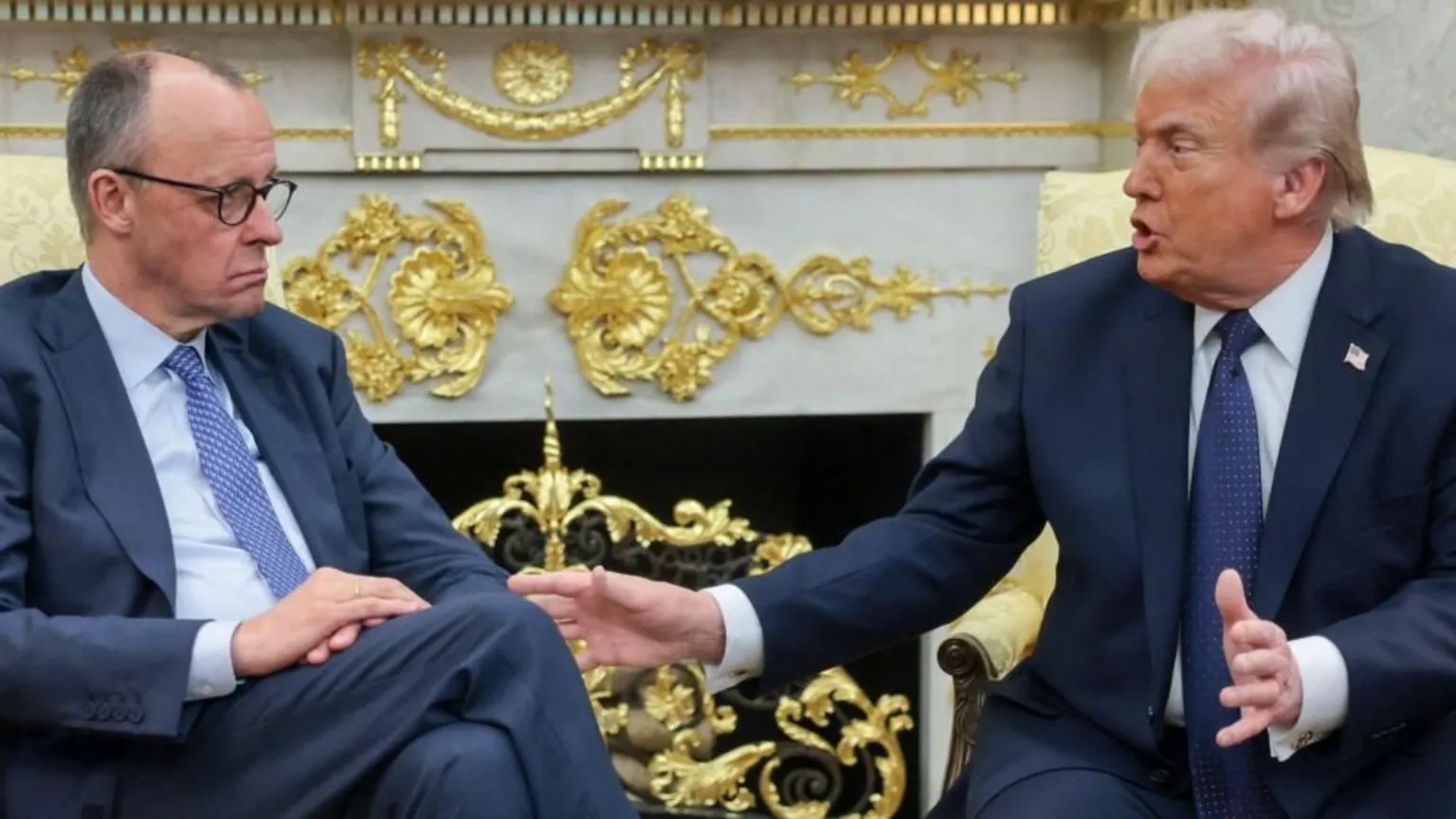
The announcement follows tensions between President Donald Trump and German Chancellor Friedrich Merz, who had criticized the US for being "humiliated" by Iranian negotiators during ongoing conflicts.
Currently, the US maintains more than 36,000 active duty troops in Germany, which is its largest military deployment in Europe. This contrasts with approximately 12,000 troops stationed in Italy and 10,000 in the United Kingdom.
When questioned about the troop reductions on Saturday night, Trump stated,
"We're cutting a lot further than 5000."
He did not provide additional details but has also suggested the possibility of withdrawing US forces from Italy and Spain.
Last year, the US reduced its troop presence in Romania as part of a broader strategy to shift military focus from Europe to the Indo-Pacific region.
Reactions Within NATO
There is growing concern among NATO's 32 member states that the US decision could undermine the alliance's strength.
Polish Prime Minister Donald Tusk warned on Saturday,
"The greatest threat to the transatlantic community are not its external enemies, but the ongoing disintegration of our alliance."
"We must all do what it takes to reverse this disastrous trend."
Two senior Republican US lawmakers expressed their apprehension about the withdrawal.
Senator Roger Wicker and Representative Mike Rogers, chairs of the Senate and House armed services committees respectively, stated,
"Rather than withdrawing forces from the continent altogether, it is in the US interest to maintain a strong deterrent in Europe."
Germany’s Defence Strategy
In the DPA interview, Pistorius highlighted the need for Europe to assume greater responsibility for its security and noted that Germany would increase cooperation with continental allies.
"Germany is on the right track,"
he said, pointing to the significant increase in Germany’s military spending in recent years.

Previously, Trump had criticized Germany for being "delinquent" due to its military spending falling short of NATO's target of 2% of GDP.
However, under Chancellor Merz's government, Germany's defence budget is projected to reach €105.8 billion (£91 billion) by 2027.
Overall defence expenditure is expected to reach 3.1% of GDP, factoring in additional defence funds and Berlin's ongoing support to Ukraine amid its conflict with invading Russian forces.
NATO’s Perspective on European Defence
On Saturday, NATO spokeswoman Allison Hart posted on X that the US troop withdrawal highlights the necessity for Europe to increase defence investments and share greater responsibility for collective security.
"We're already seeing progress since allies agreed to invest 5% of GDP at the NATO summit in The Hague last year."
Recent Tensions Between Trump and Merz
The latest disagreement between Trump and Merz originated from comments made by the German chancellor on Monday.
Merz told university students,
"The Americans clearly have no strategy."
He further remarked on Iranian negotiators' tactics,
"The Iranians are obviously very skilled at negotiating, or rather, very skilful at not negotiating, letting the Americans travel to Islamabad and then leave again without any result."
Merz added that the "entire nation" was being "humiliated" by Iran.
In response, Trump took to his platform Truth Social, accusing Merz of believing it was "OK for Iran to have a Nuclear Weapon" and claiming he "doesn't know what he's talking about."
This exchange was soon followed by the announcement of the US troop withdrawal.
Details on the Withdrawal Process
Pentagon spokesman Sean Parnell stated that the order for withdrawal came from Defence Secretary Pete Hegseth.
"We expect the withdrawal to be completed over the next six to twelve months,"
he added.
Broader US Military and Strategic Moves
Trump, known for his criticism of NATO, has expressed frustration with allies over their reluctance to participate in operations aimed at reopening the Strait of Hormuz, a vital oil shipping route.
Iran has severely restricted traffic through the waterway in retaliation to US and Israeli strikes that commenced on 28 February.
The US has also imposed a naval blockade on Iranian ports in the Gulf region.


