

Orban Deploys Troops to Energy Sites Amid Pipeline Dispute
Hungarian Prime Minister Viktor Orban announced the deployment of soldiers to key energy facilities across Hungary after accusing Ukraine of disrupting energy supplies to his country.
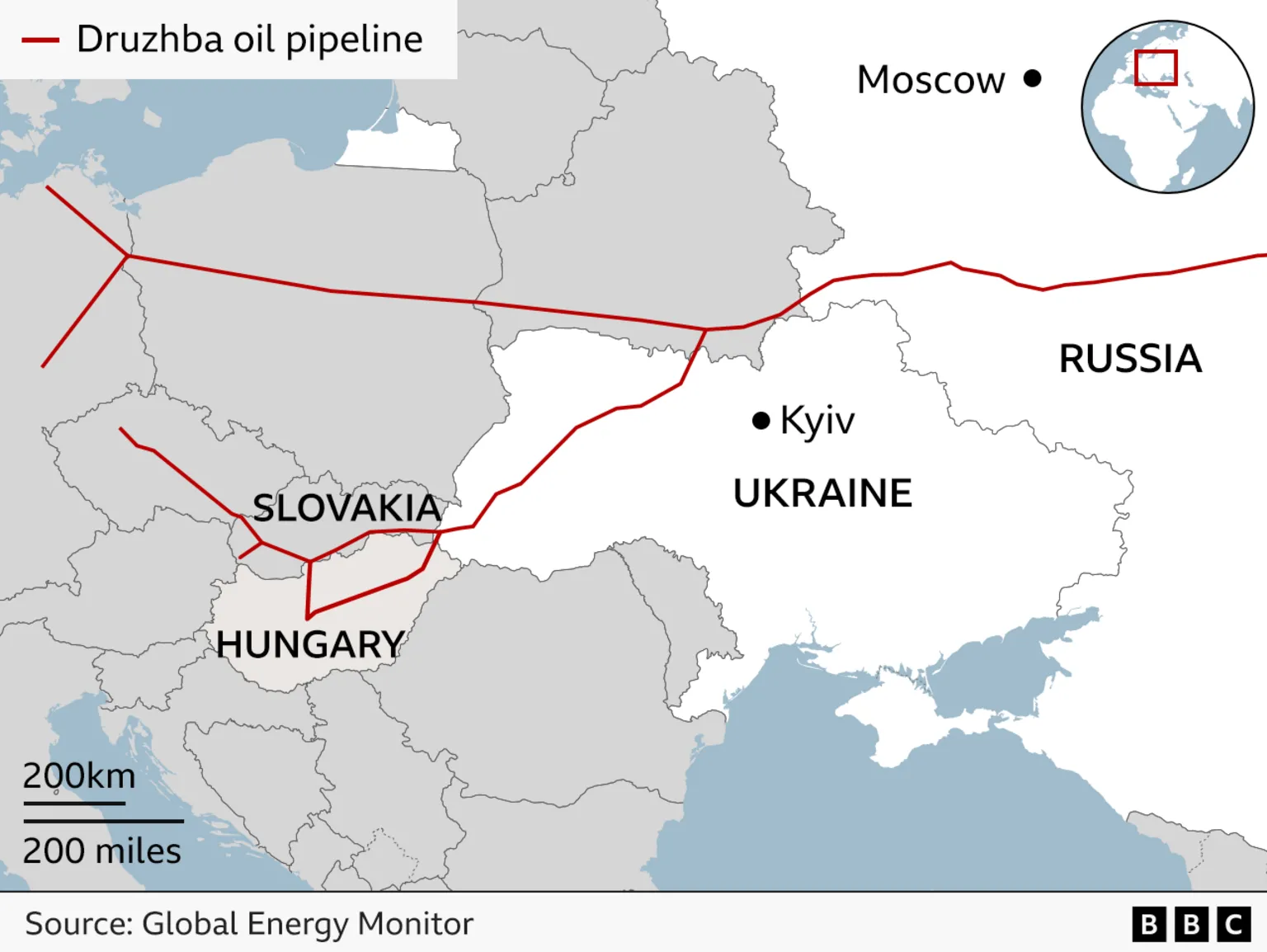
Orban, who is currently trailing in opinion polls ahead of critical elections scheduled for next month, has accused Kyiv of imposing an "oil blockade" on Hungary by deliberately delaying the reopening of the Druzhba pipeline.
Ukraine has stated that the pipeline was damaged by Russian strikes last month and that repair crews have been injured in subsequent attacks.
Druzhba serves as the primary route for delivering Russian oil to Hungary and Slovakia, with shipments to both countries halted since 27 January.
Political Context and Accusations
The Hungarian leader, widely regarded as Russia's closest ally within the European Union, contends that the suspension of this vital oil supply is politically motivated. He has accused Ukraine of "preparing further actions," including sabotage, despite the ongoing four-year full-scale war initiated by Russia.
Critics of Orban argue that his escalating rhetoric against Ukraine is a strategy to persuade the Hungarian public that the country is under attack ahead of the 12 April elections. Most opinion polls indicate that his Fidesz party risks losing power after 16 years of governance.
This week, Orban vetoed a €90 billion (£78 billion) EU loan to Ukraine and blocked the 20th package of sanctions targeting Moscow.
In an open letter posted on social media on Thursday, Orban accused Ukraine, the EU, and opposition parties of "co-ordinating efforts to bring a pro-Ukraine government to power in Hungary."
EU and Regional Responses
The European Union has urged Kyiv to expedite the reopening of the pipeline. However, Ukrainian President Volodymyr Zelensky responded,

"they advise us to repair it, but they know that there have already been attacks on Druzhba".
Slovakia's Prime Minister Robert Fico, also considered one of Russia's closest European partners, accused Zelensky of delaying the process. On Monday, Slovakia announced it would cease providing emergency power supplies to Ukraine until oil shipments through the pipeline resume.
Due to severe power shortages throughout the winter caused by intensified Russian attacks on its electricity and gas infrastructure, Ukraine has had to increase imports from European neighbors.
The European Commission clarified on Wednesday that although Hungary and Slovakia have begun utilizing their emergency oil reserves, there is no risk of shortages, as alternative sources are available for both countries.
European Commission spokesperson Anna-Kaisa Itkonen stated after expert discussions,
"Croatia confirmed... that non-Russian crude oil is being transported through the Adria pipeline to Hungary and Slovakia. It remains the main alternative pipeline for Hungary and Slovakia to cover their needs, and the pipeline has sufficient capacity to increase volumes to fully cover the Hungarian Slovakian requirements."
Ukrainian Attacks on Russian Oil Infrastructure
Ukraine's military has conducted repeated attacks on Russian oil facilities within Russia. Earlier this week, a Ukrainian drone strike targeted an oil pumping station in Tatarstan.
These attacks compelled Russia's oil operator to reduce the volume of crude oil intake by approximately 250,000 barrels per day, according to .
Orban's Security Measures and Accusations
In his Thursday message, Orban accused President Zelensky of blocking the Druzhba pipeline as part of an "anti-Hungarian policy," following his earlier claim that Kyiv was "preparing further actions to disrupt Hungary's energy system."
After a meeting of the Hungarian Defence Council on Wednesday, Orban announced that soldiers had been deployed to energy stations, police would patrol power facilities, and drones were banned in Hungary's north-east border region adjacent to Ukraine.
There is no evidence indicating that Ukraine plans any attack, and its armed forces are already heavily engaged in defending against the ongoing Russian invasion along a front line approximately 1,200 km (750 miles) long.
Zelensky did not immediately respond to Orban's accusations. However, Orban has consistently portrayed Kyiv as attempting to involve Hungary in the conflict and has repeatedly sought to block financial aid to Ukraine.


