

Navalny's Death Confirmed as Poisoning by Allies
The mother of the late Russian opposition figure Alexei Navalny has stated that the recent assessment confirming her son died from poisoning validates her conviction that he was murdered.
On Saturday, the United Kingdom and European allies issued a statement declaring that Navalny, who passed away in 2024, was killed using a poison derived from a dart frog toxin. The statement further asserted that "only the Russian state had the means, motive and opportunity to deploy this lethal toxin."
"This confirms what we knew from the very beginning," Lyudmila Navalnaya said while visiting her son's grave in Moscow on Monday, the second anniversary of his death. "We knew that our son did not simply die in prison, he was murdered."
Russian Government Denies Allegations
Russia has strongly rejected the accusations. Kremlin spokesman Dmitry Peskov responded on Monday:
"Of course, we do not accept such accusations. We disagree with them, we consider them biased and unfounded. And, in fact, we resolutely reject them."
Family and Public Commemorations
Navalny's widow, Yulia, also marked the two-year anniversary of his death with a social media post stating:
"We have achieved truth and we will achieve justice one day too."
She had previously indicated that analyses of smuggled biological samples, conducted by laboratories in two countries, demonstrated that her husband had been "murdered," and she challenged the facilities to publish their findings. The Kremlin did not comment on her statements at that time.
On Monday, dozens of Muscovites and several foreign diplomats visited Borisovskoye cemetery, placing flowers on Navalny's grave. A note left on the grave read: "Alexei, we remember you every day."

Navalny's Life and Legacy
Navalny was 47 years old when he died in the Siberian penal colony where he was serving a 19-year sentence for "extremism." He was a fierce and charismatic critic of President Vladimir Putin, known for campaigns exposing high-level government corruption. His efforts mobilized hundreds of thousands of people to protest and earned him recognition abroad as Russia's primary opposition leader.
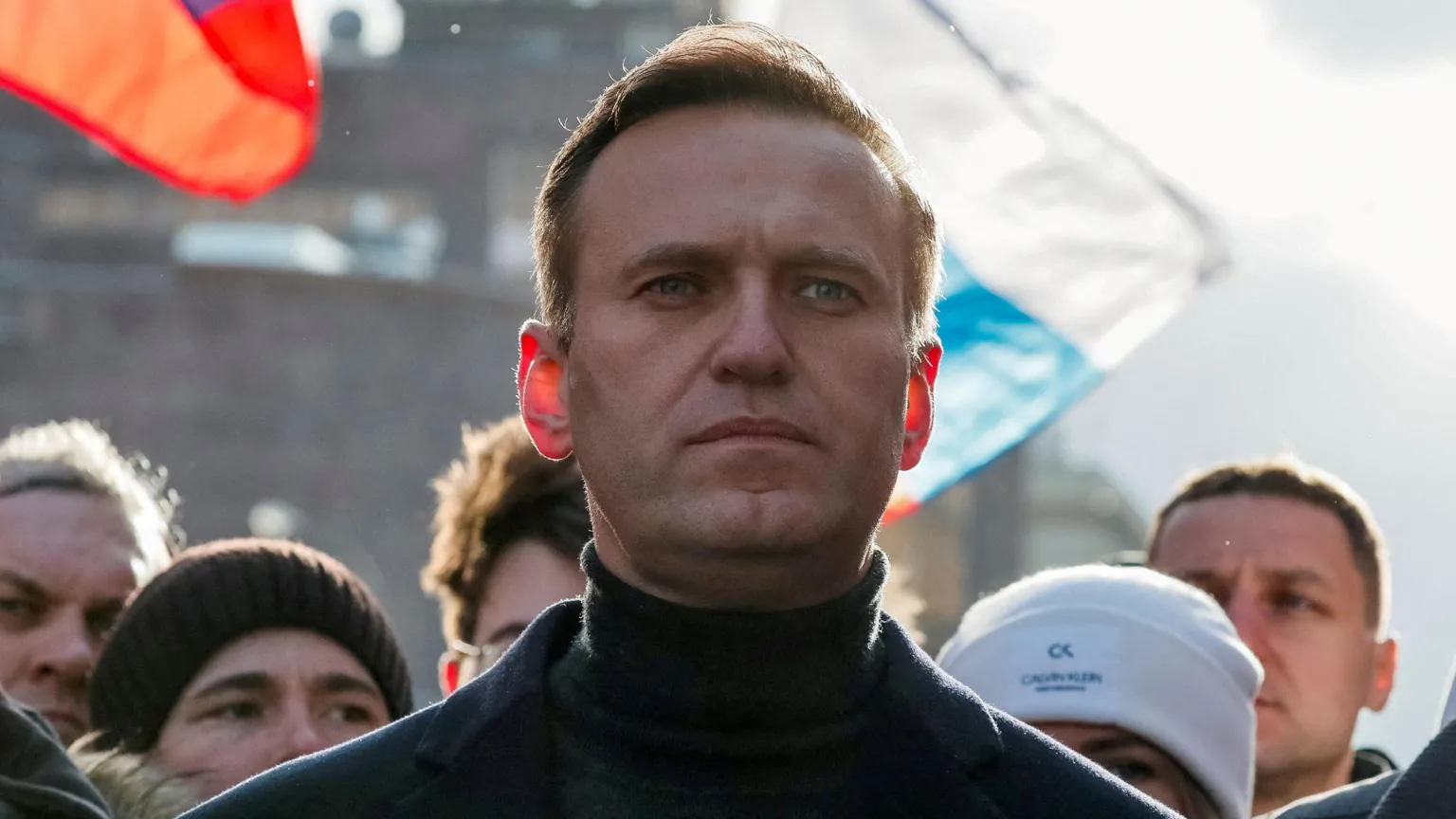
In 2020, Navalny survived a suspected poisoning with the Novichok nerve agent and received treatment in a German hospital. He returned to Russia the following year, expressing his determination not to "give up either my country or my beliefs." Upon arrival, police arrested him. Just over a year later, he died in the Polar Wolf penal colony located above the Arctic Circle.
At the time of his death, the Kremlin stated that Navalny had died of natural causes. Although authorities initially refused to release his body, he was eventually buried in Moscow in March 2024. His funeral was attended by thousands of mourners who defied concerns over a potential police crackdown, marking the last major public gathering of like-minded Russians.
Increasing Repression in Russia
Repression in Russia has intensified over recent years, escalating further following Moscow's invasion of Ukraine in February 2022. New punitive laws have been enacted, and expressions of anti-government sentiment—whether through street protests or online posts—are frequently met with lengthy prison sentences.
Many of Navalny's associates have been imprisoned or have fled the country. His widow Yulia, who now leads Navalny's Anti-Corruption Foundation, also faces the threat of arrest and currently resides abroad with their two children.
The Russian opposition in exile remains politically fragmented, struggling to present a unified front amid public disputes among different factions.


