

Macron 'very sceptical' about short-term peace as 'no willingness' on Russia's side
France’s President Emmanuel Macron addressed the ongoing conflict, expressing deep skepticism regarding the prospects for short-term peace. He stated that there is "no willingness on the Russian side to have peace."
Macron emphasized the necessity for increased support for Ukraine and urged the European Union leadership to expedite the disbursement of the €90 billion loan package, declaring,
"We will deliver that, no choice."He also advocated for additional sanctions targeting Russia, including measures against its shadow fleet to undermine its operational business model.
Regarding security guarantees, Macron noted that these are "being finalised" and require concrete agreement. He concluded his remarks by expressing admiration and solidarity with the Ukrainian people.
Four years into Ukraine invasion, Russia’s gains are small, while Kyiv remains resilient
As the conflict enters its fifth year, Russia’s invasion of Ukraine has surpassed the duration of the eastern front battles of World War II. The Soviet advance from Leningrad to Berlin in 1944-45 took just over 15 months, whereas current Russian advances in Ukraine are minimal, with territorial gains measured in meters per day—70 meters daily near Bakhmut and 23 meters in Kupiansk.
In 2025, Russia has gained approximately 1,865 square miles, about 0.8% of Ukraine’s territory, contradicting narratives suggesting a slow-motion defeat of Ukraine. Despite extensive damage to infrastructure, including widespread loss of electricity, heating, and water due to Russian bombing, Ukraine continues to clarify its strategy and achieve modest battlefield successes.
Russia continues to demand Ukrainian military withdrawal from Kramatorsk, Sloviansk, and the remainder of Donetsk, proposing a demilitarized zone with Russian patrols. NATO intelligence estimates that Russia is unlikely to capture the region within the next 18 months, with urban combat potentially prolonging the conflict and resulting in substantial Russian casualties, possibly exceeding 600,000.
Diplomatic efforts reveal Russia’s military difficulties. Recently, Russian Foreign Minister Sergei Lavrov referenced alleged understandings from the 2021 Anchorage summit, claiming US President Donald Trump agreed that Ukraine should cede Donetsk without resistance. However, the US has not pursued such a position amid Ukrainian and European opposition.
Reminder: Q&A with Shaun Walker on Ukraine at 2pm UK, 3pm Europe
Our correspondent Shaun Walker will join a live Q&A session at 2pm UK (3pm Europe) to answer questions on the Ukraine conflict. Readers are encouraged to submit their questions in the comments section below the article.
No Time to Heal - documentary on psychological rehabilitation of Ukrainian soldier after Russian captivity
Ukrainian soldiers suffering from PTSD, depression, and anxiety receive treatment at the Forest Glade, Ukraine’s first center dedicated to psychological trauma rehabilitation. Among them is 25-year-old Kyrylo Chuvak, who spent three years in Russian captivity following the battle for Mariupol and now undergoes a three-week rehabilitation program near Kyiv.
The center offers psychological therapy alongside activities such as tango, archery, guided breathing, medieval games, and informal conversations over tea. After four years of war and diminishing international attention, the psychological battle continues alongside frontline combat.
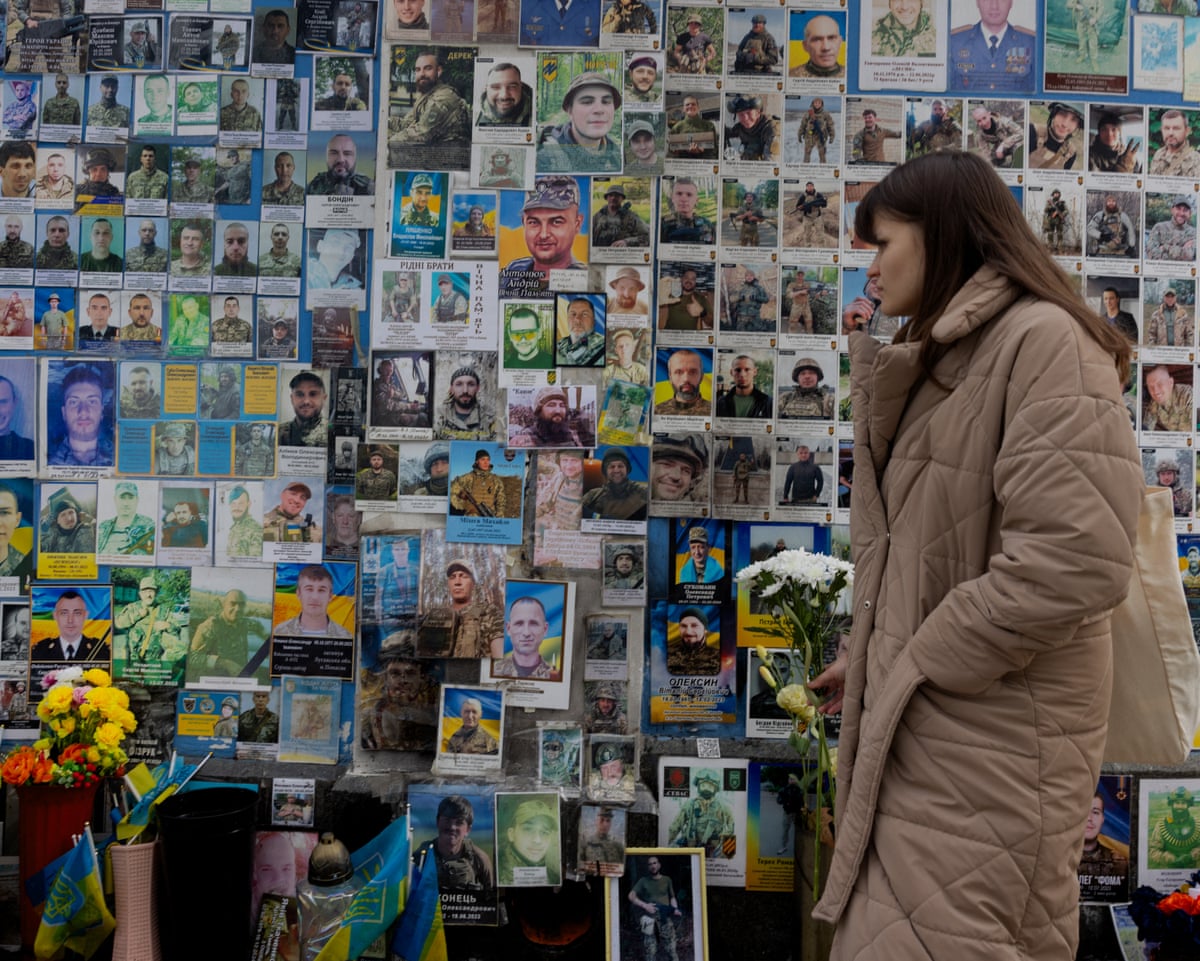
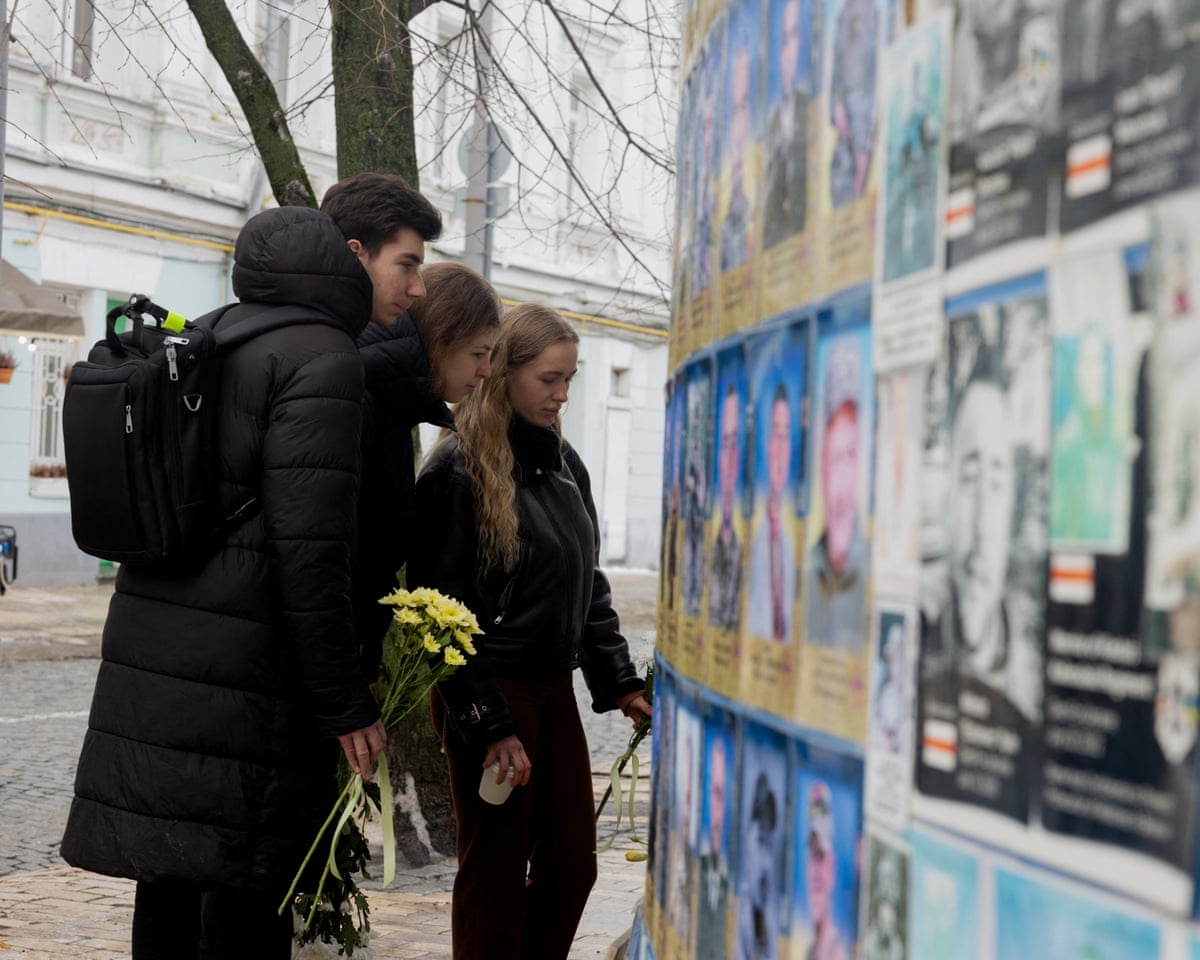
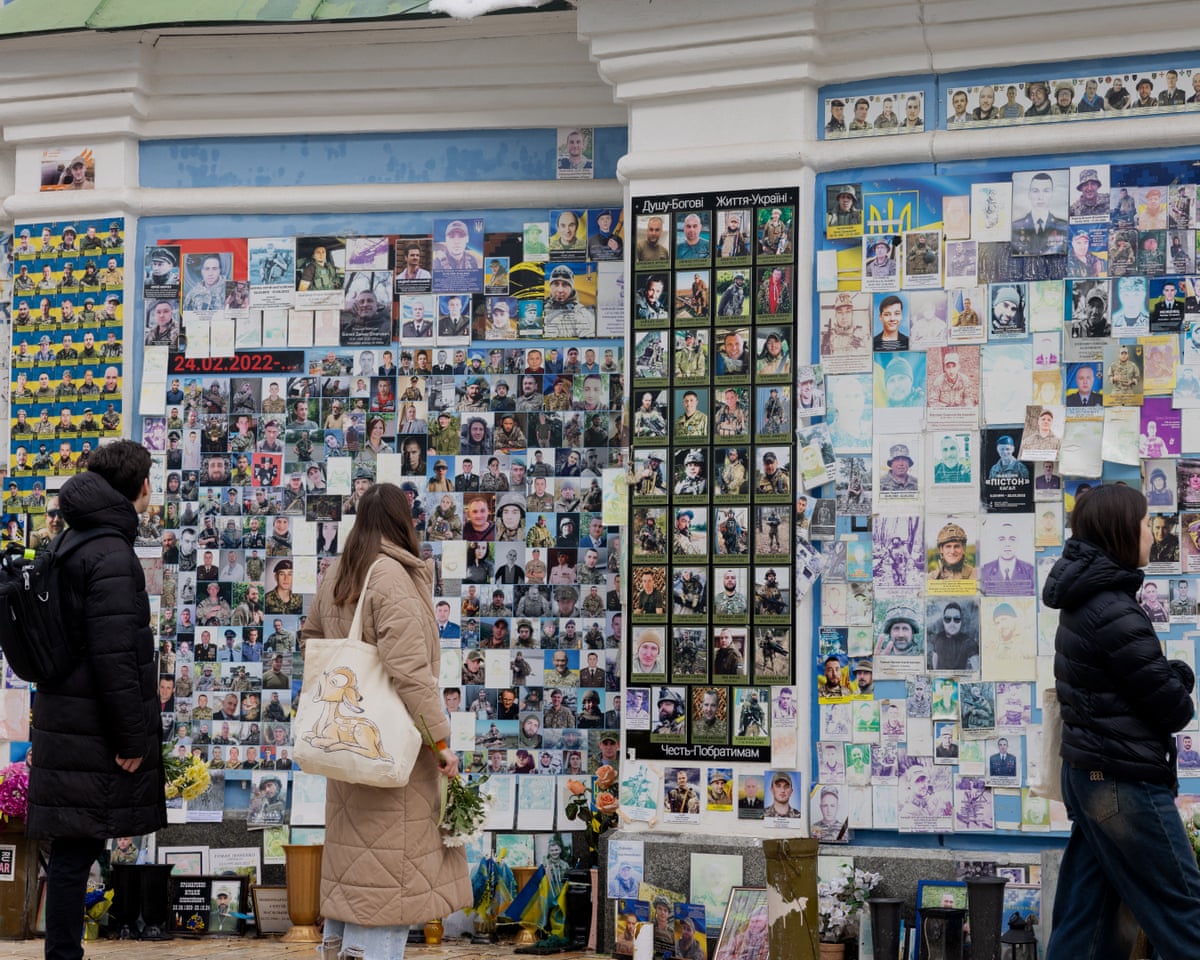
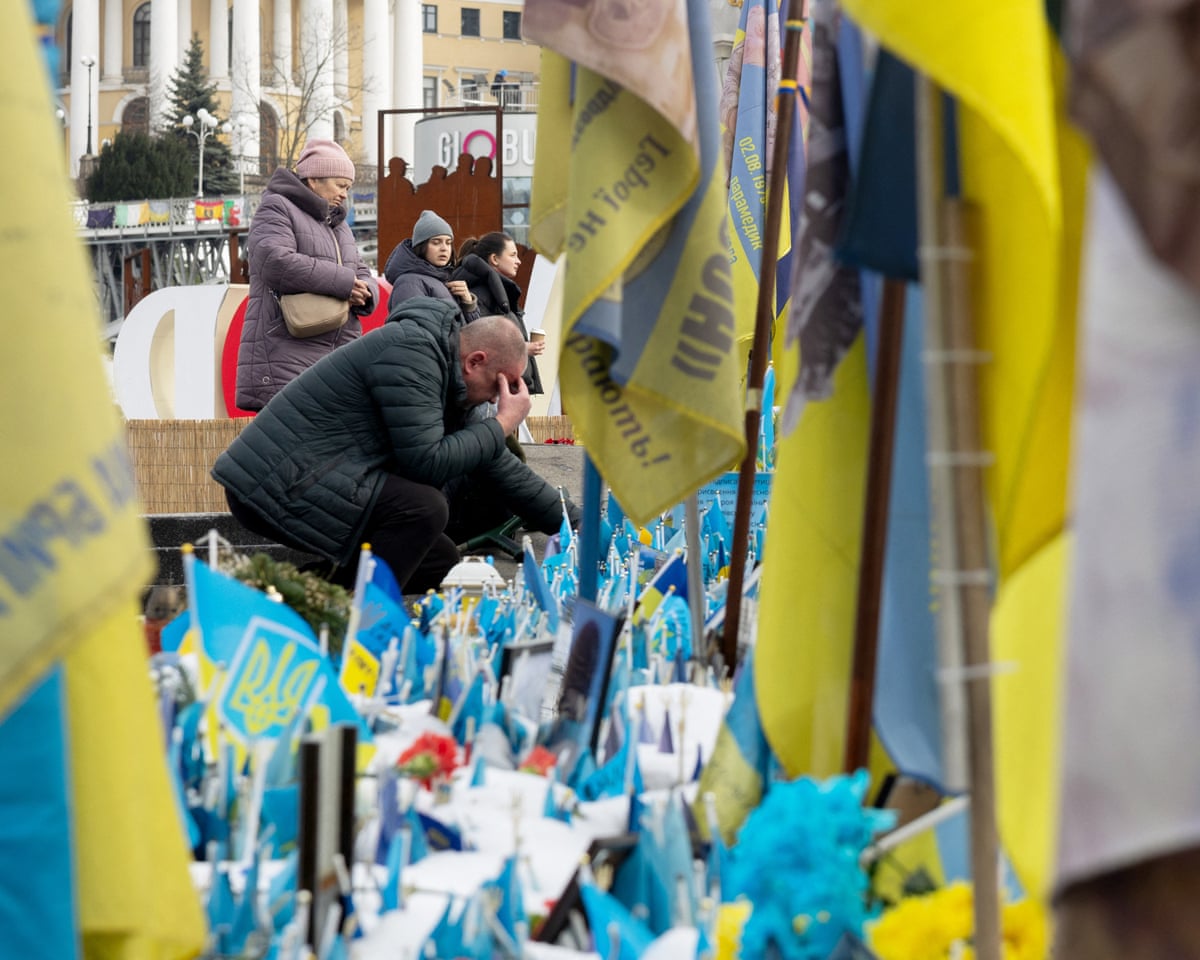
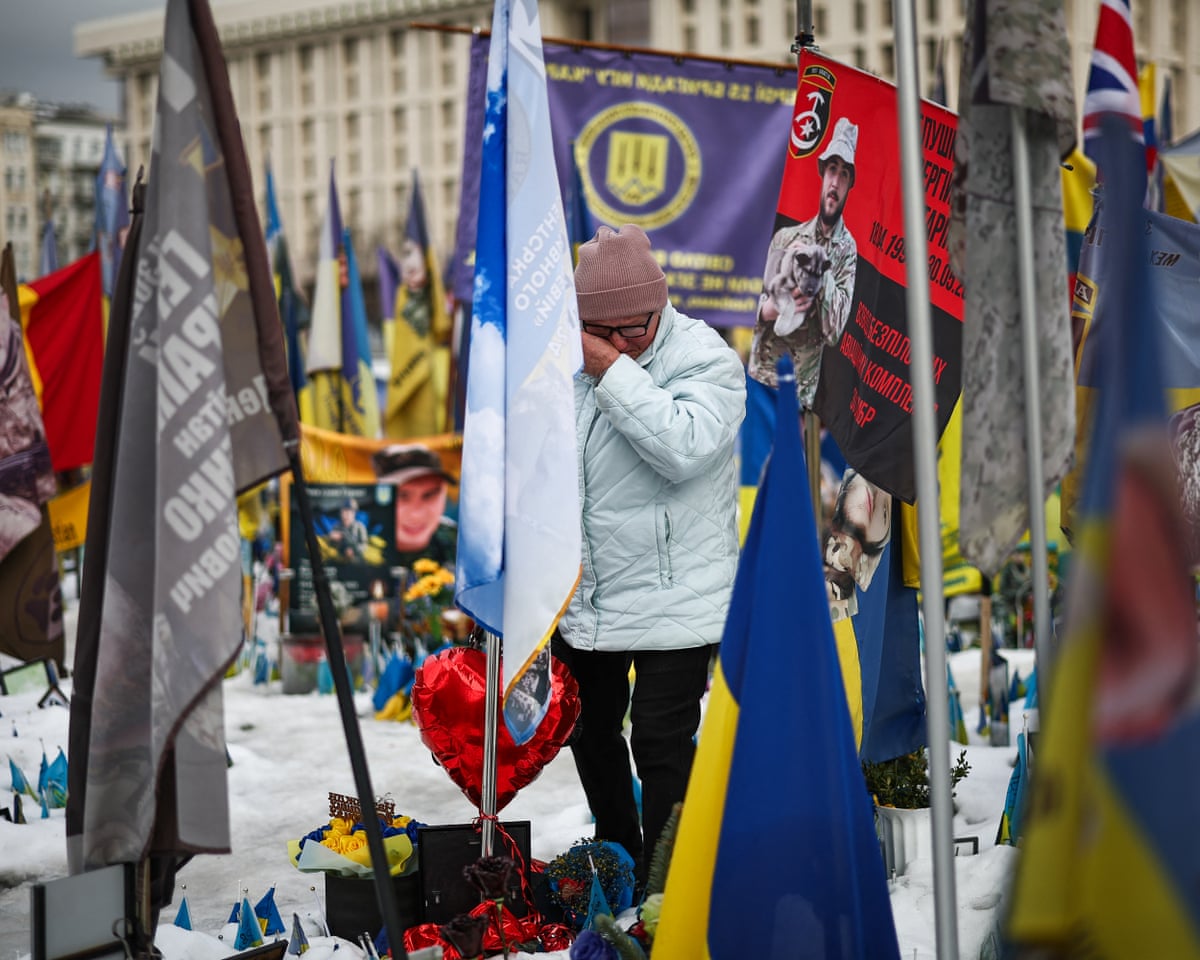
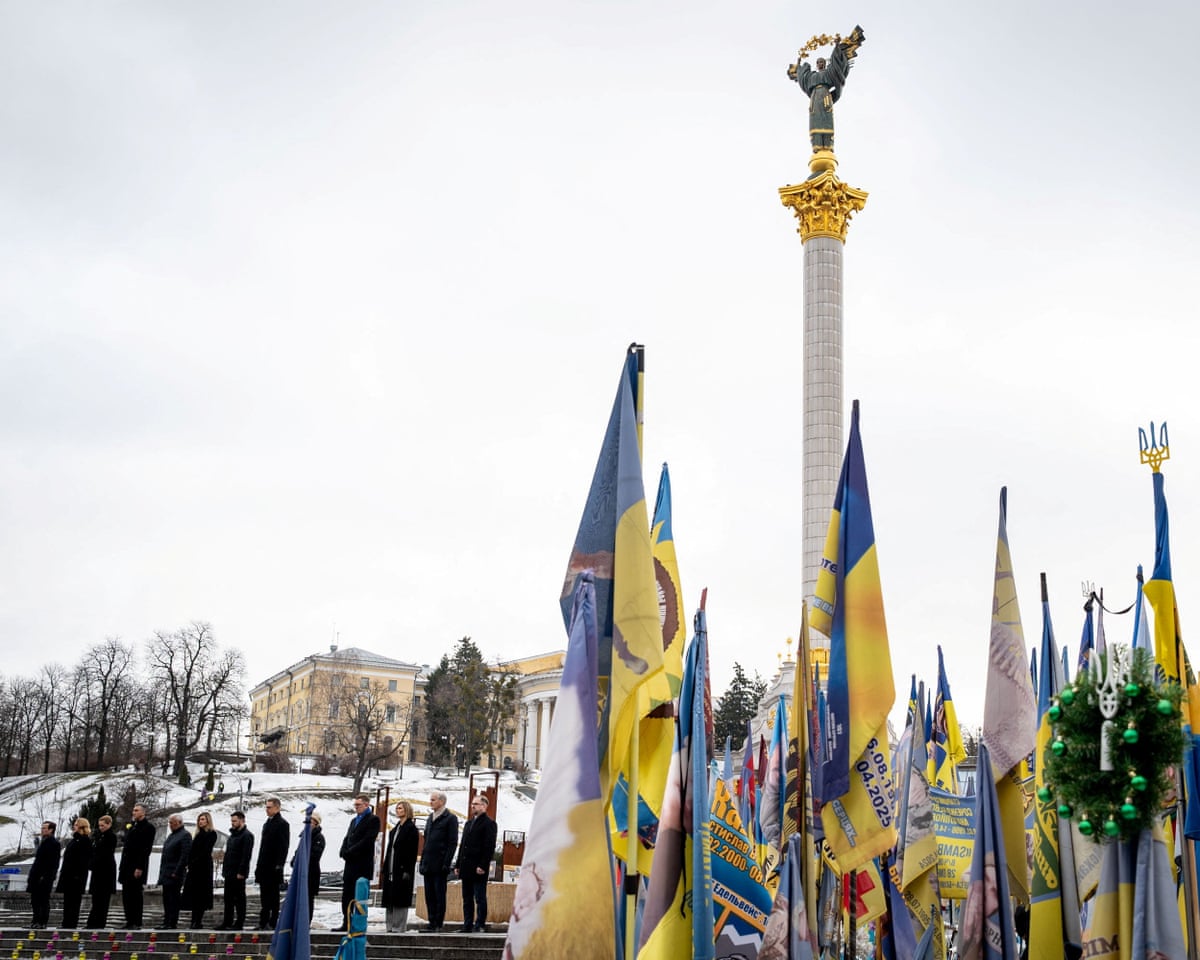
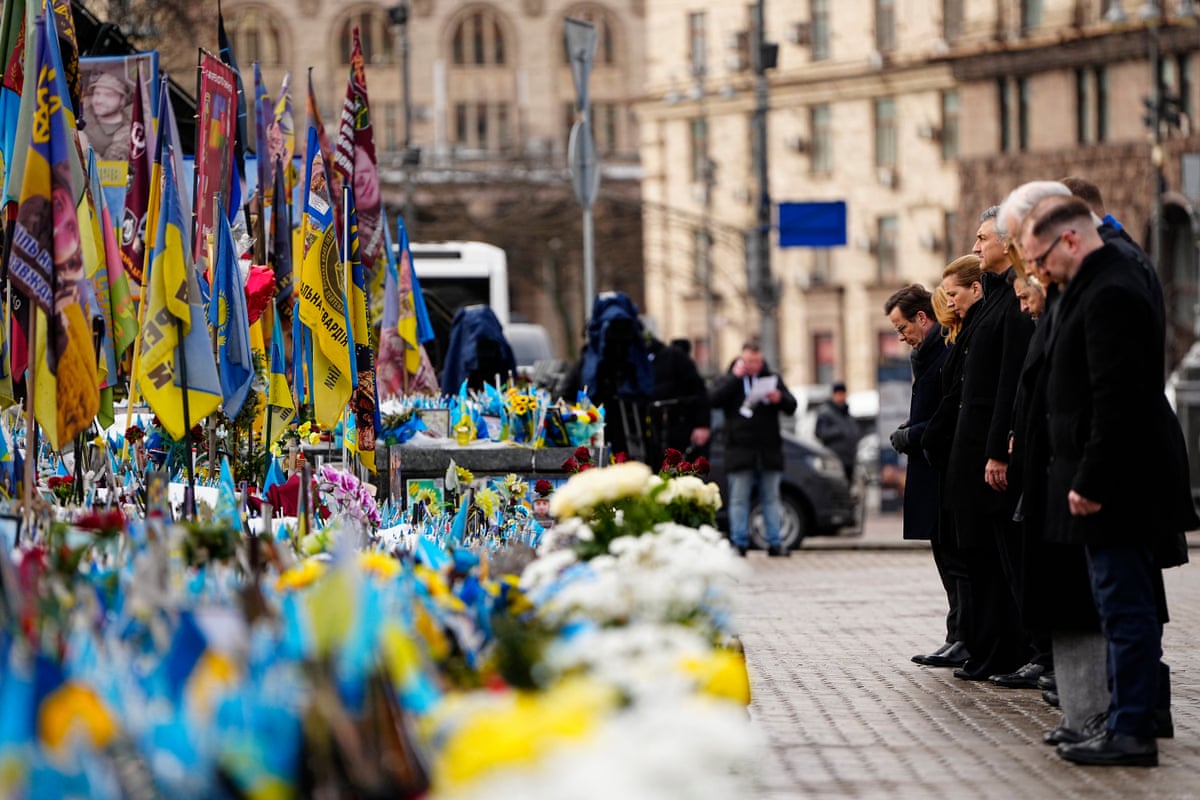
Kyiv marks fourth anniversary of full-scale aggression - in pictures
As Ukraine marks the fourth anniversary of Russia’s full-scale invasion, citizens pay tribute to fallen soldiers and victims of the conflict.
'Russia is not winning,' Germany's Merz says, as he calls for more pressure on Moscow
Germany’s Friedrich Merz delivered pre-recorded remarks during a state ceremony in Berlin honoring former Bundestag president Rita Süssmuth. He reaffirmed Germany’s unwavering support for Ukraine, stating:
"So we must be very clear this war will only end when Putin realises that he cannot win."
Merz called for increased pressure on Russia to cut off its war funding, asserting,
"Moscow is not as strong as it would like the world to think. Russia is not winning."
Following Merz, NATO Secretary General Mark Rutte was scheduled to speak, after which the public event concluded and discussions continued behind closed doors.
'We need peace, but have to prepare' for other scenarios, Zelenskyy says, hinting at further talks with Russia in 7-10 days
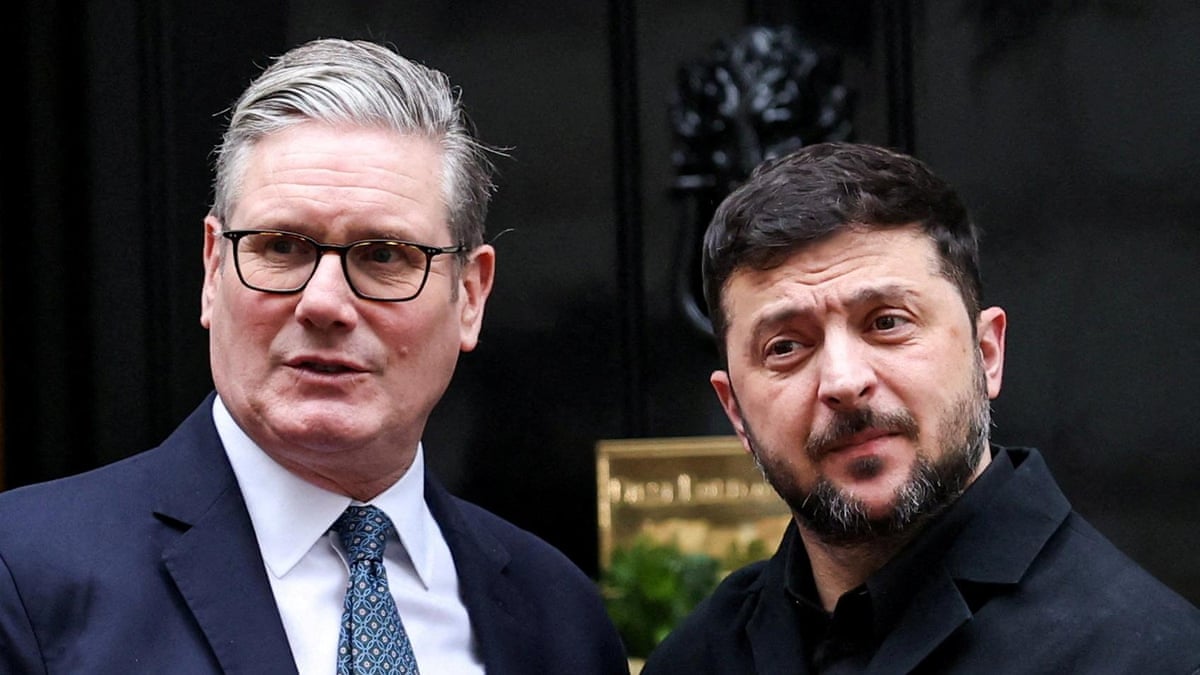
Ukrainian President Volodymyr Zelenskyy, following brief remarks by UK’s Keir Starmer, expressed gratitude for international support. He highlighted ongoing Russian attacks on civilians and critical infrastructure amid a harsh winter and requested assistance to repair the energy grid.
Zelenskyy thanked allies for military aid delivered through the Prioritized Ukraine Requirements List (PURL), noting that half of the latest air defense package has arrived, which he described as very important.
Addressing the contentious issues of further EU sanctions and the €90 billion EU loan, currently blocked by Hungary, Zelenskyy stated he would provide updates on negotiations privately but emphasized the need for peace talks.

He announced plans for further trilateral talks with the US and Russia within the next week to ten days, stating:
"We need peace, but we have to prepare to any other kind of challenges from Russian side."
Coalition of the Willing's meeting on fourth anniversary gets under way
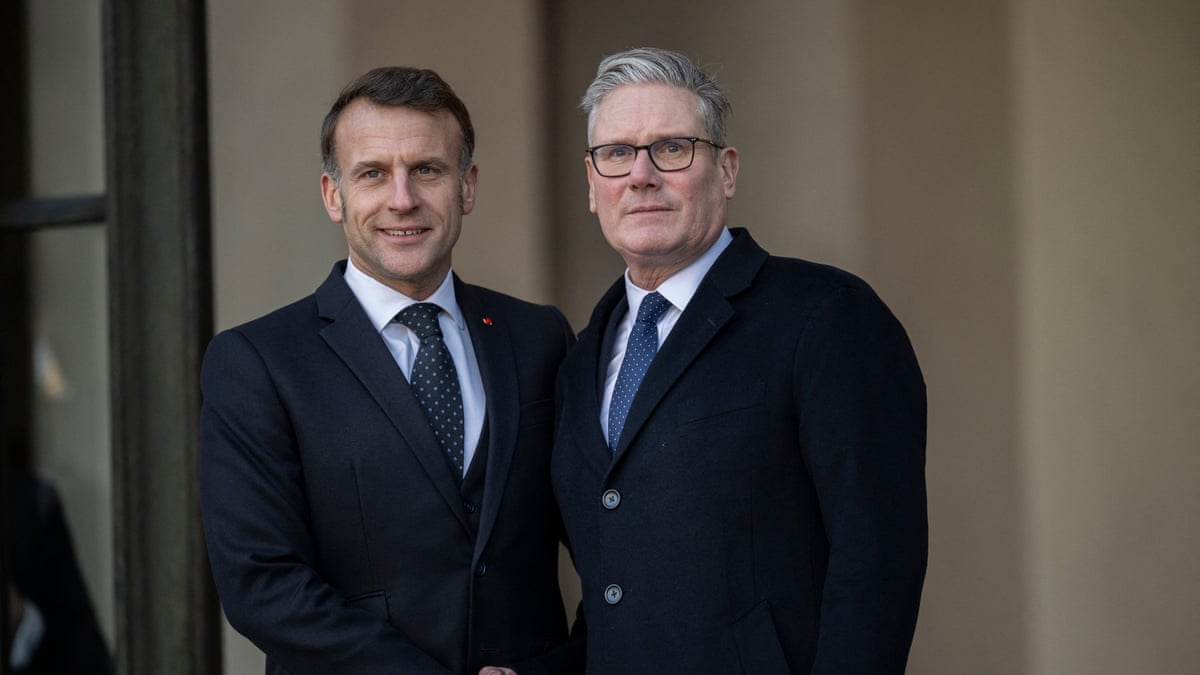
The Coalition of the Willing convened, co-chaired by UK’s Keir Starmer and France’s Emmanuel Macron, who joined remotely from London and Paris. Ukrainian President Zelenskyy and numerous European leaders gathered in Kyiv for the meeting.
Key statements and developments from the meeting were provided live.
Over 200,000 Russian soldiers killed in Ukraine identified
Russian independent journalists have identified over 200,000 Russian soldiers killed in Ukraine since the invasion began. Using official reports, obituaries, tombstone images, and government leaks, outlets including Meduza and the Bellingcat investigative group have compiled a comprehensive database tracking confirmed military deaths across more than 27,000 locations throughout Russia.
Western intelligence agencies estimate the actual death toll may be as high as 325,000, acknowledging that many casualties cannot be independently verified.
Comparatively, the Washington-based Center for Strategic and International Studies (CSIS) reported that Russian battlefield fatalities in Ukraine are more than 17 times greater than Soviet losses in Afghanistan during the 1980s, 11 times higher than in the Chechen wars, and more than five times greater than all Russian and Soviet conflicts combined since World War II.
On the eve of the anniversary, Russian President Vladimir Putin met with widows of soldiers killed in the war in a carefully staged event intended to demonstrate public support for the invasion.
Russia will press ahead with its war aims in Ukraine, Kremlin says
The Kremlin reaffirmed its commitment to continuing the military operation in Ukraine, describing the conflict as part of a broad confrontation with the West. Kremlin spokesperson Dmitry Peskov stated that Western efforts to "crush" Russia have instead fostered national unity.
"The past four years have been extremely significant in Russia’s life and will remain in people’s memory forever,"Peskov said, adding that the period has led to a "remarkable consolidation" of Russian society.
He acknowledged that the military objectives have not yet been fully achieved, which justifies the continuation of the operation.
Peskov also reiterated unsubstantiated claims by Russia’s foreign intelligence service (SVR) accusing Britain and France of preparing to arm Kyiv with a nuclear device, calling it a "flagrant violation of international law," though no evidence was provided.
Ask your questions about Ukraine war for our live Q&A at 2pm UK, 3pm CET
Today’s coverage includes key events marking the fourth anniversary of Russia’s full-scale invasion of Ukraine. At 2pm UK (3pm CET), correspondent Shaun Walker will join a live Q&A session to answer questions about the conflict. Readers are invited to submit questions in the comments below.
Putin is standing in way of peace, Starmer says, as he says Ukraine is 'frontline of our freedom' and marks its resilience
UK Prime Minister Keir Starmer addressed the cabinet on the fourth anniversary of the war, praising Ukraine’s resilience and emphasizing the importance of continued support. He stated:
"We must defeat the falsehood that Russia is winning,"noting that Russia has only taken 0.8% of Ukrainian territory in the past year at a great cost of approximately half a million losses.
Starmer stressed that a just and lasting peace is desired by all but asserted that
"it is Putin who is standing in the way."
He called for doubling support for Ukraine through capabilities, resources, and sanctions, announcing the UK’s latest round of targeted measures.
Starmer highlighted the conflict’s direct impact on the UK, including economic effects on families, and underscored Ukraine’s role as the "frontline of our freedom."
Ukraine needs 'ammunition today and every day' in its fight against 'Russian terror,' Nato's Rutte says
NATO Secretary General Mark Rutte emphasized the urgent need for continued military, financial, and humanitarian aid to Ukraine, stating that ammunition is required "today and every day until the bloodshop stops."
Speaking in Brussels, Rutte affirmed Ukraine’s success in resisting Russian aggression and declared that Russia has failed to meet its battlefield ambitions.
He stressed that Ukraine’s security is integral to European security and that true peace in Europe depends on peace in Ukraine. Rutte called on Russian President Vladimir Putin to demonstrate sincerity regarding peace efforts.
Invoking Winston Churchill’s World War II speech, Rutte declared that "the flame of freedom is alive in Ukraine, and that flame continues to burn and glow."
Russia shows contempt for Europe, Zelenskyy warns
President Zelenskyy delivered a strong message urging Europe to act decisively against Russian interests. He stated:
"In many ways, we can see how Russia shows contempt for Europe, but Russians should learn that Europe is not just a land for the villas of Russian oligarchs.
It’s not a museum for the lovers of Russian officials to admire beauty, another place of leisure for Russian killers.
Russians must learn that Europe is a union of independent nations and millions of people who do not tolerate humiliation and will not accept violence."
He called on Europeans to "continue to defend the European way of life," receiving a prolonged standing ovation in response.


