

British and Ukrainian Engineers Collaborate in Secret Repair Facility
In a confidential and undisclosed location in western Ukraine, British and Ukrainian engineers work closely to repair damaged military equipment. They inspect the undersides of artillery systems and dismantle British-donated howitzers for maintenance.
Until recently, the existence of this facility, along with three other similar sites within Ukraine, was kept confidential. Official communications used neutral language to avoid drawing attention due to the sensitive nature of military-related activities in the country.
was granted exclusive access to this location earlier this week during a visit by UK Defence Minister Luke Pollard. This marked the first time media representatives have been allowed inside. Pollard described the facility as an example of the UK undertaking efforts “no other nation has been willing or able to do.”
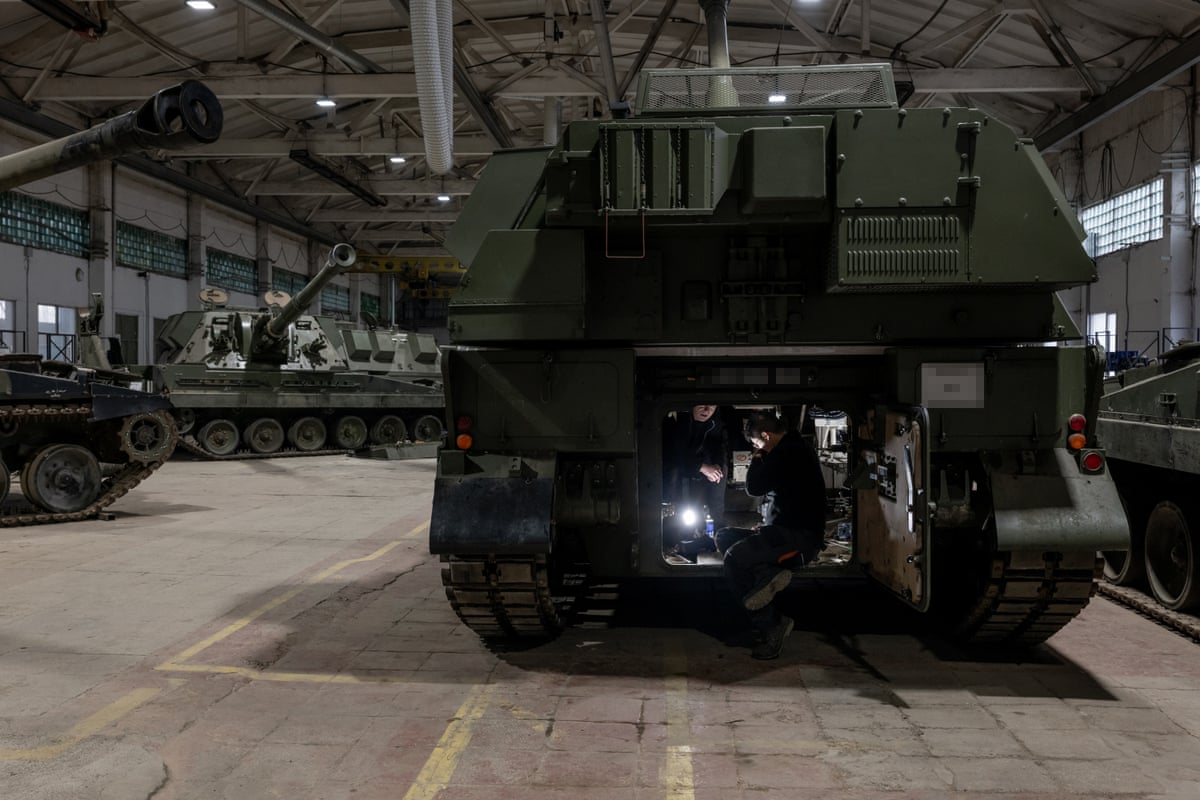
UK Defence Ministry Contractors Provide On-Site Support
While no British military personnel are present at the site, British engineers contracted by the Ministry of Defence operate within Ukraine. Other countries have often preferred to conduct repairs outside Ukraine for safety reasons, resulting in longer transport times and delays in returning equipment to the front lines.
The facility has repair bays capable of accommodating up to 30 vehicles simultaneously and can service various weapons systems, including British-made AS-90 self-propelled howitzers. Originally, the AS-90 was scheduled for withdrawal from British Army service in the 2030s, but the entire stock was donated to Ukraine over recent years.
Pollard commented on the sensitive nature of the work, stating,
“There are some things that in military times we don’t talk about, but when it comes to industrial partnerships, and the legitimate question of ‘You’ve donated all those AS-90s, what’s happened to them?’… we want to start telling the story.”
He acknowledged the risks involved in operating the facility within Ukraine but emphasized it was a “risk worth taking and managing” to support Kyiv effectively.
“Any operation or support provided inside Ukraine is clearly going to have a greater risk than if it’s provided in Poland or anywhere within the NATO Article 5 protected area, but it’s precisely this type of support that Ukraine needs to stay in the fight,” Pollard said.
Collaborative Efforts Between British Companies and Ukrainian Technicians
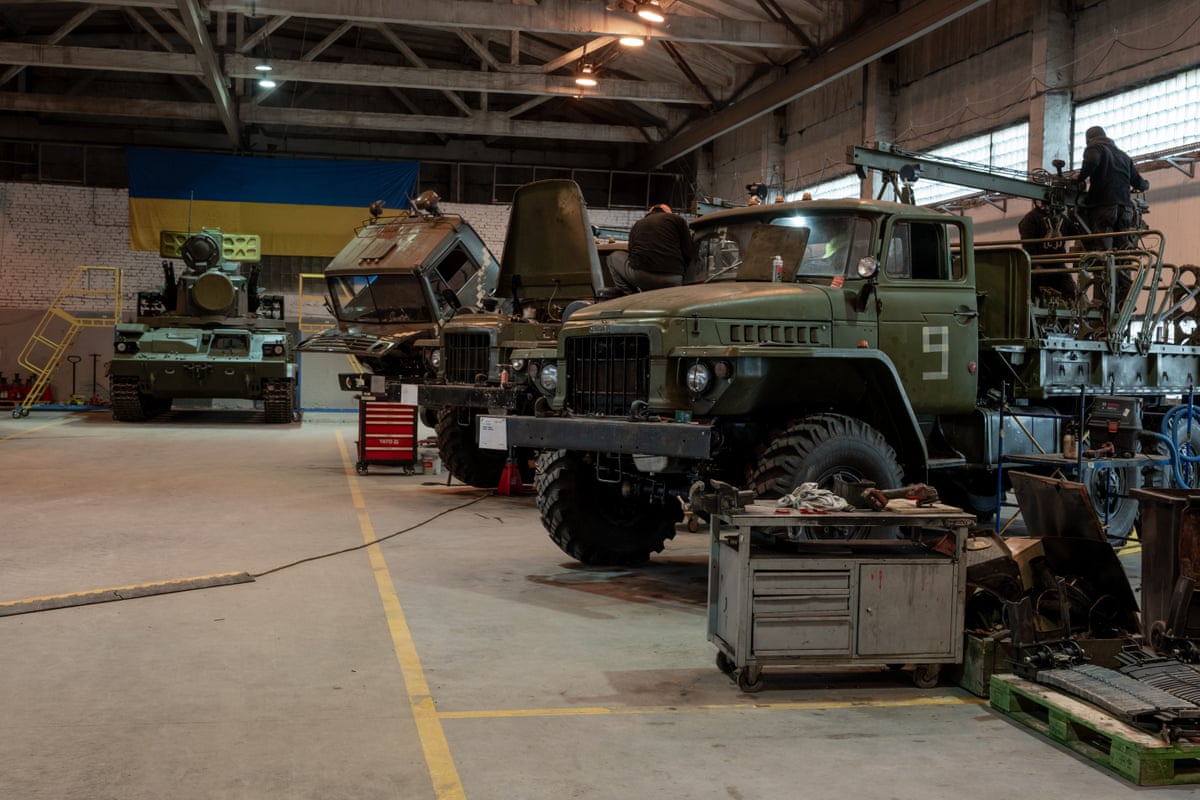
Engineers and technicians from British companies BAE Systems and AMS work alongside Ukrainian counterparts to repair military equipment. Many Ukrainian employees previously worked for domestic military enterprises that have been damaged or destroyed and are now being trained to handle British and other foreign-donated hardware.

Much of the Ukrainian armed forces’ equipment is outdated, necessitating the establishment of new supply chains for spare parts. BAE Systems, involved in the original manufacture of the AS-90, has access to technical drawings, facilitating repairs. For other systems, more innovative methods have been employed.
For example, engineers studying the Soviet-era Tunguska anti-aircraft platform and Soviet T-72 tanks visited the Bovington Tank Museum in Dorset to examine displayed vehicles and determine how to manufacture spare parts in the UK.
Swedish Archer artillery systems are also repaired at the facility under a cooperation agreement whereby the Swedish government finances the work, and British and Ukrainian engineers perform the repairs. There are plans to expand the project to additional sites and involve more countries.
“We want one structured, organised approach, where any nation giving equipment has a structure they can plug into,” Pollard stated.
Implications for Post-Conflict Support and Security Guarantees
Facilities like this provide insight into how Western support for Ukraine might continue following a potential peace agreement. A so-called “coalition of the willing” has emerged, comprising nations prepared to support Ukraine to prevent further Russian aggression, especially if diplomatic efforts led by former US President Donald Trump succeed.
Ukrainian President Volodymyr Zelenskyy has expressed interest in including provisions for Western troops to be stationed in Ukraine after the war. In September, Finnish President Alexander Stubb indicated that such a coalition would offer “real security guarantees” compelling Western nations to respond if Russia violated a ceasefire.
However, recent years have demonstrated that no Western country is prepared to engage in combat in Ukraine, and this stance is unlikely to change.
“We know that our only real security guarantee is going to be a strong Ukrainian army,” said a Ukrainian security source.
Last month, UK Defence Secretary John Healey expressed hope for increased UK troop presence after a peace deal, though these forces are not expected to engage Russian troops directly.
“UK forces are not the deterrent, a stronger Ukraine is the deterrent,” Pollard explained, highlighting the focus on restoring Ukrainian hardware and training troops.
Currently, Ukrainian units use their equipment “to the point of destruction,” Pollard noted, and after a ceasefire, the priority will be to rapidly restore frontline equipment, which is difficult while the hardware remains in active use.
“For the UK, one of the key roles in the coalition of the willing is to regenerate Ukrainian armed forces, and to do that we need to have the infrastructure ready to go on day one of the peace,” Pollard said.


