

EU anticipates positive decisions on €90bn Ukraine loan
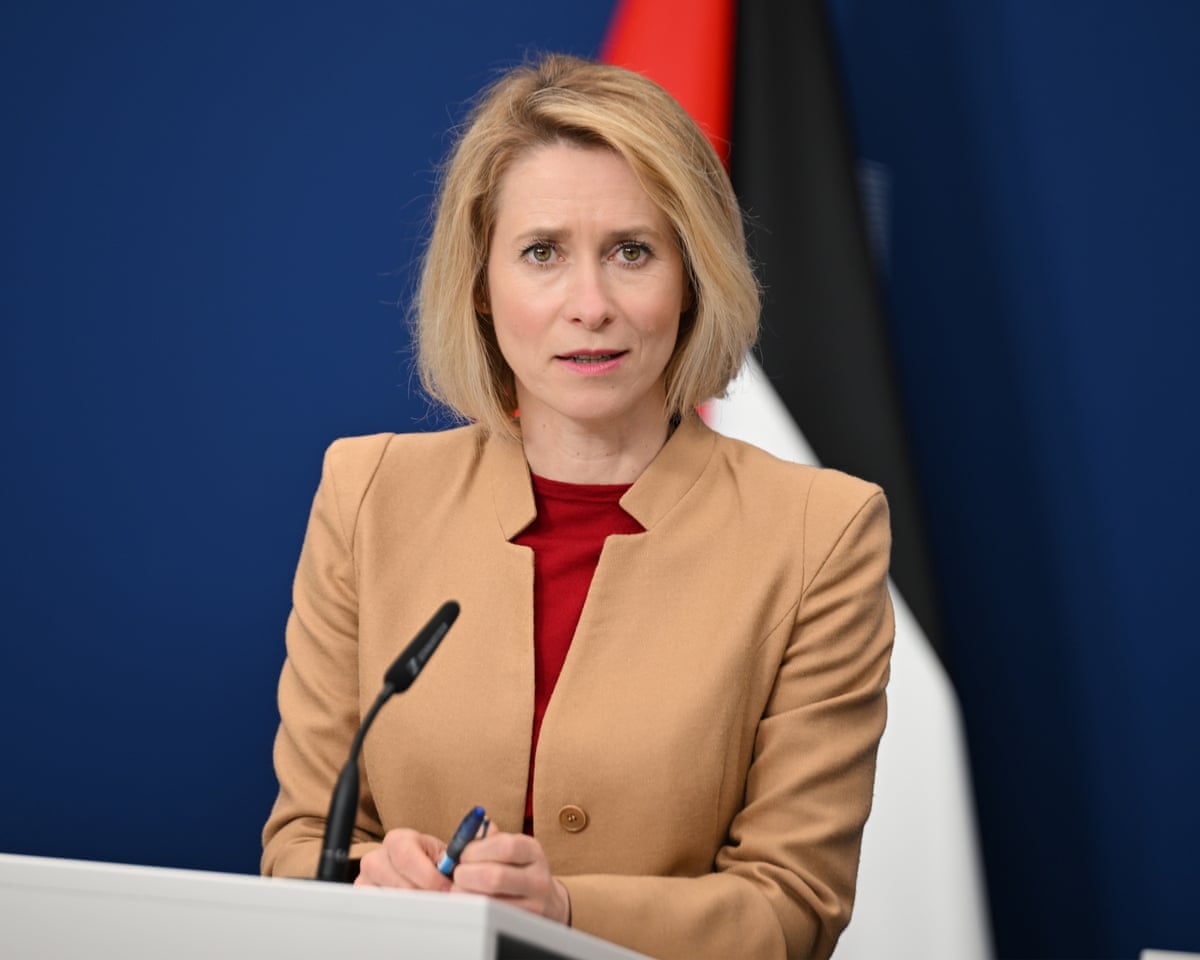
EU foreign policy chief Kaja Kallas has confirmed expectations of "some positive decisions tomorrow" regarding the €90bn loan for Ukraine.
"Ukraine really needs this loan and it is also a sign that Russia cannot outlast Ukraine. This is extremely important at this moment."
Ministers relieved after Orbán's defeat, hopeful for progress on Ukraine loan and Russia sanctions
In Luxembourg, many ministers expressed relief following Viktor Orbán's defeat by Péter Magyar in Hungary just over a week ago. The anticipated change in government is seen as a key factor in advancing the €90bn loan for Ukraine.
Sweden’s Maria Malmer Stenergard stated she was "quite optimistic that after the Hungarian obstacle is gone, so to speak, we will be able to deliver on the promise we have made to the Ukrainians … and move forward with the 20th sanctions package" against Russia.
Poland’s junior minister Ignacy Niemczycki commented, "after the expected change of government in Hungary, many things to do with Ukraine will get unblocked." He added, "I am hopeful that we will be able to swiftly progress the loan for Ukraine, and the 20th package of sanctions, and I am expecting decisions already in the coming days."
EU court rules Hungary's LGBTQ+ content ban violates EU law, posing challenge for new government
The EU’s top court has ruled that Hungary’s law banning LGBTQ+ content in schools and primetime television breaches fundamental human rights and freedom of expression protected under EU law.
This ruling marks the first adverse finding based on the EU’s foundational values, with the court stating the Orbán-era reform infringed "several fundamental rights" safeguarded by EU legislation.
"The law is contrary to the very identity of the Union as a common legal order in a society in which pluralism prevails," the court declared.
The court urged Hungary to comply "without delay," presenting a political test for Péter Magyar’s incoming government as it seeks to improve relations with the EU.
Non-compliance could prompt the European Commission to initiate further legal action, potentially resulting in financial penalties similar to those imposed over Hungary’s asylum laws.
Irish foreign minister urges EU progress on Ukraine loan and Israel issues
Arriving at the Luxembourg meeting, Ireland’s foreign minister Helen McEntee emphasized the importance of advancing the Ukraine loan and the 20th sanctions package against Russia.
"It is really important as the EU that we make progress" on the loan and sanctions "to exert as much pressure as possible on Russia."
She noted discussions with Ukrainian leaders highlighted that "we are at that breaking point where that loan is absolutely essential."
McEntee welcomed the new Hungarian government’s stance, expressing hope for the imminent release of funds.
Regarding the Middle East, she referenced a joint initiative by Spain, Slovenia, and Ireland requesting a debate on the EU association agreement with Israel to uphold fundamental values.
"Israel has, since our last meeting, enacted a new law which essentially introduces the death penalty, but in particular penalises and specifically targets Palestinian people. It’s completely unacceptable, and so we have asked for a suspension of the Israeli agreement, and if not, then a suspension on the trade elements of the Israeli agreement.
We must be seeking to have this not just as a discussion here today at the council but that there would be some clear actions at the next council meeting."
She also noted the political shift following Hungary’s election, stating, "it is very clear that there has been a shift" in political signals from the new government.
Ukraine loan release nears as Druzhba pipeline reopening expected
Optimism is growing among EU leaders that the €90bn loan, agreed in December but delayed by Hungary and Slovakia, could soon be released to Ukraine.
This development depends on the Druzhba pipeline resuming operations within 24 hours after months of disputes between Ukraine and the two countries.

While no immediate decisions are expected, the call for a focused debate reflects mounting concern and pressure within the EU to act decisively.
Spain, Slovenia, and Ireland seek discussion on suspending EU-Israel association treaty
Spain’s foreign minister José Manuel Albares confirmed that Spain, Slovenia, and Ireland have requested a discussion on suspending the EU’s association treaty with Israel at the foreign ministers’ meeting.
He emphasized the importance of the EU maintaining credibility by upholding consistent principles across all issues.
"If the EU is not capable to say today to Israel that it is expected to respect human rights and international law, and not make war a foreign policy tool, we are going to lose that credibility."
Albares stressed the need for the EU to communicate clearly to Israel that its current path is unacceptable and that ongoing conflict impedes normal relations.
He suggested that if full suspension of the treaty is unacceptable to some members, at minimum the trade elements should be suspended.
EU foreign ministers convene to discuss Ukraine, Russia, and Middle East issues
EU foreign ministers gathered in Luxembourg to address updates on Ukraine, Russia, and the Middle East.
Attention centers on the Druzhba pipeline, which transports Russian oil to Hungary and Slovakia and is nearing operational status after prolonged disputes with Ukraine.
Outgoing Hungarian Prime Minister Viktor Orbán indicated he would lift Hungary’s veto on the €90bn Ukraine loan once oil flow resumes, with Slovakia reportedly sharing this position.
The issue is slated for discussion by EU ambassadors on Wednesday but may arise sooner.
Ministers will also focus on Middle East developments, with Lebanese Prime Minister Nawaf Salam providing a regional security update.
Spain, Ireland, and Slovenia are advocating for increased scrutiny of Israel’s actions, including potential suspension of the EU association agreement and sanctions on violent Israeli settlers.
Substantial progress is unlikely during this meeting due to Hungary’s current government, a close ally of Israel, opposing such measures. However, ministers are considering future possibilities following Hungary’s government change.
EU foreign policy chief Kaja Kallas hinted at a possible new approach from the incoming Hungarian government, stating:
"Now this country [has recently] had the elections and will [soon] have a new government. I will not speak for the new government, but definitely I think we can look into all these policies and see whether they have a new approach."
Coverage of these developments will continue as the situation evolves.
It is Tuesday, 21 April 2026. This is Jakub Krupa reporting for Europe Live.


