
Artemis II Leaves Earth's Orbit
The four astronauts aboard the Artemis II mission have departed Earth's orbit following a critical engine firing aboard their Orion spacecraft, propelling them on a trajectory toward the Moon.
The spacecraft's main engine executed a five minute and 55 second burn, known as the translunar injection (TLI), which NASA's Dr. Lori Glaze described as having gone "flawlessly."
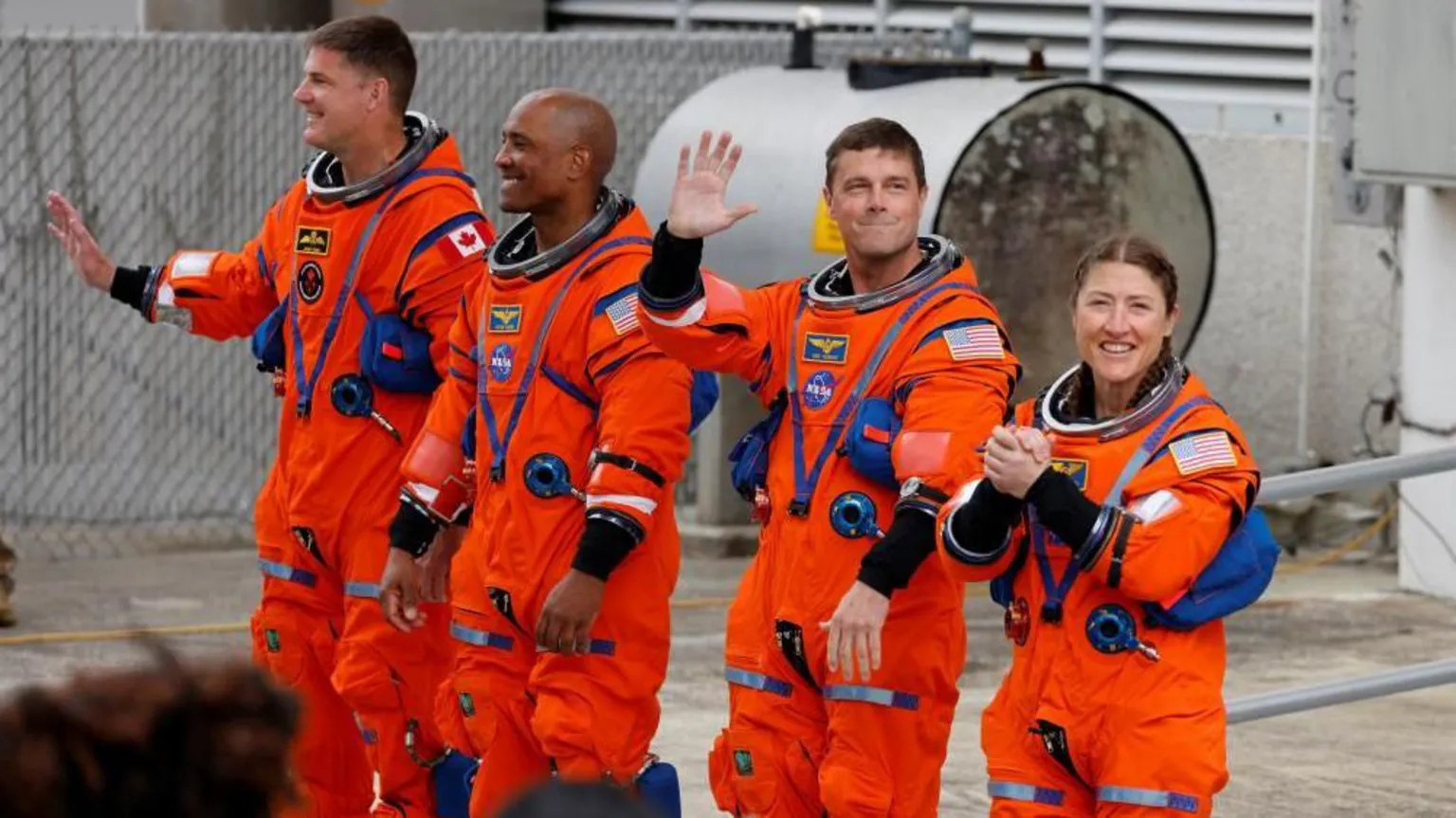
From inside the Orion capsule, Canadian astronaut Jeremy Hansen reported the crew was "feeling pretty good up here on our way to the Moon."
Mission Trajectory and Historical Context
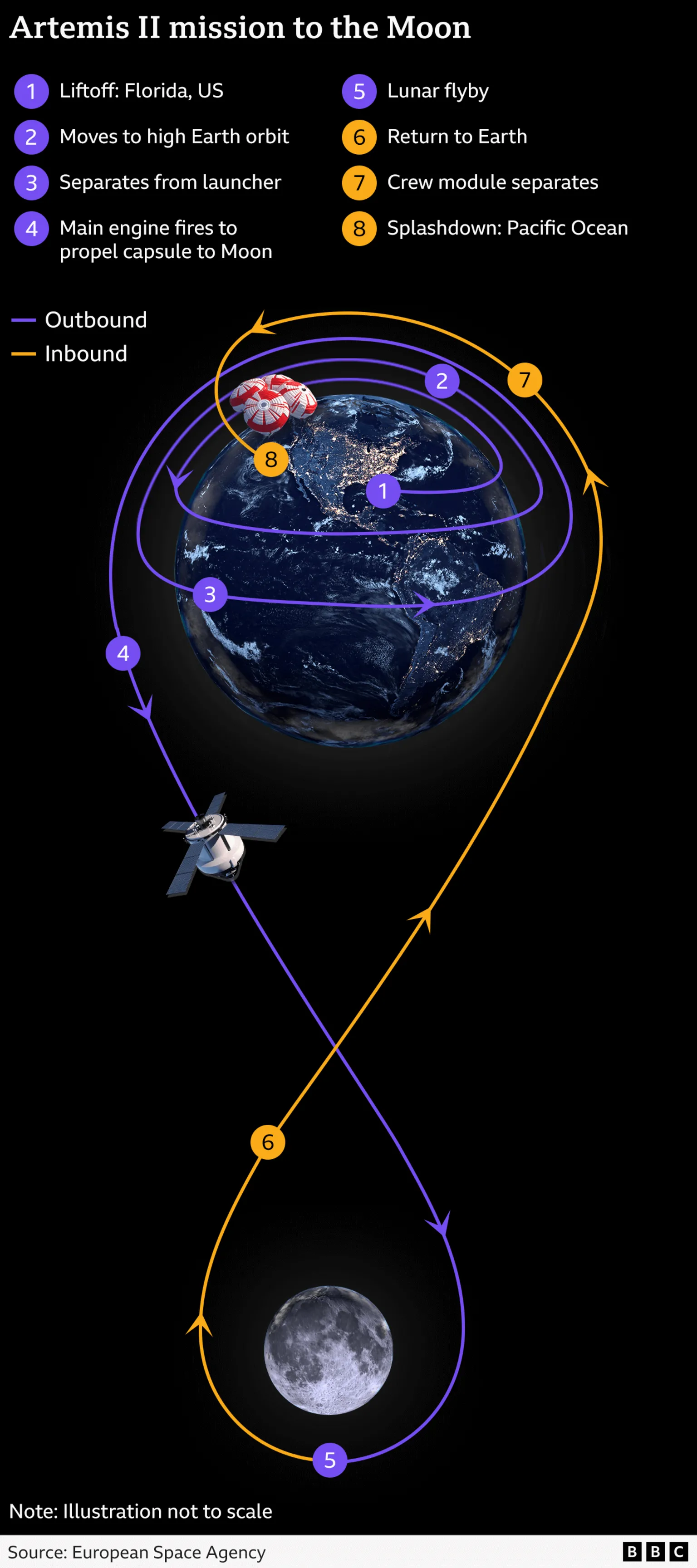
Artemis II is now following a looping path that will take the crew around the far side of the Moon before returning to Earth. This mission marks the first time since 1972 that humans have traveled beyond Earth's orbit.
During the live broadcast from Orion, viewers observed Earth gradually diminishing in size as the spacecraft ventured deeper into space.
Hansen, the first non-American astronaut to travel to the Moon, communicated with NASA's mission control expressing the crew's profound connection to those who have dedicated themselves to the mission's success.
"Humanity has once again shown what we are capable of," he said. "It's your hopes for the future that carry us now on this journey around the Moon."
Preparations and Engine Burn
After spending approximately one day in a highly elliptical Earth orbit, the Orion spacecraft underwent comprehensive checks of its engines, navigation, and life-support systems while orbiting the planet.
Following final approval, the spacecraft's service module ignited its main engine behind the crew seats, delivering a sustained thrust that increased Orion's velocity by thousands of kilometers per hour.
This translunar injection maneuver set the spacecraft on a course expected to take the astronauts farther from Earth than any humans before—over 4,700 miles (7,600 kilometers) beyond the Moon—before lunar gravity redirects them back.
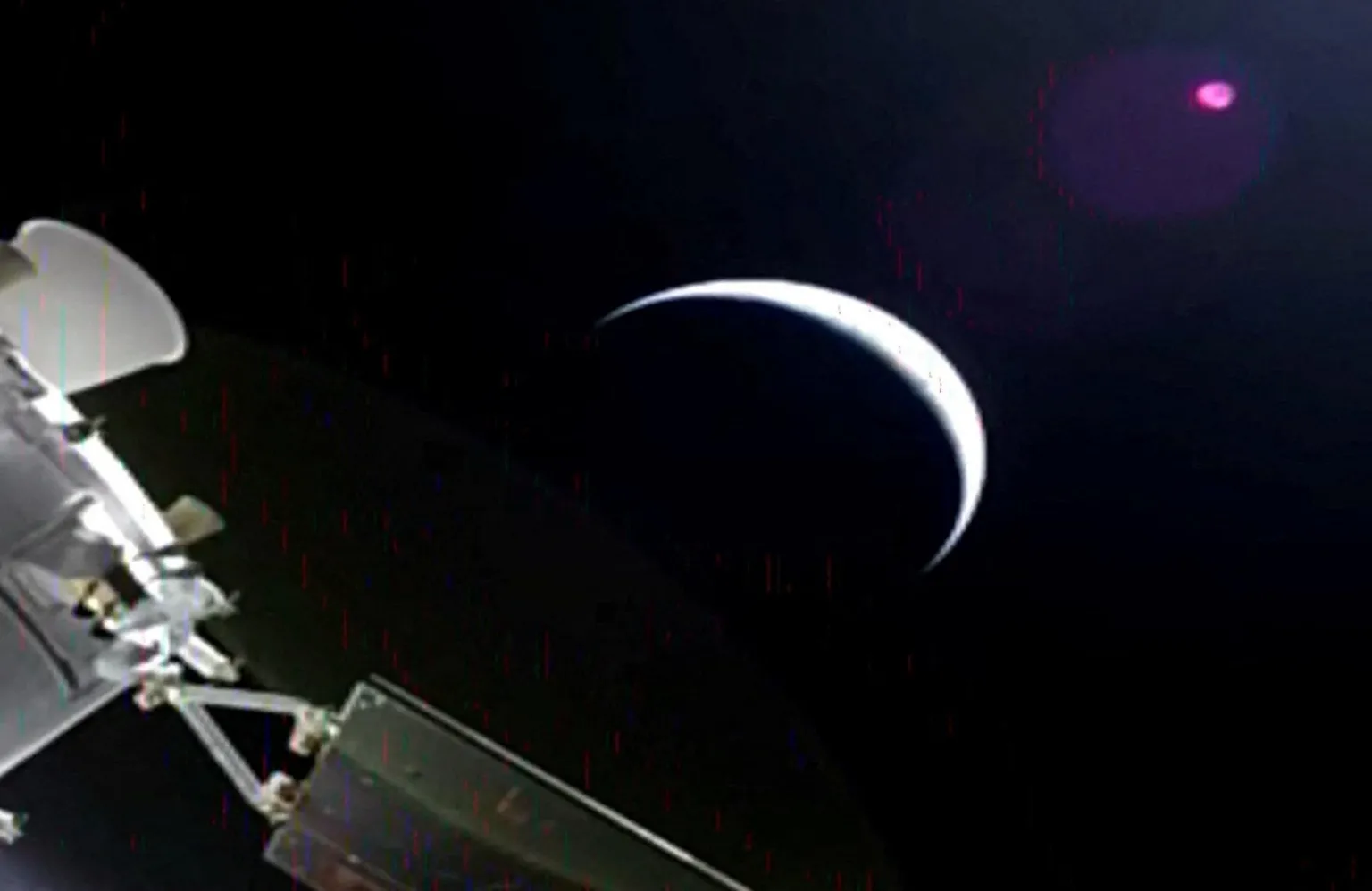
NASA anticipates this distance could surpass the record held by Apollo 13 in 1970, contingent upon precise timing and trajectory details.
Safety Measures and Mission Control
The TLI burn does not represent a point of no return for Orion. Even after this significant maneuver, mission controllers retain the capability to perform a rapid turnaround, akin to a "handbrake turn" in space, to return the crew safely to Earth if a serious issue arises.
In the event of an emergency, executing this U-turn is the quickest route home within the first 36 hours post-TLI. Beyond that window, it may be equally fast or simpler to continue around the Moon and then return to Earth, according to Orion program manager Howard Hu.
"We have run hundreds of thousands of [simulations] to ensure that we are able to get the crew home safely," Hu stated prior to launch.
Following the successful engine burn, Hu expressed optimism at a briefing, saying,
"What a great couple of days!"
Views and Upcoming Events
As Orion advances into deep space, the astronauts will witness increasingly inspiring views: Earth shrinking into a small blue and white marble behind them, while the Moon enlarges from a bright disc into a heavily cratered world filling their windows.
Approximately on the sixth day of the mission, as Orion passes beyond the Moon, the crew will observe a total solar eclipse. During this event, the Moon will completely obscure the Sun, revealing its normally hidden shimmering halo, with Earth visible to one side.
Significance of the Translunar Injection
Space missions often involve complex terminology, and TLI has become a familiar term for those following Artemis II. It represents the critical propulsion maneuver that moves humanity one step closer to returning astronauts to the lunar surface.


