

Fears of Renewed Conflict in Tigray Prompt Mass Exodus
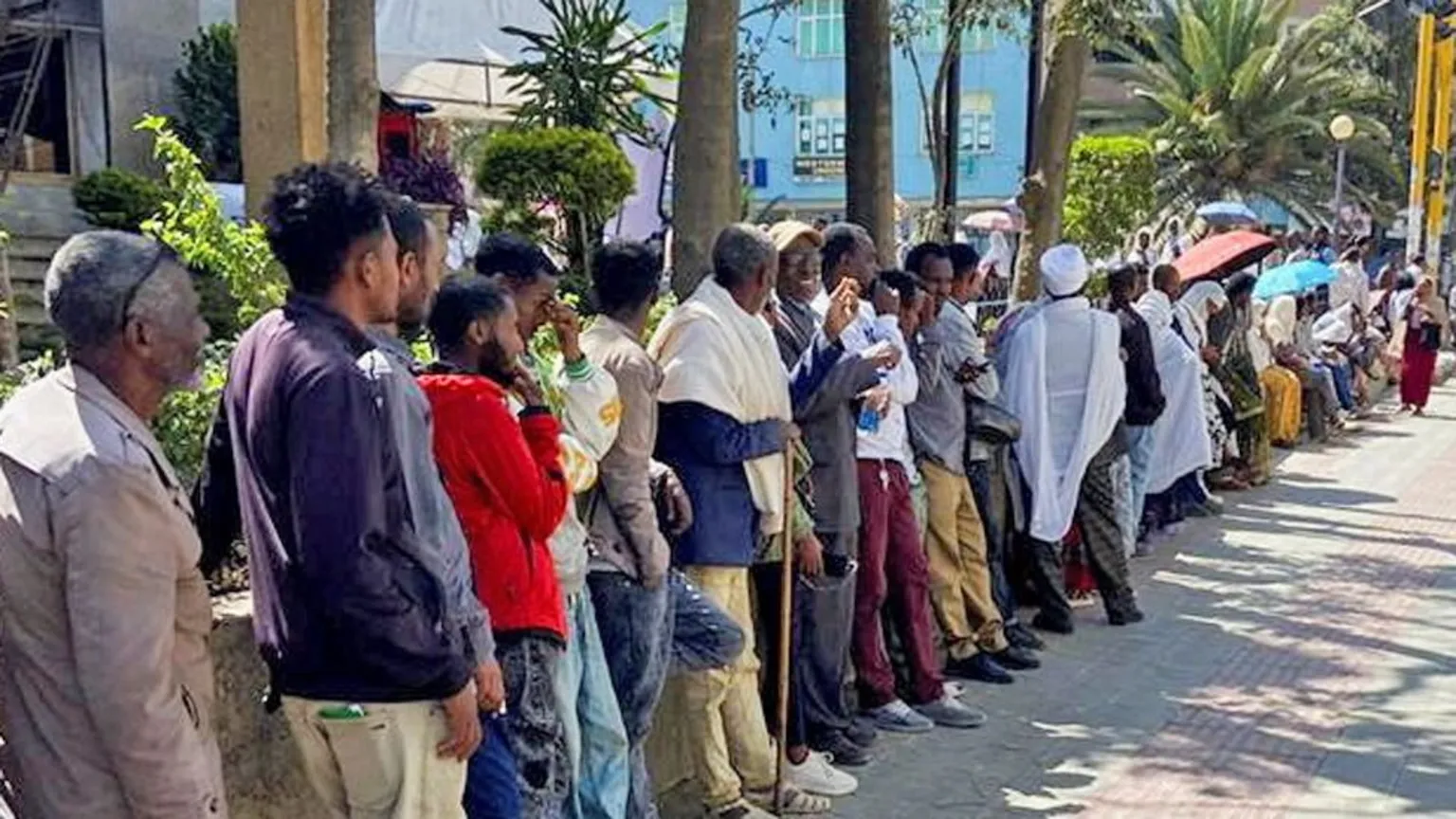
Concerns about a possible return to war in northern Ethiopia are causing many residents to flee the Tigray region, more than three years after the civil war there officially ended.
"Those who can afford it fly, those who can't use buses,"a resident of Mekelle, the region's main city, told the BBC, describing how large numbers of young people are moving toward the capital, Addis Ababa.
Prices of goods are soaring as people stockpile essentials, and a bank run has led to a daily cash withdrawal limit of approximately 2,000 birr ($13; £10) per person.
Cash shortages reminiscent of the two-year conflict that concluded in November 2022 persist, with those seeking to make large transfers often paying additional fees for electronic transactions.
What Has Happened to the Peace Deal?
The civil war between the Ethiopian federal government and the Tigray People's Liberation Front (TPLF) resulted in an estimated 600,000 deaths, according to an African Union (AU) envoy, and pushed the region to the brink of famine.
The peace agreement brokered by the AU in November 2022 was met with widespread relief and celebration.
Signed in Pretoria, South Africa, the accord led to a cessation of hostilities, restoration of basic services, and a gradual return to normal life in Tigray.
However, concerns arose immediately due to the absence of two key warring parties at the signing ceremony:
The Ethiopian government has since experienced falling outs with its former ally Eritrea and armed militias from the Amhara region.
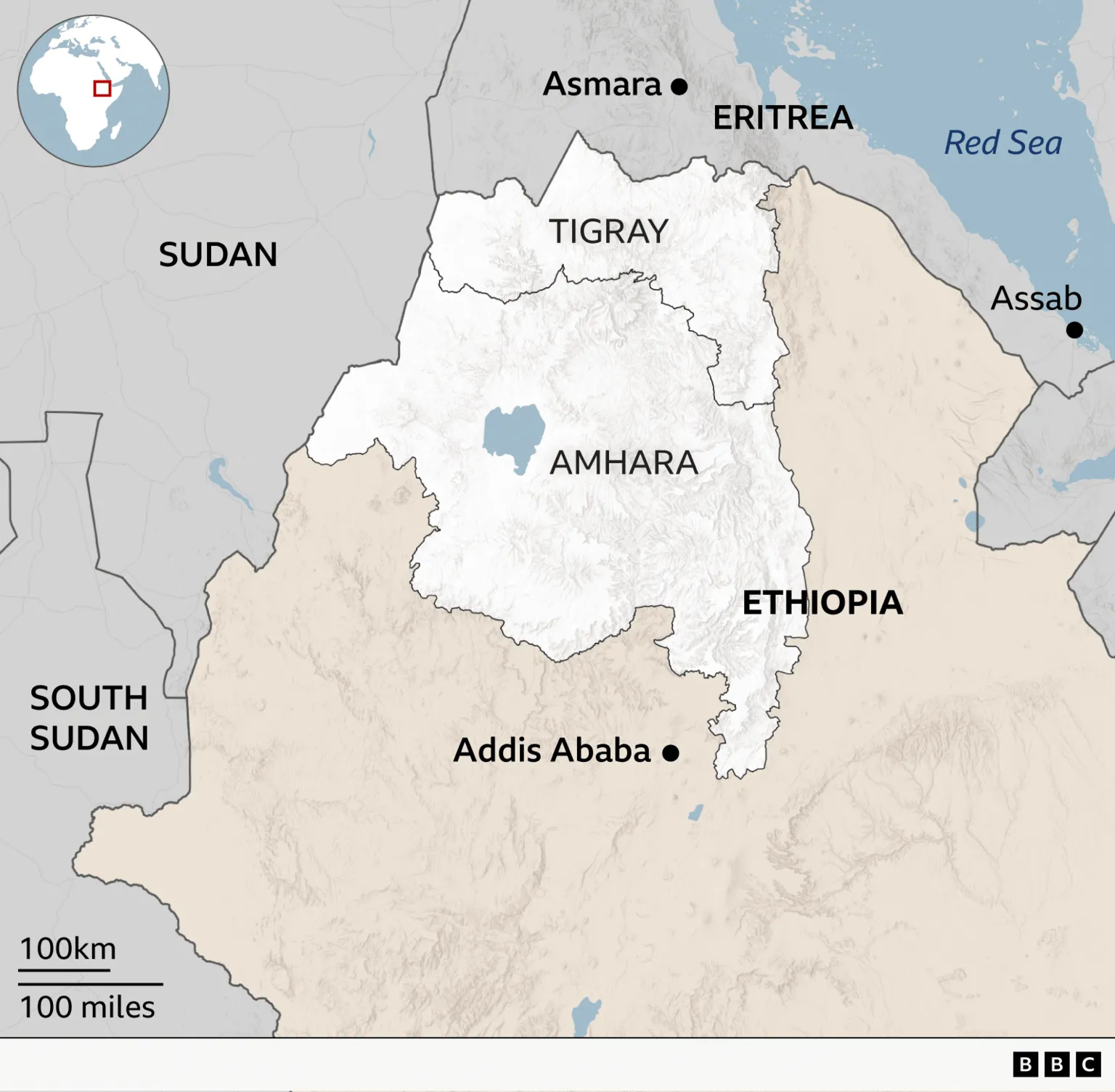
As Ethiopia approaches elections in June, tensions have escalated between the government and the TPLF over unresolved disputes regarding territorial control in Tigray, particularly areas occupied by Amhara forces.
These developments have fostered widespread distrust, causing the Pretoria accord to unravel rapidly.
How Have Tensions Escalated?
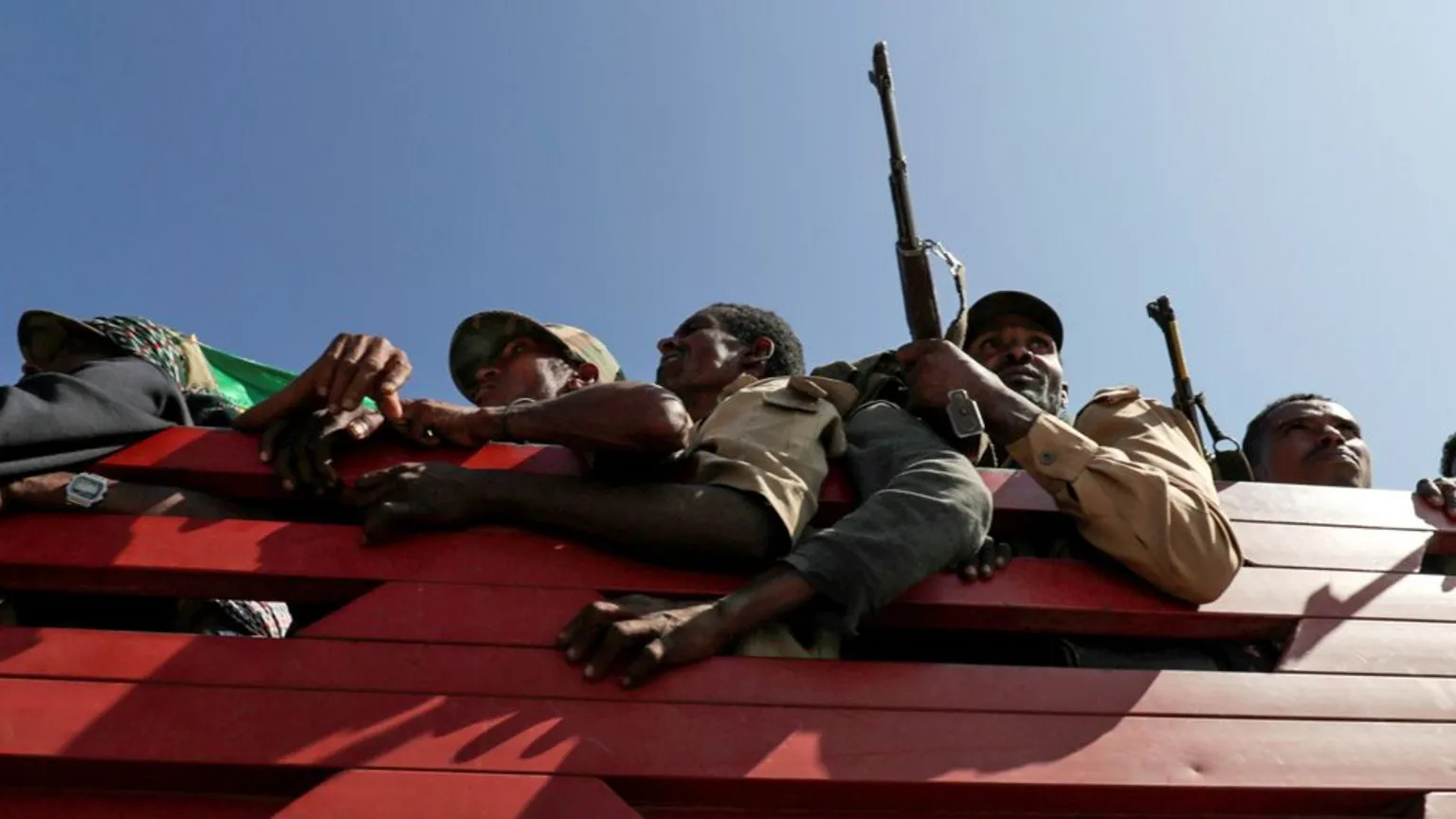
Reports indicate troop mobilizations in northern Ethiopia, with the United Nations describing the situation as "highly volatile."
In late January, brief clashes occurred between federal troops and Tigrayan fighters advocating for the return of territories still under Amhara control.
Drone strikes targeted the region, and flights to cities in Tigray were suspended for nearly a week.
Ethiopia has accused Eritrea of interfering by supporting Tigrayan forces, a claim Eritrea denies. Addis Ababa views the growing alliance between the TPLF and Eritrea as a significant threat.
In October, Ethiopia's foreign minister sent a letter to the UN Secretary-General alleging that Eritrea was forming an alliance with "hardliners within the TPLF" to "wage war" against Ethiopia.
Last week, TPLF leader Debretsion Gebremichael warned that war was "looming" over Tigray and stated that "the people… will be under the obligation to resist aggression and defend themselves to maintain their existence."
Why Is the TPLF Dissatisfied?
The TPLF seeks to regain territories lost during the war, including western Tigray.
Approximately one million people fled western Tigray during the conflict and currently live in poor conditions in makeshift camps across Tigray, unable to return home.
A recent decision by the election board that disputed areas will vote independently in June, rather than under Amhara or Tigray jurisdiction, has further angered many Tigrayans.
The TPLF, designated a terrorist group during the war, also demands reinstatement of its legal status as a political party.
However, disagreements have stalled this process, and the electoral board has revoked the TPLF's license, barring it from contesting the upcoming elections.
The TPLF has also fractured internally, with some members forming a new party, complicating an already tense political environment.
The party dominated Ethiopia's political landscape for two decades until Prime Minister Abiy Ahmed assumed office in 2018 and established a new party, which the TPLF leadership declined to join.
Supporters of Abiy regard the remaining TPLF members as "hardliners," blaming them for failing to implement the peace deal effectively and for aligning with Eritrea, resulting in dramatically altered regional allegiances compared to 2020.

Why Has Ethiopia's Relationship with Eritrea Deteriorated?
Ethiopia and Eritrea have a historically volatile relationship, alternating between friendship and hostility.
Eritrea officially seceded from Ethiopia in 1993 but later engaged in a deadly border conflict.
Prime Minister Abiy Ahmed was awarded the Nobel Peace Prize in 2019 for ending the two-decade military stalemate with Eritrea.
However, relations that improved during the Tigray war have since deteriorated into a war of words over control of the Red Sea.
As the world's most populous landlocked country, Ethiopia lost its Red Sea ports following Eritrea's independence, which took with it a 1,350km (840-mile) coastline.
For Abiy, this situation represents an existential crisis, prompting him to pursue control over Eritrea's southern port of Assab, located approximately 60km from the border, even hinting at the possibility of seizing it by force.
"The Red Sea and Ethiopia cannot remain separated forever,"Abiy stated during a recent parliamentary address.
What Is the Role of the Amhara Region?
A low-level rebellion has been ongoing in Amhara since 2023, fueled by dissatisfaction that the region's contributions during the Tigray war have not been properly recognized.
Rebels demand formal recognition of western Tigray as part of Amhara.
Ethiopia has also accused Eritrea of involvement in this unrest, allegations Eritrea denies.
In January, federal security forces in Amhara reported seizing 50,000 rounds of ammunition allegedly sent by Eritrea to anti-government militias.
Potential Consequences of Renewed War
The scars and trauma from the previous conflict remain evident in Tigray. Much of the damaged infrastructure has yet to be rebuilt, and the region's economy has not fully recovered.
Chronic unemployment drives many young people to embark on perilous migration routes in search of better opportunities in Europe and the Middle East.
A renewed full-scale war between the Ethiopian army and the TPLF, or between Ethiopia and Eritrea, would likely make Tigray the primary battleground, devastating the region once again.
Such a conflict could also destabilize the broader Horn of Africa.
Neighboring Sudan is already suffering from severe violence, resulting in the world's worst humanitarian crisis.
"Any war between Ethiopia and Eritrea involving Tigray and other Ethiopian domestic actors is very likely to connect to Sudan. The two conflicts will be merged,"US-based international relations expert Michael Woldemariam told the BBC.

Efforts to Prevent Another Conflict
Diplomatic pressure, particularly from the United States, was instrumental in achieving the 2022 peace deal.
Gulf countries have become more engaged in the region, and their influence could help prevent another catastrophic conflict.
The United Arab Emirates (UAE) reportedly maintains close relations with Addis Ababa, while rival Saudi Arabia is thought to be closer to Asmara.
However, Michael Woldemariam remains pessimistic.
He notes that currently, "the AU doesn't have the requisite leverage," US attention is focused elsewhere, and the Gulf states are divided.
Recent meetings by Saudi officials with Ethiopian and Eritrean authorities are viewed positively, but their effectiveness is uncertain given Saudi Arabia's own interests in the Red Sea and rivalry with the UAE.

Additional Information
For more news from the African continent, visit BBCAfrica.com.
Follow BBC Africa on Twitter @BBCAfrica, Facebook at BBC Africa, or Instagram at bbcafrica.


