Pope Leo XIV Focuses on Africa in Major Tour
Pope Leo XIV aims to "turn the world's attention to Africa," according to a senior Vatican official, as he begins a significant tour of the continent addressing themes of peace, migration, and interreligious dialogue.
The 11-day journey, commencing on Monday, marks Pope Leo's second major international visit since his election in May last year and underscores Africa's growing significance within Catholicism.
More than one-fifth of the global Catholic population—approximately 288 million people as of 2024—resides in Africa, making it one of the fastest-growing regions for the Church.
The Vatican reports its latest survey reveals a "remarkable increase" in the number of baptized Catholics on the continent.
It is unsurprising that this trip is considered a personal priority for Pope Leo.
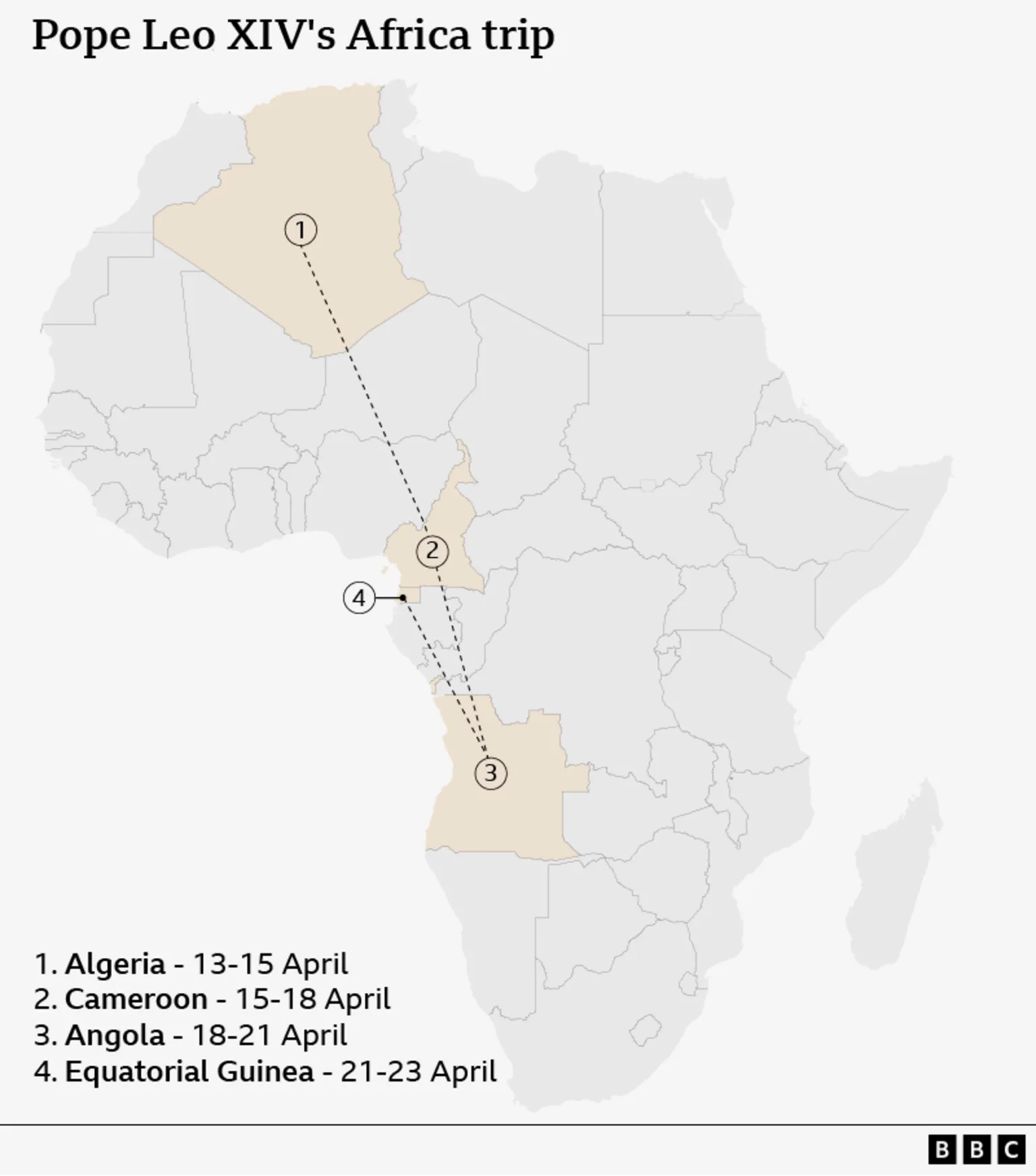
The extensive itinerary includes visits to 11 cities across four countries: Algeria, Cameroon, Angola, and Equatorial Guinea. The Pope will cover nearly 18,000 km (11,185 miles), mostly by air, undertaking 18 flights.
All but one of the countries have substantial Catholic populations; however, Pope Leo has chosen Algeria—a predominantly non-Catholic nation—as his first destination due to its profound significance to him.
Algeria is the birthplace of St Augustine, and Pope Leo XIV is the first pontiff from the order that follows Augustine's teachings.
The 4th-century North African theologian's ideas, such as community and humility, have influenced the current leader of the Catholic Church.
The Pope will visit the region where St Augustine served as bishop—formerly known as Hippo, now Annaba—where he will celebrate Mass.
This will be the first papal visit to Algeria, with interfaith dialogue expected to be a central theme, including a visit to the Great Mosque of Algiers.
Another significant stop will be the Basilica of Our Lady of Africa in Algiers, a pilgrimage site for both Muslims and Christians.
Behind the statue depicting a black Virgin Mary—venerated in both faiths—are the words "pray for us and pray for the Muslims."
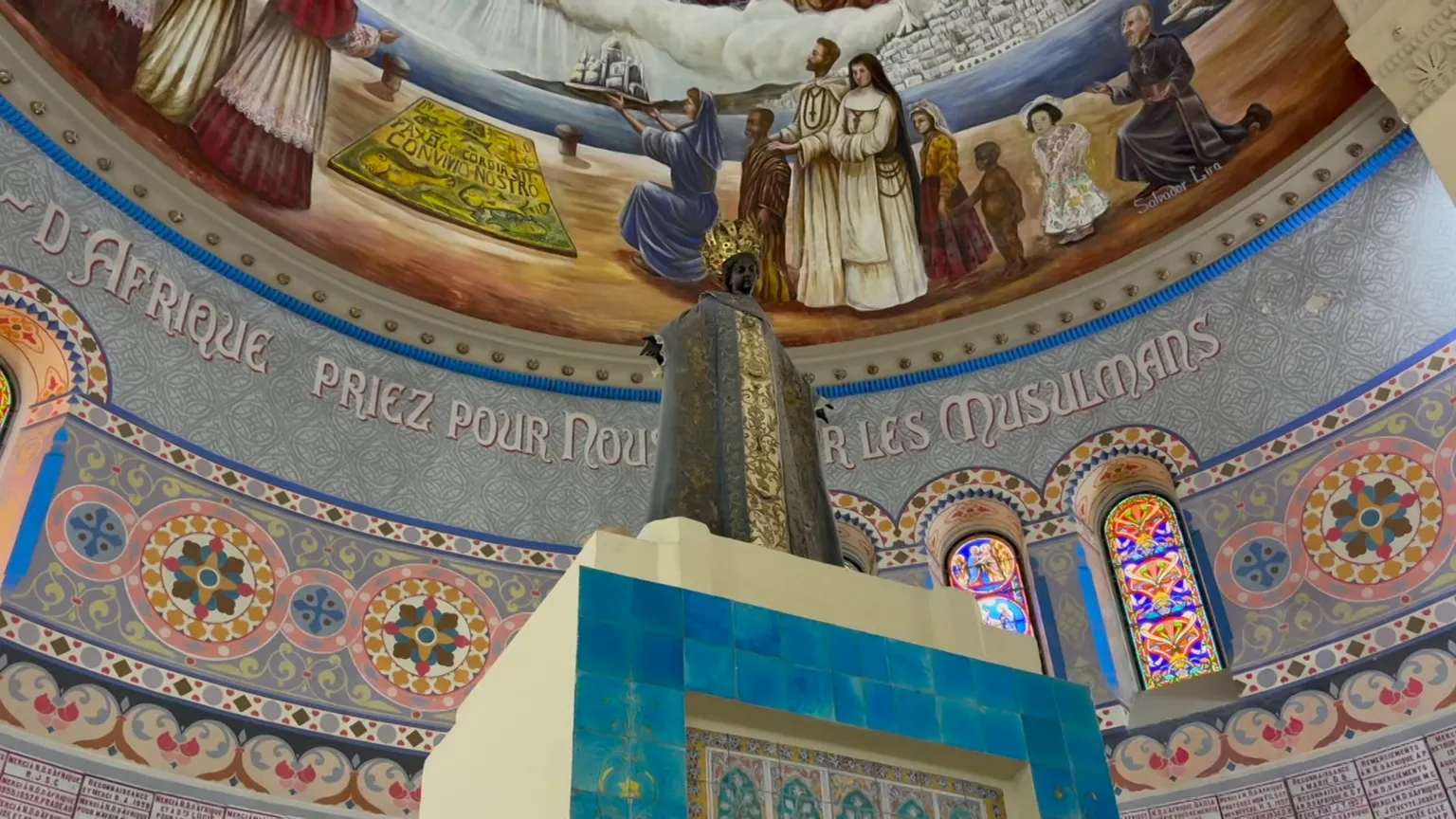
"[Pope Leo] will encourage us in our faith and in our mission to build a new world. A world where there is peace and where people live together in harmony," said Father Peter Claver Kogh, Rector of the Basilica, in an interview with the BBC.
However, the visit occurs amid concerns from rights groups regarding Algeria's treatment of religious minorities.
Algeria's population is predominantly Sunni Muslim. Previously, courts have imprisoned Christians and Ahmadi Muslims for "unauthorized worship" or offenses against Islam.
Visit to Cameroon Amid Conflict
Following Algeria, Pope Leo will travel to Cameroon, where ongoing conflict in the anglophone regions provides a challenging backdrop.
The United Nations estimates that at least 6,000 people have died and over half a million have been displaced due to nearly a decade of violence stemming from tensions between English-speaking separatists and the francophone-dominated government.
Bamenda, the capital of Cameroon's North-West region, has been central to the conflict.
Here, the Pope will celebrate a Mass for peace and justice at the airport, an event local residents hope will serve as a catalyst for reconciliation.

"With God coming—because he is God on Earth—I know that everything will be solved," said Ernestine Afanwi, a 45-year-old woman who fled Bamenda after her house and shop were destroyed.
For the past three years, Afanwi and her six children have lived with other internally displaced persons in a dilapidated feed processing plant in Yaoundé, the capital.
"If I was face-to-face with the Pope, I would tell him all my problems [and ask] him to anoint the land," she told the BBC.
Peace and Reconstruction in Angola
The impact of conflict will also be a focus during the stop in Angola, a country that endured decades of civil war from the mid-1970s until 2002. Peace and reconstruction are key themes for this visit.
In addition to meeting with bishops, Pope Leo will celebrate Mass with approximately 200,000 faithful in a nation where between 40% and 55% of the population identify as Catholic.
The Catholic Church's presence in Angola dates back to the late 15th century, when Portuguese explorers and missionaries arrived along the coast.
Social Justice in Equatorial Guinea
Equatorial Guinea, the final country on the tour, has a Catholic population exceeding 70%.
Social justice is among the issues the Pope is expected to address in a country ruled by President Teodoro Obiang Nguema for nearly 50 years, making him one of the world's longest-serving heads of state.
Critics describe Obiang's government as one of the region's most oppressive and accuse it of human rights abuses, allegations the government denies.
During his visit, Pope Leo will meet with authorities, visit a psychiatric hospital and a prison, and engage with young people.
Pope Leo XIV’s African Experience and Tour Details
While this is Pope Leo's first pastoral visit to Africa since becoming the Catholic Church's leader last year, he is no stranger to the continent.
As Cardinal Robert Prevost, he visited several countries including Kenya and Tanzania.
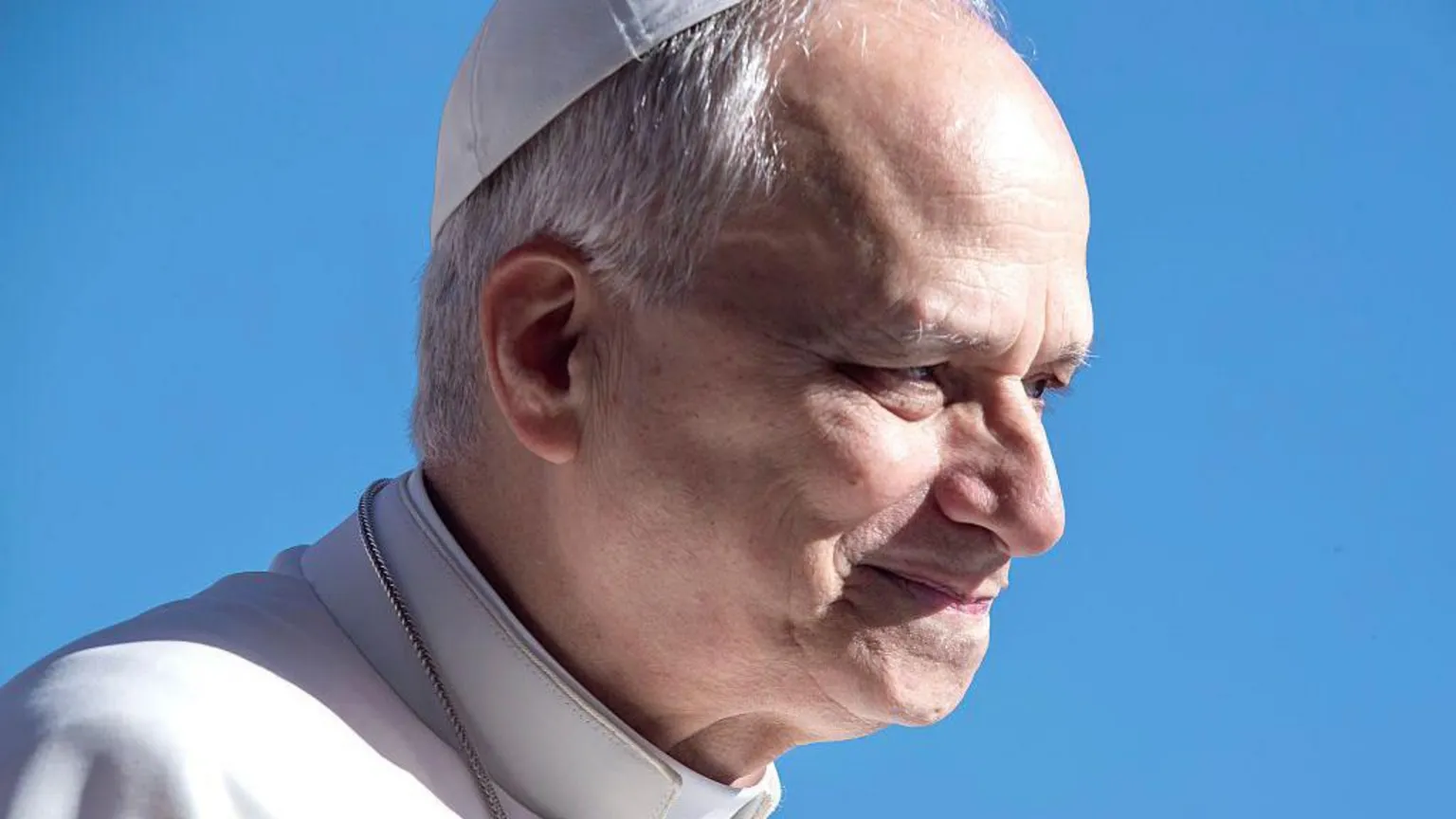
The 70-year-old pontiff will deliver around 25 speeches, meet political leaders, local Catholic communities, and participate in interfaith events.
The demanding itinerary reflects the Vatican's prioritization of its engagement with Africa.
By selecting Africa for this extensive tour, the Vatican states Pope Leo will reinforce the continent's role in global Catholic life, highlighting it as a place of faith, resilience, and future growth.
Additional reporting by Nomsa Maseko, Paul Njie in Yaoundé, and Ager Oueslati in Algiers.
For more news from the African continent, visit BBCAfrica.com.
on Twitter @BBCAfrica, Facebook at BBC Africa, or Instagram at bbcafrica.