Coordinated Attacks Shake Mali
Mali is grappling with a severe crisis following coordinated attacks by jihadist and separatist rebel groups that resulted in the seizure of multiple towns and military bases, as well as the killing of the defence minister and the military intelligence chief.
The weekend offensive targeted the West African nation's security infrastructure and was orchestrated by Jama’at Nusrat al-Islam wal-Muslimin (JNIM), an al-Qaida-affiliated group, alongside the separatist Tuareg-led Azawad Liberation Front (FLA), two former adversaries with differing objectives.
The defence minister, Sadio Camara, was killed in an assault on his residence in Kati, a garrison town near the capital, Bamako, according to the junta-led government. A spokesperson reported that a suicide attacker drove a car laden with explosives into Camara's residence, and during the subsequent firefight, Camara sustained injuries and later died in hospital.
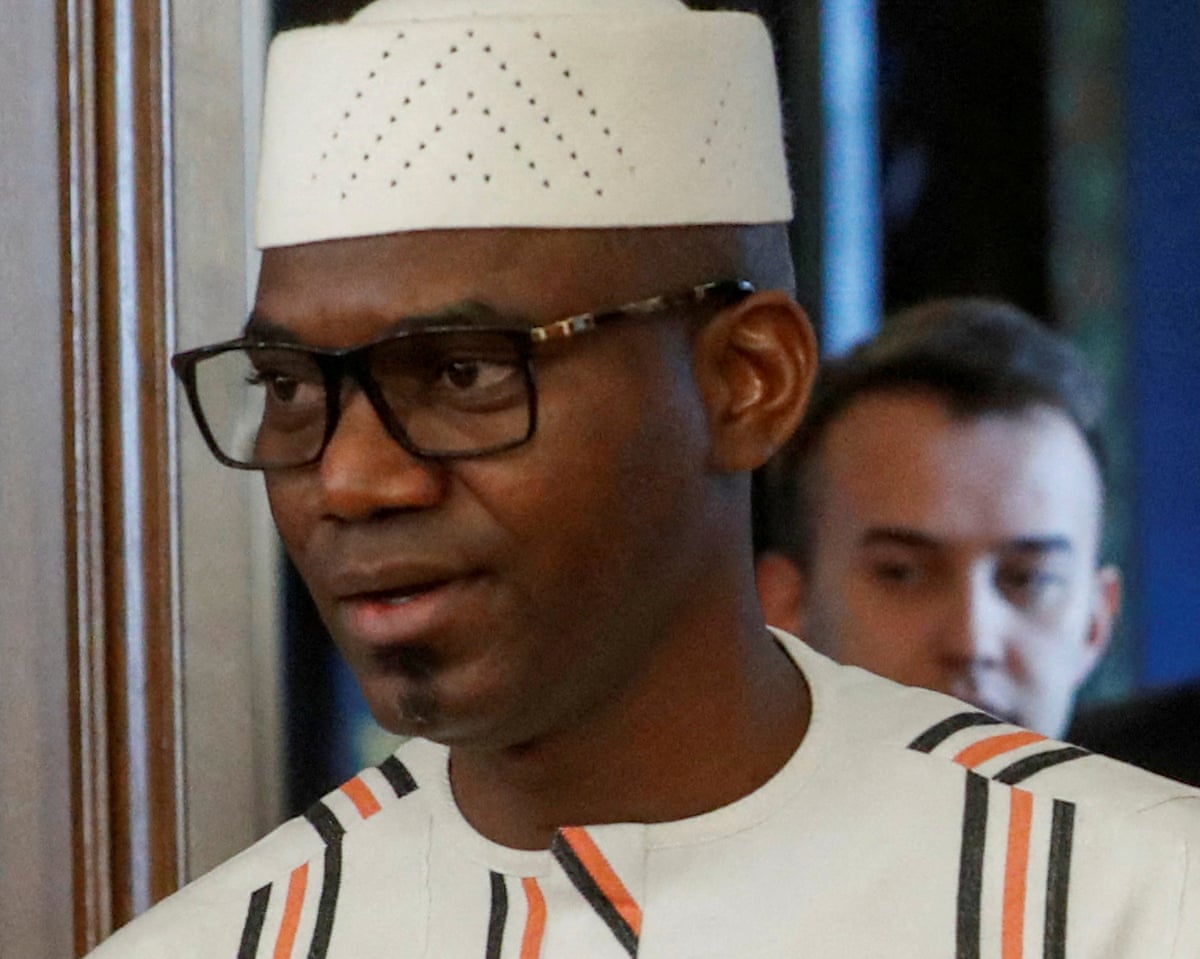
Reports also indicate that Modibo Koné, the military intelligence chief, was killed during the attacks.
The assailants employed car bombs and armed drones in their assaults on Kati, Gao in the east, and the central towns of Mopti and Sévaré.
Heavy gunfire and explosions were reported near Modibo Keita International Airport and the main military base in Kati. The airport was temporarily closed as a result.
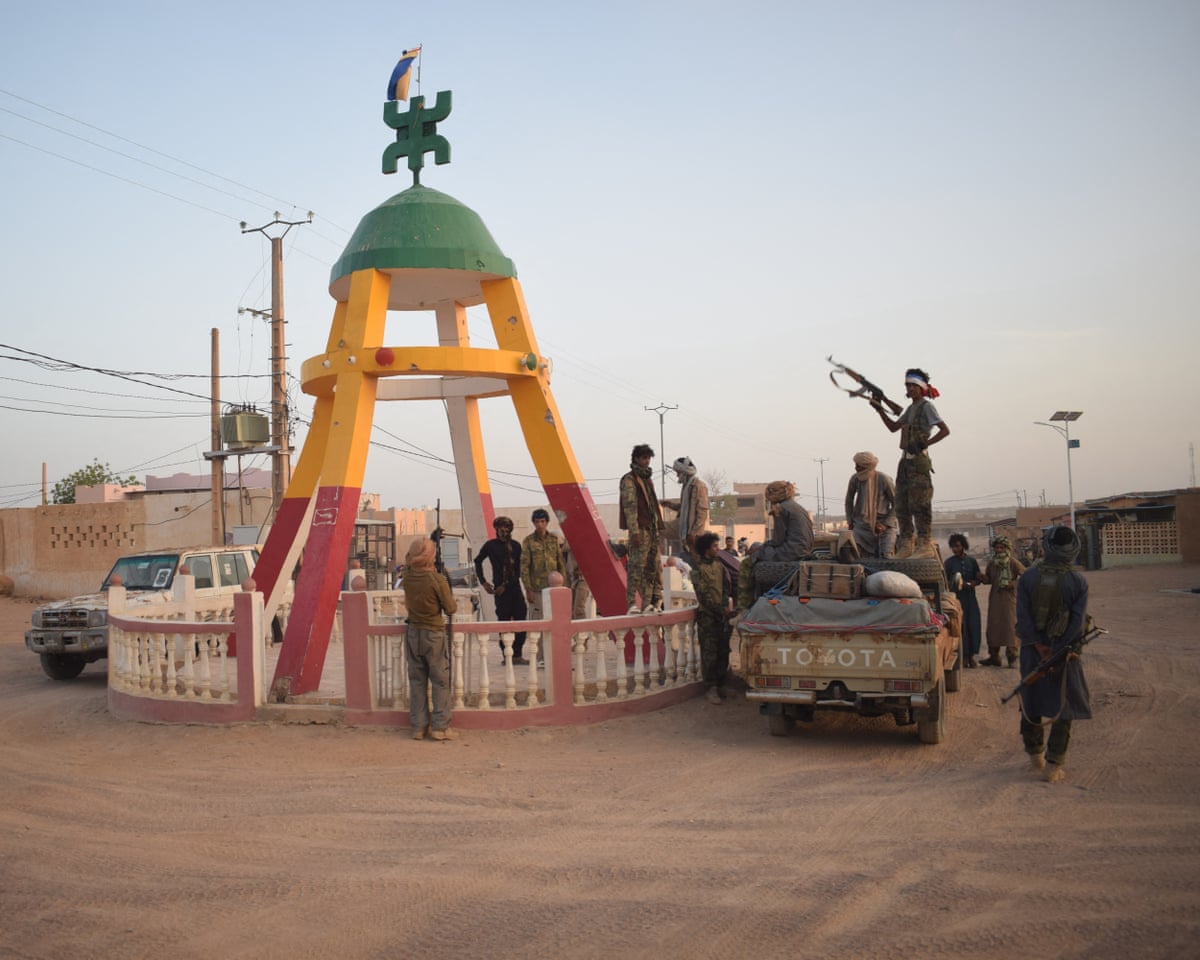
Videos circulated on social media showing jihadists laughing and relaxing at the residence of the governor of Kidal, a town approximately 250 miles (400 km) south of the Algerian border. has not independently verified these videos.
Background and Political Context
JNIM and FLA played significant roles in the 2020 overthrow of Ibrahim Boubacar Keïta’s civilian government. A subsequent coup in May 2021 brought Captain Assimi Goïta to power as the head of state and led to the denunciation of an existing peace agreement between the government and rebel factions.
Goïta, reportedly protected by a private military company from Turkey that has provided military support to Mali in recent years, has not yet issued a public statement regarding the recent attacks.
Authorities have not released an official death toll but announced on Sunday that the assault had concluded. On state television Sunday night, General Oumar Diarra, the chief of general staff, stated that the army had withdrawn from Kidal but claimed Malian forces had "neutralised" over 200 terrorists nationwide and recovered ammunition.

The FLA spokesperson, Mohamed El Maouloud Ramadan, asserted that soldiers from the Africa Corps—successors to Russia’s Wagner Group—had left Kidal following an agreement for their peaceful withdrawal. Kidal has long been a strategic objective for the separatists as their prospective capital.
Ongoing Conflict and Regional Dynamics
Mali has faced persistent challenges from militants linked to al-Qaida and Islamic State, alongside a separatist rebellion in the northern region. Notably, the Islamic State – Sahel Province (ISSP), formerly known as Islamic State in the Greater Sahara (IS-GS), did not participate in the weekend’s events.
Following a shift away from Western allies, Mali entered a security partnership with the Wagner Group, led by Yevgeny Prigozhin, to combat Islamic militants. Sadio Camara oversaw the transition to Africa Corps after Prigozhin's death in August 2023.
This partnership has not yielded the desired results. Last year, JNIM imposed a blockade on fuel trucks from Côte d’Ivoire and Senegal, cutting off vital supplies to Bamako until a resolution was reached.
Over the weekend, an Mi-8AMTSh helicopter operated by Africa Corps was reportedly downed by a surface-to-air missile near Gao, resulting in the deaths of all personnel on board.
Ulf Laessing, head of the Sahel programme at the German think tank Konrad Adenauer Foundation, described the attack as a significant setback for Moscow’s regional ambitions.
“For Russia the attack has been a disaster,” Laessing told . “They were unable to prevent the fall of the highly symbolic Tuareg stronghold of Kidal and now need to leave this northern city.”
Reports have also emerged of an Ivorian aircraft conducting surveillance near the border. Côte d’Ivoire, perceived alongside Nigeria as a French ally by the Malian junta, has been pursuing cooperation with the United States for cross-border operations into Mali and Burkina Faso, both affected by jihadist insurgency.
Regional and International Responses
In Abuja, Nigeria, the Economic Community of West African States (ECOWAS) issued a statement on Sunday urging "all states, security forces, regional mechanisms and populations of West Africa to unite and mobilise in a coordinated effort" against insurgency.
Mali withdrew from ECOWAS and established the Association of Sahel States (AES) in 2025, alongside Burkina Faso and Niger. Ibrahim Traoré, Burkina Faso’s military leader and AES chairperson, claimed the attacks in Mali were "backed by the enemies of the Sahel liberation struggle," though he did not provide evidence to support this assertion.
United Nations Secretary-General António Guterres expressed deep concern over the violence, highlighting the vulnerability of approximately five million people in Mali currently requiring humanitarian assistance.