

Attack on Mali Defence Minister's Residence
The family of Mali's defence minister has reported that he was killed in an apparent suicide truck bombing targeting his residence near the capital, Bamako.
Multiple news outlets have confirmed the death of Sadio Camara as part of a series of coordinated attacks carried out by jihadist militants and separatist groups across Mali.
Although the military junta has not officially confirmed the incident, reports indicate that its leader, General Assimi Goita, was relocated to a secure location after an attack on his home.
Withdrawal of Russian Mercenaries from Kidal
Further north, Russian mercenaries contracted by Mali's military agreed to withdraw from the city of Kidal following two days of clashes, according to the separatist Azawad Liberation Front (FLA).
For several years, Mali has faced insurgencies from groups linked to al-Qaeda, the Islamic State, and the FLA.
News agencies, citing Camara's family and French media, reported that the attack—launched by militants affiliated with al-Qaeda in Kati on Saturday—also resulted in the deaths of at least three members of Camara's family.
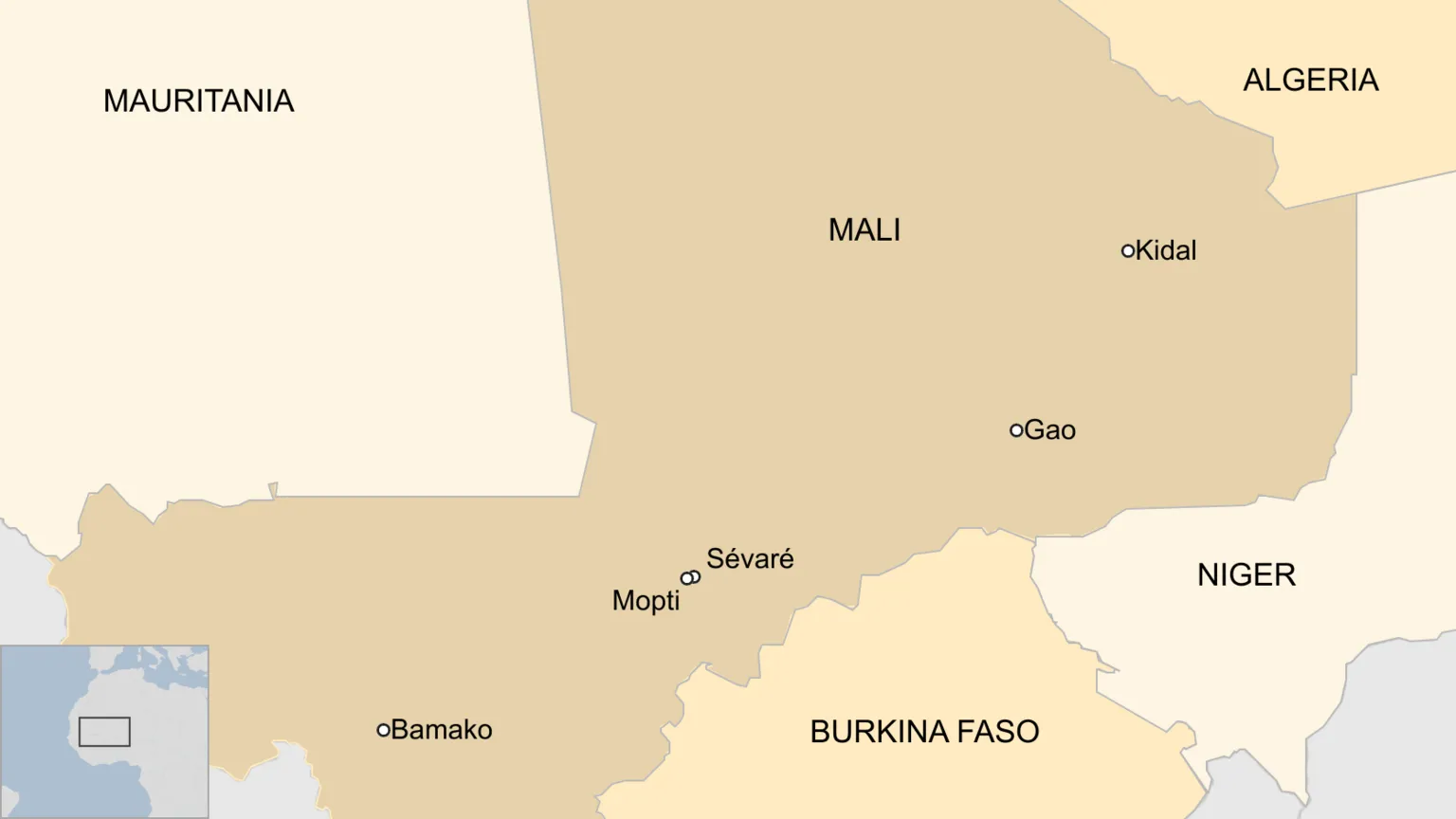
Fighting on Saturday was reported in Kati, a major military base near the capital, as well as in Gao and Kidal in the north, and the central cities of Sevare and Mopti.
Reports suggest that the separatists, who seek an independent ethnic Tuareg state in northern Mali, focused their assault primarily on northern cities, while the jihadist group Jama'at Nusrat al-Islam wal-Muslimin (JNIM) conducted simultaneous attacks at multiple locations nationwide.
Ulf Laessing, head of the Sahel programme at the Konrad Adenauer Foundation in Mali, told the BBC that the incident appeared to be the "largest co-ordinated jihadist attack on Mali for years."
Situation in Kidal and Ongoing Clashes
FLA spokesman Mohamed Elmaouloud Ramadane stated that Kidal had "not fallen completely" during the attacks, explaining to the BBC that the group remained in the city because "elements of the Malian army and Russian mercenaries" were still present.
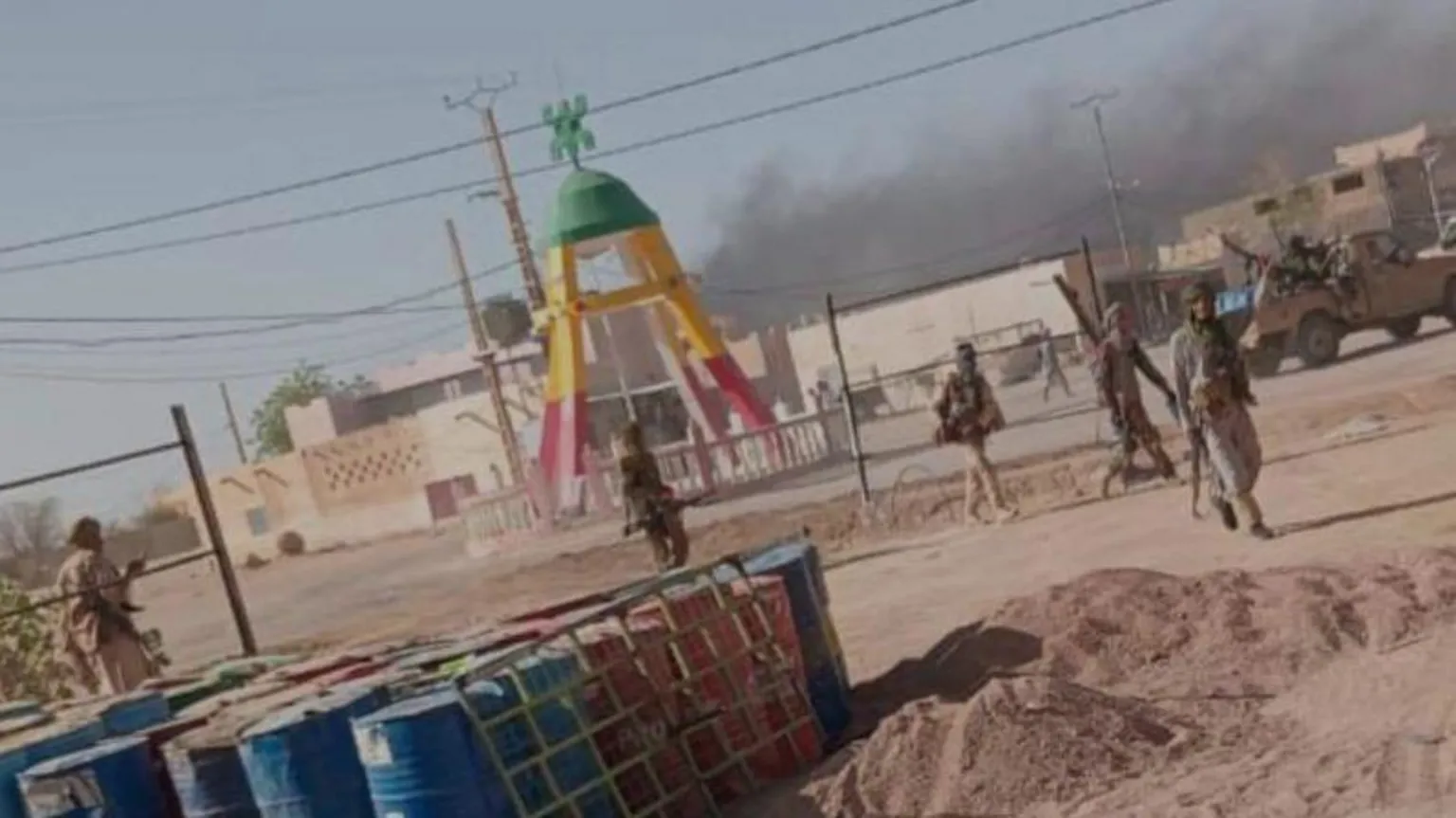
On Sunday, clashes between the FLA and the Malian government resumed in Kidal.
Shortly after these reports, Ramadane announced:
"An agreement was reached between the Azawad forces and the Russian elements of the Africa Corps with a view to ensuring their secure withdrawal from the fighting."
His morning social media post was followed by an update from the FLA stating that the group was escorting the Russian mercenaries out of the city.
The FLA also claimed to have taken control of Kidal, which had served as an unofficial headquarters of the separatist movement for over a decade before being captured by Mali's army with Russian mercenary assistance in late 2023.

An FLA field commander involved in the Kidal assault told the BBC on Saturday that the group had been preparing for the offensive "for months," adding:
"Our main goal now is to control Gao and then Timbuktu will be easy to fall."
Casualties and Government Response
State broadcaster ORTM reported that 16 people, including civilians and soldiers, were injured in the attacks, which caused "limited damage."
ORTM also stated that several "terrorists" had been killed and that the situation was "completely under control" in all affected areas.
However, the military confirmed that fighting continued in Kidal, Kati, and other parts of the country.
In a statement on Sunday, the military declared that the violence would "not go unanswered." It added that a nationwide alert had been issued, with increased patrols and reinforced checkpoints to enhance security.
Curfews have been imposed in certain areas. In Bamako, a curfew is in effect from 21:00 to 06:00 local time (GMT), expected to end on Monday.
International Reactions and Regional Context
Following the widespread attacks on Saturday, UN Secretary-General Antonio Guterres condemned the "acts of violence" and expressed his "solidarity with the Malian people." West Africa's regional bloc, Ecowas, also condemned the attacks.
Mali, Niger, and Burkina Faso withdrew from Ecowas after military coups brought their armies to power.
Mahmoud Ali Youssouf, chair of the African Union Commission, stated he was monitoring the situation with "deep concern."
Background on the Conflict and Political Situation
The FLA has long sought the creation of an independent Tuareg homeland in northern Mali, a region over which it maintains effective control.
Mali is currently governed by a military junta led by General Assimi Goïta, who first seized power in a 2020 coup, pledging to restore security and counter armed groups.
The junta initially enjoyed popular support, promising to address the persistent security crisis triggered by the Tuareg rebellion in the north, which was later overtaken by Islamist militants.
UN peacekeepers and French forces, deployed to counter the escalating insurgency, withdrew after the junta assumed control, and the military government engaged Russian mercenaries to assist in combating insecurity.
Despite these efforts, the jihadist insurgency persists, and large areas in the north and east remain outside government control.


