ICC Finds Concrete Evidence Linking RSF Leaders to Darfur War Crimes
The International Criminal Court (ICC) has obtained "concrete evidence" connecting leaders of the paramilitary Rapid Support Forces (RSF) to recent war crimes committed in Sudan's Darfur region, according to Nazhat Shameem Khan, the ICC's deputy chief prosecutor.
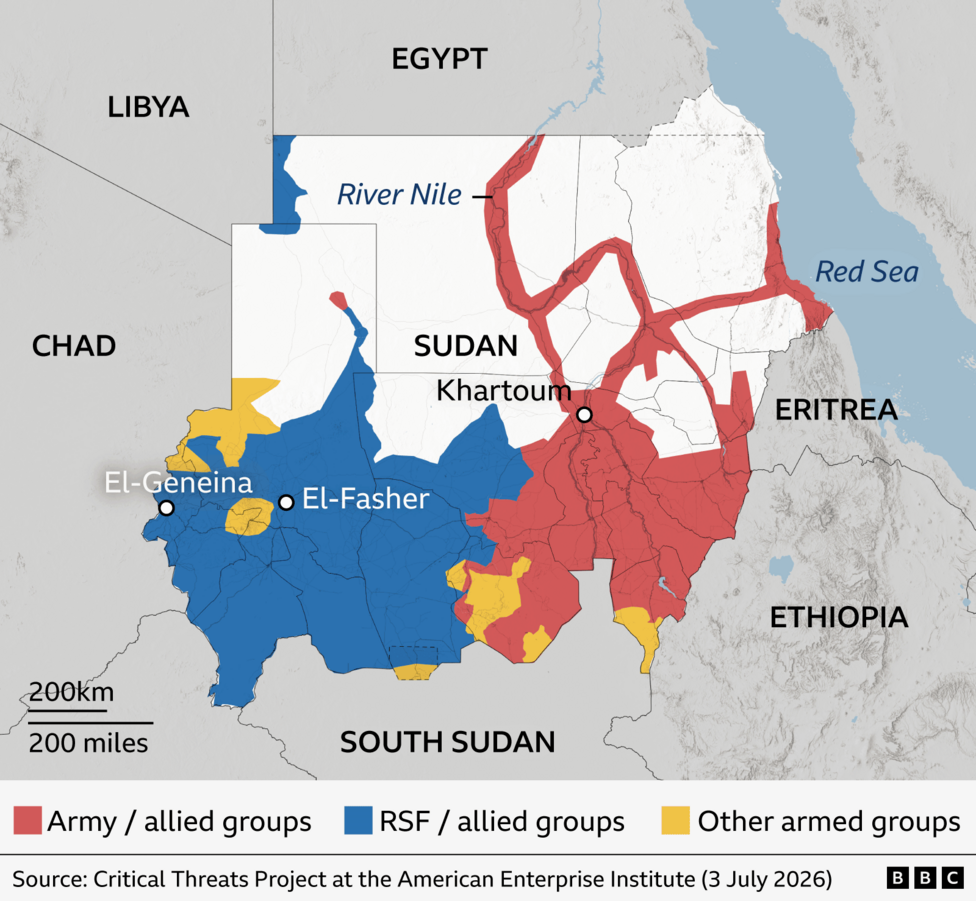
Khan informed the BBC that the ICC has achieved a "breakthrough" in its investigation into the massacres of civilians in the cities of el-Fasher and el-Geneina.
"It may take time for justice to develop, to be brought to the court, but we will get there," Khan said, adding that RSF leaders have also been implicated in crimes against humanity.
The takeover and siege of el-Fasher represented one of the deadliest episodes in the ongoing conflict between the RSF and Sudan's army.
The United Nations reports that over 6,000 people were killed in el-Fasher during the RSF's seizure of the city in October of the previous year. The paramilitary group is similarly accused of perpetrating a massacre in el-Geneina.
The RSF has consistently denied involvement in widespread killings throughout Darfur.
A United Nations fact-finding mission report released on Wednesday documented evidence of extensive atrocities committed by both the army and the RSF during Sudan's conflict.
The report indicated that RSF fighters were responsible for the majority of systematic attacks on civilians, particularly in Darfur, where targeting was based on ethnic grounds. Such actions "may amount to war crimes and crimes against humanity," the report stated.
Additionally, RSF fighters and affiliated groups committed sexual abuses, including rape, gang rape, sexual slavery, and other violations during their capture of el-Fasher last year, according to the UN fact-finding mission.
ICC Investigation and Evidence
Speaking to the BBC about the ICC's inquiry, Khan stated,
"We have now found concrete evidence that links what is happening on the ground through linkage evidence to specific persons in leadership mode."
However, she did not specify a timeline for when charges might be filed against those responsible for the atrocities in the conflict, which began in April 2023.
"We cannot say how quickly or how long it's going to take," she said. "But we can say that progress has been significant and that we have achieved a breakthrough."
The ICC, headquartered in The Hague, Netherlands, is an international court empowered to prosecute genocide, crimes against humanity, and war crimes.
Khan's comments followed her visit to refugee camps in eastern Chad, where individuals displaced by the Darfur fighting recounted the atrocities they endured.
Tens of thousands fled el-Fasher, and the UN characterized the violence there as bearing the "hallmarks of genocide."
The RSF denies widespread allegations that killings in el-Fasher were ethnically motivated or part of a pattern of Arab paramilitaries targeting non-Arab populations.

The group maintains that the scale of atrocities has been exaggerated but acknowledges that some violations occurred in the city.
Following the capture of el-Fasher, RSF leader General Mohamed Hamdan Dagalo stated that the group was investigating any atrocities. The RSF recently confirmed that this probe is ongoing.

Concerns Over El-Obeid and Ongoing Investigations
The UK's Human Rights Ambassador, Eleanor Sanders, recently warned that the city of El-Obeid could face atrocities similar to those witnessed in el-Fasher last year.
On Monday, the UN Human Rights Council ordered an urgent investigation into alleged crimes committed during fighting in El-Obeid.
The ICC has been investigating war crimes allegations in Darfur for over 20 years, dating back to violence in the 2000s.
"What we see is patterns of offending that in fact were the same patterns of offending 20 years ago when this situation was first referred to us by the Security Council," Khan said.
The ICC investigation incorporates witness testimonies, corroborative evidence such as videos, photographs, and forensic data.
Previous investigations have resulted in seven arrests and six separate cases brought before the court for alleged war crimes and crimes against humanity.
Those charged include Sudan's former President Omar al-Bashir, who remains at large after being ousted in a 2019 coup. It is believed he is held in a secure medical facility in Sudan.
Four others have arrest warrants but have not been detained.
Last year, the ICC sentenced a former militia leader to 20 years in prison after conviction on 27 counts of war crimes and crimes against humanity committed in Darfur between 2003 and 2004.
Ali Muhammad Ali Abd-Al-Rahman was a senior figure in the Janjaweed, a government-backed militia that targeted Darfuri civilians outside the country's majority Arab population.
The Janjaweed was among the groups that evolved into the RSF, a paramilitary force formerly aligned with Sudan's army but now engaged in conflict against it.
Additional Resources
More about the conflict in Sudan from the BBC:
- 'Our job is only killing' - how Sudan's brutal militia carried out a massacre
- 'I saw bodies dumped in Sudan mass grave'
- 'The weapons were loud, but there was always music': Sudanese band play on through the war
Visit BBCAfrica.com for more news from the African continent.
on Twitter @BBCAfrica, on Facebook at BBC Africa, or on Instagram at bbcafrica.