Yann LeCun Develops New AI System to Surpass Current Models
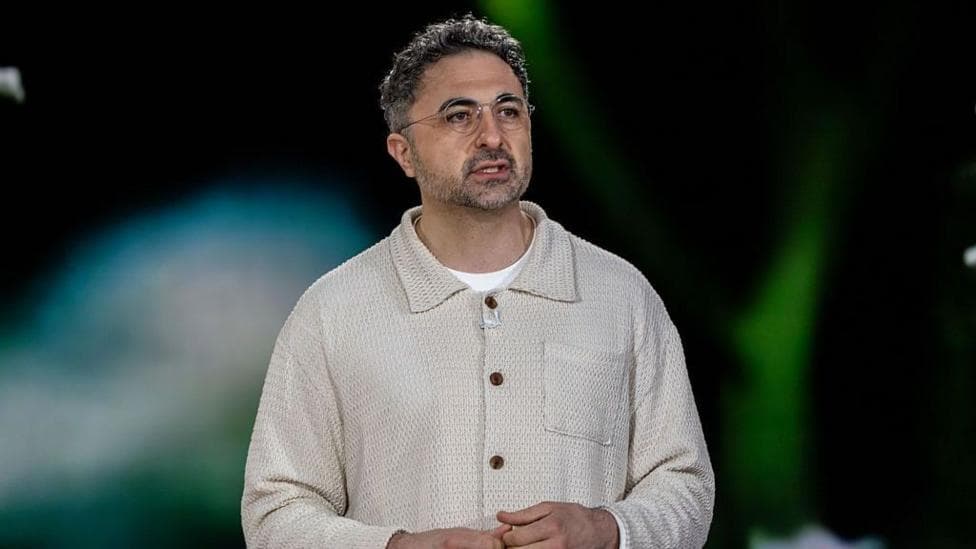
Yann LeCun, founder of Advanced Machine Intelligence Labs (AMI Labs), is pioneering a new approach to artificial intelligence. Reflecting on current AI capabilities, he states,
"We don't have robots that are nearly as good at understanding the physical world as a rat."
LeCun, who served as chief AI scientist at Meta (formerly Facebook) for ten years before leaving in 2025, is focused on advancing AI beyond existing systems such as ChatGPT, Claude, and Gemini. While these models have practical applications, he believes they are fundamentally limited and incapable of handling complex real-world tasks like household chores.
"They're not a path towards human level or human-like intelligence, or even animal-like intelligence, because they cannot deal with real world data, they just are not built for that,"
he explained during an interview at VivaTech, France's premier technology conference.
To address these limitations, AMI Labs, based in Paris, is developing a novel AI architecture distinct from the technologies underlying current large language models (LLMs). The company has attracted significant investor interest, having raised over $1 billion (£760 million) earlier this year. Notable backers include Nvidia, a leading US computer chip manufacturer, and the private wealth fund of Amazon founder Jeff Bezos. This seed funding round ranks among the largest early-stage investments in Europe.
Limitations of Large Language Models
LeCun acknowledges that LLMs excel at specific tasks such as coding, solving mathematical problems, and generating text.
"They [LLMs] basically just accumulate knowledge... They can regurgitate something, you train them to regurgitate, but they're not particularly smart. They don't have an underlying understanding,"
he said.
He emphasized that these tasks are well-defined and predictable, unlike the unpredictable nature of real-world environments. For example, he demonstrated by holding a pen upright on its tip and asked what would happen when released. While even a toddler understands the pen will fall, predicting the exact direction is impossible. LLMs, however, might attempt to generate a single prediction based on statistical patterns from training data, which would likely be incorrect because they do not reason about physical reality but generate statistically plausible outputs.
LeCun’s new system, called Joint Embedding Predictive Architecture (JEPA), aims to overcome these challenges by creating abstractions of the real world that enable the AI to assess potential outcomes of actions. This involves complex mathematical processes to filter out irrelevant information, leaving the AI with useful representations of the environment. In the pen example, the AI would recognize the futility of predicting the fall direction.
Humanoid Robots Require Advanced AI to Navigate Real-World Tasks
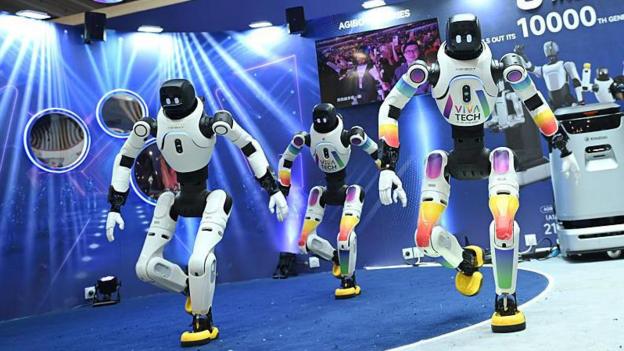
The robotics industry prioritizes building more adaptable AI. Despite billions invested in humanoid robots and impressive demonstrations, training these machines to safely perform everyday household tasks such as ironing or loading dishwashers remains difficult and costly.
LeCun is skeptical about current AI models’ suitability for robotics.
"LLMs are largely hopeless for robotics,"
he stated.
"The claims that somehow by just scaling up LLMs, we're going to reach super human intelligence, that is simply not going to happen."
Oxford’s Ingmar Posner Develops Alternative AI Model
Many AI experts share LeCun’s perspective. Ingmar Posner, professor of Applied Artificial Intelligence at Oxford University and director of its Applied AI Lab, is among them. He is also an Amazon Scholar.

Posner believes the next decade will focus on AI systems capable of explanation and causal reasoning.
"My view is that the next decade will really be about systems that can explain... You need models that can answer questions like: What matters? What causes what? What would happen if I did something else - like if I took a different action?"
For four years, Posner and his team of approximately ten researchers have been developing an alternative AI approach categorized as World Models. Although the concept of World Models has existed for decades, a 2018 paper by David Ha and Jürgen Schmidhuber inspired renewed interest. They proposed that AI could learn to perform tasks through a learned "mental" simulation of the world.
This idea has spurred significant research, including Google’s Dreamer World Model. Last year, a variant of Dreamer successfully learned to collect diamonds in the video game Minecraft by imagining future scenarios to guide decision-making.
Posner’s team aims to advance this approach with what he terms a "mechanistic world model," which organizes knowledge efficiently for AI use.
"You need systems that are able to compartmentalise and organise knowledge in such a way that it can be recalled, combined and modified when it matters,"
he explained.
He noted the difficulty in predicting development timelines:
"If you asked anyone in 2017 or 2018, how long it would be until you can have a ChatGPT sort of thing, they would go: 'Decades, decades of work'."
The original ChatGPT was launched in November 2022.
Other organizations working on World Models include DeepMind (part of Alphabet) with its Genie model and London-based Wayve with its Gaia system. AI pioneer Fei-Fei Li founded World Labs in San Francisco in 2023 to develop new AI models.

Future Prospects for AMI Labs and AI
LeCun indicated that AMI Labs plans to refine their JEPA model throughout the current year, aiming for initial industrial applications in the following year.
Success in these settings could pave the way for broader ambitions.
"Eventually down the line we'll have sort of general generic intelligence systems that can be applied to just about anything in the world with minimal training or fine tuning."
Regarding the role of humans in a future with autonomous robots, LeCun emphasized the continued importance of human creativity and decision-making.
"We're still going to need humans to figure out what questions to ask, what to build, what to create, which is really the properly human aspect,"
he said.
He envisions AI as a tool that will assist humans rather than replace them.
"Our interaction with future AI systems - even if they are smarter than us - is going to be like the interaction between a captain of industry or a political leader with their staff of assistants - many of whom are smarter than they are."