

AI Sparks Mixed Reactions at Stanford Commencement
American college graduates have sent a clear message to this year's commencement speakers: be cautious when discussing artificial intelligence (AI).
Prominent figures in technology, including former Google CEO Eric Schmidt, have faced boos when mentioning AI.
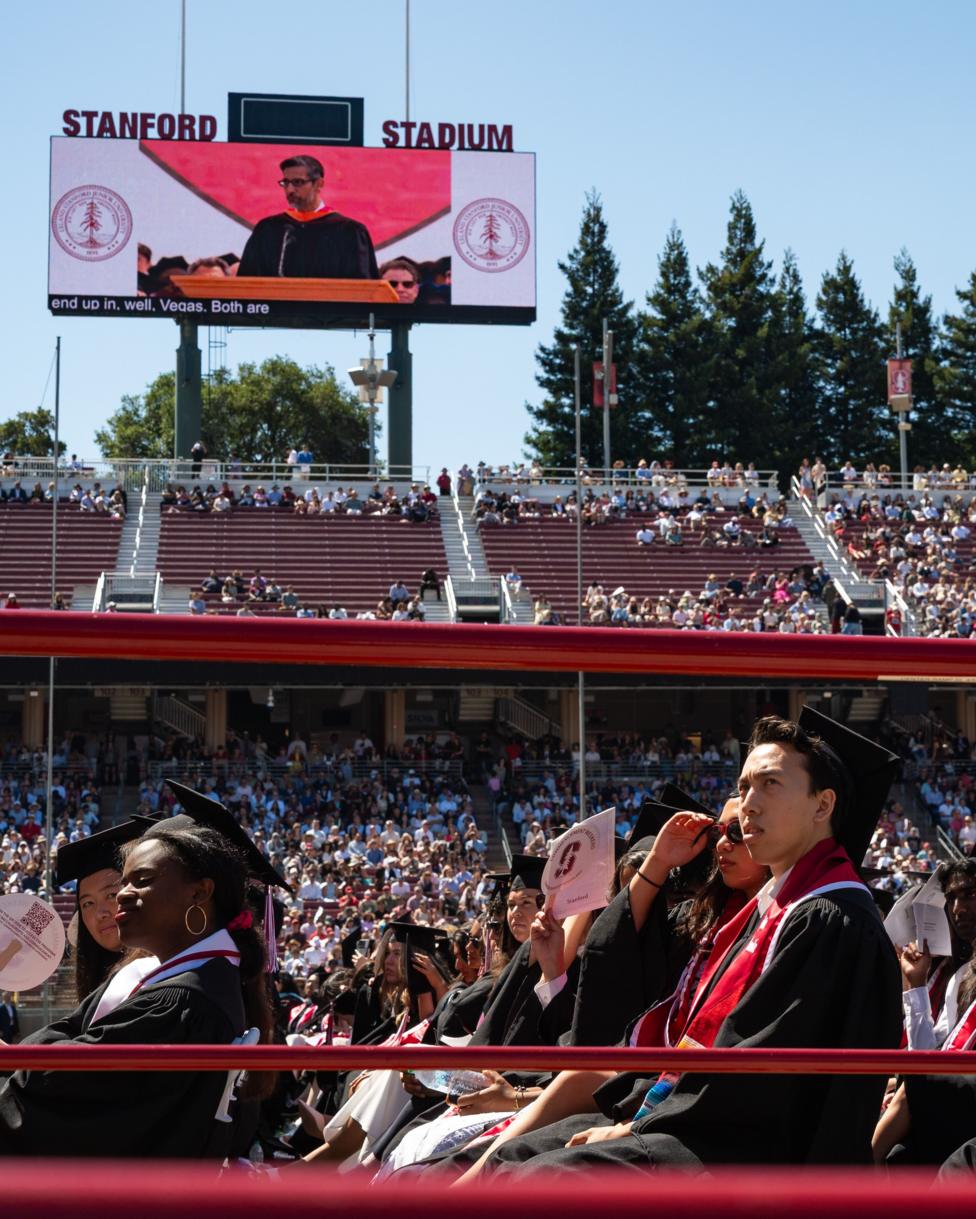
At Stanford University, located in Silicon Valley, Sundar Pichai, Google's CEO and a leading AI developer, humorously acknowledged being advised to avoid the topic during his recent commencement address.
Despite this, a group of graduates walked out during his speech.
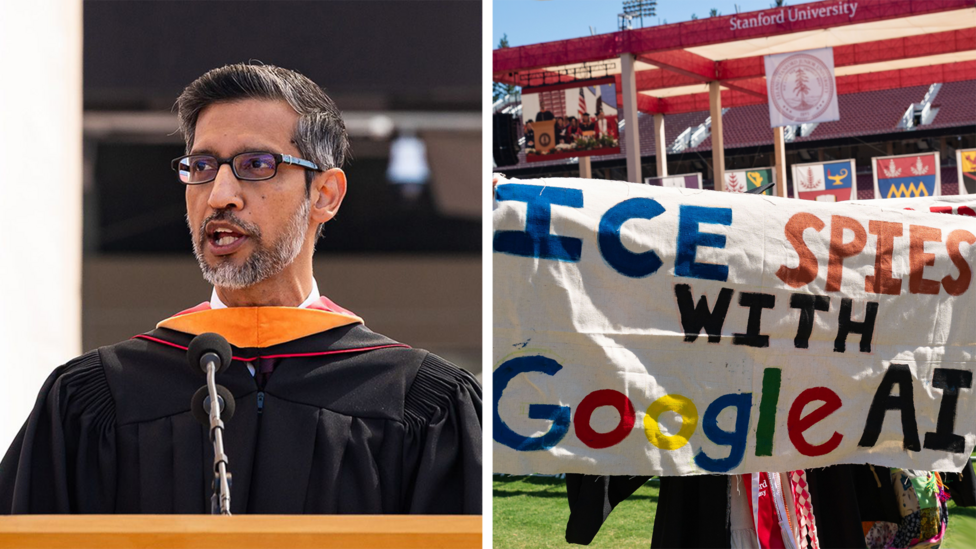
Some students carried signs as they exited; one read "ICE spies with Google AI," while others waved Palestinian flags.
Stanford holds a distinctive place in the American tech landscape. Known as a hub of innovation, it is situated near some of the world's most influential Big Tech companies, many pioneering AI advancements. Its elite students enter the workforce with a significant advantage.
Nevertheless, the backlash against AI was evident even there.
The BBC interviewed Stanford graduates shortly after Pichai's speech, revealing diverse perspectives on AI. Some expressed fear, others excitement, but nearly all agreed AI is already reshaping the world around them.
Optimism and Caution Among Graduates
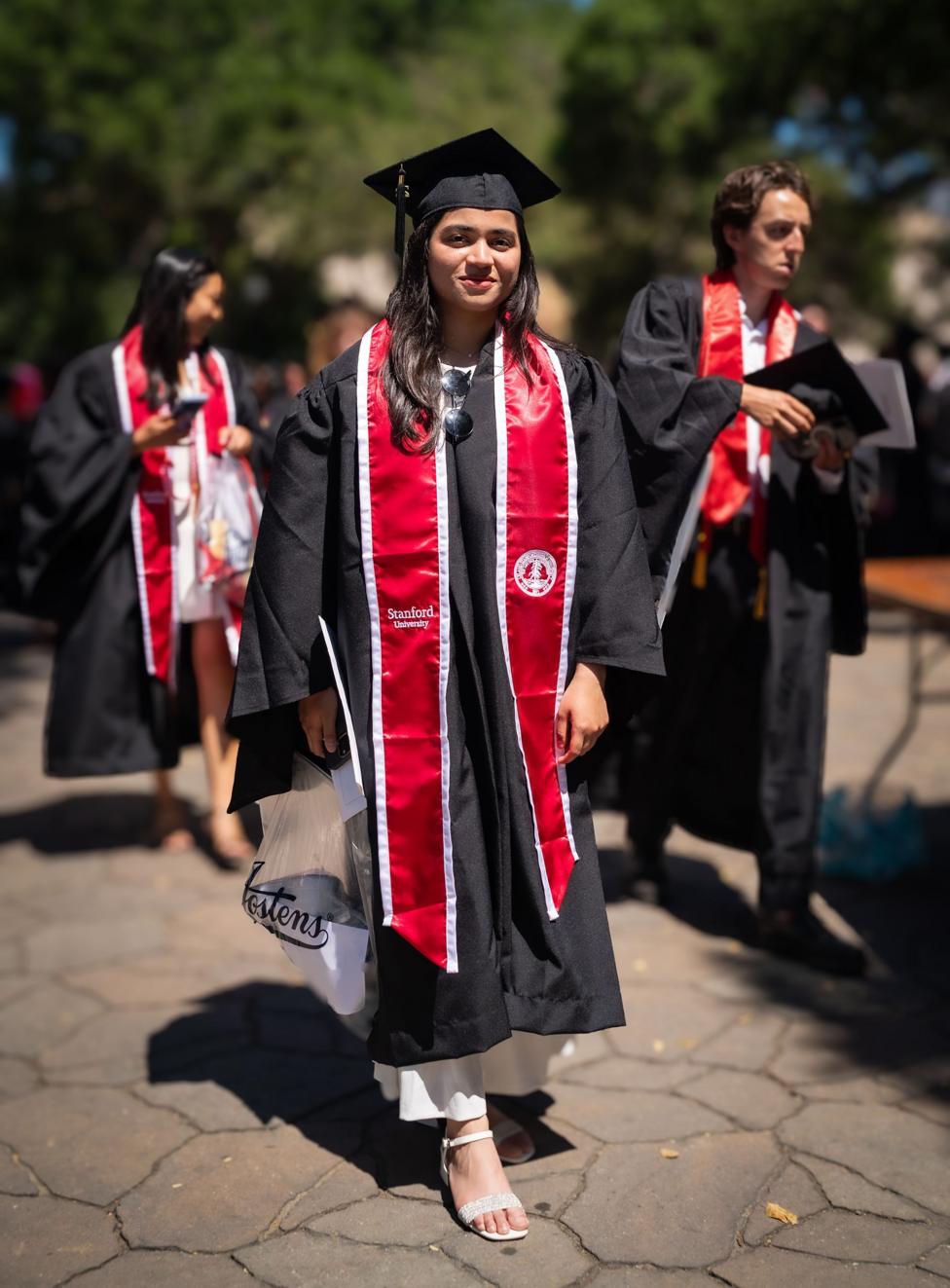
Ifdita Hasan, a computer science and AI major, expressed optimism about AI, emphasizing its potential as a tool for understanding the universe.
"I feel optimistic about AI," Hasan said. "I think AI gives us the opportunity to learn more about the universe. It's a tool that people should try to use and try to adapt to."
She acknowledged the backlash but noted that early skepticism is common with new technologies.
"This is what happens. It happened with the internet," she said. "But I would encourage people to be optimistic about AI - to try to learn and explore more."
Other graduates expressed less confidence about AI's impact as they prepare to enter a rapidly transforming corporate world.
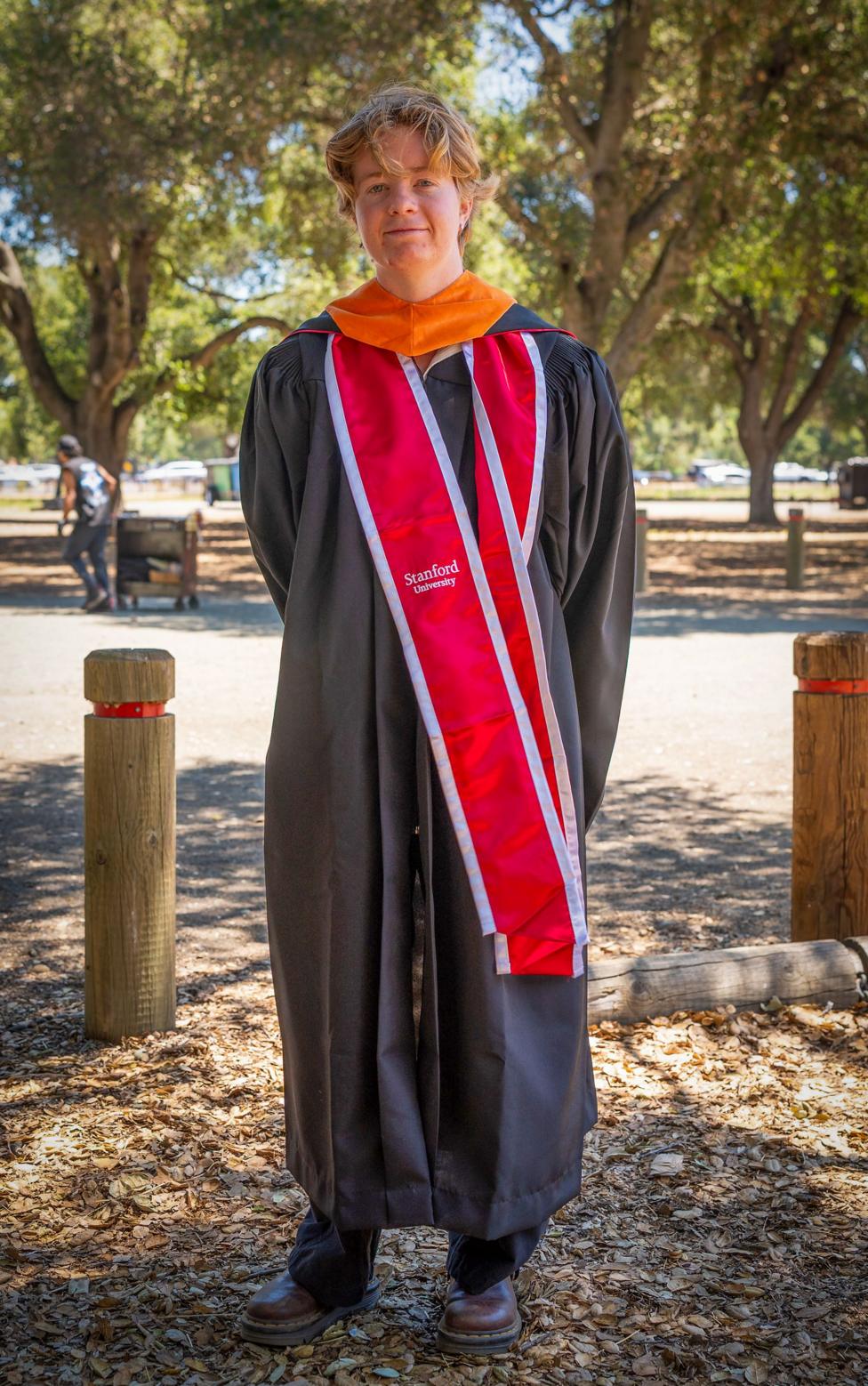
Atash Heil, an Earth Systems major focused on environmental science and policy, voiced concerns about the uncertain and swift changes AI is bringing.
"It's already had such a big impact in such a small time," Heil said.
He described a recent visit to an AI-generated art exhibit as unsettling.
"I thought it was scary, especially on my graduation day, to see that. The future is… that? I want art to be made by humans. That's what makes it art, right?"
Heil also criticized the ethical approach of many AI companies.
"It has to be done ethically, and it's not being done ethically these days," he said while awaiting the ceremony.
Employment Challenges and AI’s Influence on Learning
AI is also affecting some students' employment prospects.
Analysis by the Federal Reserve Bank of New York indicates recent college graduates face difficulties securing jobs.
A Stanford study published in November found significant employment declines among early-career workers in AI-exposed fields, including software development.
Unverified social media rumors suggest some Stanford computer science students have struggled to find employment.
Stanford did not provide job placement statistics to the BBC, but most interviewed graduates had either secured jobs or planned further study.
When these students began their studies in 2021, AI chatbots were not widely accessible. The launch of OpenAI's ChatGPT dramatically altered the landscape.
Students raised concerns about "cognitive offloading," where reliance on AI diminishes independent problem-solving.
Lucy Zimmerman, a computer science major and teaching assistant, observed a discrepancy between AI-assisted take-home assignments and exam performance.
"I think it's really impacted how people are learning," Zimmerman said.
Some courses have reinstated proctoring and oral exams to counteract cheating.
"I'm worried about future generations," Zimmerman added, "and for my generation."
Despite concerns, Zimmerman looks forward to working as a software engineer at a San Francisco tech startup.

"I'm right in the thick of it."
Stanford’s Legacy and Influence in Technology
Stanford University, founded in 1891, predates the rise of Silicon Valley and is often compared to Ivy League institutions such as Harvard and Columbia.
In the latter 20th century, Stanford's leaders and researchers helped transform the region into a global tech hub.
Google, Meta, and Apple headquarters are all within 25 kilometers of the campus.
Stanford has contributed innovations including computer time-sharing and biologically active DNA synthesis.
It hosts the SLAC National Accelerator Laboratory, where North America's first website launched in 1991.
Notable alumni include Google co-founders Larry Page and Sergey Brin, who began their project as PhD students at Stanford. Brin was known to casually walk the campus years after founding Google.
Stanford researchers have been pioneers in AI development; the term "artificial intelligence" was coined there by computer scientist John McCarthy.
Several leading AI figures maintain ties to Stanford, including Fei-Fei Li, a professor dubbed the "Godmother of AI," and OpenAI co-founder Sam Altman, who dropped out in 2005.
A four-year undergraduate degree at Stanford can cost nearly $400,000 including expenses, but admission offers a strong pathway to tech careers.
Historically, some lecturers reportedly included job offers with graded exams for top-performing students, though this practice has declined.
Stanford remains a prime source of tech talent, with industry leaders frequently visiting the campus.
The university receives tens of thousands of applications annually, admitting fewer than 4%.
"Stanford is the centre of ingenuity in the entire country and in the world," said Harry Kaplan, a Management Science and Engineering graduate. "A lot of knowledge, research and innovation comes from here. And it's a proud legacy for all of us to be a part of."
Kaplan expressed uncertainty about AI's impact on his future.
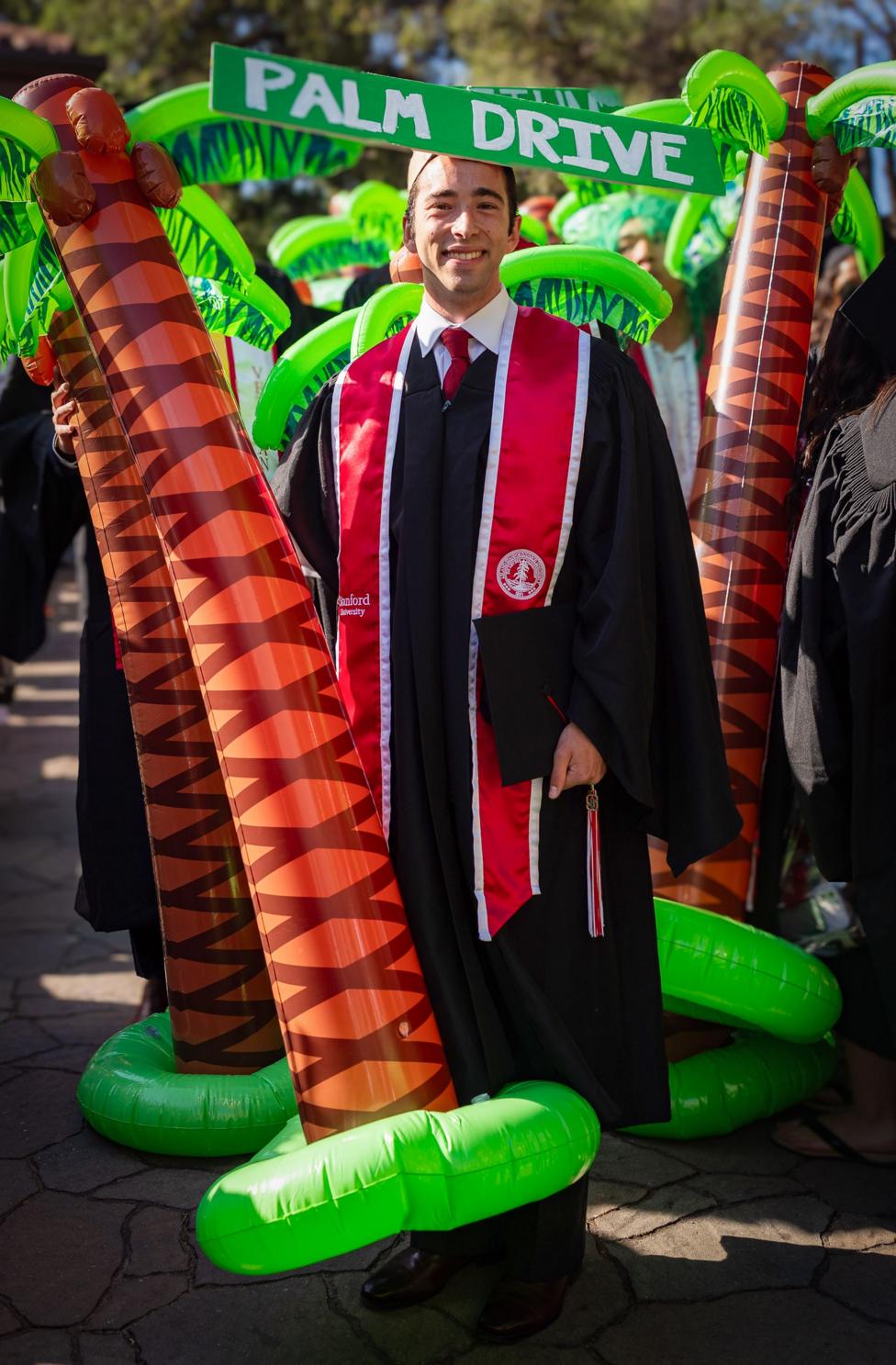
"It's too early to tell," he said, holding an inflatable palm tree ahead of the "Wacky Walk" graduation tradition. "It's an exciting place to be. It feels like we're at the edge of something."
Psychology major Colbey Harlan described AI as a useful tool, particularly for creative writing and managing ADHD, but voiced environmental concerns.
"I'm not a fan of how it's destroying the environment. Data centres are taking a lot of resources, a lot of energy," Harlan said. "I'm kind of at a point where it's like – 'Okay, AI is cool, but can we just stop progressing it?' because if we continue, things are going to get out of control."
Protests During Pichai’s Commencement Address
Google CEO Sundar Pichai, who earned a master's degree at Stanford, made only brief references to AI during his recent commencement speech.
"People have been giving me a lot of advice on what to say. Actually, it's been the same advice – and it's about what not to say," he remarked. "People thought it would be really difficult for me; it is the last two letters of my last name, after all."
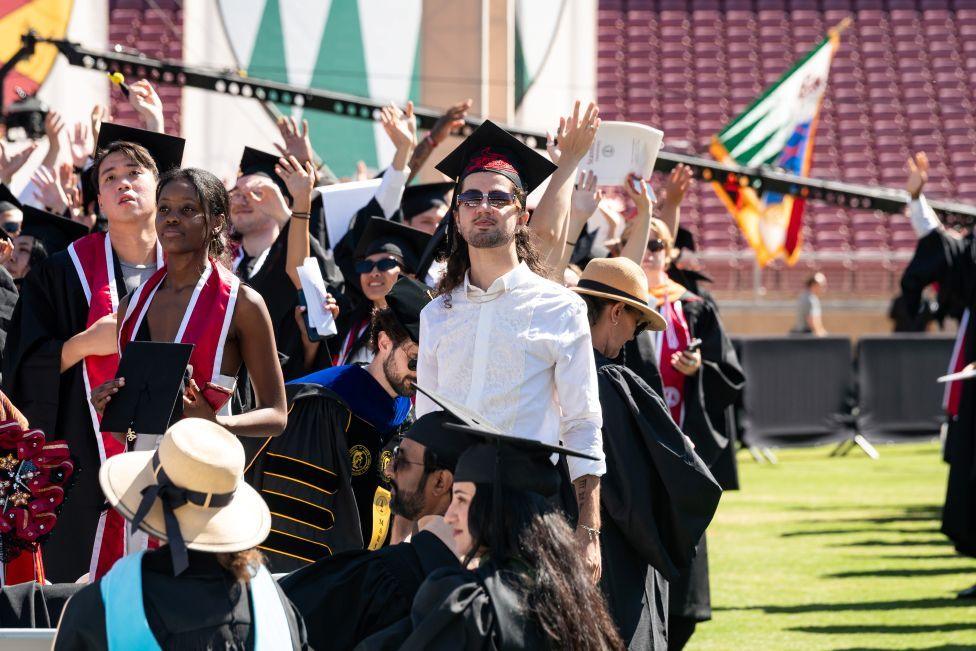
His remarks were partially drowned out by chants of "free Palestine" and others as approximately 200 students stood and walked out of Stanford Stadium.
Protesters carried signs criticizing Google's Nimbus contract to provide AI tools to the Israeli military.
Another sign read "ICE Spies With Google AI," referencing the company's connections to the Trump administration's immigration enforcement.
When asked by the BBC about the walkout, Pichai remained silent.
"His presence represents what this political climate is empowering, and who is benefiting from the AI race," said one anonymous graduate who participated in the walkout. "We cannot relate to him at all."
Some protesters attended an alternative ceremony featuring pro-Palestinian activist Mahmoud Khalil, known for his role in 2024 Gaza war protests at Columbia University and his legal battle against ICE deportation attempts.
Stanford students have staged protests at graduation ceremonies in 2024 and 2025 as well.
Balancing AI’s Promise and Perils
Despite widespread skepticism, some graduates believe AI could help address challenges it also creates.
Atash Heil plans to work on climate resilience in New Orleans and sees AI as a valuable tool for modeling climate change.
"I think AI can be useful in training models – like, for example, climate models that predict how the climate will change," Heil said.
He feels fortunate to have grown up without AI, allowing him to develop his cognitive skills, but anticipates AI will shape much of his life.
"I'm young," Heil said. "It's going to take up most of my lifetime."
Video by Katy Bailes, photographs by Seeger Gray and design by Jez Frazer


