SpaceX’s Acquisition of xAI Creates $1.25tn Business Amid Questions
The recent merger of SpaceX and Elon Musk’s artificial intelligence startup, xAI, represents a significant transaction combining two ambitious ventures into a business valued at $1.25tn (£920bn). This deal values SpaceX at $1tn and xAI at $250bn, with plans for a stock market flotation aligned with Musk’s birthday and a planetary alignment. The merger aims to extend "the light of consciousness to the stars," as Musk described it, but it has raised questions regarding its benefits for SpaceX’s non-Musk shareholders and the feasibility of the technological premise behind it.
Why is Musk Linking Rockets and AI?
Central to Musk’s rationale for the merger is the plan to relocate datacentres—the core infrastructure powering AI tools—into space. Musk argues that current AI companies rely heavily on earth-bound datacentres, which demand immense energy. His proposed solution involves deploying up to a million satellites in orbit to create vast, solar-powered datacentres.
Professors Julie McCann and Matthew Santer, co-directors of the School of Convergence Science in Space, Security and Telecoms at Imperial College London, acknowledge that solar-powered datacentres could be a future option for AI companies. However, they note limitations in the compute power achievable with current satellite technology, suggesting that a "planet-wide distributed computer composed of many satellites," as Musk envisions, would be necessary.
They also highlight potential challenges, such as ensuring high-quality connections between orbiting devices that must operate in tandem to replicate terrestrial datacentres and beam outputs back to Earth. Additional issues include exposure to solar radiation and maintenance difficulties. Terrestrial datacentres undergo constant maintenance due to normal component failures, but shipping and fitting components in space is complex and costly, requiring innovative solutions.
Musk envisions these space-based datacentres adding 100 gigawatts of AI capacity annually, underscoring the ambition of his vision. He believes merging rocket hardware with AI software will create the "most ambitious, vertically integrated innovation engine on (and off) Earth." Dan Ives, an analyst at Wedbush Securities, supports this view, stating:
"This merger is aimed at creating a new path to generate a low cost of generating AI compute within the next two to three years by bringing together the top internet/space exploration company with top datacentre builders."
Does xAI Need SpaceX’s Financial Support?
Musk’s AI company xAI competes with rivals investing heavily in infrastructure such as datacentres and computer chips. xAI, which developed the Grok AI tool and owns the social media network X, reportedly spent $13bn last year. Unlike competitors such as Meta, Amazon, Microsoft, and Google, xAI lacks a legacy cash-generating business to fund its operations.
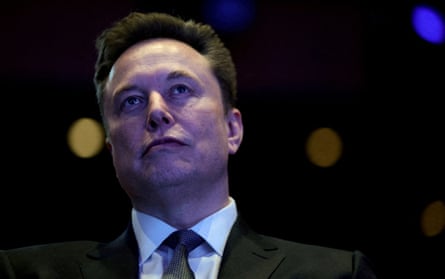
Combining with SpaceX provides xAI with improved access to capital and investors. Ross Gerber, an investor in Tesla and SpaceX, explains:

"Musk is already running low on capital for xAI and it is competing with companies putting hundreds of billions of dollars into their AI investments. If you merge SpaceX and xAI you can support xAI because SpaceX is an extremely attractive prospect to a lot of investors."
What Do SpaceX Shareholders Think?
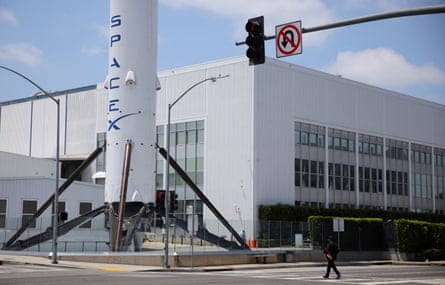
SpaceX operates a complex technology business with straightforward revenue streams, including reusable rocket launches for satellite deployment and International Space Station resupply missions, as well as the Starlink satellite internet service. In the previous year, SpaceX generated approximately $8bn in profit on revenues between $15bn and $16bn.
The addition of xAI introduces narrative complexity to SpaceX’s story. Michael Sobel, president and co-founder of Scenic Management, which invests in privately held companies including AI firm Anthropic, notes:
"By folding in xAI, which carries a significant monthly cash burn, you change the financial profile of the company overnight. In the secondary market, ‘simple’ is usually rewarded. This merger requires investors to do a lot more homework on how xAI’s cash burn impacts SpaceX’s overall valuation and IPO timeline."
There is also the added complexity of X, a social media platform frequently subject to controversy and scrutiny.
Nonetheless, Sobel acknowledges the compelling argument for the merger:
"For a long-term investor, this secures the most advanced AI ‘brain’ for the most advanced hardware ‘body’ in existence. The upside is a $1.25tn entity that controls the entire stack, from the launchpad to the neural network."
Gerber, who invested in Musk’s platform when it was known as Twitter, welcomes the deal but expresses reservations about SpaceX shareholders’ perspectives:
"For me as a Twitter shareholder, I could not be happier. I pretty much figured I had lost my money but that has now been parlayed into owning SpaceX shares. It’s awesome for me but if I was a SpaceX shareholder I would be pissed."
What’s Next? Potential Tesla-SpaceX Merger?
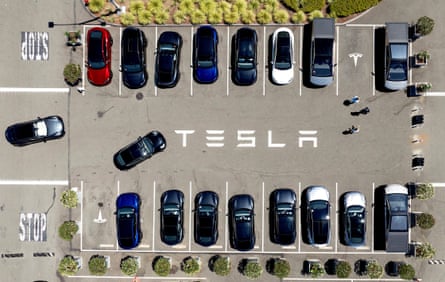
Musk holds approximately 44% of the combined SpaceX business and 17% of Tesla, where he serves as CEO. Speculation arises about a possible merger between SpaceX and Tesla.
Dan Ives suggests there is a "growing chance" of creating a unified investment vehicle encompassing Musk’s ventures, stating:
"Musk wants to own and control more of the AI ecosystem and step by step the holy grail could be combining SpaceX and Tesla."
Gerber agrees, noting the timing is favorable with both companies currently valued at $1.25tn:
"This is the time to create a multitrillion-dollar company. I know Elon. It’s going to happen."