Introduction to Quantum Battery Prototype
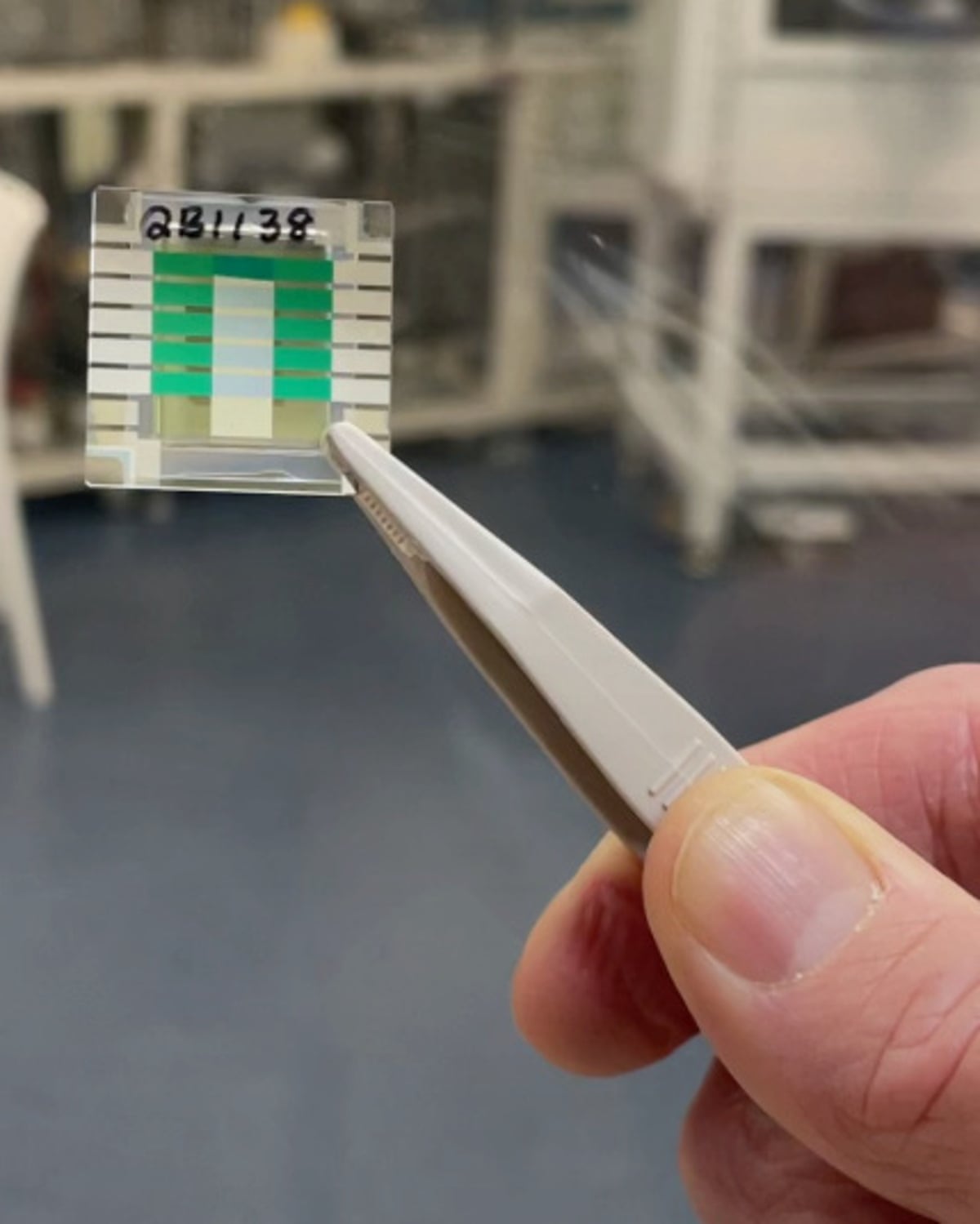
Australian researchers have announced the development of what they claim to be the world’s first proof-of-concept quantum battery. This prototype represents a significant advancement towards creating fully operational quantum batteries capable of rapid charging.
Quantum batteries, initially proposed as a theoretical concept in 2013, operate based on the principles of quantum mechanics to store energy. They hold promise for greater efficiency compared to traditional batteries.
The newly developed prototype is charged wirelessly using a laser, marking a major step forward in the realization of quantum batteries with fast charging capabilities.
Functionality and Advantages Over Conventional Batteries
Dr James Quach, lead researcher at CSIRO, Australia’s national science agency, explained the significance of the prototype:
“It’s the first prototype which does a full cycle of a battery: in other words, you charge it, you store energy, and you can discharge it.”
In conventional batteries, the time required to charge increases with the battery’s size. Dr Quach illustrated this by noting,
“That’s why your mobile phone takes about 30 minutes to charge and your electric car takes overnight to charge.”
Quantum batteries, however, exhibit a unique characteristic where the charging time decreases as the battery size increases. This phenomenon is attributed to “collective effects,” where quantum cells charge more rapidly when multiple cells are involved.
Previous Demonstrations and Current Prototype Capabilities
Dr Quach and his team had previously demonstrated the collective charging property in quantum batteries, but those prototypes lacked the ability to extract stored energy.

The current prototype, detailed in a scientific journal, charges in femtoseconds (quadrillionths of a second) and retains energy for nanoseconds, which is approximately six orders of magnitude longer.
To contextualize this, Dr Quach explained,
“For a battery that took one minute to charge, six orders of magnitude would mean it would stay charged for ‘a couple of years’.”
Despite this advancement, the prototype’s capacity remains limited to a few billion electron volts, which is insufficient to power practical devices.
“What we need to do next is … to increase the storage time,”Dr Quach added.
“You want your battery to hold charge longer than a few nanoseconds if you want to be able to talk to someone on a mobile phone.”
Potential Applications and Future Development
Fully operational quantum batteries that can charge almost instantaneously could eventually power quantum computers or small conventional electronic devices.
Since quantum batteries are charged wirelessly via lasers, they also present opportunities for remote charging applications.
“You could put a quantum battery, for example, on a drone … and you could charge it while it’s in flight,”Dr Quach said.
“Once the technology matures … you would no longer need to stop your car at a petrol station to charge it up; you could charge it on the go.”
Expert Commentary
Professor Andrew White, head of the quantum technology laboratory at the University of Queensland, who was not involved in the research, praised the work as
“a really nice piece of work showing that the quantum battery is more than an idea, it’s now a working prototype.”
He cautioned, however, that these batteries are not expected to be integrated into electric vehicles in the near future, but their initial impact will likely be in quantum computing.
Quantum batteries could supply energy coherently with minimal energy cost to quantum computers, Professor White noted.
“Quantum batteries could provide energy ‘coherently … with the minimum energy cost to these computers’,”White said.