AI Unlocks Text on Burnt Scroll from Vesuvius Eruption
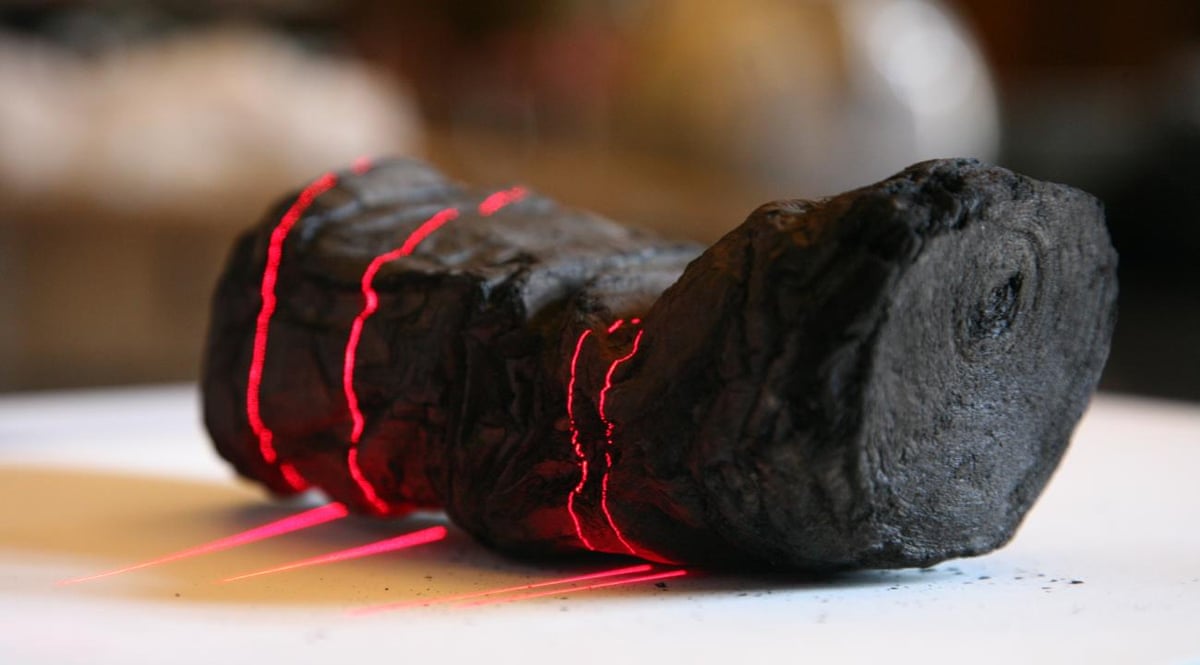
The surviving fragment of an ancient scroll, carbonized during the eruption of Mount Vesuvius nearly two millennia ago, has been virtually unrolled and its text deciphered with the assistance of artificial intelligence.
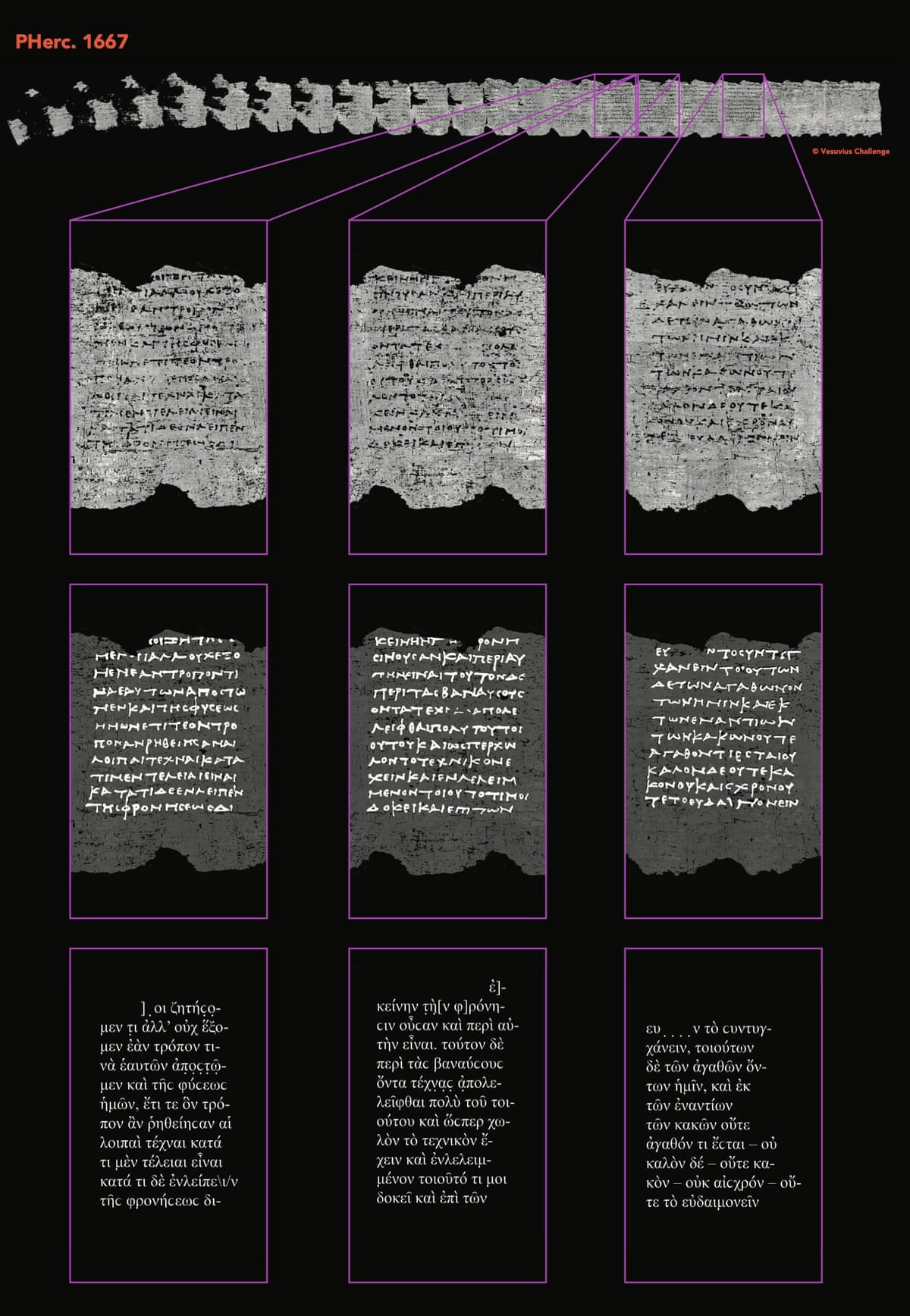
Researchers successfully revealed 20 columns of previously inaccessible text spanning over a meter of charred papyrus without physically unrolling the fragile scroll. The content discusses stoic philosophy, focusing on ethics, art, and human behavior, and is dated to the second or late-third century BC.
The scroll, designated PHerc 1667, is among the oldest in a collection of hundreds retrieved from the library of a luxurious Roman villa in Herculaneum. This villa was destroyed and buried under volcanic ash during the AD 79 eruption that also devastated Pompeii.
The scroll endured significant damage over time: it was broken in half, and earlier attempts to unwrap it caused the outer layers to flake or disintegrate. The remaining fragment measures only 8cm in height and 2cm in width, approximately half the size of the original.
“We don’t have the full scroll, but the surviving object was unwrapped and that’s a very important result because it shows that we are able to unwrap these objects completely.”said Dr Federica Nicolardi, a papyrologist at the University of Naples Federico II.
Advancements Announced at Naples Conference
The breakthrough was announced at a conference in Naples and represents the latest development from the Vesuvius Challenge, initiated in 2023 as an international competition to read the carbonized scrolls. The project has awarded substantial prizes to teams employing artificial intelligence and advanced software to virtually unwrap the scrolls and interpret the text from high-resolution X-ray imagery.
The Herculaneum library is predominantly composed of works by Philodemus of Gadara, an Epicurean philosopher and poet from the first century BC. However, the title and author of PHerc 1667 remain unidentified. Its earlier date and content suggest a different authorship.
Dr Nicolardi and her team’s analysis indicates the text is a stoic treatise, potentially authored by Chrysippus, a Greek philosopher and the third head of the Stoic school, whose other works are present in the collection. The text references Aristocreon, Chrysippus’s nephew and pupil.

“At first, we were saying this could be an Epicurean talking about stoic doctrine,”Nicolardi explained.
“But then I stopped and said, you know, if this was found outside of Herculaneum, we would categorise it as a stoic work.”
Machine Learning Enables Virtual Unwrapping
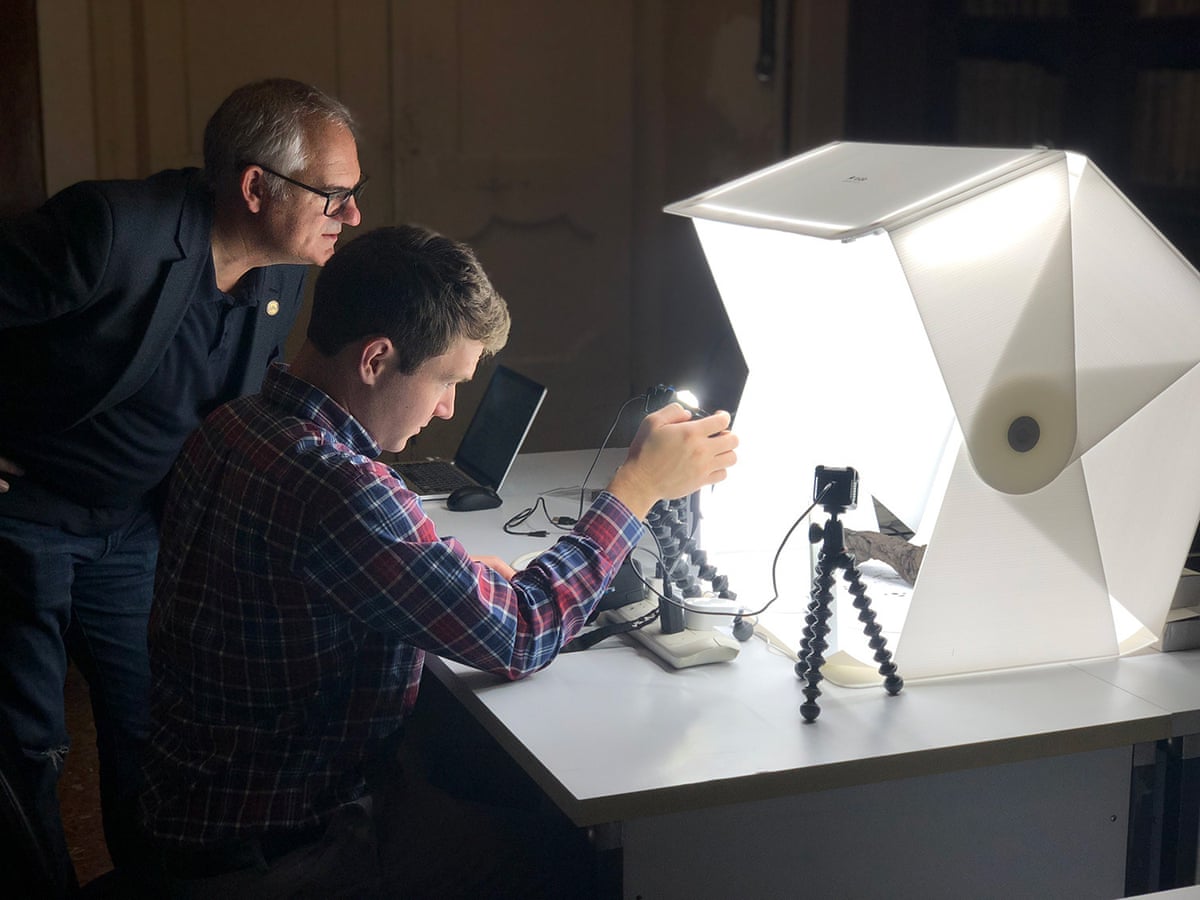
The Vesuvius Challenge builds on pioneering work by Professor Brent Seales, a computer scientist at the University of Kentucky. He demonstrated that machine-learning algorithms could be trained to detect ink on the concealed layers of the scrolls by identifying subtle variations in papyrus fibers within X-ray images. Supported by Silicon Valley donors, the contest attracted teams refining techniques to virtually unwrap and read the scrolls.
Insights into Stoic Concepts
The newly deciphered text explores the stoic concept of hormē, or impulse, cautioning that failing to regulate behavior through reason can result in destructive passions and deviation from one’s objectives. It also discusses phronēsis, or “practical wisdom,” regarded as the highest virtue in stoic philosophy.
One passage states:
“We will inquire into something, but we will not grasp it, if in some way we depart from ourselves and from our own nature.”This suggests that reason and the innate human inclination toward good are essential for advancing knowledge.
Additional Discoveries from Virtual Unwrapping
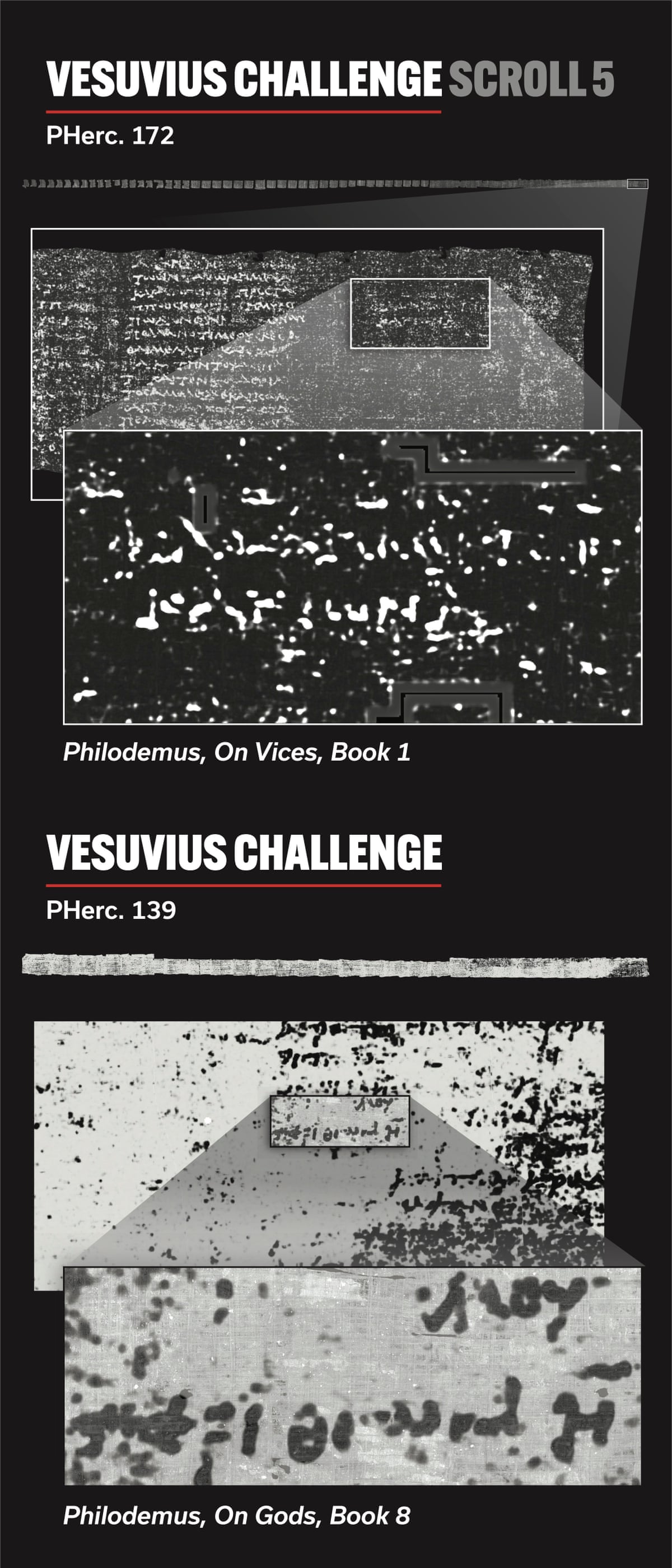
Another virtually unwrapped scroll revealed the inscription “Philodemus, On Gods, Book 8,” confirming for the first time that On Gods was a multi-book work. Previously, only the first book had been identified.
“These unopened Herculaneum Scrolls look like dead books, but they’re not,”Nicolardi remarked.
“They’re starting to speak again.”
From Technical Achievement to Scholarly Interpretation
Professor Seales noted that the challenge has shifted from developing methods to read the burnt scrolls to the scholarly task of interpreting their content.
“People now know that this can be done and now we’re exploring what [the texts] actually mean,”he said.
“For me that’s the world cup. I just won the world cup: that’s my victory.”