Introduction to Aberdeen's Potential Transport Innovation
The public in Aberdeen is currently being offered a chance to view a new type of bus that resembles and operates more like a tram, potentially marking a significant shift in the city's transport system.
Transport partnership Nestrans has displayed one such vehicle in the city centre, allowing residents and visitors to examine it firsthand.
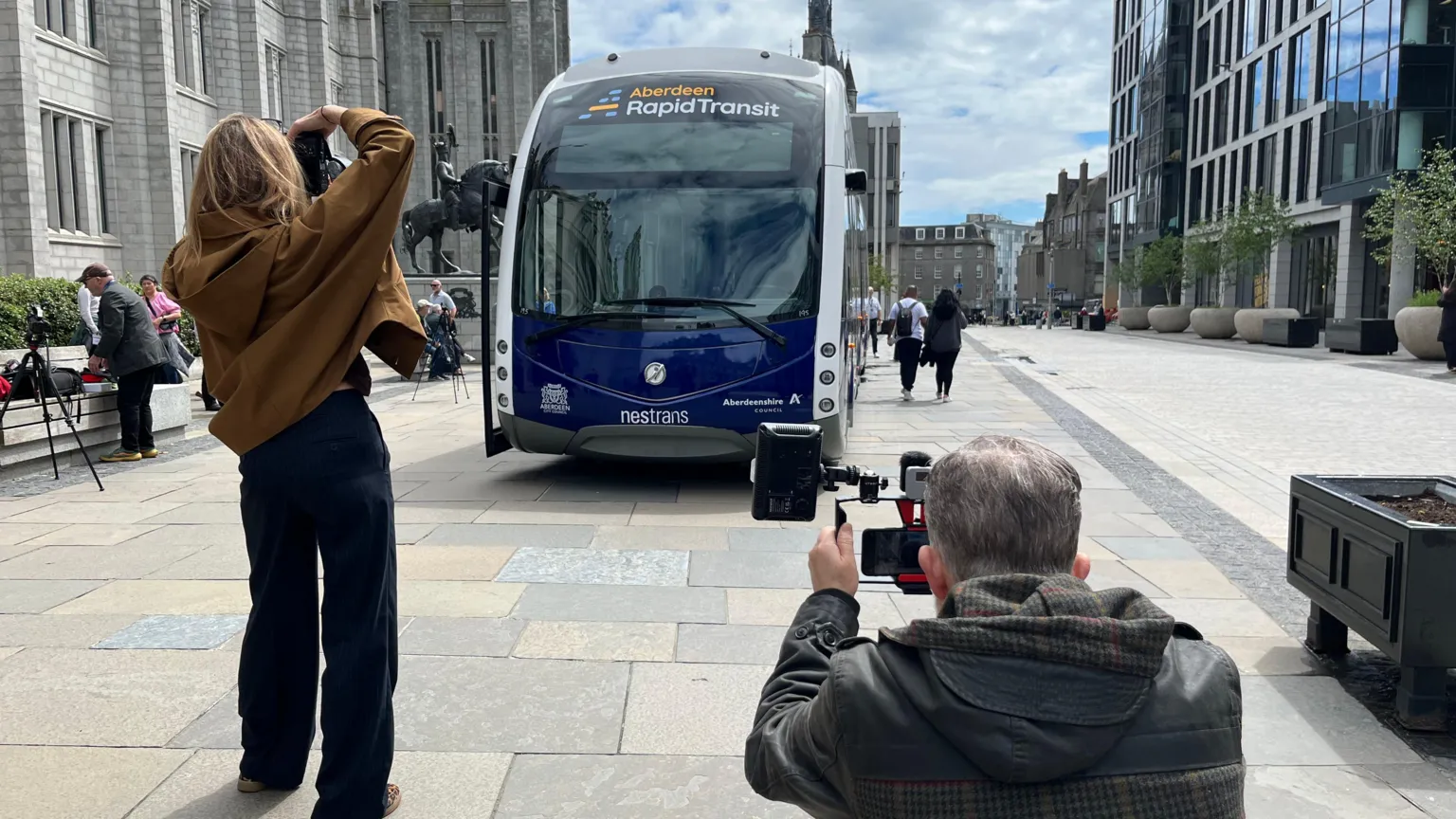
Aberdeen Rapid Transit Scheme Overview
This vehicle is part of the Aberdeen Rapid Transit scheme, which, if approved, would establish dedicated lanes for these buses along two routes. These routes would connect the city centre with key locations such as the airport, the infirmary, and the university.
The scheme is projected to cost hundreds of millions of pounds. Nestrans emphasizes that these vehicles are designed to be easier to board than traditional buses and aim to reduce journey times by enabling passengers to purchase tickets in advance.
Distinctive Features of the Tram-Like Bus
So, how does this vehicle differ from a conventional bus?
The buses include level boarding, multiple wide doors, and can accommodate up to 150 passengers.

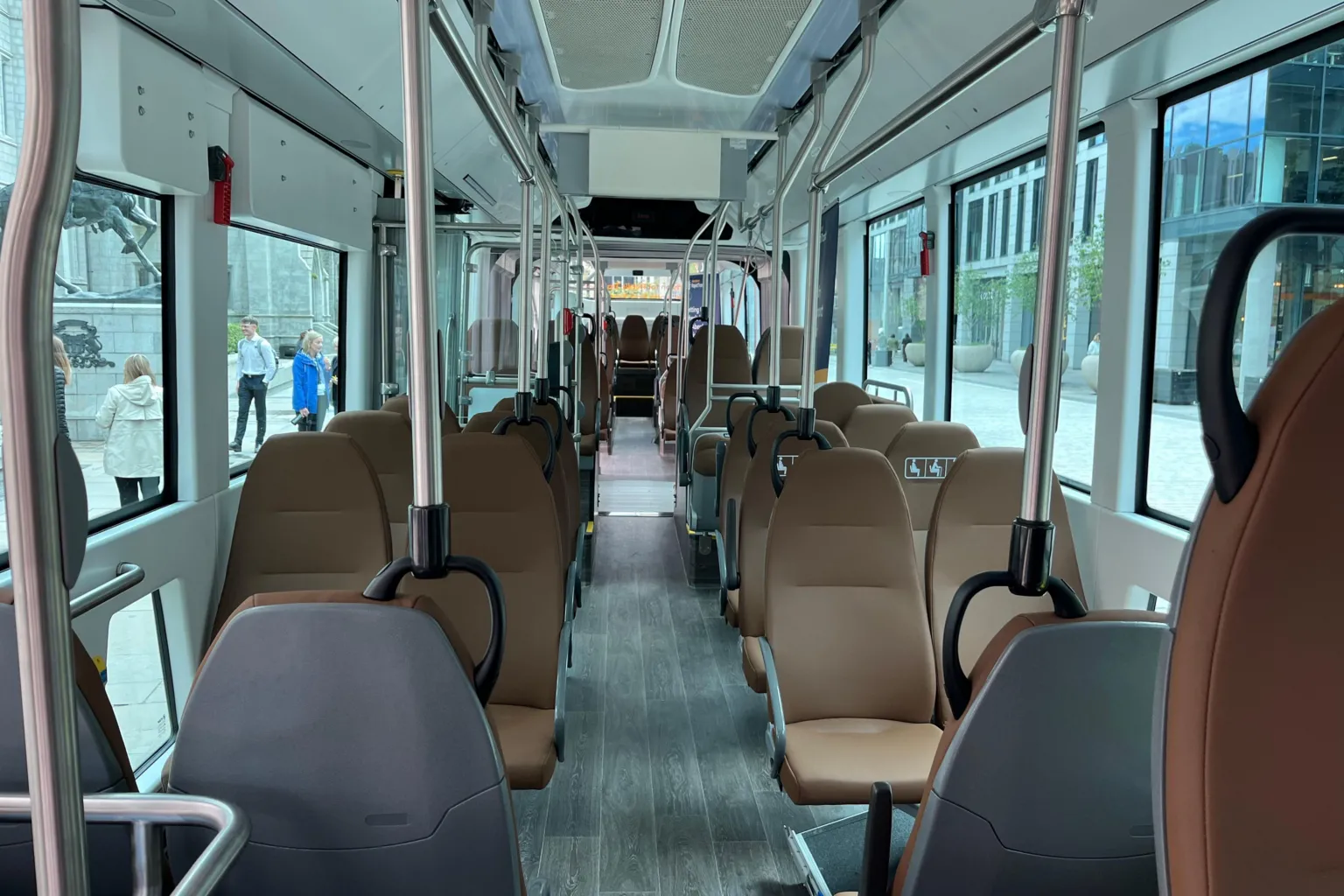
Paul Finch from Nestrans highlighted that these vehicles are expected to provide "greater capacity and better reliability than an ordinary bus system."
"It is part of having modern vehicles that are easy to get on and get off.
It is about the ticketing strategy so you can be having your ticket before you board so you are not delayed by the interaction with the driver on and off.
That helps the journey times."
Finch also emphasized that the project involves a "jigsaw" of components, including the entire system to be implemented, not just the vehicles themselves.
Financial Considerations and Project Scope
A report published last year estimated the project's cost to be between £167 million and £323 million.
The lower-cost option would involve less new infrastructure, while the higher-cost alternative would include more extensive construction and integrated cycling facilities.
Finch noted that the precise cost would only be determined once an outline business case is submitted next year.
"There is a capital cost and that sits within a range," he told BBC Scotland News.
"We should not be shy of asking for what we actually need for the support going forward to deliver on our ambitions.
The north east of Scotland is such an important part of the economic viability of Scotland, it contributes so much.
We should be asking for this sort of amount of money, and we should be working at how we can find ways to deliver that."
Vehicle Demonstration and Future Plans
The vehicle, transported from Spain specifically for this demonstration, will also be showcased in Westhill, Kingswells, and Portlethen next week.
Finch expressed optimism about the timeline for the scheme, stating that it could be operational within five to ten years and that he was "confident" this would be achieved.