Australian nicotine use rises amid booming illegal tobacco trade and pop culture revival
Have you noticed? Smoking is back in the spotlight. Kylie Jenner appeared smoking on the cover of Vanity Fair. Madonna and Hailey Bieber posed with cigarettes for Interview magazine. Fashion brands like Cool Girl and Dôen have distributed branded cigarette packs at parties.
Zendaya’s character Rue in the latest season of Euphoria is frequently shown smoking, working in a smoke shop. Fans have even inquired on social media about the brand she uses.
The return of cigarettes to pop culture is unmistakable. Dedicated social media posts showcase celebrities looking stylish while smoking, despite the increased lung cancer risk by about 25%. Publications compile lists of stars who smoke, normalizing the habit.
The public health nonprofit Truth Initiative reported that tobacco depictions in the 15 most popular streaming shows among 15-to-24-year-olds rose by 110% between 2021 and 2022. Over half (53%) of young people’s most-watched shows featured tobacco imagery. Notably, three of the top eight were animated series, including The Simpsons.
Tobacco imagery in music videos has also surged. In 2018, 12% of top Billboard music videos depicted smoking; by 2022, this had more than doubled to 28%.
‘Heaps of my friends smoke!’
These trends raise concern among experts.
“We are concerned about people of any age taking up smoking. Young people are particularly influenced by their peer group,”says Rachael Andersen, Quit director at Cancer Council Victoria.
“Gratuitous depictions of smoking in film and music, on streaming services, down fashion runways, across social media and amongst the celebrity elite all contribute to the false notion that smoking is ‘cool’,”she adds.
“Big tobacco has been using cultural cachet to promote its lethal products for decades. When used as intended, smoking still kills two in three lifetime users.”
Australia has one of the world’s lowest daily smoking rates. Between 1991 and 2010, the daily smoking rate fell from 24% to 15%. The last decade saw further declines, with rates continuing to drop annually until 2019. However, in June 2024, the Australian Bureau of Statistics reported a 40% rise in nicotine consumption since 2017.
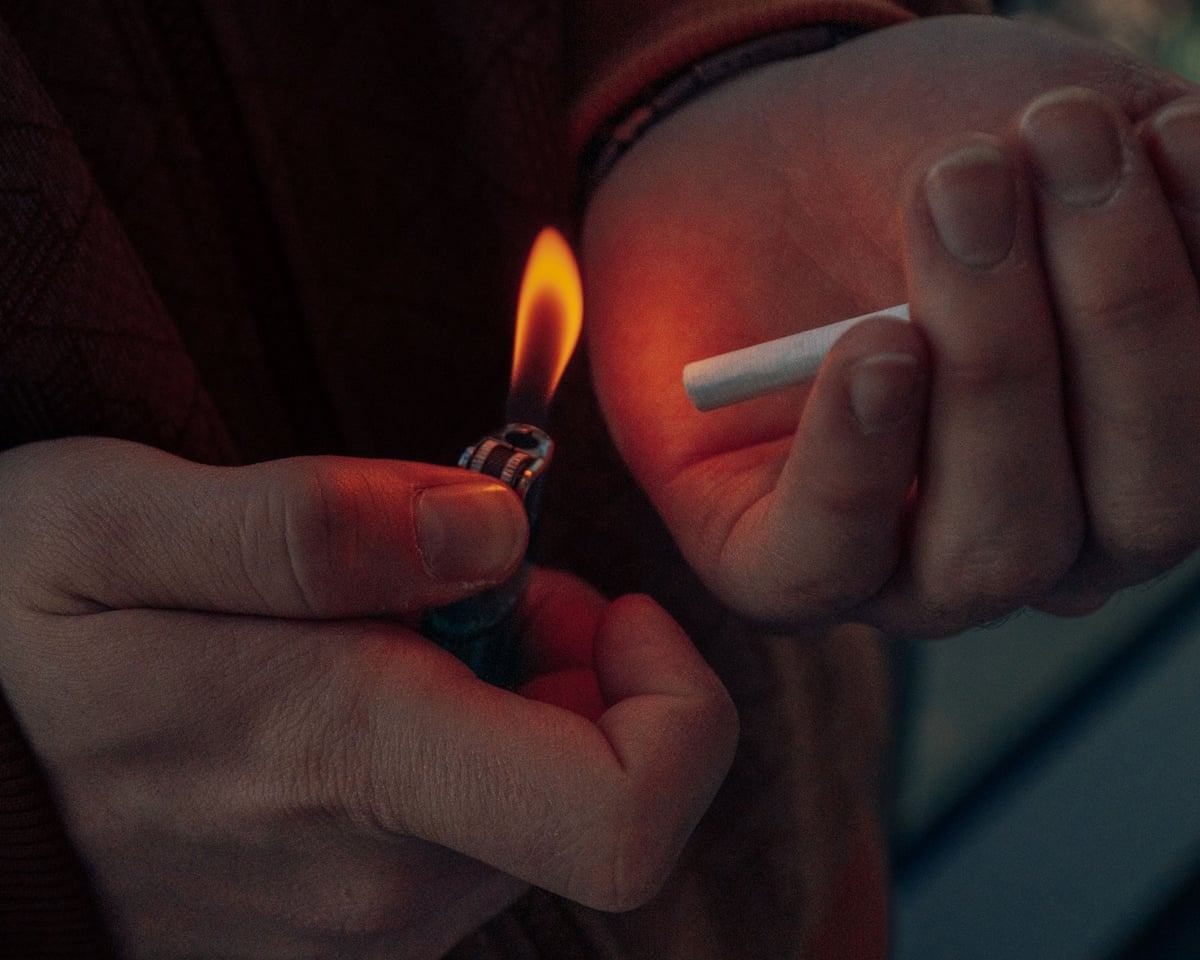
This increase is not isolated to Australia; parts of England have also reported rising smoking rates.
Levi, a 22-year-old personal trainer and sport science student, describes himself as an occasional smoker despite his health-focused lifestyle.
“I definitely see a lot more people smoking than I used to,”he says.
Melbourne florist Briony Wright recalls smoking’s heyday in the 1990s when she worked in fashion media and DJed.
“It felt like … one big ad for how cool smoking was,”she remembers.
“Everyone basically knew it was bad for them but it was so intrinsic to any interesting friend group, counter-or-subculture that it was just part of life.”
That changed over time. By the early 2020s, smoking was largely excluded from social settings. Yet Wright has noticed a resurgence among her friends.
“Heaps of my friends smoke!”she says, adding,
“They also go to the gym.”
The recent smoking resurgence in Australia is linked to the rise of illegal tobacco and e-cigarette use.
In July 2024, Australia banned the recreational sale and importation of vapes. This ban was driven by concerns over increasing e-cigarette use. However, new challenges emerged.
“I think a lot of people picked up smoking cigarettes as a way to weirdly try to stop vaping,”Levi explains.
“It’s a lot easier to limit cigarettes than vaping because you have to go outside, wash your hands, brush your teeth. But with vaping you can kind of do it anywhere, anytime, very discreetly.”
Levi’s personal experience reflects a broader trend. He began smoking cigarettes after a breakup, then transitioned to vaping on friends’ advice to quit smoking.
“I pretty much transitioned from one vice to another.”
He was addicted to vaping for about six months, using it more than cigarettes. He has since returned to smoking in an attempt to quit vaping.
Australia imposes high taxes on cigarettes to deter smoking. At the time of writing, tobacconist chain Smokemark priced packs between $37 and $42. However, the illegal tobacco market has grown dramatically, rising from 12% of all tobacco consumed a decade ago to an estimated 80% in 2025.
Illegal tobacco mainly consists of imported cigarettes from Asia and the Middle East. These black market cigarettes typically cost less than half the legal price, retailing for as low as $10 to $15 per pack.
“I have a bunch of friends that drive to all sorts of places trying to get either different vapes or different non-brand cigarettes,”Levi says.
The price difference appeals not only to youth but to a broader demographic.

“I honestly think that the people who transitioned to vaping, or who maybe started out vaping, are all smoking cigarettes again because these cheap, off-brand tailor-made cigarettes are more widely available, making them easier to justify,”Wright observes.
Levi adds,
“I feel now it’s seen as very cringe or embarrassing to pull out a vape compared to smoking cigarettes.”
Romanticised nostalgia
Joanna Nilson, co-founder and host of the fashion and culture account Haute and Bothered, attributes the smoking resurgence partly to cyclical fashion trends online. She notes that many young people have idealised the early 2000s “indie sleaze” aesthetic during Covid lockdowns.
“Younger people … rediscovered a lot of the party pictures and Tumblr accounts from this period, and the messiness and liberation that seemed to be documented with it – morning-after hair, dirty ballet flats, lived-in makeup and people smoking inside clubs.”
Nilson also links smoking to other concerning health trends. With renewed emphasis on “thinness as currency,” she is
“not surprised”that some people turn to smoking as an appetite suppressant.
Another theory, though difficult to quantify, suggests a form of generational nihilism. In the widely read article “I Mean, Why Shouldn’t We All Smoke Cigarettes Again?” author Xochitl Gonzalez reflects on her own temptations. Amid constant distressing news, she admits to craving a cigarette.
When Nilson expressed frustration about smoking’s return on Haute and Bothered’s Instagram, many responses echoed Gonzalez’s sentiments.
“A lot of people were saying, ‘Well, I have to work twice as much as my parents to merely survive, let alone be able to buy a house or have a family.’ They’re stressed out and don’t see a comfortable and dignified future for themselves.”
Hannah McElhinney, co-founder of youth-focused creative agency Snack Drawer, observes a similar sense of disconnection.
“People like Charli XCX glamorise club culture, smoking, drinking and staying out late which can feel really refreshing since we’ve been in this era of isolation and rigid wellness routines. Smoking has always been about rebellion, and so when people want to rebel against their own health, cigarettes are naturally going to have their moment,”she explains.
“Big tobacco doesn’t need to do much but let it burn!”
‘Tobacco companies manipulate us’
While tobacco companies may not need to do much to promote smoking’s resurgence, they remain actively engaged in shaping its image. For much of the 20th century, cigarette ads were high-style fashion fantasies shot by renowned photographers like Irving Penn and Sam Abell.
In the late 20th century, many countries, including Australia, began restricting tobacco advertising and sponsorships in media. Australia pioneered the Tobacco Advertising Prohibition Act in 1992, largely banning tobacco advertising nationally. A decade later, Australia was the first country to introduce plain packaging laws.
In response, tobacco companies have continually innovated to circumvent legislation.
“They have been forced to innovate constantly to get around legislation,”says McElhinney.
The University of Bath’s Tobacco Control Research Group found that tobacco companies indirectly promote products by associating smoking with youth culture and employing third-party advocates, such as social media influencers, to carry marketing messages.
In June 2024, Australian fashion retailer Princess Polly was reprimanded by Ad Standards over a YouTube ad showing young people smoking in a convertible and at a barbecue. The ad framed cigarettes as part of a “rebellious youth lifestyle.”
Despite decades of aggressive health warnings, it is easy to become desensitized to the dangers of smoking.
“Smoking is highly addictive and causes 16 types of cancer. Sadly, 24,000 Australians die from smoking-related illness every year – that’s 66 families losing a loved one each day,”Andersen states.
Social trends, public policy, and advertising have at times placed smoking at the center of mainstream culture, but public health efforts have also pushed it to the margins.
McElhinney is hopeful Australia can reverse the trend again but acknowledges the challenge. She suggests public health campaigns should focus not only on smoking’s health risks but also on educating the public about how
“tobacco companies manipulate us through insidiously inserting themselves into culture.”The idea is that recognizing these tactics may reduce their influence.
“Now taking on big tobacco isn’t as simple as banning glossy print ads,”she says.
“Over the past decade, subtle culture-led advertising has become best in class. As big tobacco continues to innovate and shapeshift, it’s hard for consumers and public health advocates to keep up.”
Additional reporting by Daisy Dumas.