NHS targets "streak" culture to get nation walking
Walking has long been associated with improved health, and for the first time, an NHS-supported initiative will offer rewards to individuals who engage in regular exercise.
Early next year, NHS England plans to introduce a "marathon a month" challenge, encouraging participants to walk approximately 30 minutes daily.
Completing daily walks will amount to roughly 26 miles per month, equivalent to the distance of a marathon.
Participants will have the option to log their walks online or via their mobile phones or smartwatches.
The NHS has indicated that those who successfully complete the challenge will qualify for rewards, which may include incentives and discounts.
"I'd do it. Small chunks would be easy to fit in," says Lauren Andrew. "I don't have a gym membership or any of that but I could go for a walk. That's free."
Regarding incentives, she adds, "If my walking is converted into a freebie, like a drink or food, then that would help get me to do it."

Younger individuals under 25, interviewed by the BBC, generally responded positively to the scheme. One participant noted that the gamified nature of the challenge would motivate her to be more active, with the desire to maintain a "streak" or consecutive days of activity serving as a strong incentive.
Another participant, who already walks approximately a marathon distance monthly, expressed willingness to accept rewards for an activity he already performs.
Regarding funding, the NHS will finance the initial setup of the program; however, the broader strategy involves securing philanthropic support from major corporations as the initiative expands.
Walking scheme taps into 'streak' culture
The initiative is being developed in collaboration with Olympic medallist Sir Brendan Foster, founder of the Great North Run, who was invited by NHS England to design a campaign promoting walking.
"I'm known for running, but the ambition here is far simpler. We just want people to walk. Simple," Sir Brendan Foster said.
This program forms part of England's 10-year health plan. Sir Brendan Foster told the BBC that increasing physical activity among the population is his objective.
According to NHS England, physical inactivity is linked to one in six deaths. An individual is classified as physically inactive if they engage in less than 30 minutes of moderate-intensity physical activity per week.
A Sport England survey revealed that nearly 25% of adults, approximately 12 million people, fell into this category in the year leading up to November 2025.

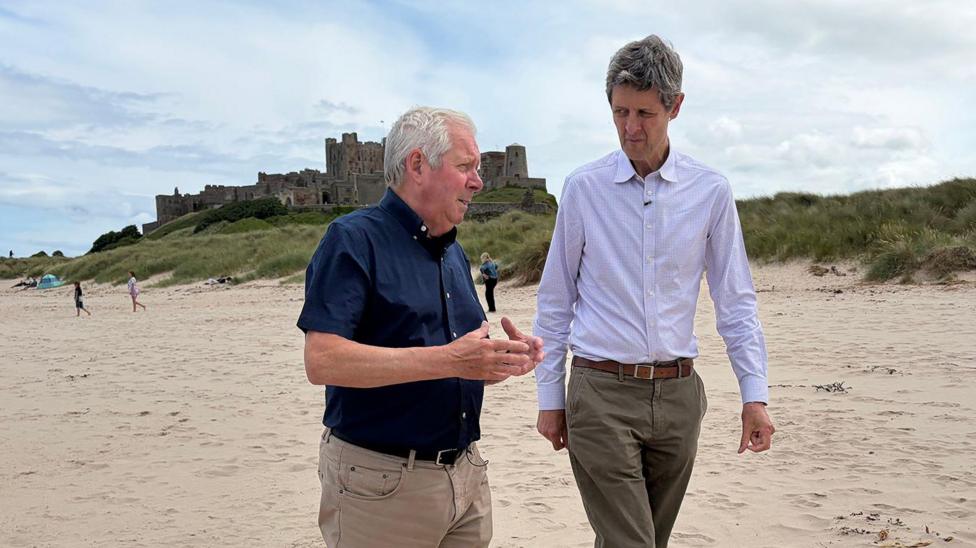
The goal is to enroll over 100,000 participants who will record their daily walking statistics digitally.
If this target is achieved, Sir Brendan Foster stated it would represent the largest marathon in history.
He anticipates that "streak culture," a habit-forming behavior popularized by platforms such as Snapchat and Duolingo, will assist participants in maintaining the challenge.
The health benefits and potential cost savings for the NHS are expected to be substantial.
"If someone walks 30 minutes five times a week, they could gain up to four extra years of healthy life," Sir Brendan Foster explained.
Sonia Pombo, head of research and impact at Action on Salt & Sugar, commented on the initiative:
"Encouraging people to build regular movement into their daily lives can support better health, and making it simple, achievable and rewarding may help more people get started.
"But we cannot rely on individual behaviour change alone. If the government is serious about improving the nation's health, particularly for children, it must pair initiatives like this with stronger prevention measures."
Full details regarding the voucher scheme and instructions on how to enroll will be announced in the coming months.
Get in touch
How do you fit in 30 minutes of walking each day? Share your advice and tips.
Want to feel happier at work? Take a five-minute walk
Ministers want 60% of children walking or cycling to school by 2035
Just 7,000 steps a day could cut health risks, study says