

WHO Elevates Ebola Risk Level in DR Congo
The World Health Organization (WHO) has raised the public health risk from the ongoing Ebola outbreak in the Democratic Republic of Congo (DR Congo) from "high" to "very high." This update was announced on Friday by WHO Director-General Dr Tedros Adhanom Ghebreyesus.
Dr Tedros also indicated that the risk level in the broader African region remains high, while the global risk continues to be assessed as low.
Details on the Bundibugyo Ebola Outbreak
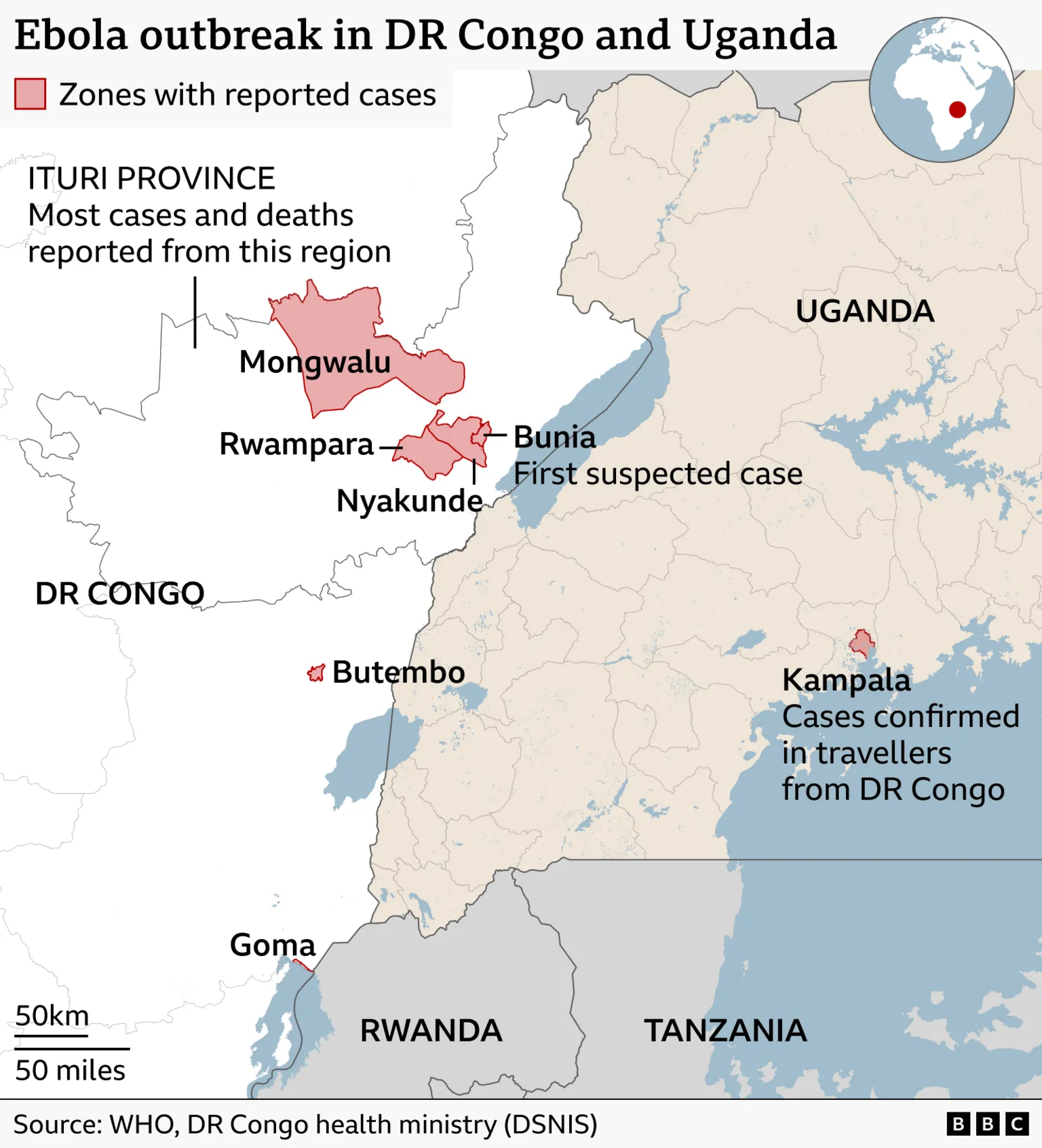
The outbreak involves a rare strain of Ebola virus known as Bundibugyo, which currently has no proven vaccine and has a fatality rate of approximately one-third of those infected. To date, the outbreak centered in DR Congo has resulted in 177 suspected deaths and 750 suspected cases.
Scientists at Oxford University in the United Kingdom are developing a new vaccine targeting this strain, with potential readiness for clinical trials within two to three months. However, there is no certainty regarding the vaccine's effectiveness, as it must undergo animal testing and human trials to determine its safety and efficacy.
In addition, a separate experimental Bundibugyo vaccine is under development but is expected to require six to nine months before any doses are available for testing.
WHO Risk Assessment and Regional Situation
During a news briefing in Geneva on Friday, Dr Tedros stated:

"We are now revising our risk assessment to very high at the national level, high at the regional level, and low at the global level."
He further commented on the situation in Uganda, where two confirmed cases of Bundibugyo Ebola and one death have been reported. Both cases involved individuals who had traveled from neighboring DR Congo. Dr Tedros described the situation in Uganda as "stable."
Characteristics and Transmission of Bundibugyo Ebola
Ebola is a rare but severe viral disease. Although the Bundibugyo strain is less deadly than other Ebola species, its rarity means that fewer medical countermeasures are available to combat it.
Ebola viruses typically infect animals, especially fruit bats, which serve as natural reservoirs. Human outbreaks can begin when people come into contact with or consume infected animals.
WHO Declaration and Challenges in Response
On Sunday, the WHO declared the Ebola outbreak a public health emergency of international concern but clarified that it does not constitute a pandemic.
Dr Tedros emphasized the importance of building trust with affected communities, noting that violence and insecurity in the conflict-affected region are impeding efforts to control the outbreak.
He made these remarks following an incident in eastern DR Congo where relatives, angered by health workers’ refusal to release a patient's body due to contamination risks, set fire to a hospital.


