

Warm Weather and UV Radiation
Warm weather often brings elevated levels of ultraviolet (UV) radiation. UV radiation is emitted by the Sun and penetrates the Earth's atmosphere. While some exposure is necessary for health, excessive exposure can lead to skin damage.
Is UV Dangerous?
UV radiation is beneficial because it enables the skin to produce vitamin D, which is essential for bone health, blood cell function, and the immune system. However, caution is advised regarding the duration of sun exposure. Professor Dorothy Bennett from St George's, University of London, emphasizes the risks associated with UV exposure.
"Every exposure to UV, especially every sunburn, increases our risk of skin cancer. Melanoma, the most dangerous skin cancer, is now the fifth commonest cancer in the UK, the ongoing rise being attributed to sunbathing."
UV radiation contributes to skin cancer by damaging DNA in skin cells. It also significantly accelerates skin aging, causing wrinkles and loosened skin folds. Additionally, UV exposure has been linked to eye conditions such as cataracts.
What is the UV Index?
UV radiation levels fluctuate throughout the day, peaking during the four-hour window around "solar noon," when the sun is highest, typically from late morning to early afternoon. The UV Index (UVI) is an international standard measurement of ultraviolet radiation, starting at zero and potentially exceeding 10. Higher values indicate greater potential for skin and eye damage and shorter times for harm to occur.
What Are the Different UV Levels?
Countries near the equator experience very high UV levels around midday year-round. For example, Nairobi, Kenya, can have UV levels above 10 throughout the year, according to the World Health Organization (WHO). In contrast, Majorca, Spain, typically reaches a UV level of nine during June and July. The Falkland Islands in the South Atlantic rarely exceed a UV level of five, even in summer.
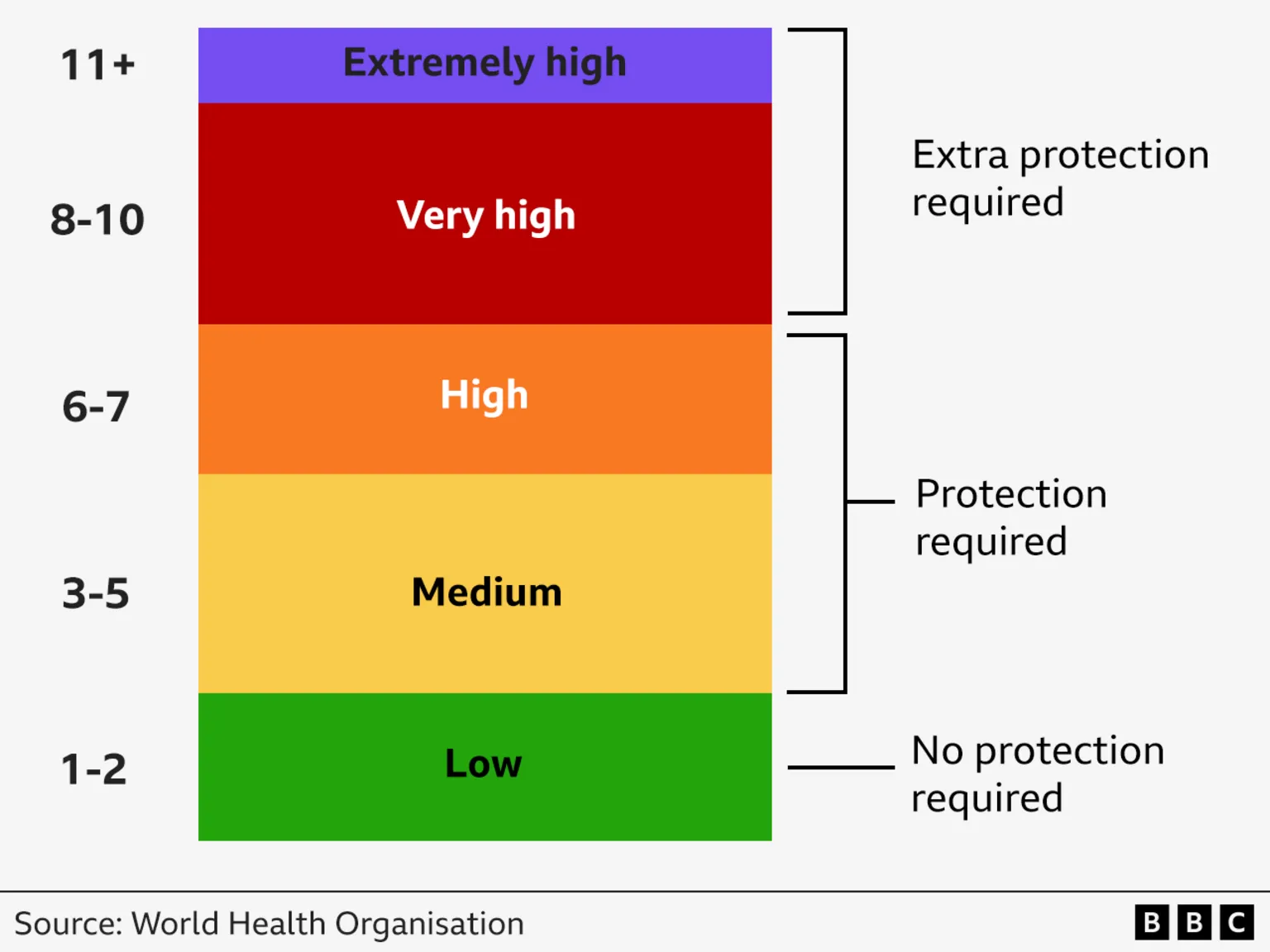
What Do the Different UV Levels Mean for People?
The WHO provides guidance on sun protection requirements based on UV levels. No sun protection is necessary at low UV levels, some protection is advised at moderate levels, and extra protection is required at high UV levels. Children are more sensitive to UV radiation than adults and thus need additional protection even at lower levels.
How Can You Avoid UV Damage?
Research worldwide indicates that people often miss certain body areas when applying sunscreen, according to Dr. Bav Shergill from the British Association of Dermatologists.

"People often forget the side of their nose - where I have seen a lot of skin cancer,"
He also highlights the importance of protecting the temples and upper chest. Adults should apply approximately six to eight teaspoons of sunscreen to cover the entire body adequately.
Can You Tan Safely?
The NHS states there is no safe or healthy method to obtain a tan. Dr. Shergill advises using self-tanning products instead.
"When you tan, ultraviolet light stimulates your skin cells to produce pigment to try and protect the DNA of skin cells - but that protection is minimal - the equivalent of SP4. That is not much protection at all - so you can still burn very early,"
he warns.
Can You Burn Even When It Is Cloudy and Windy?
The amount of UV radiation reaching the skin is not determined by the ambient temperature, explains Dr. Michaela Hegglin from the University of Reading.
"UV levels on a bright and breezy late April day in the UK will be about the same as a warm sunny day in August."
BBC Weather's Helen Willetts adds,
"Your skin can burn just as quickly whether it's 30C or 20C. Don't be caught out on cloudy days. UV will still penetrate thin clouds - so even if you don't think it's that sunny, you can still burn."
I Have Brown Skin. Do I Need to Worry?
Skin color does not necessarily provide complete protection against UV damage. Dr. Shergill notes,
"The skin may look darker, but it doesn’t always behave that way from a protection point of view – because there are more genes at play than we think about. I have, for example, seen South Asian people with skin cancer and I have seen people with dual-heritage get skin cancer."
Furthermore, the risks of eye damage and immune system impairment from excessive UV exposure affect individuals of all skin tones.


