

Resident Doctors to Strike in England Over Pay and Staffing Concerns
Resident doctors in England are set to undertake a six-day strike in April following unsuccessful negotiations between the British Medical Association (BMA) and the government. The union contends that their pay demands and concerns regarding workforce shortages have not been sufficiently addressed, while the government maintains that the doctors’ expectations are unreasonable and unrealistic.
This strike, scheduled after the Easter bank holiday weekend, will mark the 15th industrial action in an ongoing dispute that began in March 2023.
Who Are Resident Doctors?
Resident doctors, formerly known as junior doctors, are qualified medical practitioners who have completed a medical degree. They constitute nearly half of all doctors in England and work across the National Health Service (NHS), including in Accident & Emergency (A&E) departments and general practitioner (GP) surgeries.
Following their medical degree and a mandatory two-year foundation training, many resident doctors choose to specialise in specific medical or surgical fields. In September 2024, the government agreed to rename their role from junior doctors to resident doctors to better reflect their expertise.
Training to become a fully qualified specialist can be lengthy; some resident doctors may have recently graduated, while others may possess over a decade of practical experience and hold responsibility for most aspects of patient care.
Resident Doctors' Earnings
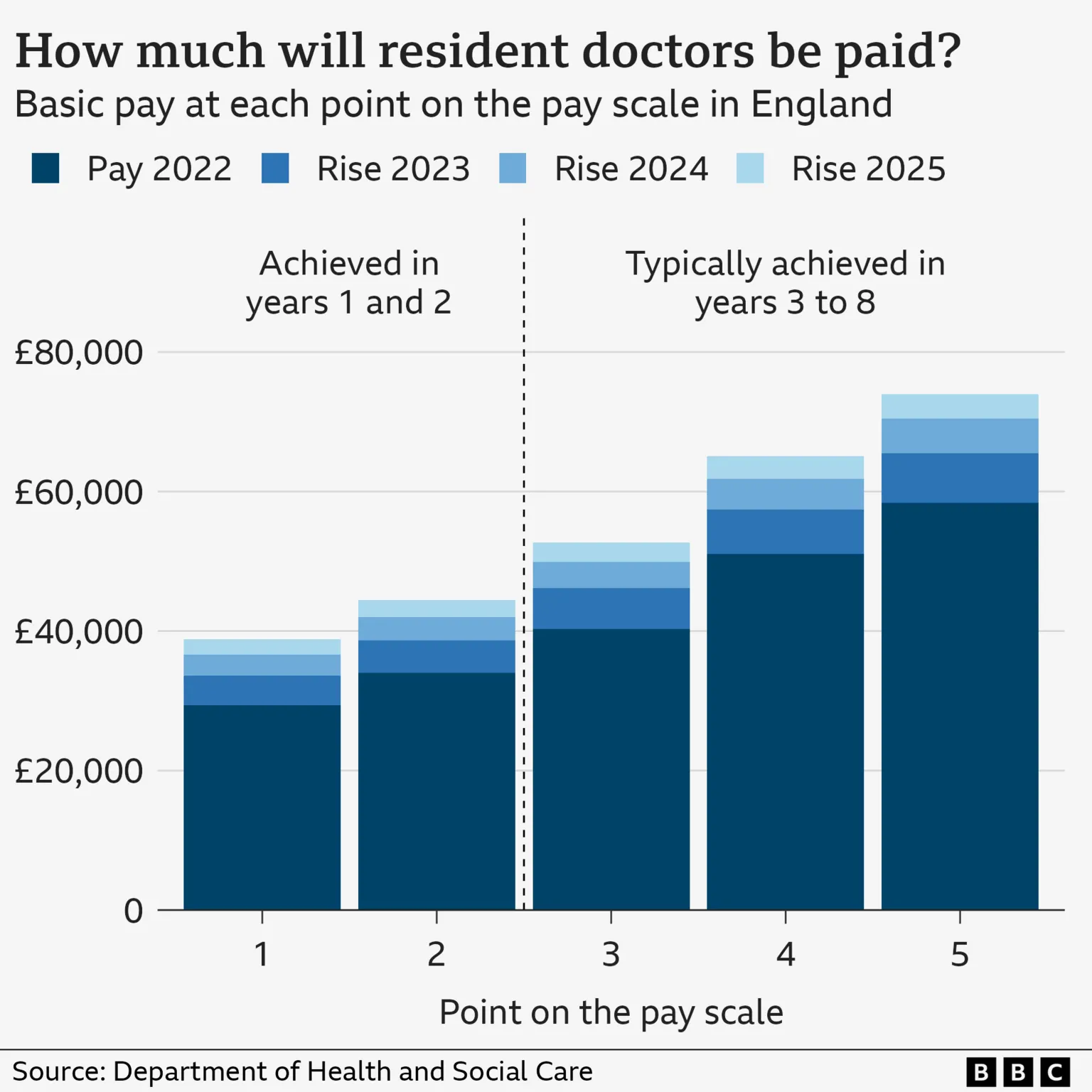
In England, resident doctors earn a basic salary of £38,831 during their first foundation year after graduation, which increases to £44,439 in their second year. They frequently work night shifts, weekends, and extended hours, for which they receive additional payments.
After eight or more years of training and experience, salaries can rise to approximately £73,000.
Between 2023 and 2024, resident doctors received cumulative pay increases totaling 22%, with an additional 5.4% increase in 2025.
Resident Doctors’ Pay Demands
The BMA has organised multiple strikes in England since 2023, focusing on pay and working conditions. The union argues that, even after the 2025 pay rise, resident doctors’ pay is 20% lower in real terms compared to 2008.
The government calculates public sector pay increases using the Consumer Prices Index (CPI) measure of inflation. However, the BMA highlights that many resident doctors carry substantial student loan debt, with interest calculated using the Retail Prices Index (RPI), which is higher than CPI.
While the government asserts that current pay levels are fair based on CPI, analysis by the Nuffield Trust think tank indicates that pay has declined by 5% since 2008 when using CPI, and nearly 20% when using RPI.
Government and BMA Positions on the Dispute
Health Secretary Wes Streeting has stated that resident doctors have received the largest pay rises among public sector employees over the past three years, amounting to nearly 30%, and has ruled out further increases.
The government’s latest offer includes plans to accelerate the expansion of specialist training posts, which resident doctors enter in their third year of training. In 2025, there were over 30,000 applicants competing for 10,000 such posts, including some international candidates.

The government has pledged to increase the number of specialist training posts by 4,000 by 2028, with the first 1,000 posts becoming available in 2026.
The proposed deal also contains emergency legislation allowing the NHS to prioritise doctors who have studied and worked in the UK when filling these posts, and reiterates an earlier offer to cover certain expenses such as examination fees.
"It does nothing to restore pay for doctors, which remains well within the government's power," said BMA resident doctors committee chairman Dr Jack Fletcher in response to the offer.
An online poll conducted days before the strike showed that 83% of respondents supported continuing the strike, with a 65% turnout.
Prime Minister Sir Keir Starmer expressed his disappointment with the poll result, describing it as "irresponsible" amid increasing pressures on the NHS due to rising flu cases.
The BMA’s current mandate for industrial action expires in early January, but the union has begun consulting members on whether to extend the dispute.
Impact of the Strike on Patients
The strike in England is scheduled from 07:00 GMT on 7 April until 06:59 on 13 April.
During previous strikes, NHS officials have advised patients not to delay seeking care and to attend scheduled appointments unless contacted otherwise.
Individuals experiencing life-threatening emergencies should call 999 and attend emergency departments as necessary.
For urgent but non-life-threatening concerns, patients are encouraged to use the NHS 111 website or helpline. GP surgeries will remain open as usual.
Hospitals have been instructed to cancel routine appointments only in exceptional circumstances during industrial action, though disruptions to appointments and operations affecting thousands of patients remain possible.
It is important to note that Scotland, Wales, and Northern Ireland are not affected by this planned strike.
Pay Increases for Other Public Sector Workers
In May 2025, the government announced pay rises for various public sector employees. However, the BMA argues that resident doctors’ pay should reflect the longer duration of medical education—typically five to six years—compared to most other degree courses, which often results in higher student debt.
Additionally, resident doctors have limited control over their work locations and schedules, and the requirement to undertake placements in different parts of the country can incur significant expenses.


