Age Limits on Fertility Treatment Success Despite Donor Eggs
This Morning's TV soap expert Sharon Marshall was 46 when she gave birth to her daughter, Betsey, through IVF treatment in 2018.
New research indicates that older women experience a reduced chance of success with fertility treatments even when using young donor eggs, with a significant decline observed from around age 49.
Experts analyzing data from 1,774 women challenge the notion that donor eggs can fully "reset" the reproductive clock, though they emphasize that older couples should not be discouraged from attempting fertility treatments.
Women aged 49 and above had twice the risk of miscarriage compared to those aged 35 to 40, and were also less likely to achieve pregnancy.
Researchers suggest that age-related changes in the womb lining may contribute to these outcomes and could potentially be addressed in the future.
They propose that it might become possible to predict, prevent, or improve the condition of the womb as it ages.
Lead researcher Dr Beatrice Crestani, from an assisted reproduction medical institute in Italy, explains that reproductive ageing has traditionally been viewed as an ovarian issue, with the assumption that replacing older eggs with younger donor ones effectively "resets" the reproductive clock.
"Our findings suggest the picture is more complex," Dr Crestani adds.
In the study, women in their mid to late 30s had a 54% chance of conceiving using donor eggs and IVF, which decreased to approximately 43% for women aged 49 or older.
Live birth rates dropped from 46% to 32%, while miscarriage rates rose from 24% to 38% in the older group.
The researchers also observed age-related changes in the endometrium—the womb lining where a fertilised egg or embryo implants—in older women. Although the thickness remained similar, the quality declined with age.
Dr Crestani emphasized,
"These findings should not discourage women from pursuing donor-egg treatment, because success rates remain meaningful even at advanced ages. However, patients should be counselled that donor eggs cannot completely eliminate the effects of reproductive ageing, particularly beyond 49 years."
The study reported a live birth rate of about 80% for women aged 35 to 40 and 62.5% for those aged 49 or older who transferred all available embryos.
Sharon Marshall's IVF Journey
This Morning's TV soap expert Sharon Marshall underwent six years of IVF attempts in her 40s. At 46, she successfully gave birth to her daughter Betsey.
Marshall reflected on the challenges she faced, stating,

"We look at celebrities who have given birth in their late 40s, early 50s and beyond. We celebrate them. We don't know what hell they've been through.
Looking back I think I spent most of my 40s really in a state of illness and depression and it was a complete loss of autonomy over my body. I was going through this process over and over again."
She revealed she had made a personal decision to stop IVF attempts at age 47 if unsuccessful by then.
"We had two losses before we finally got there on the seventh round," she recalled.
Marshall admitted she was anxious throughout her pregnancy,
"I never once felt calm... until the point she was born."
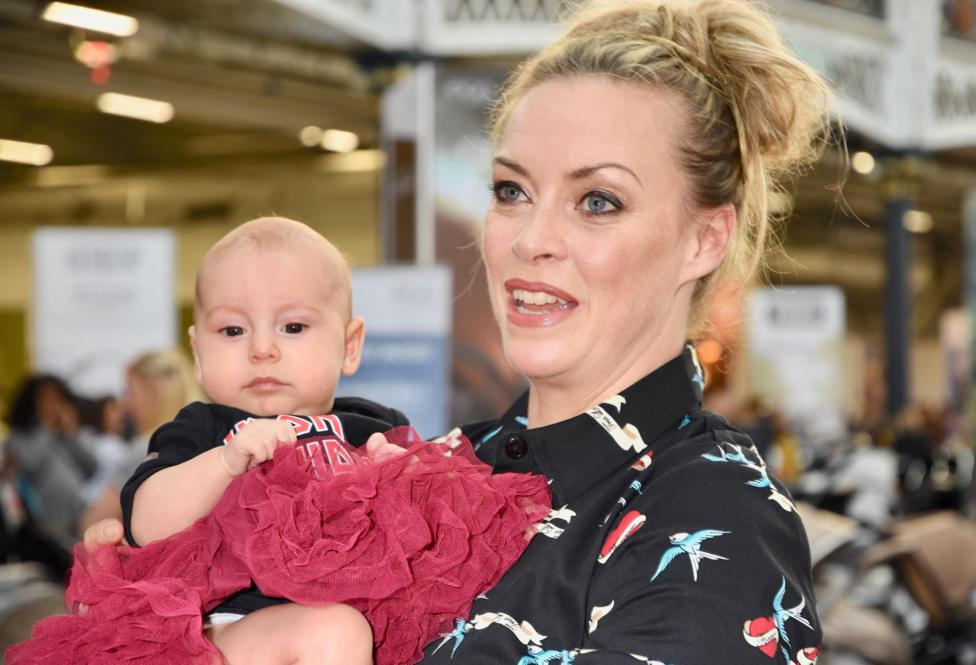
Regarding the new study, she commented,
"Let's be honest with women about the difficulties they may face, about how hard it can be to get pregnant when you get older."
Fertility Treatment Regulations and Recommendations
Experts note that the health of the womb and ovaries varies among women.
In the UK, there is no legal upper age limit for IVF, unlike some European countries such as Greece, which sets a cutoff at 54 years.
Women up to age 36 are eligible to donate or share their eggs in the UK.
Regulators request that private UK clinics assess the welfare of the resulting child and the recipient's physical ability to carry a pregnancy safely.
NHS guidelines recommend offering three IVF cycles to women up to age 40 and one cycle to women up to age 42.
Patients typically must self-fund the donor egg portion of treatment.
Since April 1, 2005, individuals conceived using donated sperm, eggs, or embryos from registered donors in the UK can request identifying information about their biological donor parent once they turn 18.
Study Presentation and Expert Commentary
The study's findings are being presented at the European Society of Human Reproduction and Embryology (ESHRE) conference and have been published in a medical journal.
Prof Borut Kovacic, Chair-elect of ESHRE, commented that researchers are working to better understand the "cross-talk" between the implanting embryo and the womb lining.
He noted that while the study identifies an age threshold linked to the onset of uterine function decline, this threshold is unlikely to be absolute.
"It provides important information for patients and offers a valuable foundation for future research aimed at identifying novel biomarkers of uterine ageing," he added.
Dr Ippokratis Sarris, chair elect of the British Fertility Society, recommended further research and highlighted that pregnancies in older women may carry increased risks, emphasizing the need for thorough checks and counselling for couples undergoing fertility treatment.
- Anyone who goes through IVF 'should be so proud', says Sara Pascoe
- Brigitte Nielsen baby at 54 sparks debate
- Why are we given only one chance to have a baby?
- What not to say to a friend who is struggling to conceive
- Investigation into IVF clinics in northern Cyprus after UK families given wrong sperm