Emergency Vaccination Programme in Kent
An emergency vaccination programme targeting one million teenagers and young adults is being launched following concerns about the number of meningitis B infections in Kent. Officials state that the programme aims to protect those at the "highest immediate risk". Meningococcal disease can lead to life-threatening illness.
Teenager's family 'heartbroken' by meningitis death
Meningitis B vaccine to be offered to a million young people
What are meningitis and 'invasive' meningitis?
Meningitis is an infection of the protective membranes surrounding the brain and spinal cord. It can affect individuals of any age but is most common among babies, young children, teenagers, and young adults. Prompt treatment is critical as the condition can be very serious.
The cause of meningitis can be bacterial or viral, determined through diagnostic tests. Bacterial meningitis, although rarer than viral meningitis, is more severe and can lead to blood poisoning (sepsis) and brain involvement.
This severe infection is termed invasive meningitis, indicating that the infection has entered the bloodstream or the meninges (brain linings).
Meningitis B (MenB) accounts for most cases of severe meningococcal disease in the UK. Cases occur annually; in 2024-2025, there were 378 reported cases of invasive meningococcal disease according to official data.
What meningitis signs should you look out for?
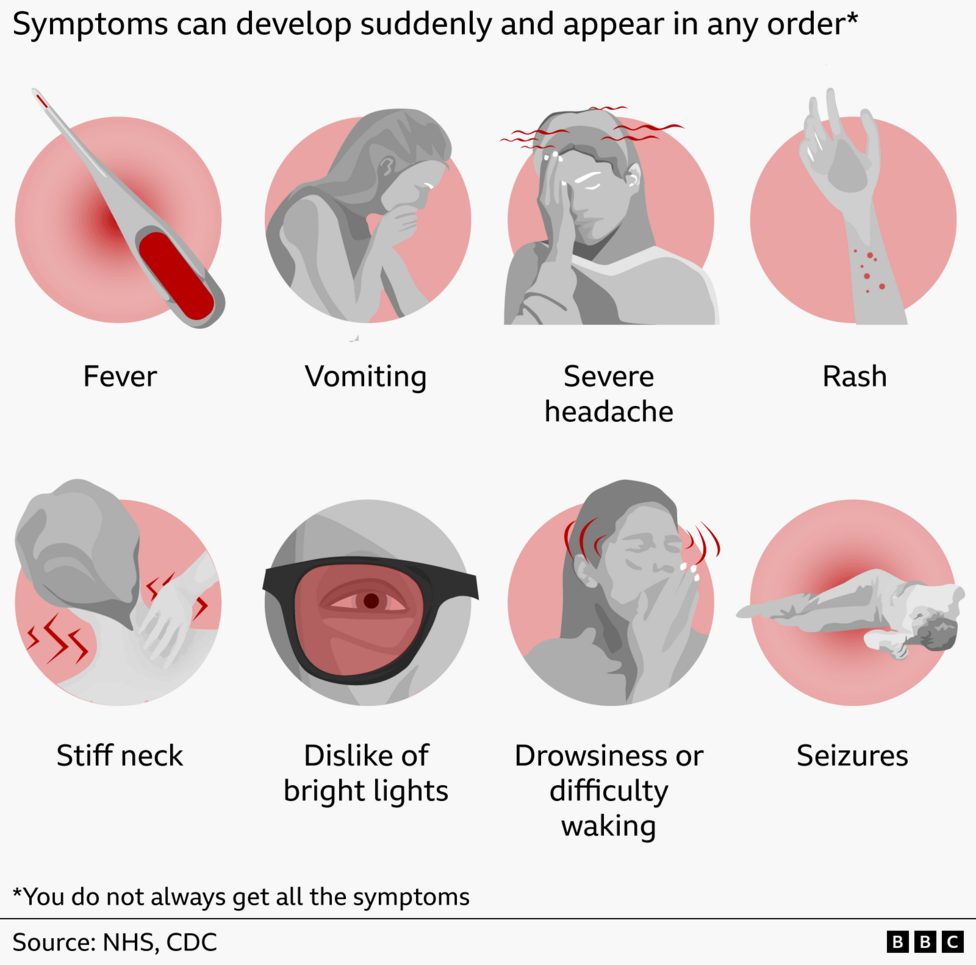
Symptoms of meningitis can develop suddenly and may include:
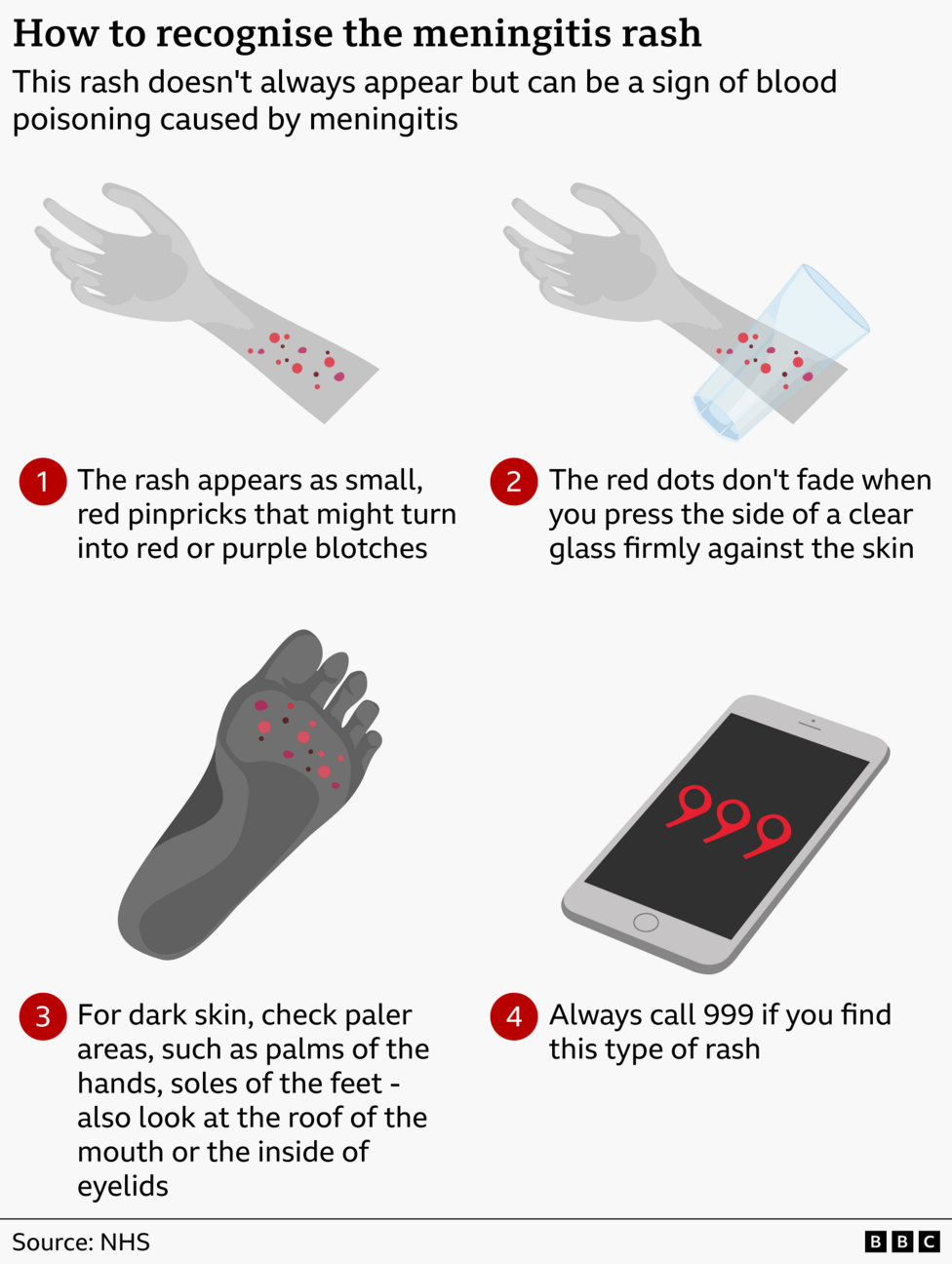
- A rash that does not fade when pressed with a glass
- Extreme sleepiness or difficulty waking
What meningitis vaccines are available, and who can get them?
Two vaccines protect against the primary causes of meningitis and septicaemia. The MenACWY vaccine protects against four meningococcal groups (A, C, W, and Y) and is offered to teenagers aged 14 years. Those who missed this vaccine can receive it for free until their 25th birthday.
The MenB vaccine protects against meningococcal group B bacteria and is recommended for babies starting at eight weeks of age, with a second dose at 12 weeks and a booster at one year.
Neither vaccine contains live bacteria and cannot cause meningitis.
Meningitis can sometimes occur as a complication of other infections; thus, several other vaccines also contribute to protection. The six-in-one vaccine (DTaP/IPV/Hib/Hep B) given to young children protects against diphtheria, tetanus, whooping cough, hepatitis B, polio, and Haemophilus influenzae type b (Hib).
The pneumococcal vaccine protects babies against serious infections caused by pneumococcal bacteria, including meningitis.
The MMRV vaccine, which replaced the MMR vaccine in January 2026, protects infants against measles, mumps, rubella, and chickenpox. The MMR vaccine remains free for anyone who missed it in childhood, regardless of age.

Typically, full protection from vaccines takes a couple of weeks, and some require booster doses.
Why aren't all teenagers vaccinated against MenB?
The MenB vaccine was introduced into the UK NHS childhood immunisation programme for babies born on or after 1 July 2015. Consequently, teenagers and young adults over 11 years old have not received this vaccine.
Young babies are vaccinated because they are more susceptible to invasive infections and have less developed immune systems.
However, research indicates that the MenB vaccine does not necessarily prevent transmission of the infection, does not cover all B bacteria strains, and does not provide long-term protection.
UK vaccine experts have concluded that offering the MenB vaccine to all adolescents is not cost-effective, and the NHS currently does not provide a catch-up programme.
Nevertheless, a one-off targeted programme is now offering the MenB vaccine to one million young people. All Year 13 pupils (those potentially leaving for university soon) and anyone under 25 starting university or residential further education for the first time this autumn will be eligible for two free doses on the NHS.
Experts note that this group is at higher risk of contracting meningitis B, which can spread in shared living environments. Invasive meningococcal disease tends to peak between October and November each year, increasing the risk during this period.
How does meningitis spread and how can you stop it?
Meningococcal disease outbreaks are rare but can occur in settings where many people gather, such as university campuses or entertainment venues.
Some individuals carry the bacteria in their nose or throat without symptoms but can transmit it to others through exchange of saliva via coughs, sneezes, kissing, or sharing vapes and drinks. Close personal contact is required for transmission.
The infection can also be spread by someone with meningitis, though this is less common.
It is possible to contract meningitis more than once.
The most effective way to prevent spread is to administer antibiotics to those who may have been exposed. Vaccination also provides protection against future infections.
What should you do if you think you or a friend has meningitis?
Anyone experiencing symptoms of meningitis or sepsis should seek urgent medical attention at the nearest Accident and Emergency Department or by calling 999. Early treatment can be lifesaving.
For further information, please consult official health sources and NHS guidance.