

England’s Adult Social Care System Under Strain
England’s adult social care system is described as “creaking,” confusing, and difficult to navigate for those who depend on it, sustained only by “sticking plasters and glue,” according to Louise Casey, head of a government-commissioned review. In a critical assessment, Casey highlighted the urgent need for reform to address the challenges posed by an ageing population and increasing numbers of individuals with chronic conditions such as dementia and Alzheimer’s disease.
“The country faced a ‘moment of reckoning’ over its failure to effectively and fairly meet the needs of Britain’s ageing population and rising numbers of people with chronic conditions such as dementia and Alzheimer’s.”
In a candid and impassioned speech, Casey emphasized the necessity of confronting the significant challenge of overhauling a system that is under-resourced and inconsistent, where “some needs are barely met at all and others are met late and in piecemeal and random ways.”
Focus on the Individual and Families
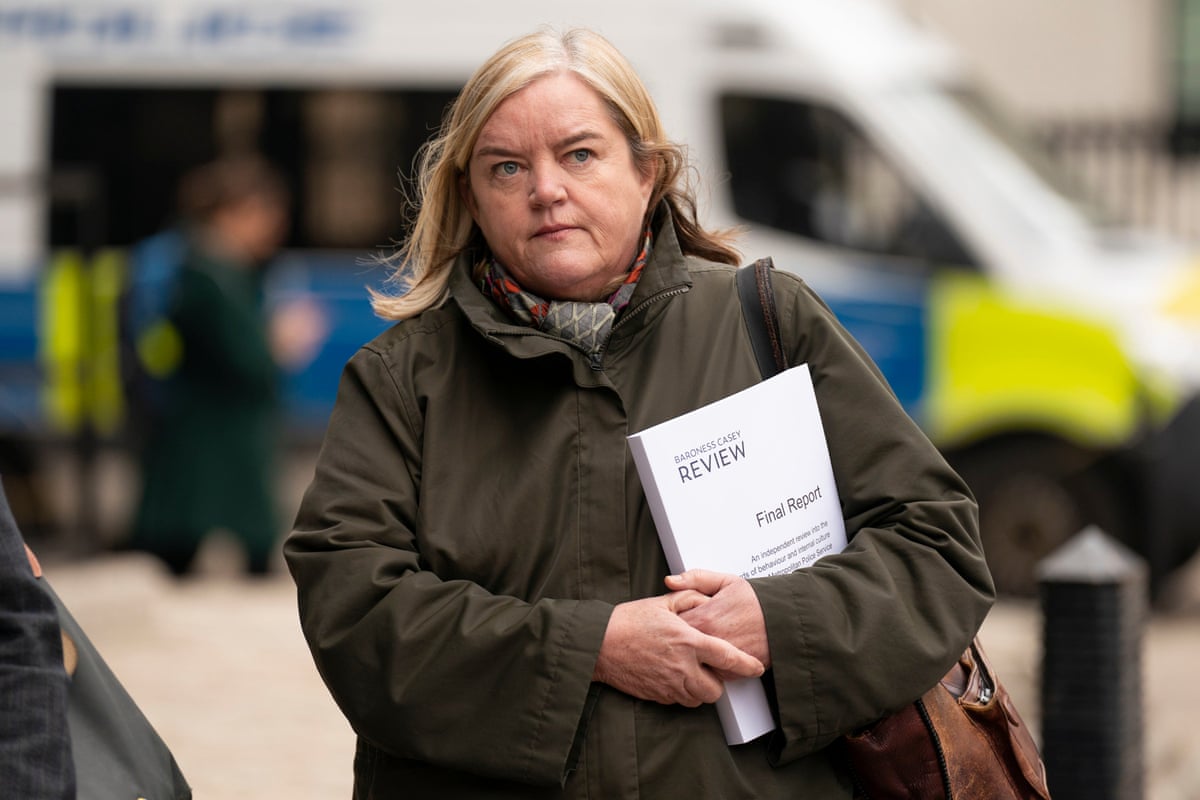
Tasked with developing policy to support the government’s manifesto pledge to establish a national care service, Casey’s review is conducted through “the lens of the adult and their family who need social care.” She stressed the collective responsibility to ensure care and support are accessible in a fair and dignified manner that reflects national values.
“The challenge for all of us is to get this right and it is a collective one. How do we ensure that care and support is available for those who need it in a fair, dignified way that reflects the nation and the values that we hold dear today? It is a moment of reckoning. It is a moment of renewal.”
Background and Context of the Review
Louise Casey, known for her work as a social campaigner and senior civil servant, including chairing national inquiries into homelessness and grooming gangs, was commissioned by the government in January 2025 to conduct a comprehensive two-part review of adult social care. She noted that adult social care has never experienced a “Beveridge moment,” referring to William Beveridge, the architect of the postwar welfare state, and that the nation has lacked an honest discussion about supporting an older and more medically complex population.
Despite over 22 major reviews of social care in the past 30 years, Casey pointed out that reform has consistently lacked the necessary political support.
Systemic Issues and Underinvestment
Casey described years of fragmented reforms and chronic underfunding that have left adult social care fragile and underpowered. The system often delivers inconsistent services, causing confusion and anxiety among those who require assistance and their families.
She highlighted the impact of austerity measures that have reduced services and noted that care provision relies heavily on the exploitation and underpayment of care workers. Adult social care is often regarded as the “poor relation” of the NHS, with the two systems frequently failing to coordinate effectively.

Casey pointed to the artificial distinctions made between healthcare and social care services, particularly in conditions such as dementia and Alzheimer’s, which have led to institutional disputes over funding responsibilities, leaving families to manage the consequences.
“This divide between care and health does not exist to the public. It is based on our divide, based on definitions and categorisations that satisfy each institution. Not the public. It is not about what is best for the patient or the person.”
Comparisons and Calls for Immediate Action
She contrasted the inadequate response of the NHS and social care to the “seismic challenge” of dementia and Alzheimer’s with the “brilliant determination and energy” demonstrated in tackling cancer. Casey urged Health Secretary Wes Streeting to act immediately rather than wait for her report, recommending investment in dementia trials, the appointment of a full-time “dementia tsar,” and expedited care for individuals diagnosed with motor neurone disease (MND).
Review Phases and Government Response
The first phase of Casey’s review, expected later this year, will outline plans for a national care service. The second phase, anticipated in 2028, will focus on developing and financing a system capable of meeting the country’s care demands.
A spokesperson from the Department of Health and Social Care confirmed acceptance of Casey’s proposals regarding dementia and MND, stating,
“This is about moving faster, cutting through delay and building a social care system that works for everyone.”
Reactions from Advocacy and Policy Experts
Caroline Abrahams, charity director at Age UK, remarked,
“This is arguably the first time that someone as senior, respected and independent as Baroness Casey has been prepared to tell the truth about the state of social care in our country.”
Natasha Curry, deputy director of policy at the Nuffield Trust, added,
“With time ticking for this government, the commission needs to act quickly and build on the momentum for change.”


