Kimberley Nixon Opens Up About Post-Natal OCD and Early Motherhood Struggles
Actor Kimberley Nixon has spoken candidly about her experience with post-natal obsessive compulsive disorder (OCD), describing the initial period of motherhood as the "darkest time" of her life.
Reflecting on her journey, Nixon shared that it was only after confronting her struggles that she realized many mothers face difficulties in some form.
The 40-year-old actress, known for her role in Fresh Meat and residing in Pontypridd, Rhondda Cynon Taf, discussed her experiences on Giovanna Fletcher's Happy Mum podcast.
Earlier this month, she published a book titled She Seems Fine to Me, detailing her personal experiences, and her one-woman show Baby Brain is scheduled to tour the UK in the coming months.
Warning: This story contains discussion of mental health and suicidal thoughts.
Nixon, who recently appeared in Sky's Under Salt Marsh and is also recognized for her roles in the BBC period drama Cranford and the romantic comedy Wild Child, noted that her acting career sometimes intensified feelings of isolation during difficult times.
"When you're an actor, you don't have co-workers in the same way as everyone else.
You're by yourself and, from social media, [it seems] everyone is doing so well."
She explained that when she became a mother, it appeared online as if everyone else was adapting naturally and happily.
"This is the darkest time of my life, I don't understand," she said.
"And then breaking through that to go 'do you find motherhood quite difficult?' and every single mother I've ever asked that question to going 'yes', in some capacity. Whether it be physically, emotionally.
From afar, everybody else has got it together. Really, growing up is realising that everybody is winging it."
Nixon admitted she was initially reluctant to disclose parts of her experience, but found that speaking openly encouraged others to share their own stories.
She described the decision to have a child as a "big moment," having been fearful of motherhood for a long time.
She and her husband, together for nearly 22 years, faced significant challenges conceiving, ultimately succeeding through IVF in 2020.
However, the initial happiness of a positive pregnancy test was soon overshadowed when, around six weeks into the pregnancy, she was informed she was likely to miscarry due to a sharp decline in her human chorionic gonadotropin (hCG) levels.
"That was definitely a comeback down to earth," she said, adding that although she was later told the baby was fine, this was soon followed by the devastation of Storm Dennis, which severely impacted her hometown, and the onset of the Covid pandemic.
As her due date neared, Nixon's anxiety intensified, largely due to the constantly changing hospital lockdown regulations and uncertainty about whether her partner could attend the birth.

After consulting with a midwife, she opted for a planned caesarean section to minimize unpredictable factors.
"We just couldn't wait, we were so excited. It had been such a long time – when he was born, we'd been together 16 years. We were just ready."
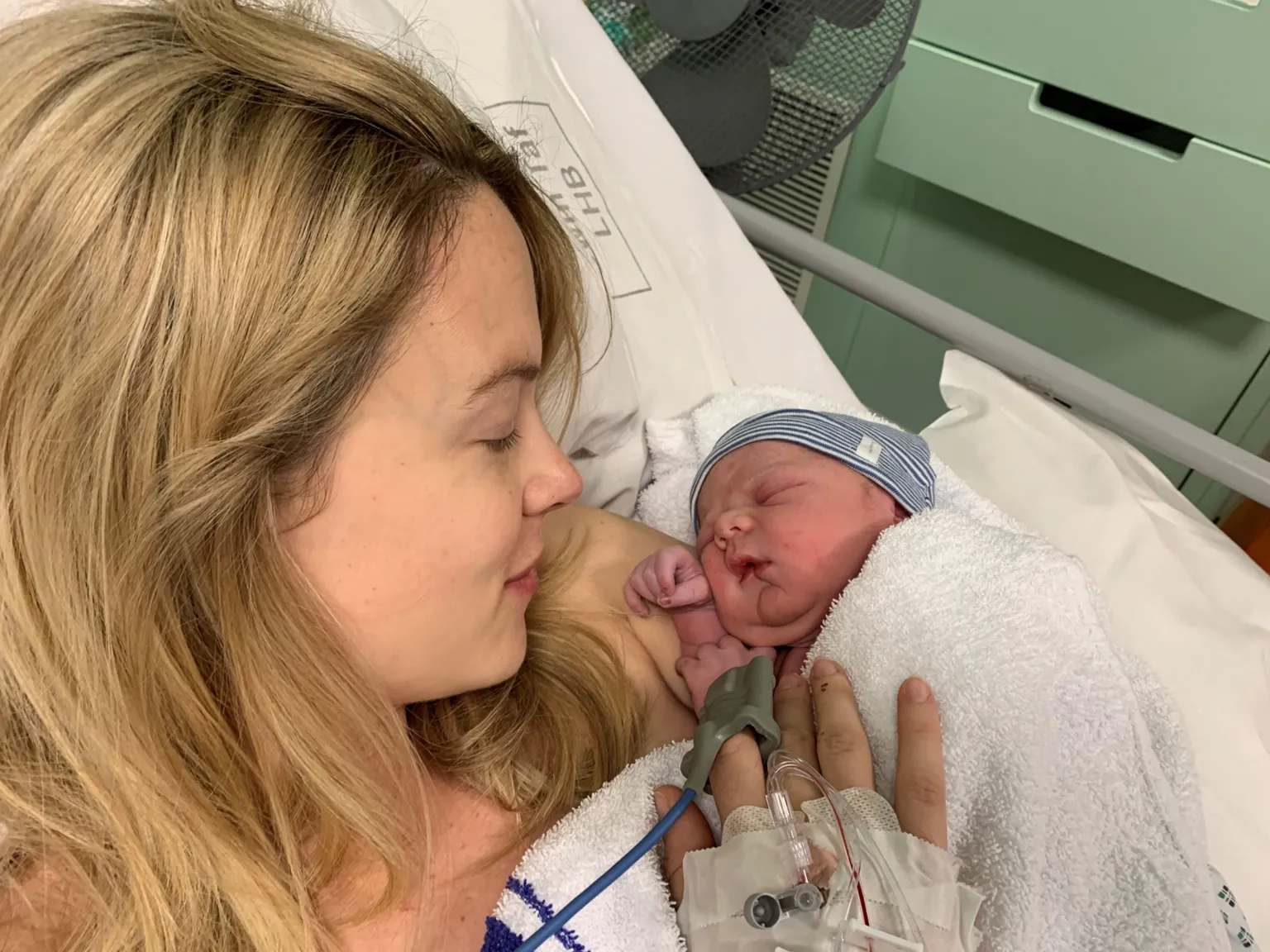
She recalled the moment her baby son was held up in the operating theatre, marveling at him, but quickly experienced a sudden shift in her emotions.
"It was just wrong, that's the only way I can describe it," she said.
"Even when I found out he was fine, everything was fine, I just never believed it. Ever again."
Nixon described a downward spiral, constantly fearing something would go wrong.
"We were in hospital for four days and my husband couldn't come and see us... he would have known immediately something was wrong. He would have been able to advocate on my behalf.
Any time I brought up anything, it was batted away."
She likened those initial days to "an audition that I haven't learned the lines for," apologizing excessively and clinging to the hope it was merely "baby blues," while feelings of failure worsened.
"I genuinely [thought] it's the end of the world, all the time," she said.
"I was seeing danger everywhere. My home turned into a sort of haunted castle.
[My son] was going to die, he was going to be hurt, and it was going to be my fault.
Without realising what it was, what I was doing, that I was making it worse, I started doing compulsions."
Nixon said she was fortunate to be able to be completely honest with her partner.
"But reassurance is never enough.... it's like you're in your own prison, a prison you've made," she explained.
"The idea that he could be hurt because I exist in the world is too much, so maybe it would better if I wasn't here."
These distressing thoughts prompted Nixon and her husband to seek urgent professional help.
She revealed that she had experienced OCD throughout her life without recognizing it and had only discovered post-natal OCD through an anonymous article late at night.
"I'd had OCD my whole life and I'd never known.
I'd never heard of post-natal OCD. I found it late at night on an anonymous article."
Understanding her condition enabled her to communicate her feelings more clearly.
"Looking back, I was remarkably honest with mental health professionals from the get-go about the nature of the symptoms, even though saying that to somebody is the scariest thing I've ever done," said Nixon, who has also since been diagnosed with autism and attention deficit hyperactivity disorder (ADHD).
Initially, she described "playing at being a mum" to cope each day, while still feeling engulfed by shame.
Opening up about her struggles online marked a turning point in Nixon's recovery, especially when connecting with others who had undergone similar experiences.
"Dipping my toe into saying 'I'm not OK'... I didn't know it, but it let cracks of light in."
Although she now reports being on an "even keel" and enjoying life, Nixon said writing her book was an "honest or nothing" process that caused many sleepless nights.
"It's the biggest exposure therapy that I've done. It's scary to write your very personal experience down.
But I know if I'd read something like that book when I was really unwell, it would have saved my life."
If you have been affected by the issues raised in this story, the BBC's Action Line provides a list of organisations offering support.