Sand dredging may have greater impact on Lough Neagh
Sand dredging in Lough Neagh "may be having broader and more persistent impacts" on the lake than previously thought, according to new research led by Queen's University Belfast.
Researchers found that disturbance created by commercial dredging is "widespread" across the lough and "could be affecting the ecosystem".
Dredging was licensed in 2021 with the vast majority of what is removed being used by the construction industry for building materials.
A spokesperson for the Lough Neagh Sand Traders said the research was incorrect, adding that the effects had been the subject of an environmental impact assessment, which "concluded there would be no adverse effect on the integrity of the Lough".
A handful of companies which were granted licenses in 2021 pay a fee to the owner of the lough bed, the Earl of Shaftesbury, for every tonne they extract.
Can the impact of dredging be limited?
The lead scientist on the research, Dr. Neil Reid, said there were solutions that could be looked at to limit any potential environmental impact from dredging.
Scientists have previously analysed the lough bed and found deep scarring.
Reid said this fresh research, led by QUB in partnership with the University of Newcastle, has combined several techniques to delve further.
"We have used sonar to map the bed of Lough Neagh and we have found that where sand is extracted, it can be lowered by 10 to 20 metres and is heavily scarred.
"But analysis of satellite imagery from space shows that sediment extends far beyond the area where sand is mined and it spreads across half the lake.
"So the boats overflow and over-spill sediment, propellers churn sediment up on the lake bed and there's run-off from the storage yards."
'Profound consequences'
The team says this is the first time sonar mapping and satellite imagery have been brought together in this way to examine Lough Neagh and "attempt to quantify the range of potential impacts".
Sedimentation is known to have "profound negative ecological consequences", Reid added.
"In this case it could affect the algal blooms by liberating nutrients from the sediment, it could reduce the water clarity and quality, it could lower the oxygen levels and it could harm wildlife throughout the ecosystem."
But he said there were "practical ways" to limit any environmental impact.

"For example, covering sand piles onshore to limit run-off due to rain erosion, adjusting suction rates to limit the amount of sedimentation in the water and reducing transit speeds or limiting boats to certain corridors to limit the impact spatially.
"So there's a variety of things that could be employed to reduce the environmental impact of sand-dredging."
A green lough
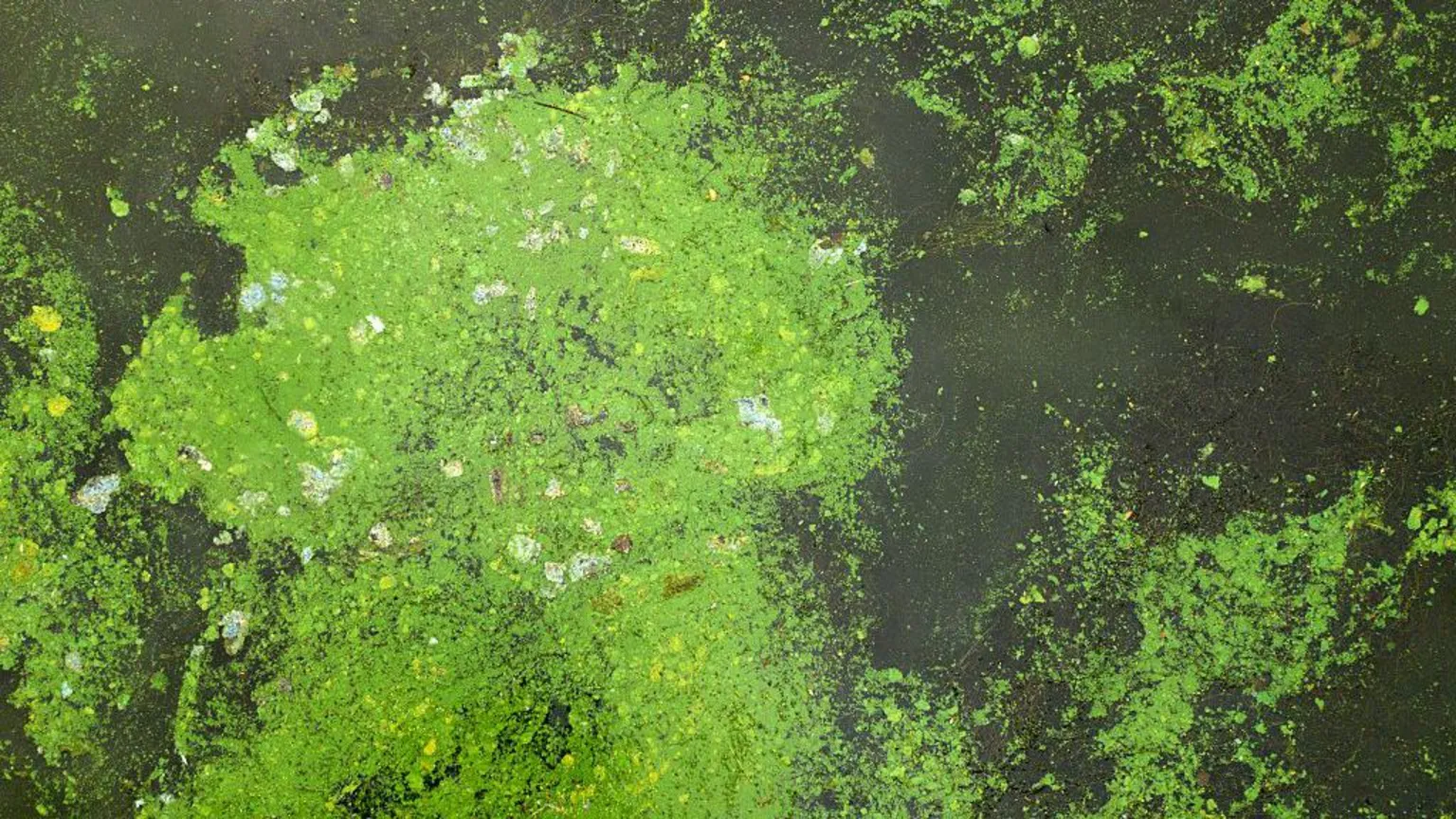
Lough Neagh has been turned green for the past three summers, due to potentially toxic blue-green algal blooms.
Nutrient levels - primarily phosphorus - in the lough, from agriculture and wastewater, play a key role in stimulating the blooms' growth.
Additional sources of nutrients include industry, septic tanks and household detergents.
A Lough Neagh Action Plan is in place to tackle the problem over the course of several years.
It looks at ways of reducing nutrients and supporting the recovery of the Lough.
Reid said the "message was clear" for Lough Neagh.
"If the lake is to recover, management cannot focus on nutrients alone while ignoring physical disturbance.
"That places a responsibility on government to ensure that regulation, monitoring, and enforcement reflect the true scale of sand extraction impacts."
What have the Lough Neagh Sand Traders said?
Lough Neagh Sand Traders (LNST) is a group made up of companies which were granted licences for sand-dredging in 2021, following a public inquiry and approval of continued dredging by the then-Infrastructure Minister Nichola Mallon in 2020.
A spokesperson said this latest research was incorrect.
"Contrary to its claim, this is not the first assessment of the environmental effects of sand extraction on Lough Neagh."
They said the effects had been the subject of an environmental impact assessment as part of the planning application, which "concluded there would be no adverse effect on the integrity of the Lough".
The statement added that LNST would "continue to operate under its planning permission and engage with the regulator…as and when required to do so".
"We will continue to consider all additional research into the habitat and ecology of the Lough as appropriate".