

Ongoing Wildfires Devastate Mourne Mountains
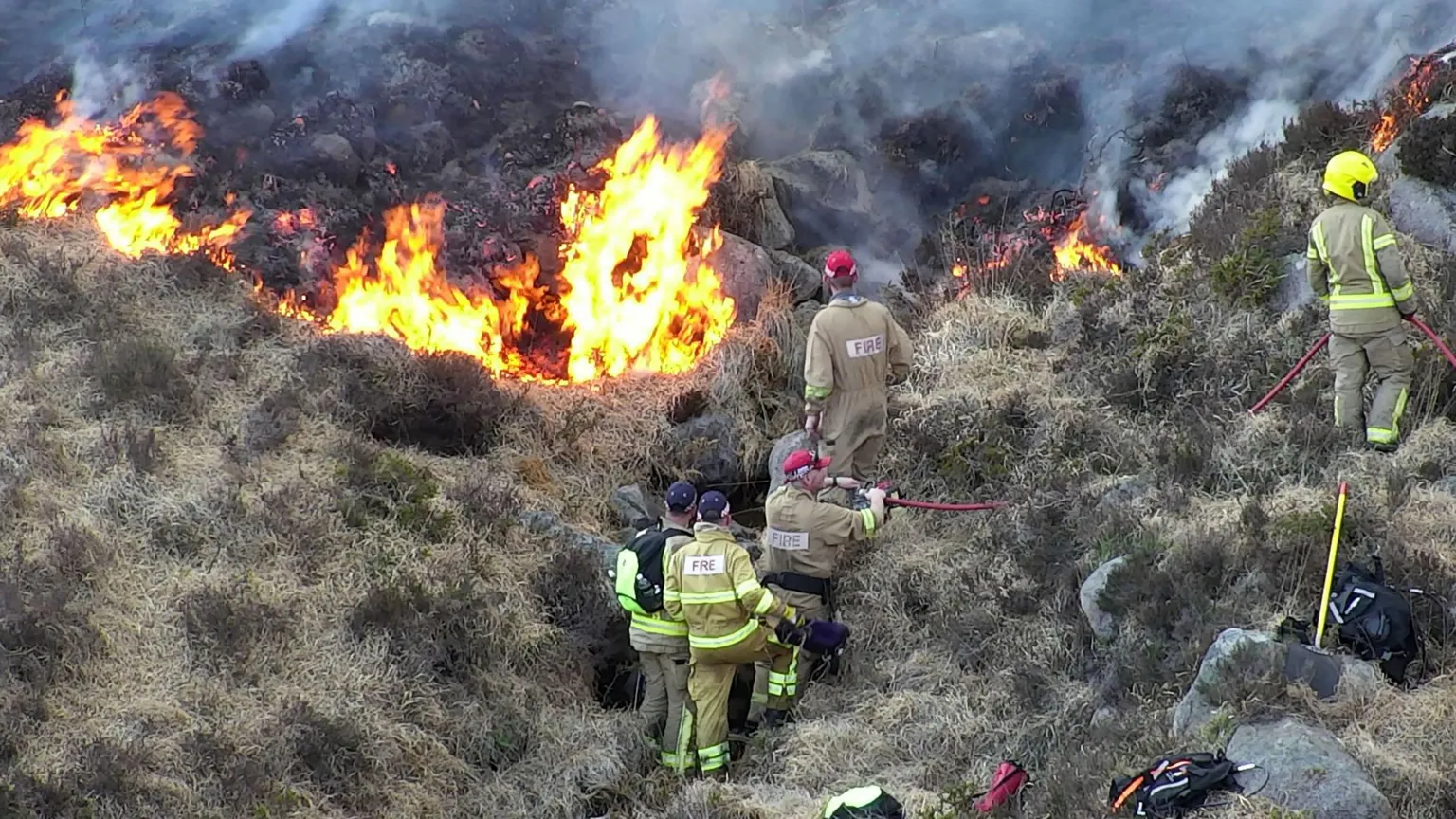
Firefighters have been actively combating wildfires in the Mourne Mountains, with over seven square miles of land destroyed in the past week.
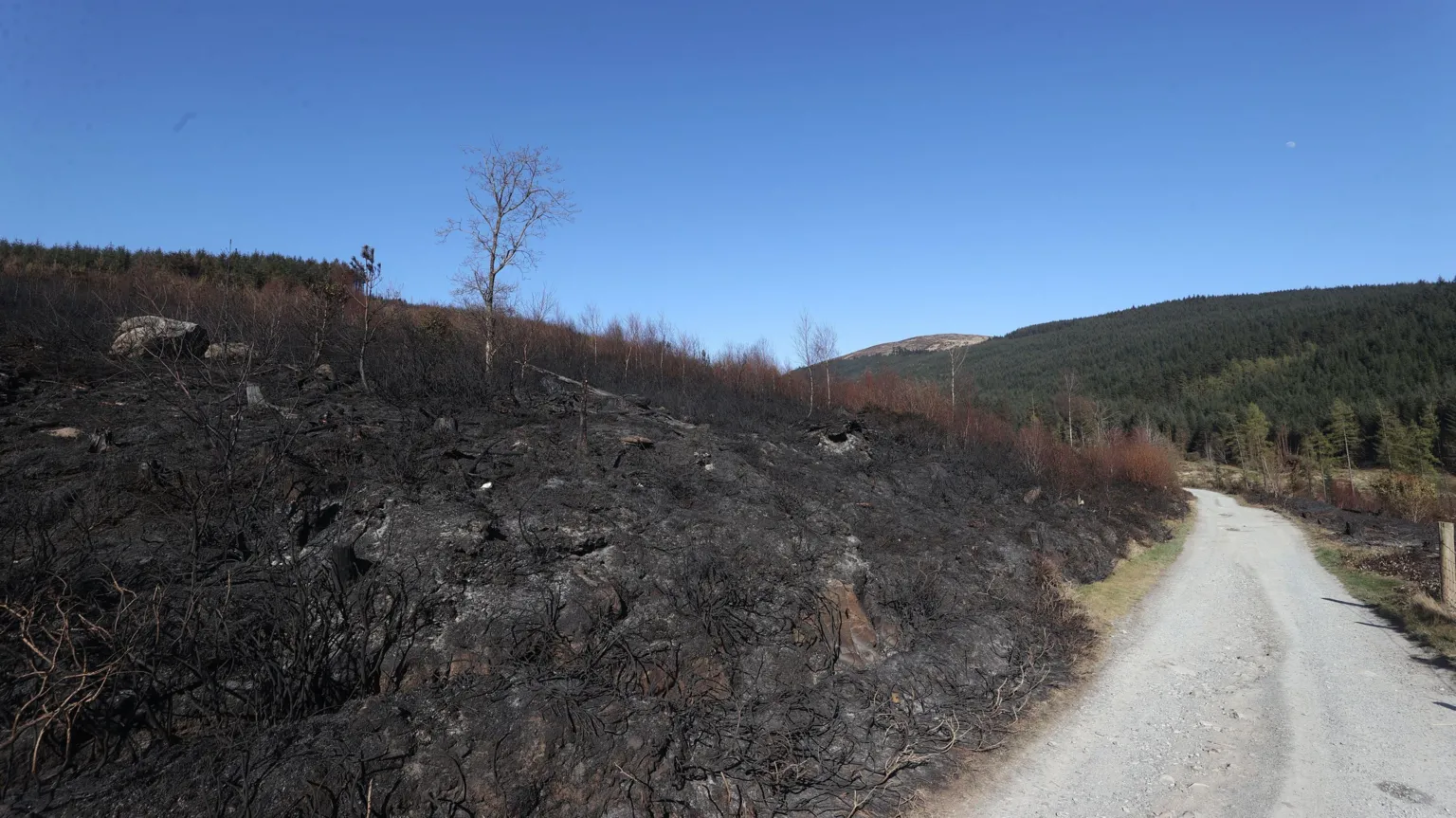
The immediate effects are evident, with thick smoke lingering over the blackened and scorched terrain. However, a conservation expert has indicated that the long-term recovery could span hundreds of years.
Dr Neil Reid from Queen's University Belfast (QUB) stated,
"If it keeps happening year after year, it's death by a thousand cuts. It's attrition and you're just losing all these peatland specialists."
The Mournes encompass 57,000 hectares of peatland, gorse, heathland, and forest, stretching from Slieve Donard, Northern Ireland's highest peak, to the County Down coastline.
While humans have inhabited and farmed the area for millennia, recent years have seen significant destruction due to deliberate fires set by some individuals.
Agriculture and Environment Minister Andrew Muir has described these acts as "rural arson."
Recovery Time Insufficient for Ecosystem Restoration
Dr Reid highlighted that a recent study on Mourne wildfires revealed that the full extent of damage is not immediately visible.
"It looks like it's recovered, the heather's back again, but underneath we've got lots of peatland specialists that require the wet conditions.
What the fire does, is it changes the structure and the chemical composition of the peat itself. As a result it is no longer suitable for those specialist peatland plants."
With wildfires recurring annually, Dr Reid expressed concern that the landscape never has adequate time to recuperate.
Peatland accumulation is a slow process, growing only about a millimetre or two each year.
He explained, "If several centimetres are lost to fire, then you're losing decades, centuries, potentially millennia of peatland.
So you could be looking at decades, centuries, millennia before the actual lost peat itself begins to build back up."

Rare Habitats Severely Impacted
James Fisher, Lead Ranger for the National Trust (NT), one of the major landowners in the Mournes, reported that over a thousand hectares were burnt in the last week alone.
"We saw over a thousand hectares burnt just in the last week which is staggering," he said.
Fisher’s role was established following a series of wildfires in 2021.
He emphasized that the greatest damage caused by fires is to biodiversity, as rare and established habitats are destroyed.
"The Mournes itself as an area is less than 1% of the area of Northern Ireland, but it has over 50% of the heathland communities.
So whenever a fire devastates an area, you're really taking out a huge amount of the special designated habitats."
Following the 2021 fires, the NT implemented an intensive monitoring program to assess heathland recovery. After three years, the invertebrate population remained 90% lower than pre-fire levels.
"So many of the other animals and the plants rely on the invertebrate communities, so they're going to be impacted hugely by that reduction in number," Fisher said.
"It will take a substantial amount of time before those species and communities recover."
The Mournes has been designated both as an Area of Outstanding Natural Beauty and as an Area of Special Scientific Interest.
Fisher stated, "Those designations have to mean something.
If this continues, the features that the area is designated for won't be there."

Landscape Described as a 'Moonscape'
Nigel McKinney from The Mourne Heritage Trust described the destruction from this week's wildfires as devastating.

"Every living thing that's on there is burned.
A black desert is the wrong term because there's more life in a desert than there'll be up in an incinerated landscape. It's like a moonscape and it's a very large area."
He expressed concern regarding the time required for flora and fauna to return.
"The reservoir of rare species, plants, insects, other animals, birds are in our uplands. If that's all incinerated that's a massive impact.
Good recovery won't happen for many, many years and if it's not managed right it's maybe not going to come back."

Intergenerational Damage to Forests
Thousands of acres of forests in the Mournes, including ancient woodlands, have also been lost to fires.
Besides their aesthetic value, forests serve critical ecological functions such as preventing soil erosion and flooding by acting as natural barriers.
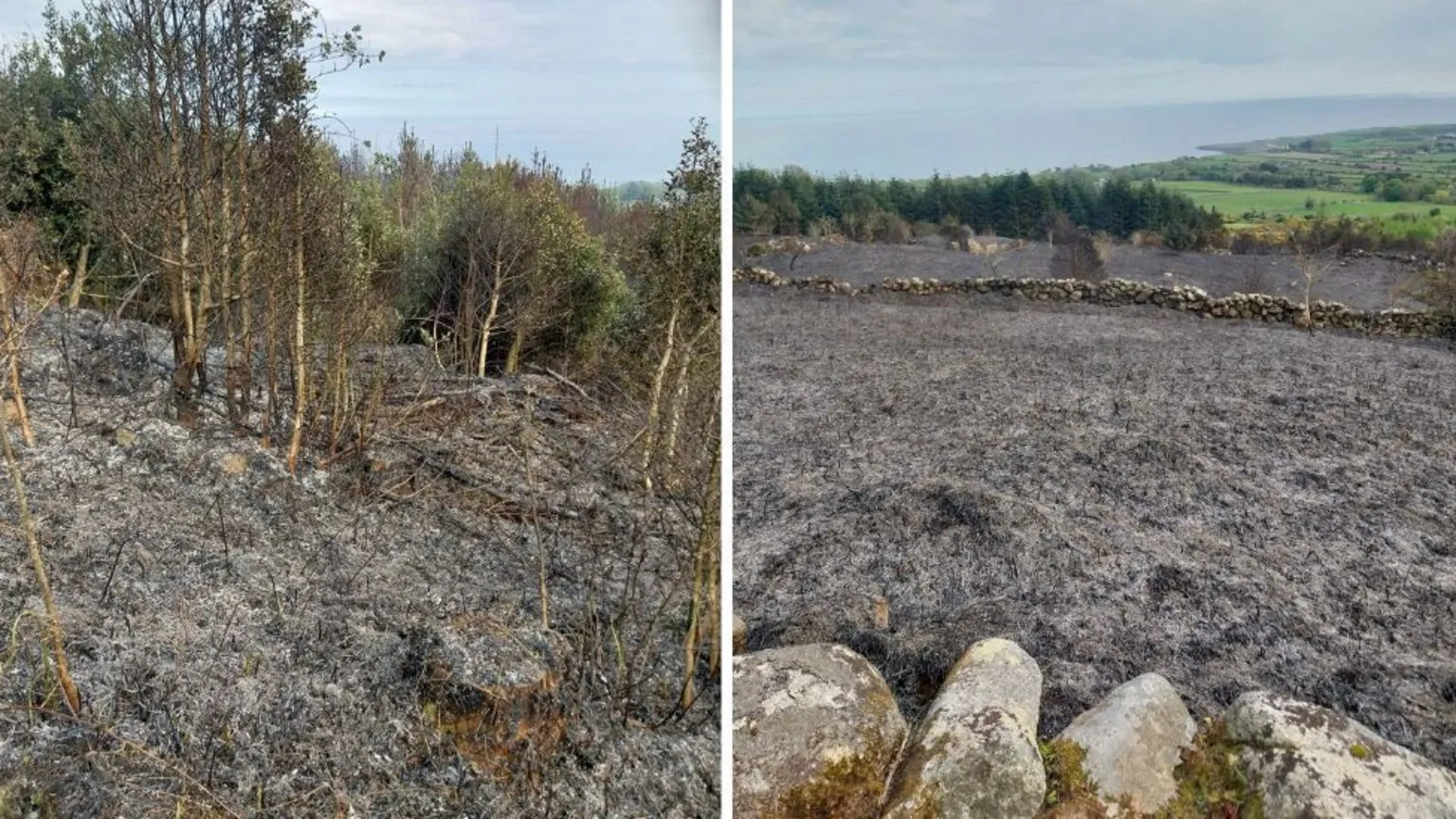
In April 2010, significant damage occurred to woodland near Annalong due to a deliberate gorse fire.
Sixteen years later, trees have been replanted, but John Martin, director of the Woodland Trust in Northern Ireland, noted that full recovery remains distant.
"It would be another 20 years potentially for some of those sites to get to a point to what we would describe as an established woodland and delivering all the benefits that it was delivering before.
So we are talking about intergenerational damage here, which is actually just stealing from people's future."
Recently, a new native woodland in the Mournes funded by the Trust was destroyed by a deliberate fire.
More than 2,000 trees were lost, which Martin described as a "disaster" for their planting goals.
"In terms of finance, I think it's probably tens of thousands of pounds worth of lost new native woodland planting," he added.

Impact on Tourism and Local Economy
Approximately 300,000 people visit the Mournes annually for recreational activities.
Tourism Northern Ireland data for 2024 indicates that nearly 6,000 jobs in the Newry, Mourne and Down council area depend on tourism, with visitors spending £73.3 million.
Vincent McAlinden, a local resident and volunteer with Mountaineering Ireland, expressed concern about the effects of deliberate wildfires on the area's appeal.
"Aesthetically it's obviously terrible and reputation-wise for the Mournes as a brand it's terrible."
He believes most fires are intentionally set to burn vegetation and urged the community to remain vigilant and to condemn such actions.
"People in the wider community have to be vigilant and also be prepared to call it out, that it's not acceptable."
Legislation and Government Response
In Northern Ireland, legislation permits the burning of vegetation such as heather, gorse, whin, or fern only between 1 September and 14 April.
Last month, the Department of Agriculture, Environment, and Rural Affairs released a wildfire action plan containing numerous measures aimed at enhancing resilience and reducing wildfire frequency and severity.
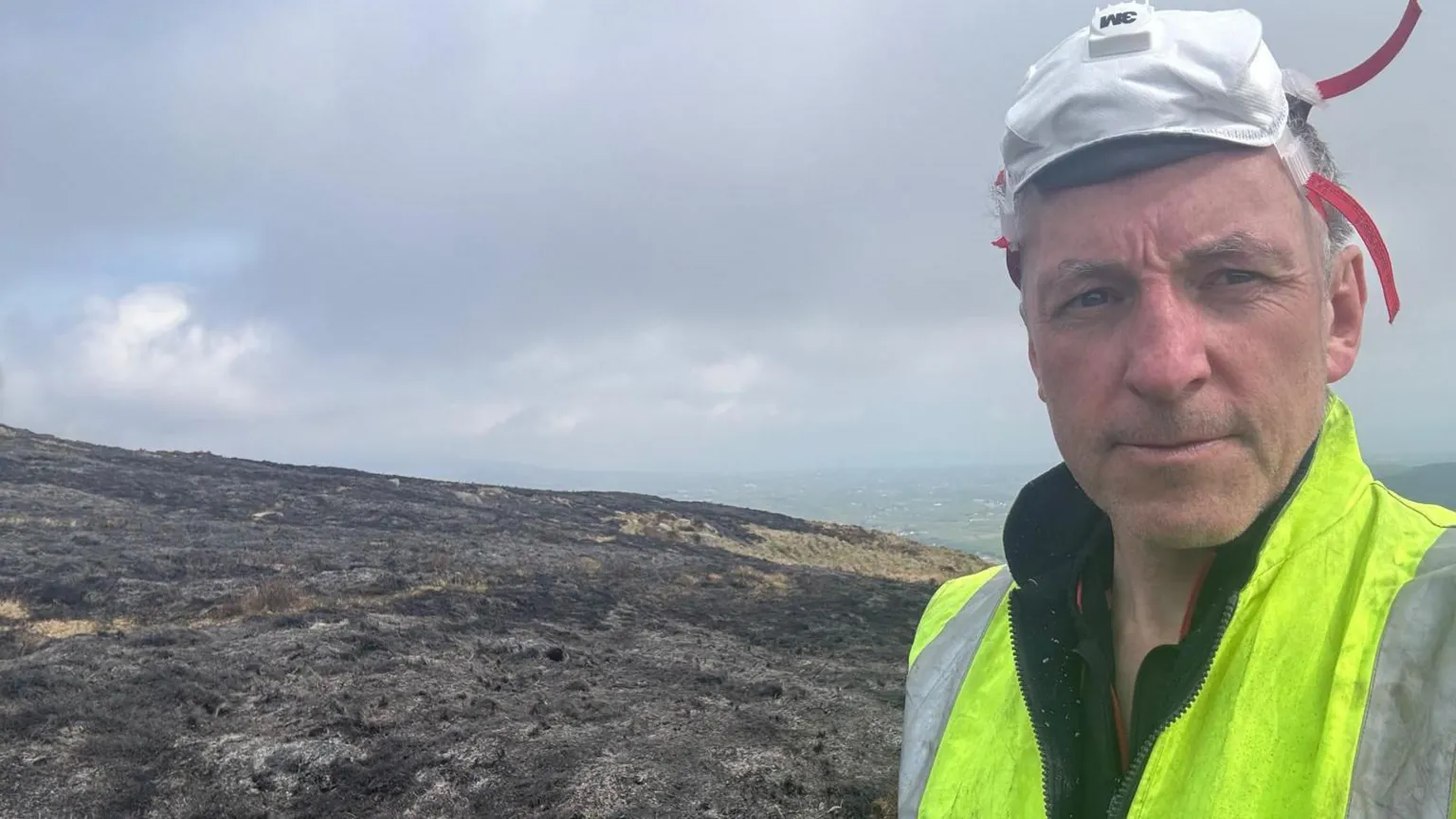
Earlier this week, Minister Andrew Muir dismissed claims that there are no consequences for those who start rural fires, noting that arsonists could face imprisonment in some cases.
He also emphasized that authorities require public assistance to identify and prosecute offenders.


