Climate Crisis Impacts Southern Right Whale Breeding Rates
After decades of recovery, southern right whales are exhibiting signs of a climate-driven decline in breeding rates, which researchers describe as a “warning signal” regarding changes occurring in the Southern Ocean.
Once hunted to near extinction by commercial whaling during the 19th and 20th centuries, southern right whales remained endangered in Australian waters. However, long-term monitoring has identified a concerning slowdown in their breeding rates since 2017. Instead of producing a calf every three years, these whales have shifted to four- or five-year reproductive cycles, according to Dr Claire Charlton, a marine biologist and director of Current Environmental.
For over 30 years, scientists have utilized photo identification data collected in the Great Australian Bight to study the species. Individual whales are identified by unique patterns of a type of callus, known as , enabling researchers to track their migrations and breeding behaviors over time.
Charlton, who leads the right whale program in the Great Australian Bight, described southern right whales as “magnificent animals”:
“Just the sheer size of them, and the fact that they ”.
She explained their migratory behavior:
“They feed in Antarctic and sub-Antarctic waters during our summertime, and then migrate up to our coasts during winter. The whales come every year to breed, mate, rest and socialise.”
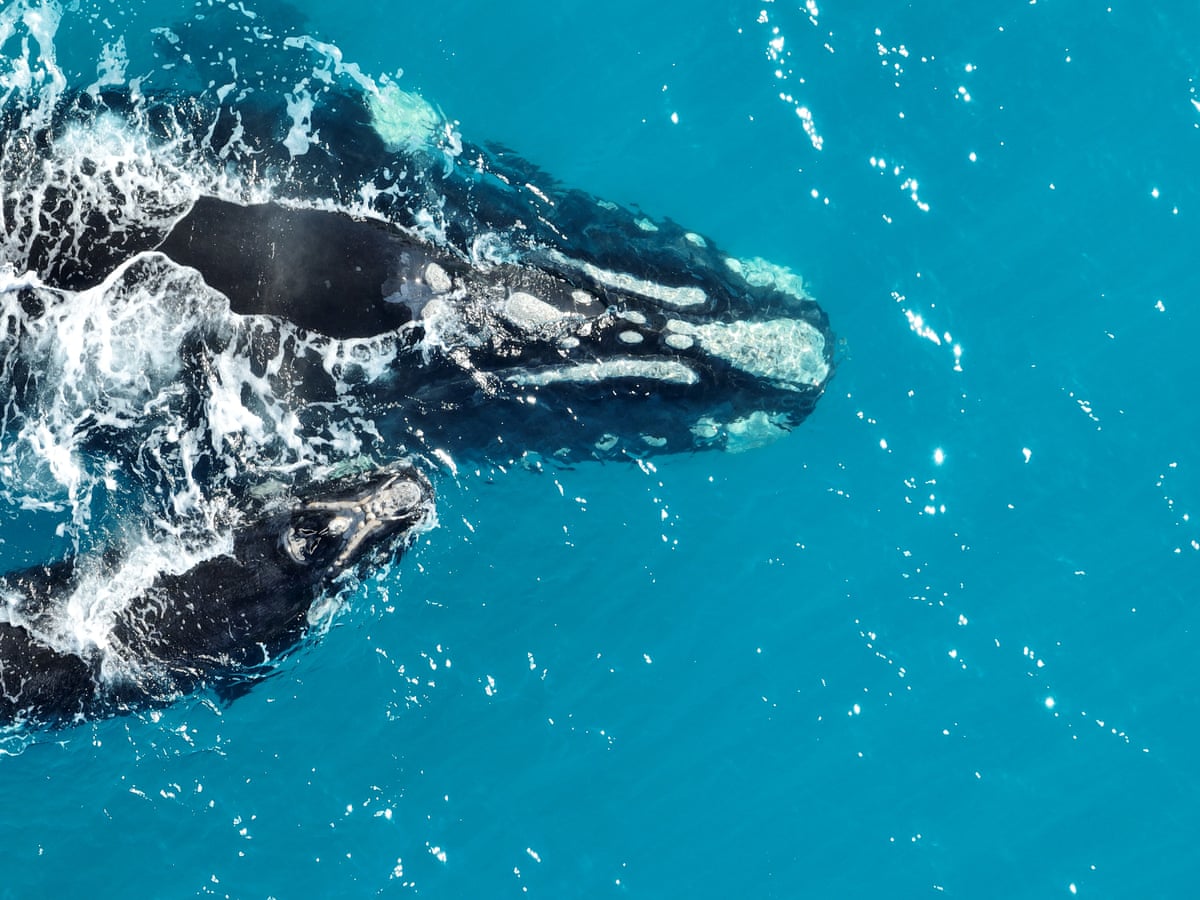
Research Links Breeding Changes to Climate-Driven Environmental Shifts
The research, published in , associates the shift in breeding cycles with climate-driven alterations in their foraging grounds located in the Antarctic and sub-Antarctic regions.
“We know that the ocean is warming, the sea ice is melting, that causes other environmental changes,” said Charlton, the study’s lead author.

The study analyzed calving intervals over a 35-year period, revealing correlations between breeding rates and factors such as sea ice extent, the frequency of marine heatwaves, prey availability, and other climate-induced changes.
Researchers noted that similar trends have been observed in southern right whale populations in South America and South Africa. Other krill-dependent predators are also experiencing pressures from marine heatwaves and diminishing sea ice.
Charlton emphasized the significance of these findings:
“This was a ‘warning signal’ about how climate change was affecting marine life, which highlighted the urgent need for coordinated conservation efforts.”
Expert Perspectives on Long-Term Data and Conservation
Whale scientist Vanessa Pirotta, who was not involved in the study, stressed the importance of long-term data for understanding these long-lived animals and their potential adaptation to changing environments.
“We need to continue to learn more about [southern right whales] given that we were responsible for so much of their loss and where their populations are right now,” Pirotta said.
Commercial whaling, which severely depleted populations, was banned by the International Whaling Commission in the late 1980s. Once reduced to fewer than 300 individuals, Australian populations now range between 2,346 and 3,940 whales, representing approximately 16% to 26% of pre-whaling levels.
Ecological Role and Reproductive Challenges
Southern right whales have been described as “tractors of the ocean” by Dr Peter Corkeron, a marine ecologist and adjunct senior research fellow at Griffith University, who was not involved in the study. To feed, the whales seek out dense patches of zooplankton and move back and forth, akin to “mowing the lawn.”
The observed change in calving intervals indicates that conditions in the Antarctic and sub-Antarctic are not as favorable as in the past, Corkeron explained.
“As mammals, the choice to have a baby is demanding,” he said. “If a female wants to maximise her lifetime reproductive output, she has to balance having babies and living a long time. When conditions are getting worse, you pull back on having as many babies.”
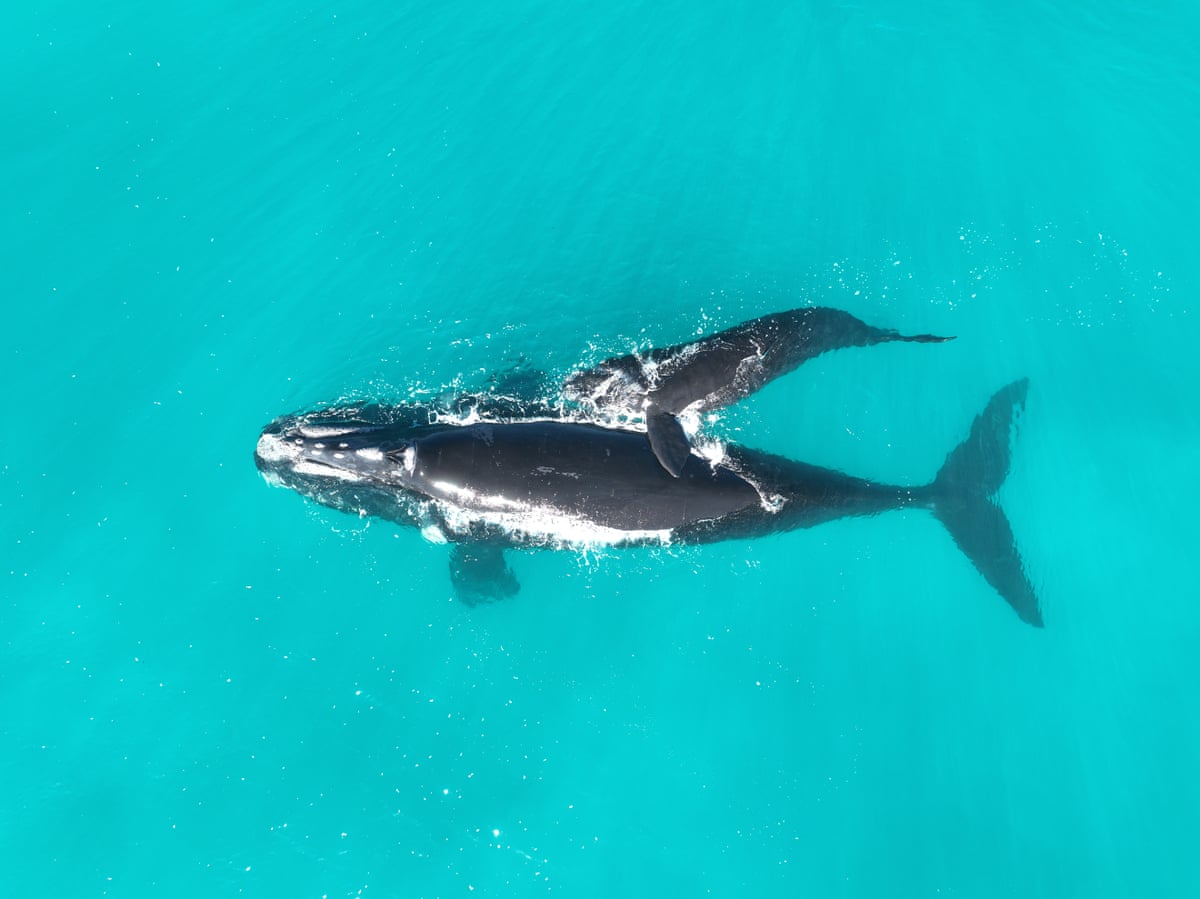
He further commented on the broader implications of climate change:
“Anthropogenic climate disruption affects everything. It’s just another message, if people choose to pay attention to it, that we’ve got to do something about this.”