Private buildings, public land: how Australia’s national parks became a battleground between conservation and commerce
Developers argue that eco-tourism helps ‘underfunded’ parks but former Greens leader Bob Brown says the idea of wilderness lodges is an ‘oxymoron’
When the Gardens of Stone in the Blue Mountains was declared a state conservation area in 2022, it should have been cause of great celebration for Keith Muir. Instead, the plans put forward by the NSW National Parks and Wildlife Service (NPWS) for the nature reserve make him weep.
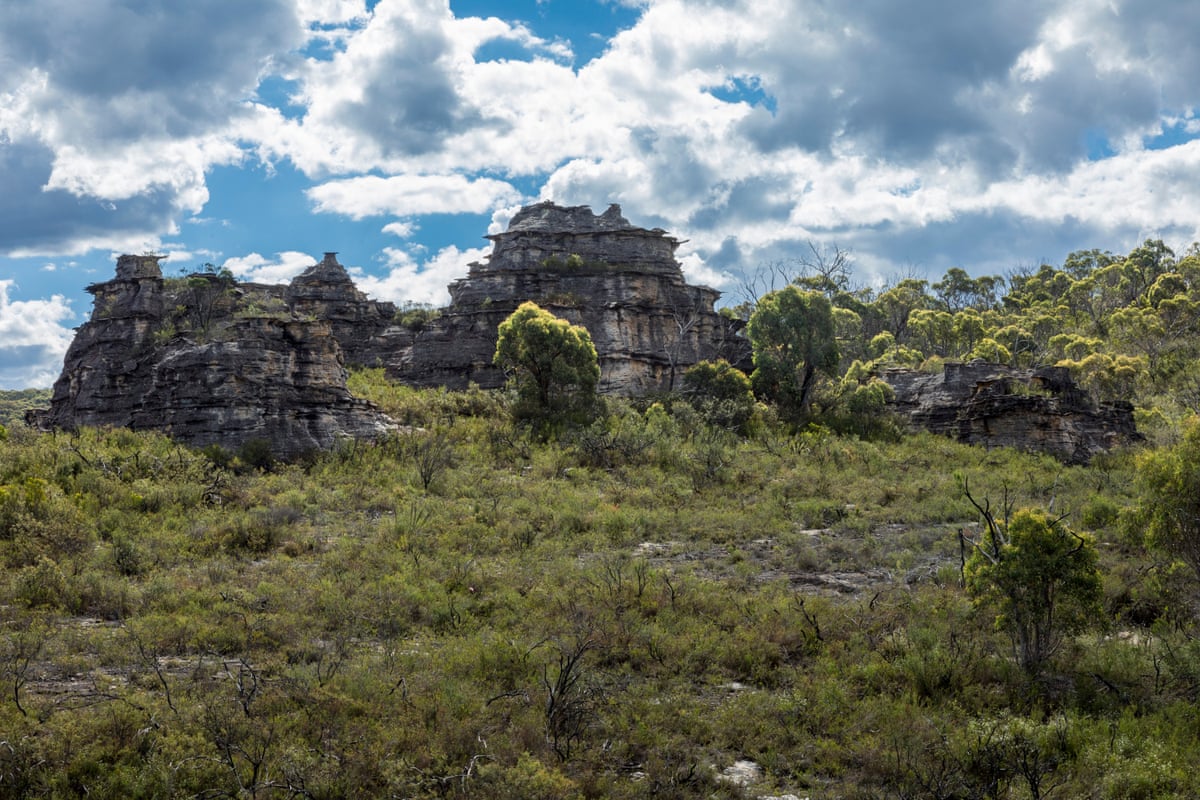
“The geology is spectacular,” he says of the nature reserve. “The pagoda landforms are sculptured natural artworks, that is the only way to describe them. They are symphonies in stone.”
Muir’s tears are not of joy but grief and rage – not just for this place he loves, close to his home in Katoomba, but for all wild places of Australia.
NPWS, as land owner, is proposing the construction of a multi-day walk passing through the Gardens of Stone, along with luxury glamping-style accommodation. It will be built in the heart of this protected area, which sits alongside a world heritage area, and leased to a private operator. Amid the wildflowers of the Gardens of Stone, between old growth banksia and unique sandstone formations – that resemble the temples of Angkor Wat – on uncleared bush, will sit 18 twin cabins.
But Muir argues that the proposed cabins are not, as they were labelled in public consultation which closed last Thursday, “bush camps”. Instead, he describes the development as a resort. And if you can develop a resort in the Gardens of Stone, he argues, you can develop a resort anywhere.
An NPWS spokesperson says the camps are not resorts, nor do they set a precedent, and that they will be “low impact and designed to blend into the natural surroundings” and occupy “a total area of less than 1 hectare”.
Wild Bush Luxury, which was to develop and manage the Gardens of Stone accommodation under a lease arrangement with NPWS, did not respond to questions or an interview request.
Tourism giant Intrepid Travel is in the process of acquiring Wild Bush Luxury. Its Australia New Zealand managing director, Brett Mitchell, rejects the characterisation of the Gardens of Stone cabins as amounting to a resort.
“We think, absolutely, tourism should play a really important role in being able to protect the environment,” he says. “Particularly here in Australia, where I think our parks are severely underfunded.”
Mitchell said several of the “great walks” of Australia were shining examples of low-impact tourism ventures that restrict visitor numbers, can protect the environment and support communities and celebrate traditional owners – specifically citing .
“I think you’ll find there is going to be a lot more going forward,” Mitchell says. “I know that is something that, as a business, we are certainly striving to do.”
Australia leading the way
Griffith University emeritus professor in sustainable tourism and environmental management, Ralf Buckley, says Australia is at the forefront of private tourism development inside national parks and reserves – a trend he says is changing the nature of the country’s protected natural places.
Historically, Buckley says, national parks and reserves in Australia were run almost exclusively for conservation purposes and independent visitors.
“It was an Australian lifestyle thing, that you would take your kids and your family and you would drive to a national park and you would camp there, for free,” he says.
Park services maintained tracks, lookouts, toilets and car parks – as a public good.
Today a four-day twin-share guided walk through Tasmania’s Tasman national park staying in private lodges can cost more than $4,000 a person and a self-guided walk costs $625. Catered hikes through the , staying two nights in architecturally designed “comfort camps”, can cost more than $2,200 a person; a self-guided walk costs $150.
“What has happened, just in the last few years, is that particular individuals have been granted rights by the state national parks agencies to build lodges inside national parks,” he says. “Private buildings, with private access roads, subsidised by the taxpayer, where the general public cannot go and no other tour operator can go – essentially they get a chunk of prime real estate inside a public national park, free.”

He cites the Scenic Rim trail that runs through the Main Range west of Brisbane as an example. It was developed through a partnership between Spicers Retreats and the government and involved the construction of two luxury cabin sites within the national park – where a three-night catered hike can cost more than $3,000. Walking the trail independently and pitching camp costs $22.50.
Spicers Retreats did not respond to questions.
A Queensland environment department spokesperson says ecotourism ventures “like the Scenic Rim Trail deliver jobs, support local businesses and regional tourism while expanding public access and strengthening national park protection through revenue, conservation work and improved facilities”.
Intrepid Travel says those improved facilities can also “increase the accessibility to some of our amazing natural assets”.
“Quite frankly, a lot of people don’t have the privilege of being able to carry a 25-30kg backpack and walk into a number of these reserves and parks,” Mitchell says.
‘Green shoe brigade developers’
The notion of privilege and great walks, however, may perhaps be something of a sore point when it comes to one of the founding fathers of Australia’s modern conservation movement.
When opposed the development of a privately operated multi-day hiking experience on the Tasman peninsula almost 15 years ago, his political opponents labelled the former Greens leader “elitist”.
Brown had argued the track was being deliberately built for people with little or no bushwalking experience.
Tasmanian Walking Company has exclusive commercial rights to the track. Its managing director, Neil Lynch, says commercial operators “can have a place in national parks if they operate at small scale, within strict government frameworks, and are held to the highest environmental standards”.
Lynch’s customers contributed $1m to Tasmanian Parks and Wildlife last year, he says, and amounted to about 20% of the track’s overnight walkers.
“Public access must remain central to park management,” he says. “We provide a pathway into wilderness for people who may not otherwise go there, whether because of experience, confidence or physical capability.”
But Brown says the Three Capes enterprise is one of an emerging threat to some of the last wild places, which, he argues, are being despoiled by the construction of extravagant, private infrastructure, such as lodges.
Worldwide, Brown says, nature is disappearing at the greatest rate in human history, “even though we’ve got less left than at any point in human history”.
“Now we’ve got a wave of green shoe brigade developers who want to go into the very little of our country that is still wilderness, and make money out of it,” he says.
“And they want to go to the most remote and beautiful and splendid places.”
Brown says there is a place for natural-based tourism and commercial enterprise.
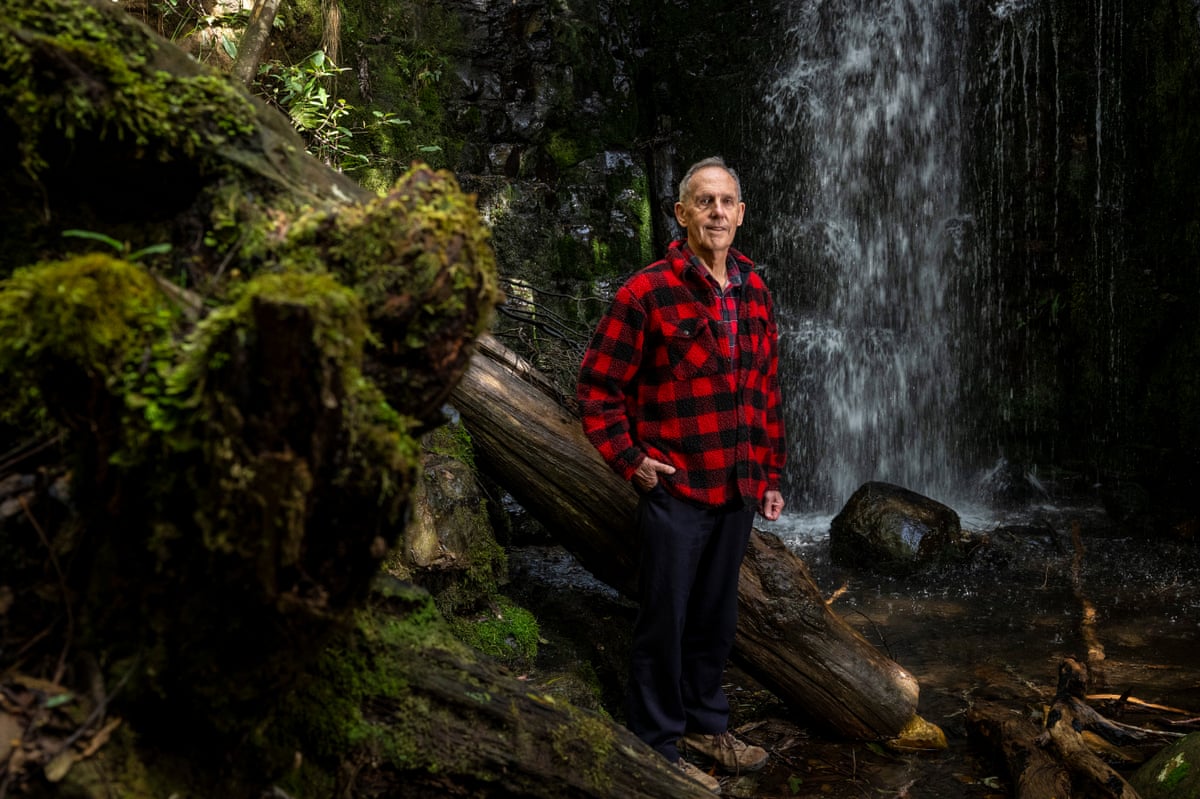
Brown says there are many areas of natural beauty that can be bought on the private market and used for nature-based tourism. He donated his former home in the Liffey Valley to nonprofit Bush Heritage Australia, and it is now a conservation reserve – parts of which are world-heritage listed.
But public land in wild places should never be handed over for private development, he says.
“The greatest oxymoron of all this is the so-called wilderness lodge,” he says.
“Wilderness is country that is free of the impact of modern technology. Full stop.”
A Tasmania Parks spokesperson said the service showcases “the best the state has to offer” by providing a “spectrum of opportunities” – a model that “ensures Tasmania’s parks and reserves cater to all visitors”.