Introduction to the Major Oak’s Demise
The Major oak, one of Europe’s oldest, largest, and most renowned ancient trees, has died. This monumental tree, which has stood in Sherwood Forest, Nottinghamshire, England, for at least 1,000 years, failed to produce any leaves this year after enduring stress from a series of hot, dry summers.
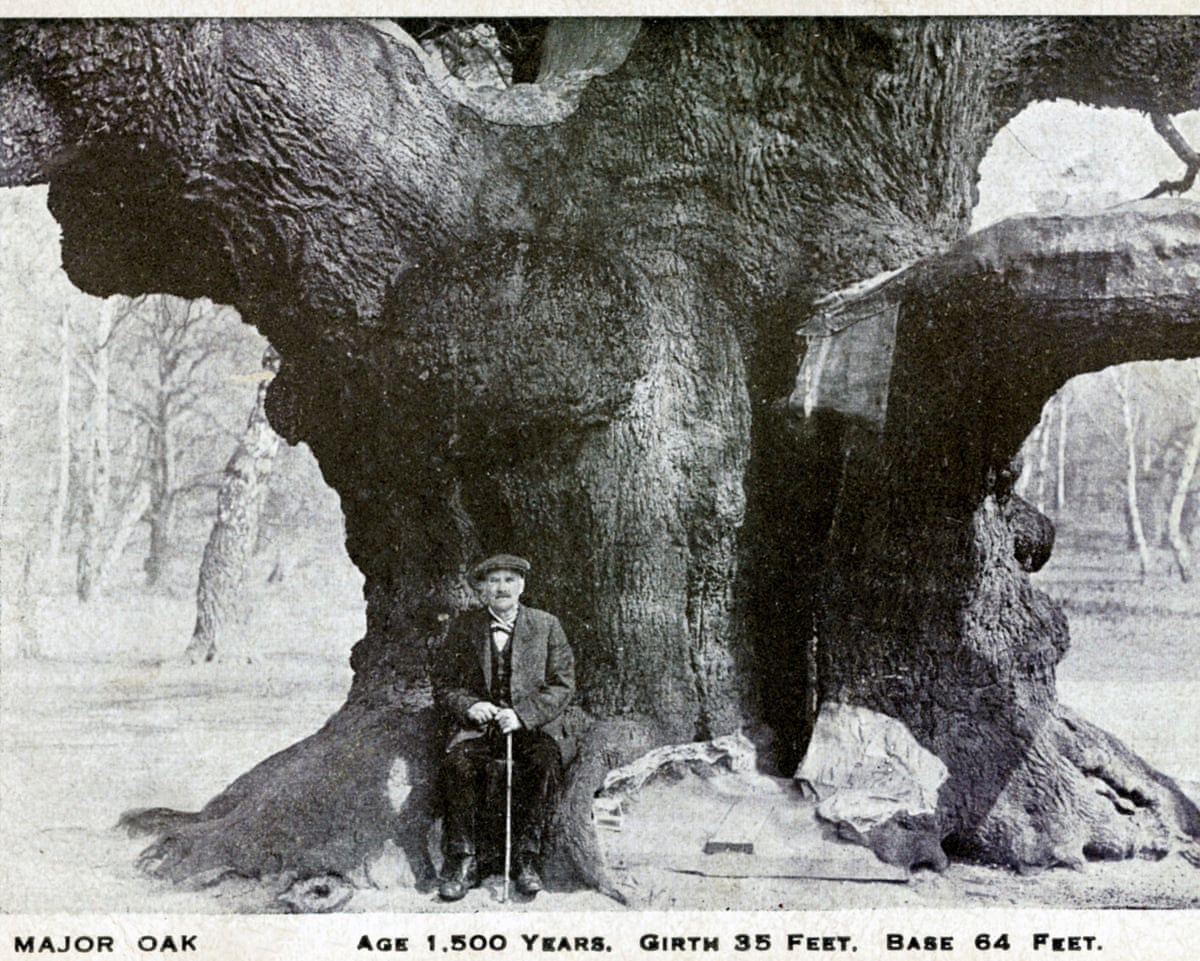
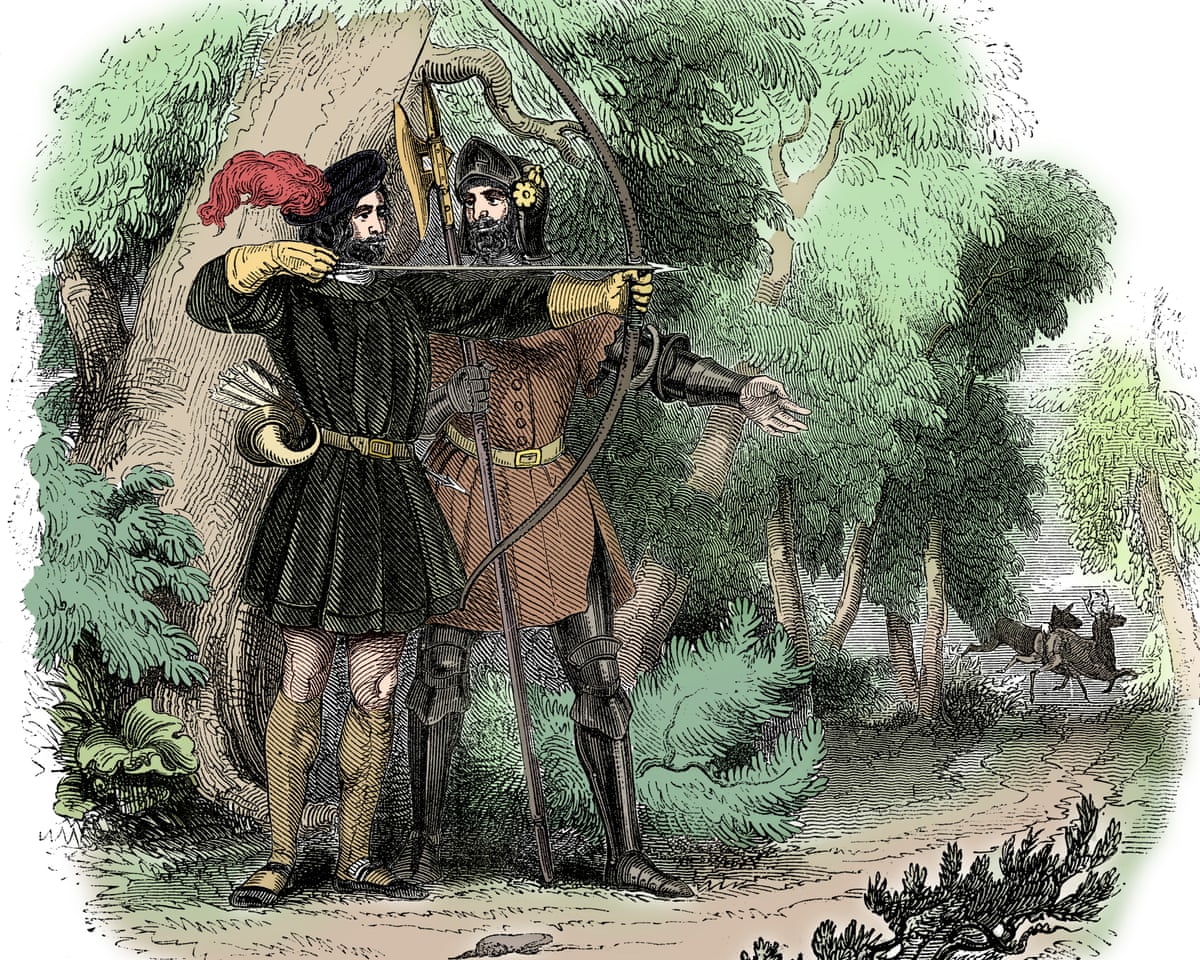
Each year, thousands of visitors come to admire the oak, whose great age, enormous 11-metre girth, and 28-metre canopy have inspired a wealth of folklore. Although the oak would not have been hollow during Robin Hood’s era, it was reputed to have served as a sanctuary for the outlaw and his band when evading the Sheriff of Nottingham.
In the winter of 2010, snow falling on the tree created an eerily precise image of Friar Tuck on its trunk. In other winters, snow fell around the tree but did not settle on its limbs.
However, it was recent summers—and the attention of human visitors—that likely accelerated the natural end of the tree’s extensive life.
Environmental Stress and Human Impact
Like many ancient oaks, the Major oak has been repeatedly stressed by the heat and drought associated with global warming, particularly during the July 2022 heatwave when Britain experienced record temperatures of 40°C.
Following the announcement of the tree’s passing by the Royal Society for the Protection of Birds (RSPB), which manages the Sherwood Forest site of special scientific interest (SSSI), a figure portraying Robin Hood arrived in an electric van to hold an impromptu, informal funeral beside the tree.
Robert Brackley, an outdoor educator who has introduced thousands of schoolchildren to the wonders of the Major oak while dressed in authentic outlaw furs and equipped with a functioning bow and arrow, reflected on the tree’s legacy:
“The stories it has given us is the legacy. It’s the most famous tree in the world. The legend always lives on. I feel sad but it’s a fleeting moment in time. We must remember how it was and be in awe of it today.”
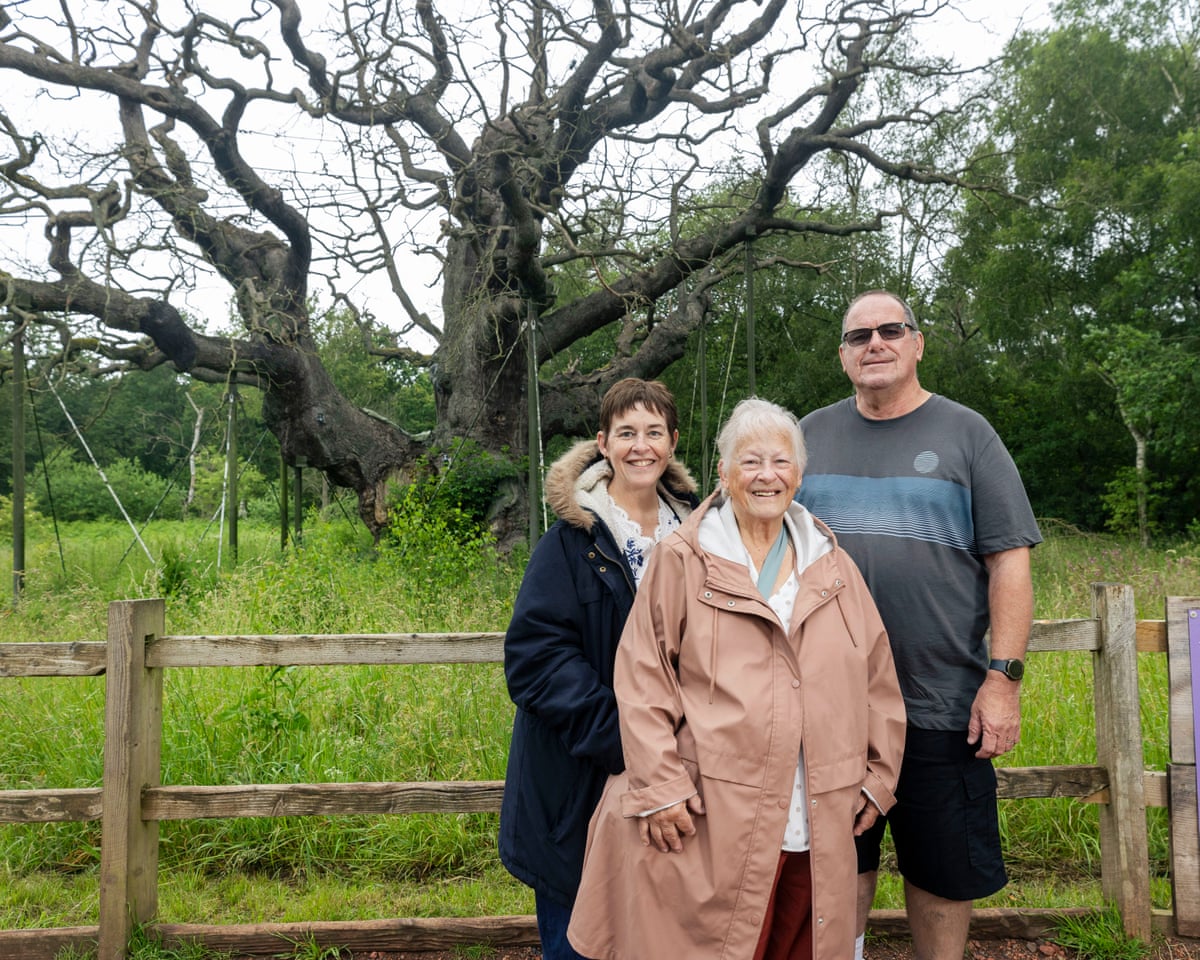
Visitors from Spain, Sheffield, the United States, South Korea, and Australia paused beside the tree to pay their respects. Carter Jackson, eight, from Sheffield, said:
“It’s ginormous! It’s a really beautiful tree and it’s sad it’s died.”
His father, Ryan Jackson, added:
“It’s a piece of history that’s dying but it was 1,000 years old, you can’t live for ever.”
Kirsty Champion from Adelaide commented:
“Poor tree. I always watched Robin Hood on the TV and read the books. It’s so sad that we tried to help it and conserve it but it probably made it worse.”
Conservation Status and Historical Interventions
England is home to 114 living ancient oaks with a girth exceeding nine metres, described by conservationists as “the white rhinos of the UK,” with only 98 such trees found across the rest of Europe, including Scotland and Wales.
Since the oak was named in honour of Major Hayman Rooke, a local historian who described the tree in 1790, it has attracted numerous admirers—currently about 350,000 visitors annually. Although a protective barrier was installed around the tree in the 1970s, the oak was weakened by poor soil health and soil compaction caused by visitors, as well as Sherwood Forest’s wartime use as a military camp.

Well-intentioned historical interventions have not extended the tree’s longevity. In 1904, props and metal chains were installed to support its branches.
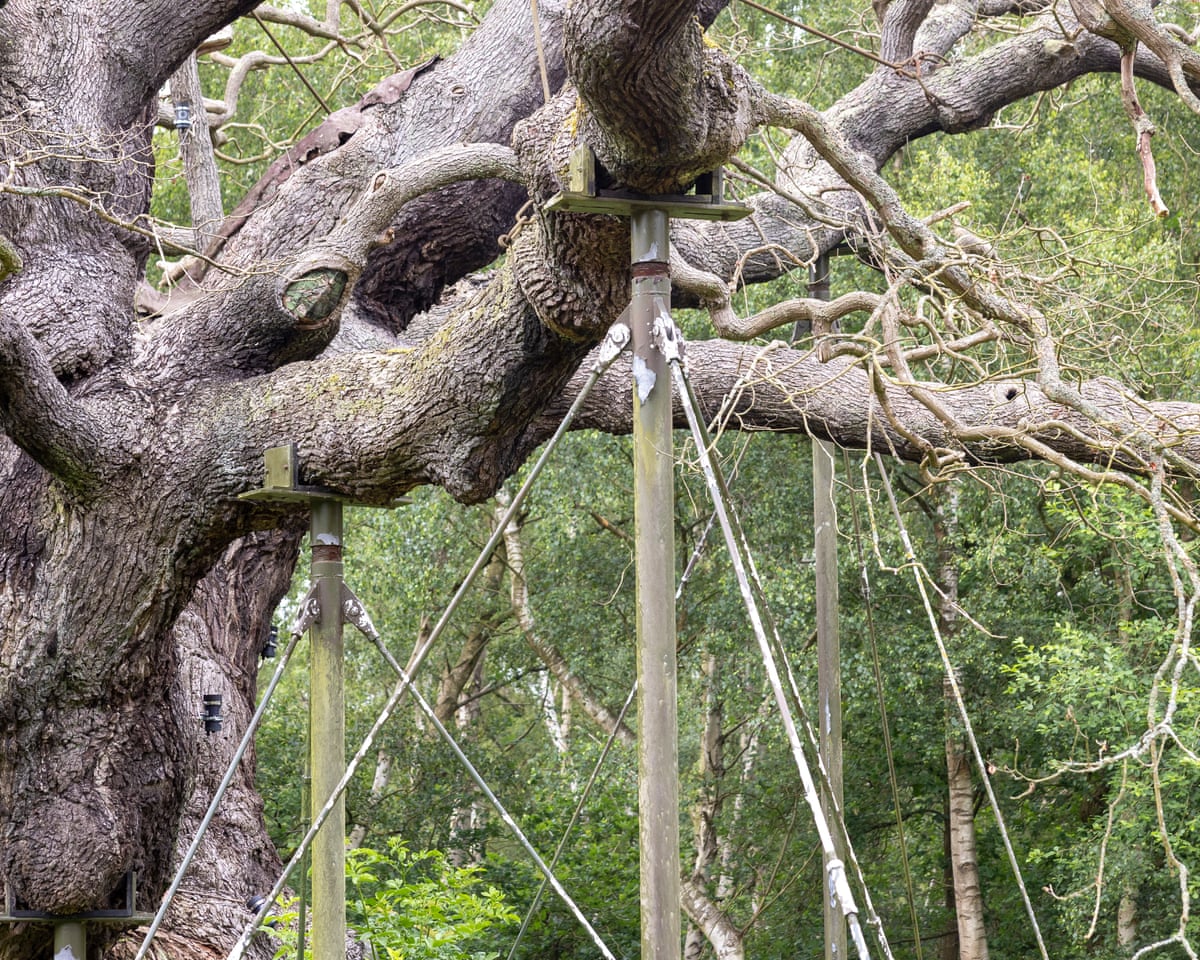
During the 1960s, hollow parts of the tree were filled with concrete to provide support, while limbs were clad with lead, then fiberglass, and treated with fire-retardant paint.
Experts believe that the props supporting the tree’s massive limbs may have placed additional strain on it. When left undisturbed, ancient oaks naturally shed limbs and “grow down,” retreating into their trunk and thereby requiring less water and nutrients as they age.
Recent Management and Health Assessments
Since the RSPB assumed management of the site in 2018 and undertook studies and emergency actions to address the tree’s declining health, it was discovered that the oak’s massive trunk was becoming depleted of water as it was pumped to the outer branches, which were artificially supported by props.
Chloe Ryder, RSPB Sherwood Forest estates operations manager, stated:
“The props probably impacted its ability to sustain itself, but they could not be removed because the tree would have collapsed. I’m devastated by the death of a tree I used to visit as a child.”
She added:
“It’s heartbreaking. I’m genuinely gutted it’s happened in my lifetime, let alone in my tenure. I’ve almost dreaded coming to see it and have that confirmation, and see no leaves on it. I still think it’s one of the most beautiful trees. We call it a living museum because it’s got so much to teach us, both good and bad.”
Underground tests revealed a “strangled and starved root system in total disconnect to its surrounding environment,” according to Ryder. The tree was growing in nutrient-poor soil that was depleted of microbial life. Over the past three winters, the RSPB gently excavated around the tree’s roots to aerate, feed, and restore their health and vitality. Although tests showed life returning to the soil, the Major oak sprouted hardly any leaves last year and has no buds or leaves this year.
Arborist , who has monitored the tree’s health for the past nine years on behalf of the RSPB, explained that it was impossible to isolate a single cause for its decline:
“The range of factors affecting it over such a long period of time is very wide and varied, including 200 years of tourist footfall and vehicular compaction, changes to the water table from coal mining beneath it and significant changes to the climate, particularly in the last 10% of its life.
Sadly, it seems probable the lack of summer rainfall over the last five years, coupled with the unprecedented high temperatures, have had a significant hand in it.”
Legacy and Ecological Importance
Although the tree is now leafless and lifeless, it will be allowed to remain standing, particularly because its deadwood is almost as valuable to other wildlife as a living tree.
Ed Pyne, senior conservation adviser at the Woodland Trust, noted:
“It still has this totally irreplaceable habitat value. It’s still one of the largest trees in Europe and it’s still doing a lot for the ecosystem.”
He added that a quarter of all forest species depend on deadwood at some point in their lifecycle.
While every effort was made to save the Major oak, Pyne highlighted that other ancient trees are dying or being destroyed without notice, calling for the government to introduce legal protection for such trees:
“We lose a tree like this every year. They have no designated legal protection and we are losing them because they are not being valued appropriately.”