Ospreys Nesting on Queensland Rainforest Canopy Crane for 15 Years
Researchers believe the same pair of ospreys have been mating and nesting in an unusual location within the Daintree Rainforest for 15 consecutive years.
What began by chance has become a remarkable natural phenomenon, as two ospreys chose a high-tech research facility as their home.
James Cook University’s 47-metre tall crane towers above the far-north rainforest canopy, providing an ideal nesting site for the seabirds.
Despite the challenges posed by the location, the birds return year after year to nest.
“The crane is constantly moving,”
said Johan Larson, station manager of the university’s Daintree Rainforest Observatory.
The crane’s jib extends 55 metres, meaning the nest can shift up to 110 metres from its previous position, yet the ospreys consistently find it without difficulty.
“But they have no problems finding it.”
The canopy crane, designed to provide researchers access to the rainforest from above, is the central feature of the university’s field station, which is situated in lowland rainforest and includes facilities such as a lecture theatre and both indoor and outdoor laboratories.
Located just one kilometre from the coast, the nest is close enough to the ocean for the ospreys to hunt fish while remaining safe from ground-based predators.
“I think they haven’t missed a single year for the last 15 years, so I think they really like it,”
Larson said.
Ospreys typically live up to 25 years, and researchers at the observatory believe the nest has been continuously occupied by the same breeding pair.
A few years ago, a university member had the idea to install a web camera focused on the nest.
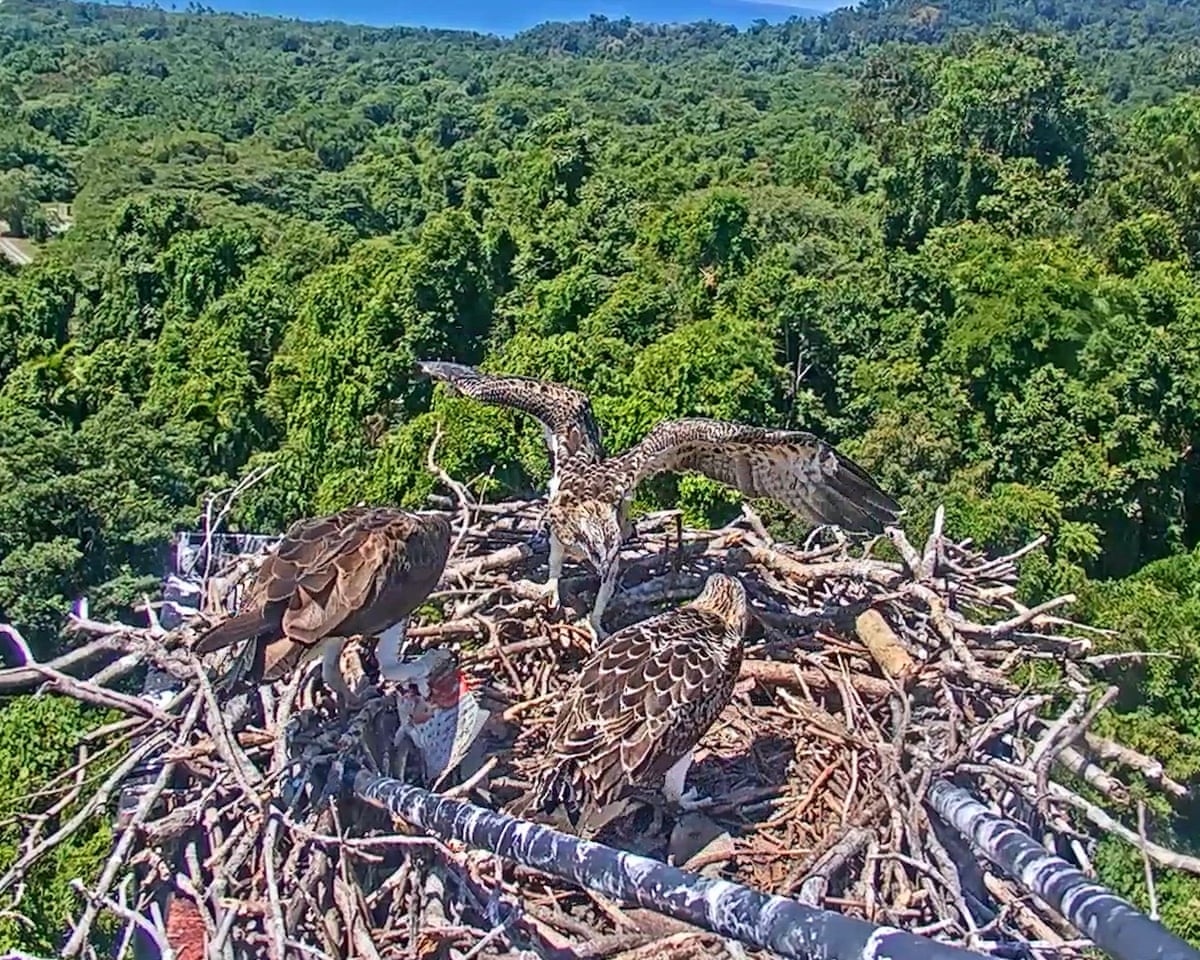
Today, the "Osprey Cam" livestreams the birds’ life cycle worldwide, providing a 24/7 view of their activities from birth to maturity.

Larson noted that nature enthusiasts from around the globe tune in to observe the ospreys as they build their nest, hunt, and raise their young each year.
“I think people in general find it fascinating to be able to watch wild animals live, and it’s very unique to be able to see a nest in particular,”
he said.
“It’s quite an online attraction.”
Osprey Behavior and Nesting Habits
Ospreys are small diurnal predators that feed almost exclusively on fish.
Unlike their European or American counterparts, Australian ospreys do not migrate and remain near the crane year-round.
Each year, they rebuild their nest from scratch. Maintenance crews clear the old nest remnants annually, but even if this were not done, the birds tend to allow their nests to deteriorate after raising their young.
Rebuilding the nest is a challenging process.
“It’s fascinating to watch them,”
Larson said.
“They’ll bring the first stick on top of the metal structure, and then the wind will catch it and it kind of swivels and then falls through the gap. They take a deep breath, go get another stick, try again.
It’s actually pretty quick once they get started. It only takes a few weeks.”
Following nest construction, the ospreys begin raising their offspring.
“They are very good parents. They tend to, from what we observe, take turns. The female spends more time on the eggs and more time with the chicks when they hatch, and the male, even though they both hunt, he tends to bring in more of the fish,”
Larson explained.
Occasionally, researchers find fish that have fallen from the sky, dropped by either parent during feeding flights.
Larson acknowledged that the birds will eventually die, potentially leaving the nesting spot to a new pair.
“It’s always sad to see an animal die but I guess it is the cycle of life,”
he said.
“Hopefully another pair will take over. It might even be one of their offspring that takes that spot.”