Call for Ban on Artificial Grass Over Environmental Risks
An environmentally conscious resident has called for a ban on artificial grass, warning it could lead to what he describes as an "ecological disaster." Jonathan Huggins, a 74-year-old from Southwold, expressed concerns about the increasing popularity of plastic grass for gardens and sports pitches, which he believes represents a "looming environmental catastrophe."
Huggins has launched a petition demanding a halt to the production of artificial grass, motivated by his strong conviction about the material's potential harm to the planet. At the time of writing, his petition has gathered over 300 signatures.
However, the Artificial Grass Company Norfolk and Suffolk defended the use of fake grass, arguing that more plastic waste is generated from the disposal of household carpets.
'We've got too much plastic'
Huggins described artificial grass as a "ticking time bomb," emphasizing the broader issue of plastic pollution.
"We've really got too much plastic on this planet, and I see this as just adding even more to it when we don't really need to," he told the BBC.
"Through wear and tear, it'll break down, meaning plastic shards blowing around the countryside, contaminating soil and waterways and being eaten by animals.
"Why do we need to change from something that's natural to something that is unnatural in a way that is going to be detrimental to the environment?"
Statistics from Aviva indicate that 21% of households across the UK have either already replaced their natural lawn with artificial grass or are planning to do so.
Huggins attributes the rise in demand for artificial grass to the perception that it is more convenient, though he disputes this notion.

"I've got a friend who has had some for about eight years, and it's not maintenance-free because once a week she goes out and hoovers it," he added.
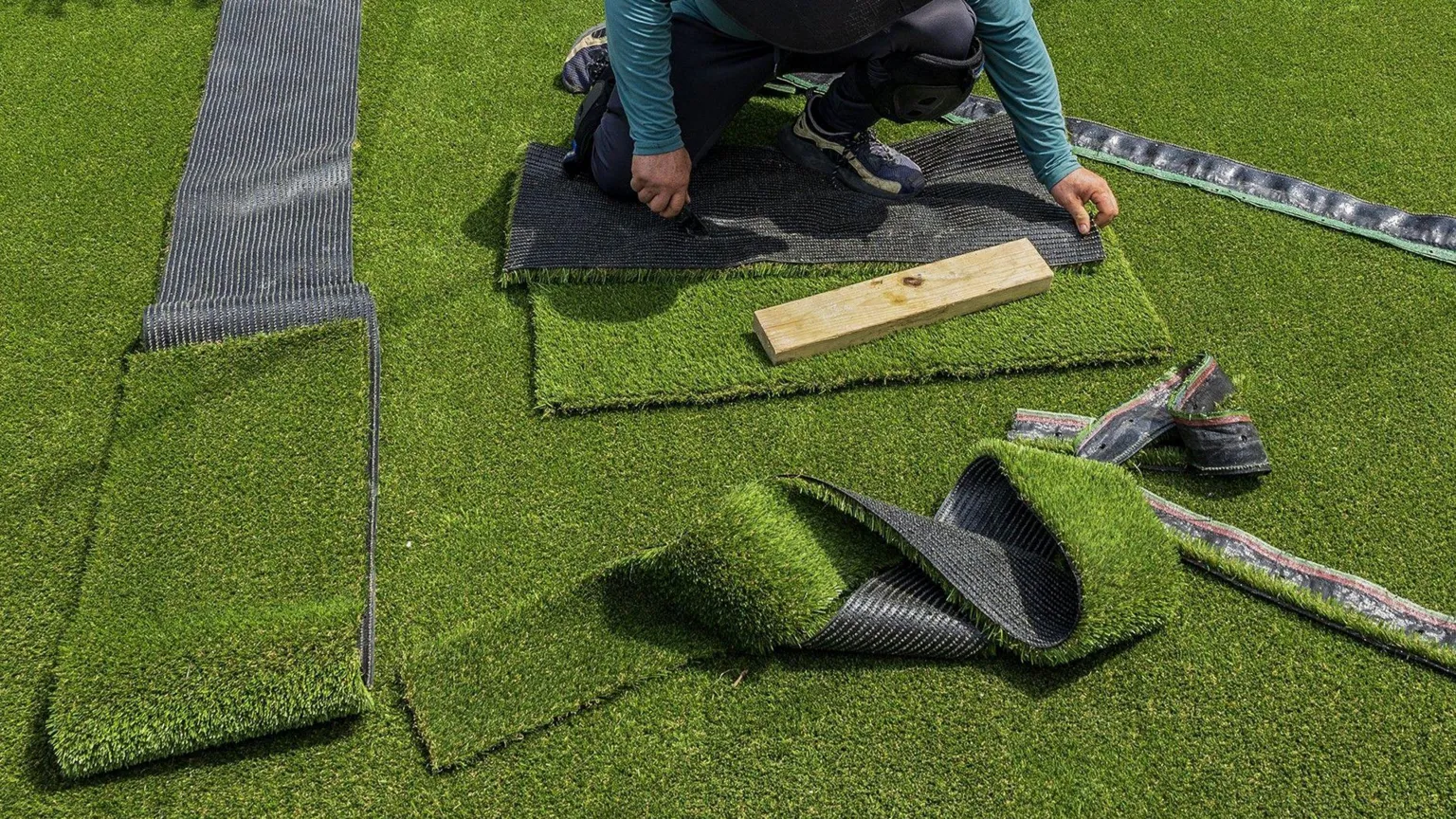
Huggins' concerns are supported by the World Wildlife Fund, which has stated that the increasing popularity of fake grass is "not good news for nature."
"Artificial lawns negatively impact nature, the environment, people and our pets, and should be avoided where possible," the WWF said.
Industry Response and Plastic Waste Comparison
In response to calls for a ban, Lee Symonds of the Artificial Grass Company Norfolk and Suffolk described such demands as somewhat hypocritical.
"Artificial grass is made from the same stuff as people's carpets, PVC windows, plastic plant pots, it's all made in the same factories," he explained.
"There will be far more plastic waste from people's carpets in their houses than there ever will be from artificial grass."
In 2023, Innovate Recycle reported that an independent study it commissioned estimated only 2% of the 500,000 tonnes of end-of-life carpet produced annually in the UK is recycled.
Symonds, who has installed "thousands" of plastic lawns since beginning his work in 2011, also highlighted the benefits of artificial grass for older individuals.
"It means they can keep a bit of colour in their garden instead of turning it into a concrete jungle," he added.
Do you have a story suggestion for Suffolk? Contact us below.
Follow Suffolk news on , Facebook, Instagram and X.