Paris Hosts First Modest Fashion Week Featuring Muslim Designers
Paris recently held its inaugural Modest Fashion Week, showcasing collections from nearly 30 designers that featured loose, long-cut garments and headscarves.
This style of clothing is commonly chosen by many Muslim women to align with their religious principles, covering the arms, legs, and sometimes the hair.
The event's location in France carried particular significance, given the country's history of restrictions and public debates surrounding hijabs and other religious attire.
Rukaiya Kamba, the creative director of the Nigerian brand Flaunt Archive, explained that presenting her collection in Paris was a decision made from a
"very intentional place".
As models walked the runway, some young attendees expressed to the BBC that the event reflected a more inclusive cultural shift occurring in France.
France is estimated to be home to between 5 and 7.5 million Muslims. Özlem Şahin, who leads the organization behind Modest Fashion Week, described Paris as
"one of the leading modest fashion capitals in Europe".
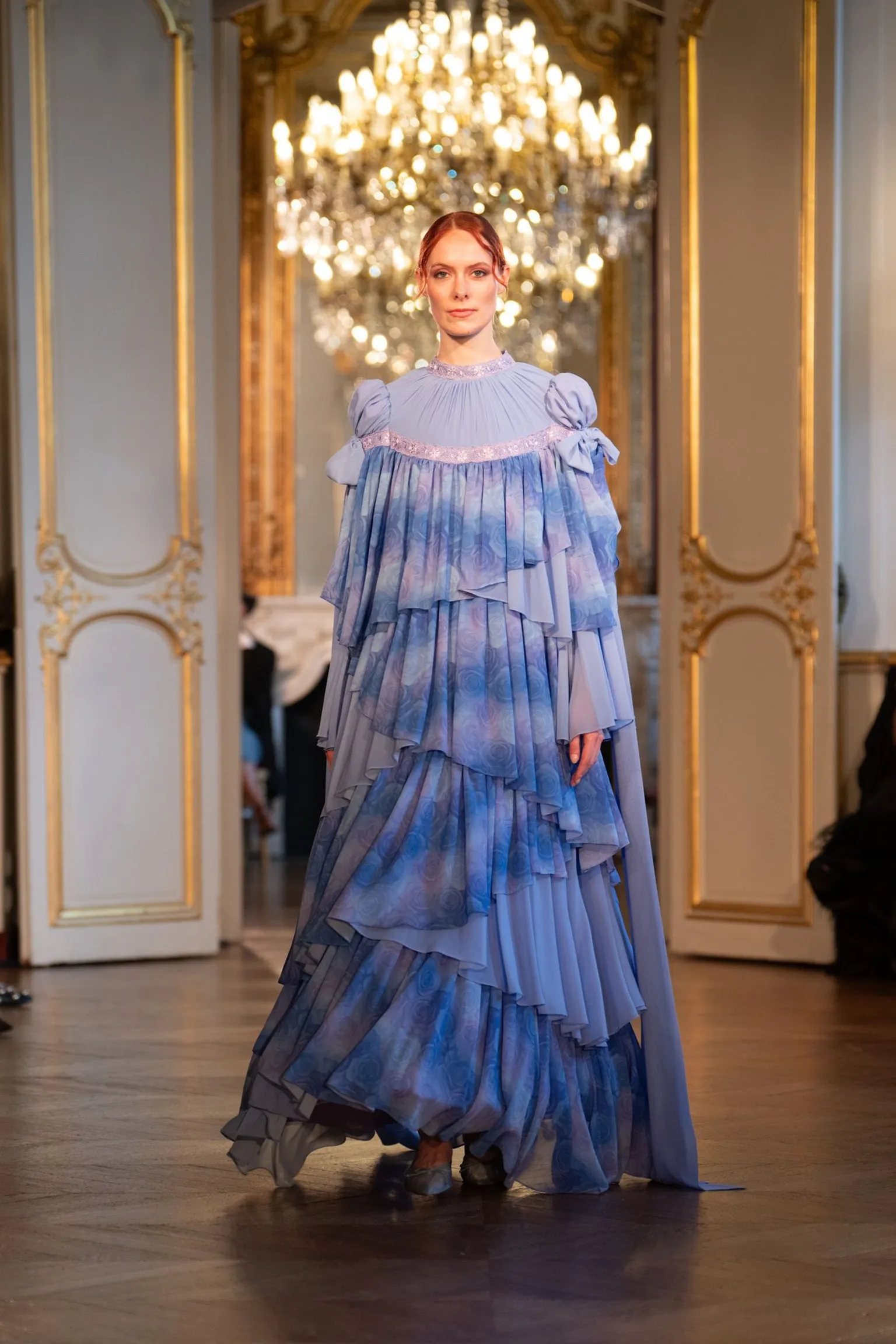
Inside Hôtel Le Marois, a mansion near the Champs-Élysées, the collections emphasized floral patterns and nature-inspired color palettes.
Hicran Önal, founder and designer of the Turkey-based brand Miha, wore a printed floral tulle dress and described romance as a key theme of her collection.
Her designs combined water-like teals and blues with natural floral pinks.
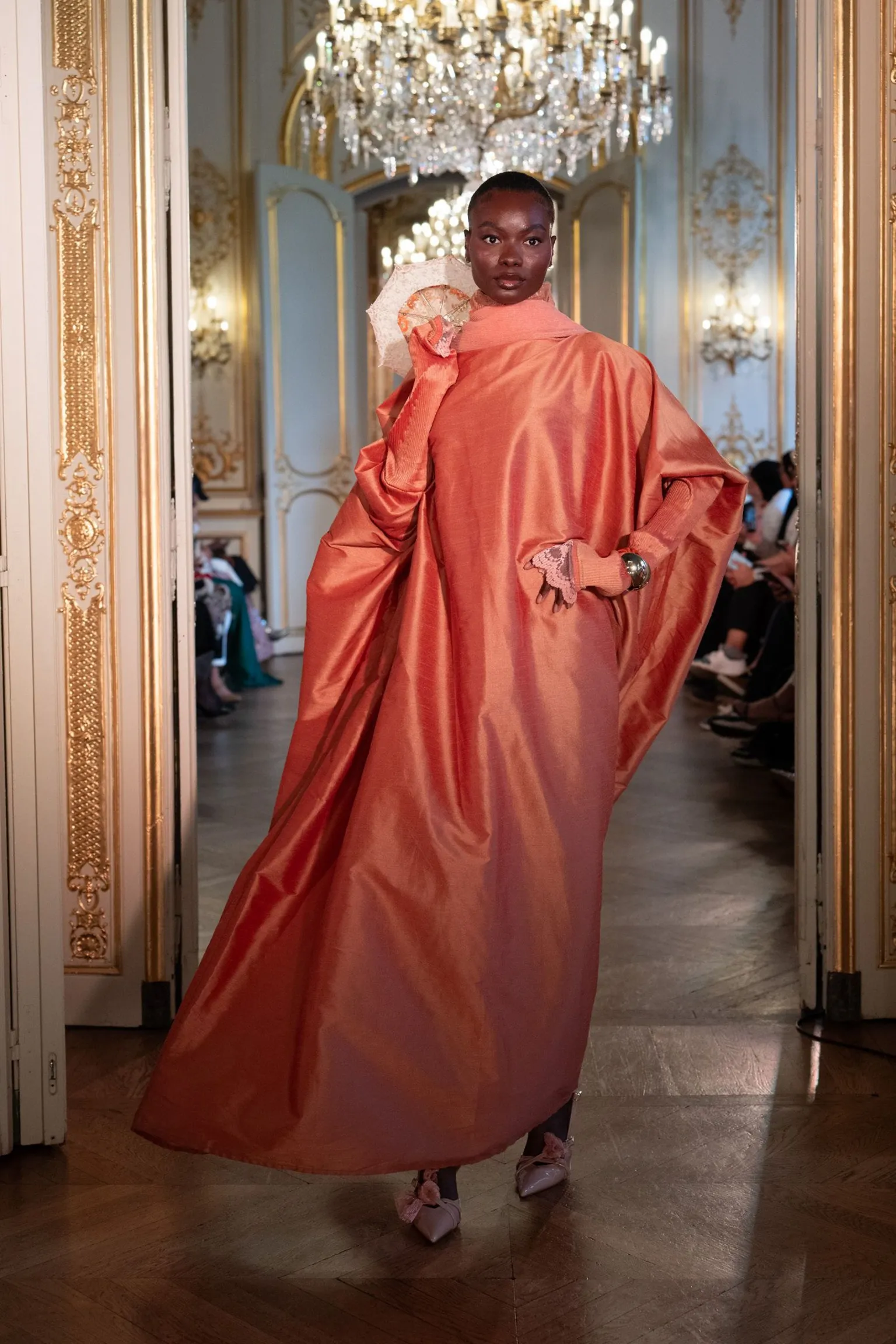
Indonesian designer Nada Puspita also incorporated floral inspiration but favored cleaner lines.
Aisa Hassan, designer of the Australian brand Asiyam, cited nature as her inspiration as well, but with warmer tones such as deep greens and autumnal reds. A bucket hat in her collection referenced her Australian heritage.
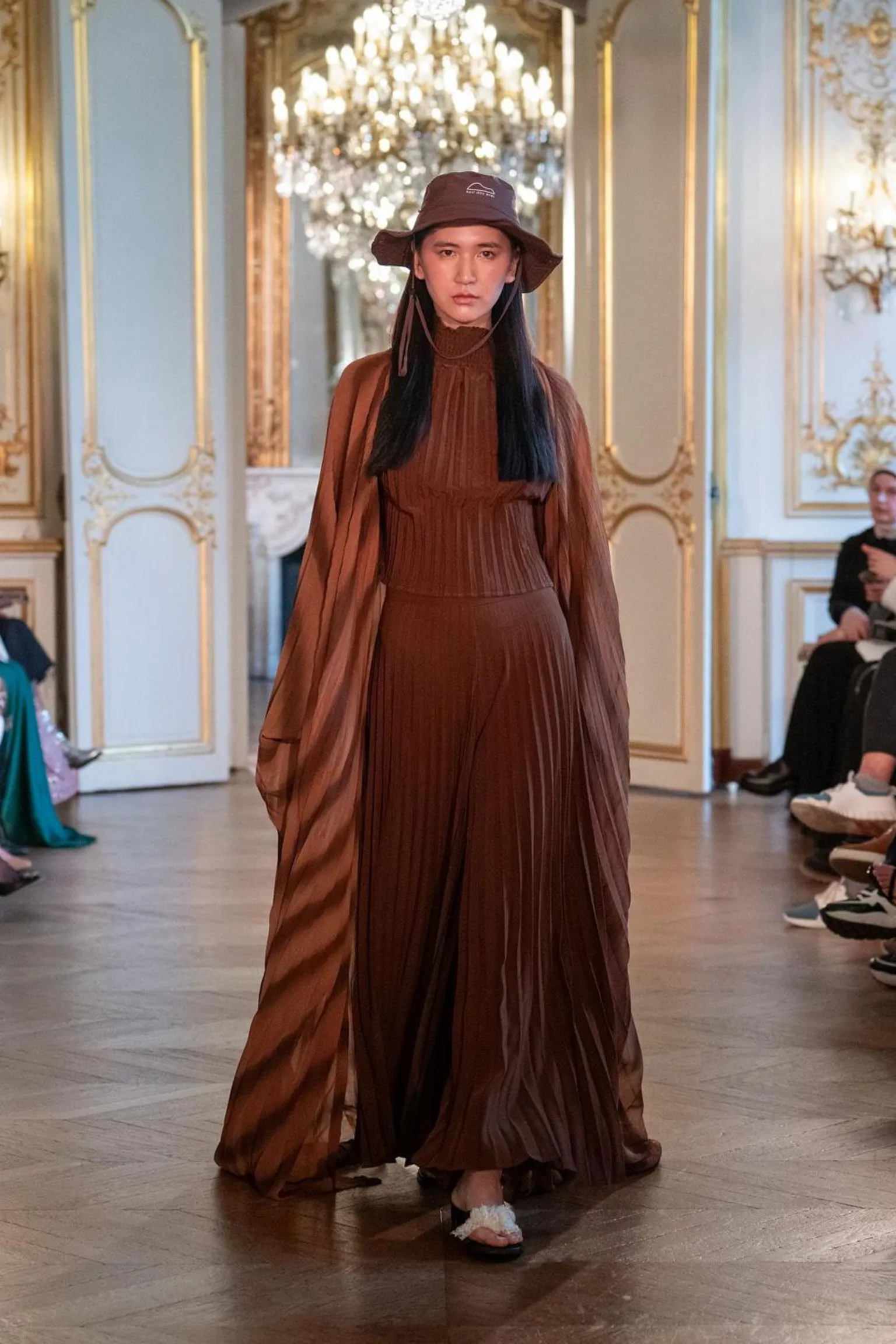
The softness of Hassan's designs contrasted with the sporty aesthetic prevalent in the modest fashion industry.

French brands Soutoura and Nour Turbans presented nylon, black, jewel-toned, and boxy garments heavily influenced by Gen Z streetwear. This style of modest fashion has also been promoted by major sportswear companies like Nike and Adidas.
Similar to Asiyam, Nour Turbans used headwear to make a statement, styling a model with a beret worn over a headscarf.
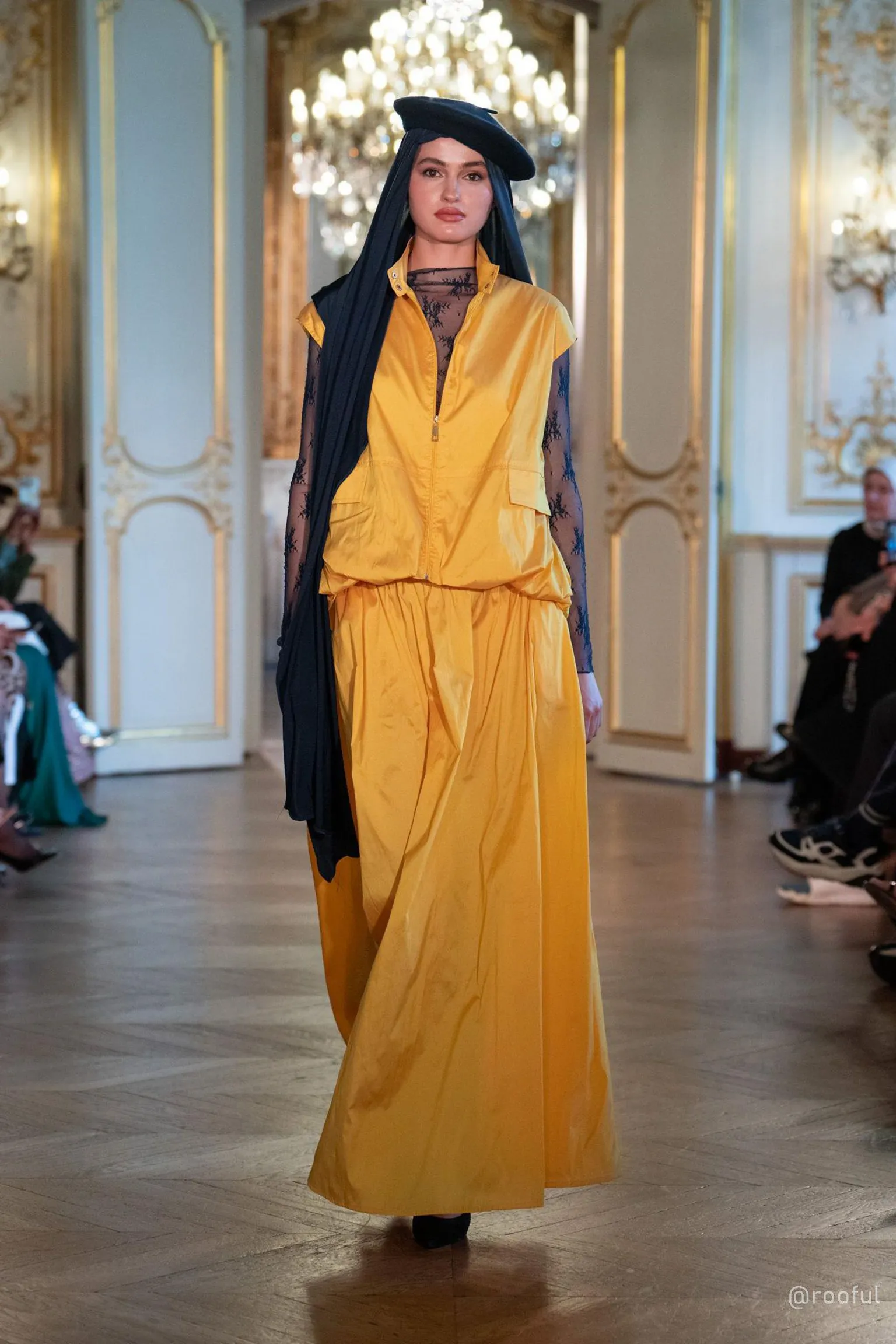
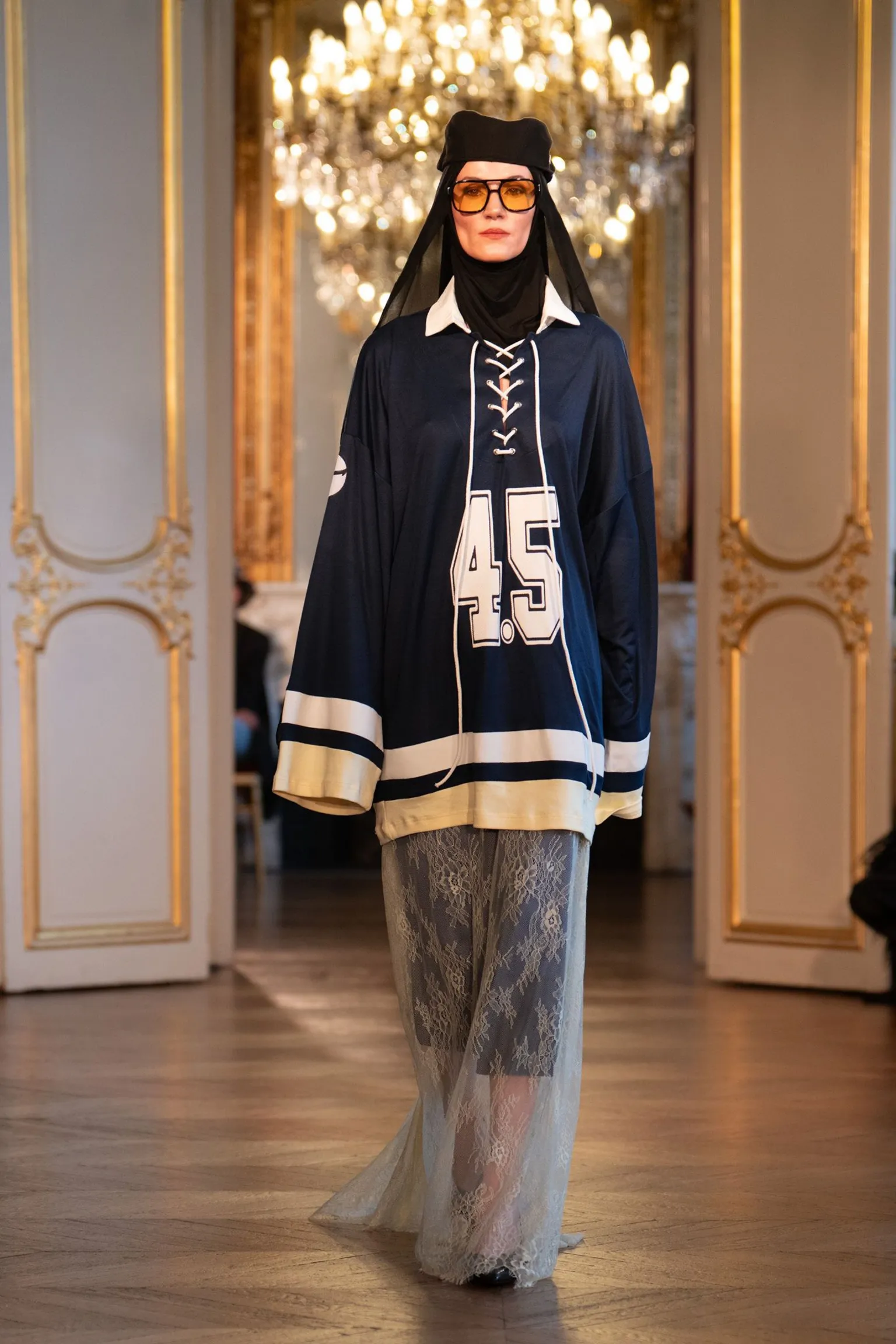
The modest fashion market has expanded rapidly over the past decade, with global consumer spending projected to exceed $400 billion by next year, according to research firm DinarStandard.
While the industry initially targeted Muslim women, it is increasingly attracting other religious groups and secular consumers.
Fatou Doucouré, founder and creative director of Soutoura, expressed pride in having the event in Paris. She shared that she had faced challenges wearing her hijab in France but now felt it no longer limited her.
Religious symbols such as the headscarf were banned in French state-run schools over 20 years ago, and more recently, loose full-length robes known as abayas have also been prohibited in schools.
These restrictions are rooted in laïcité, the French version of secularism, which mandates that the state and public institutions remain free of religious influence. Consequently, individuals cannot wear religious clothing while working in public-sector roles such as teaching or civil service.
Doucouré remarked that showcasing her collection in Paris made her feel that Muslim women who cover their hair or dress modestly could
"take on any role in any society".
Turkish swimwear brand Mayovera presented a collection of burkinis—a blend of the words "burka" and "bikini"—which cover the body except for the face, hands, and feet. While burkinis are banned in most public swimming pools in France, they are permitted on beaches.
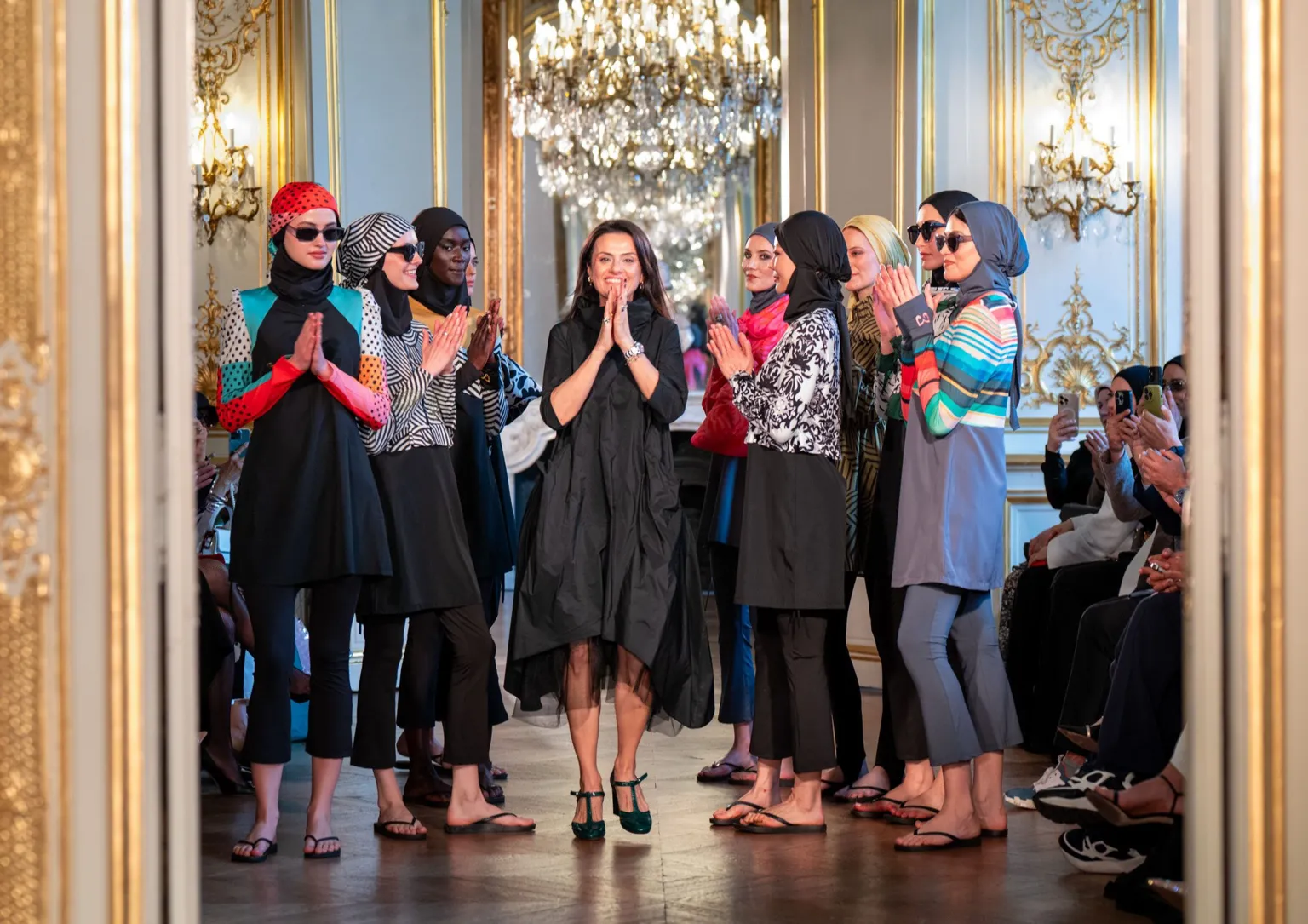
A young French attendee of Malian heritage shared that the event brought her joy as someone who had previously experienced discrimination for wearing a headscarf.
She said that witnessing a major show featuring international designers in central Paris made her
"never want to leave France".
Another attendee expressed that the event felt like a turning point in France, where her hijab no longer dominated political discussions. She added that she sensed a growing acceptance on the streets as well.