Dear You and Its Teochew Roots
The Chinese film Dear You was filmed almost entirely in Teochew, a dialect originating from China's Chaoshan region.
A nostalgic story centered on family, hope, and hardship, Dear You has become a box office success in China this summer and has unexpectedly ignited a conversation about identity thousands of kilometers away in Singapore.
The film’s use of Teochew is notable as this dialect remains spoken primarily among older generations of Chinese in Southeast Asia.
However, when Dear You was released in Singaporean cinemas this month, many viewers expressed disappointment upon learning that most screenings would be dubbed into Mandarin, which is the official lingua franca of China and one of Singapore’s four official languages alongside English.
"Being Teochew, watching it in Teochew makes it even more special,"
said Wu Silin, a church worker. She and her mother attended one of only eight special Teochew screenings last week, where tickets reportedly sold out in under two hours.
Many Singaporeans have questioned why the film is screened in its original language in China but not in Singapore, where Teochew is still spoken by many elderly ethnic Chinese residents.
Debate Over Language Policy and Dialect Preservation
The film has inadvertently sparked a debate regarding Singapore’s longstanding government policy encouraging Chinese Singaporeans to speak Mandarin instead of other Chinese dialects.
Originally intended to unify the Chinese community, this policy has been so effective that critics argue it has led to the irreversible decline of dialects such as Teochew, Hokkien, Cantonese, and Hakka.
In response to public appeals for more dialect screenings, Singapore’s information ministry issued a statement on Monday acknowledging the calls for greater freedom in screening dialect films and promised to adopt a more flexible approach.
As the discussion gained momentum online, some individuals shared plans to travel to neighboring Malaysia to watch Dear You in Teochew. Following this, an additional eight shows—offering nearly 5,000 tickets—were released on Monday and sold out within two hours, according to local media. On Thursday, 50 more Teochew screenings were approved.
For many Singaporeans, Dear You represents a bittersweet journey into their own history, told in a dialect that has traversed seas and entered a new era.
Historical Context and Cultural Significance
Dear You is set against the backdrop of a significant historical wave of Chinese migration to Southeast Asia.
Even viewers who do not understand Teochew have sought out the film in its original language.
"I think sometimes it's just the vibe,"
said Anna Zhang, a 35-year-old from Beijing who relocated to Singapore for work. She watched the film in Teochew with subtitles, similar to how she would approach any foreign film.
"I'm not saying these translated versions are not good, but I do feel there is a bit of difference … It doesn't feel like this is coming from the original character."
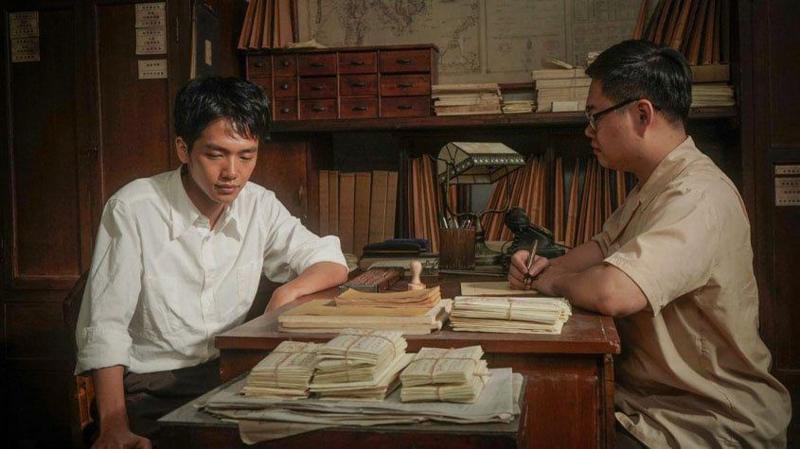
Produced on a modest budget and featuring mostly novice actors, Dear You tells the story of a young man from a southern Chinese village who travels to Thailand in search of his grandfather.
The grandfather had fled their village in 1948 to avoid conscription during the Chinese civil war, eventually becoming a trishaw rider in Thailand in the 1950s. He lived in a hostel with other Chinese migrants and sent letters filled with longing to his family back home.
The film’s use of Teochew touches on identity because it is set during a historical period when millions of Chinese undertook perilous sea voyages to reach Singapore and other parts of Southeast Asia between the 19th and mid-20th centuries.
"Dialects have always been the root of where the Singaporean Chinese come from. Mandarin, I would say, is mostly a superimposed language that we learn from schools,"
said Lee Cher Leng, associate professor of Chinese studies at the National University of Singapore.
"I think it's really interesting that a small movie like that would bring [up] something so impactful."
Decline of Dialects in Singapore
Dialects were once widely spoken among Singapore’s Chinese community, which constitutes over 70% of the country’s population.

However, they disappeared from media airwaves in the 1980s after the government launched a campaign encouraging Chinese residents to use Mandarin instead of their various dialects.
Dialects have since been dubbed over in cinemas and removed from radio and television programming.
This was part of a broader bilingual policy adopted in the 1960s, which mandated English as the common language for all Singaporeans, alongside a "mother tongue" language determined by ethnicity.
At the time the Speak Mandarin Campaign was introduced, nearly 70% of Singaporeans spoke one of several Chinese dialects at home. By 2020, that figure had dropped to 8.7%.
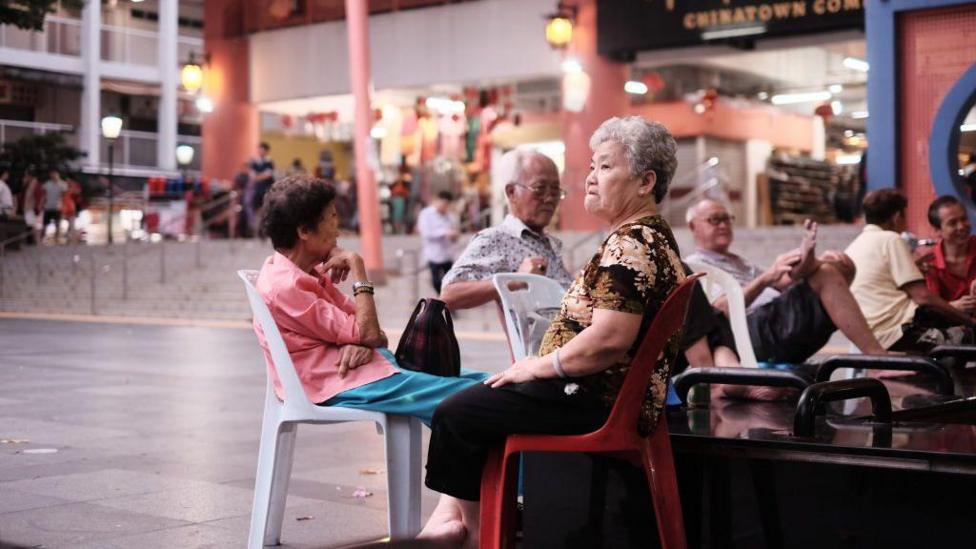
Today, dialects are mostly spoken by a shrinking generation of elderly Singaporeans.
Many of these restrictions remain in place, even though nearly half of Singaporeans now cite English as their most comfortable language.
Since the 1990s, the Speak Mandarin Campaign has shifted focus to English-educated ethnic Chinese, moving away from those who speak dialects.
"The campaign has achieved what it set out to do - it has established Mandarin as the common language among Chinese Singaporeans and dismantled the dialect landscape,"
read a letter by two filmmakers published last week in the local newspaper The Straits Times.
"Screening a dialect film is now no different from screening a French or Malay film."
They further asked,
"What better way to confirm the success of the Speak Mandarin campaign than to relax this rule completely,"
to "signal a maturity" in handling cultural diversity among Chinese Singaporeans.
Public and Political Reactions
This debate has resonated across social media and commentary platforms over the past week, drawing attention from politicians as well.
Opposition Member of Parliament Dennis Tan praised dialects on Facebook as
"the living, breathing repositories of our forefathers' journeys, customs, and identity."
The discussion is expected to continue, with two lawmakers reporting that they have inquired with authorities about screening movies in their original dialects.
"Actually a lot of people can't speak dialect [anymore],"
Wu said.
"I think it's time they revisit this policy. If they want to retain some of our culture, then I think it's important."
It is not only the dialects that are disappearing but also the traditions associated with them.
Wu was particularly moved by a Teochew ritual depicted in Dear You that she personally experienced. When she turned 15, a culturally significant age in the community, her parents gave her a gift to mark her coming-of-age, known as "leaving the garden" in Teochew.
However, when her niece turned 15 last year, Wu noted that no such celebration took place.
Despite this, younger Singaporeans have shown increasing interest in reconnecting with their heritage, including learning the fading dialects of their grandparents, taking lessons, and organizing trips to ancestral hometowns in China.
Nonetheless, Tan Ying Ying, an associate professor at Nanyang Technological University who studies dialects, is skeptical that this interest will reverse the decline.
"Young people who are learning them now … You can learn it like a foreign language and learn it for fun. But if no-one is speaking it, you're not going to be able to retain it,"
she said.
Tan described the uproar over Dear You as perhaps
"like grieving a loss."