The Enduring Mystery of Bigfoot
Whether regarded as a hoax or an undiscovered species, the legend and cultural mythology surrounding Bigfoot have captivated public imagination for decades.
Bigfoot became a prominent cultural icon in 1967 when grainy footage emerged showing a 7-foot-tall, ape-like figure walking upright and glancing back at the camera in California, USA.
Despite this, definitive evidence remains disputed, and the debate over Bigfoot's existence has persisted for nearly 60 years. Notably, naturalist Sir David Attenborough has expressed support for the possibility of creatures like the Yeti, Bigfoot, or Abominable Snowman, while many researchers maintain a skeptical stance.
Researching the Bigfoot Community
To gain insight into this fascination, two sociologists conducted interviews with over 160 individuals deeply committed to collecting evidence supporting Bigfoot's existence.
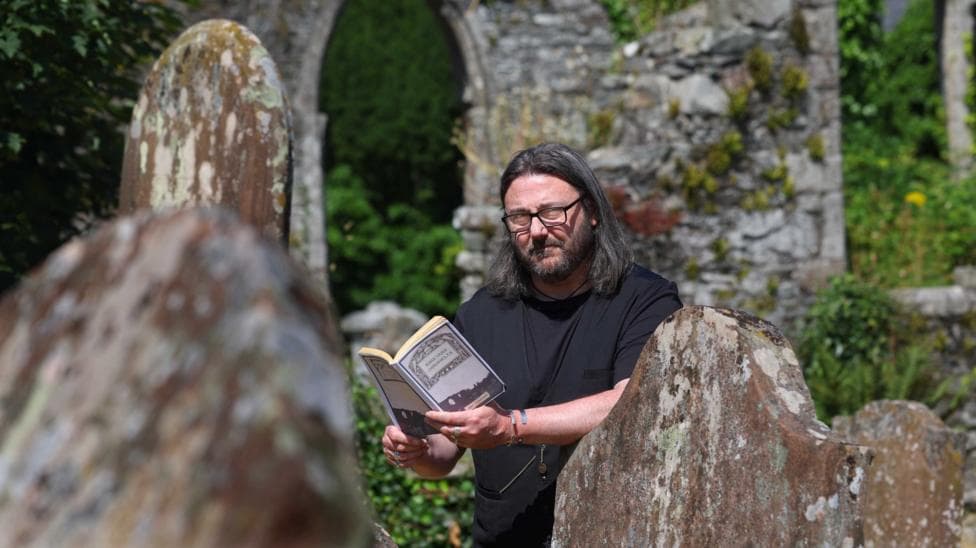
"Bigfoot exists - at least as a known object that people shape their lives around," said Dr Jamie Lewis, sociologist at Cardiff University.
"One thing I would never do is question the dedication of a fair percentage of the Bigfooters."
Dr Lewis, alongside Dr Andrew Bartlett from the University of Sheffield, spent three years interviewing believers, academics, and skeptics for their book Bigfooters and Scientific Inquiry.
Researchers often spend "days, weeks, in some cases months" in the dense forests of North America, according to Lewis, with many motivated by childhood encounters or introduced to the pursuit by close acquaintances.
"We're talking in the thousands of people. But there are a couple of hundred really serious people of which I probably interviewed at least half," Lewis explained.
Embarking on expeditions in vast and sometimes hazardous environments, Bigfoot hunters utilize drones, infrared cameras, audio recorders, and materials to cast footprints.
They also attempt to replicate Bigfoot "calls," based on the belief that the creature communicates through howl-like sounds or by knocking on trees.
Bigfooters tend to be predominantly middle-aged white men, often with military backgrounds, residing in rural areas and employed in blue-collar jobs, Lewis noted. He added that the community exhibits a "masculine energy" and a "frontier" mentality.
"A lot of it is kind of an attempt to re-enchant the world, so to speak.
"The idea that an eight foot ape is still living in the US not known to science is quite an enchanting idea."

Belief and Popularity
Bigfoot has been the subject of numerous documentaries and is believed in by thousands, with a 2021 YouGov survey indicating nearly a quarter of Americans consider Bigfoot probably or definitely real.
Believers can be categorized into two groups, Lewis explained.
"Apers believe Bigfoot is just a primate unknown to science while Woo-Woos think Bigfoot is some sort of inter-dimensional traveller - an alien of sort."
The study focused on interviewing Apers, who "aren't anti-science but they are counter elitist and counter-establishment."
Bigfooters have even developed their own DNA testing kits to analyze hair samples they find, but have also collected evidence that defies easy explanation, Bartlett said.
This evidence includes shapes captured on trails or infrared cameras, howls, and witness testimonies, enabling Bigfooters to hypothesize about the creature's anatomy, behavior, sociality, and intelligence levels.
Personal Encounters and Experiences
Glenn Adkins, 59, from Ohio—ranked fourth globally for Bigfoot sightings—has been investigating Bigfoot for over 30 years.

He has witnessed changing attitudes toward Bigfoot hunting, recalling how he was ridiculed for his interest, which began around age nine.
Glenn recounted his first face-to-face encounter with Bigfoot while camping with a friend in 1992.
"It was standing right there and looking at us... we both froze of course.
"The last thing on my mind was getting a picture, you are all of a sudden in the presence of something that is awesome. You can't fathom how big they are."
He described the primate as 7-8 feet (2.1-2.4 meters) tall and very heavy.
"When it took a deep breath I could see it almost pull up and take that breath and I'm like 'oh my God, he's going to suck all the air out of this place and I'm not going to have any'.
"It was just that big and that impressive."
The encounter lasted no more than 10 seconds but felt much longer, leaving Glenn uncertain of how to react.
Since then, Glenn has observed various signs of Bigfoot, including unidentified feces, hoots, and animal remains torn apart with apparent extreme strength.
March was an "exciting time" as Glenn was active with the Bigfoot Society following reports of a surge in clustered sightings in northeast Ohio within a single week.
Glenn hopes for progress in the field but believes, "you don't find Bigfoot, Bigfoot finds you."
"Even if evidence revealed Bigfoot doesn't exist or it was a hoax, I would not see it as time wasted as I had seen the most wondrous things in the woods, but would like to see people being more open minded about the mystery.
"People like to make fun of things they don't know."
Scientific Perspectives and Sightings
In a Nature on PBS documentary, Sir David Attenborough discussed a large ape species that existed between six and five million years ago, the gigantopithecus.
Described as possibly the largest ape to have ever lived, it inhabited grasslands in southern China and "could well have stood at three metres tall, in which case it would have been eight times as heavy as I am," Attenborough said.
"And if you're as heavy as that, you don't spend much time climbing in trees because they won't support you.
"So the likelihood is that his arms are quite short, and he walked upright."
The Bigfoot Field Research Organization (BRFO) maintains an online database with over 5,000 reported sightings.
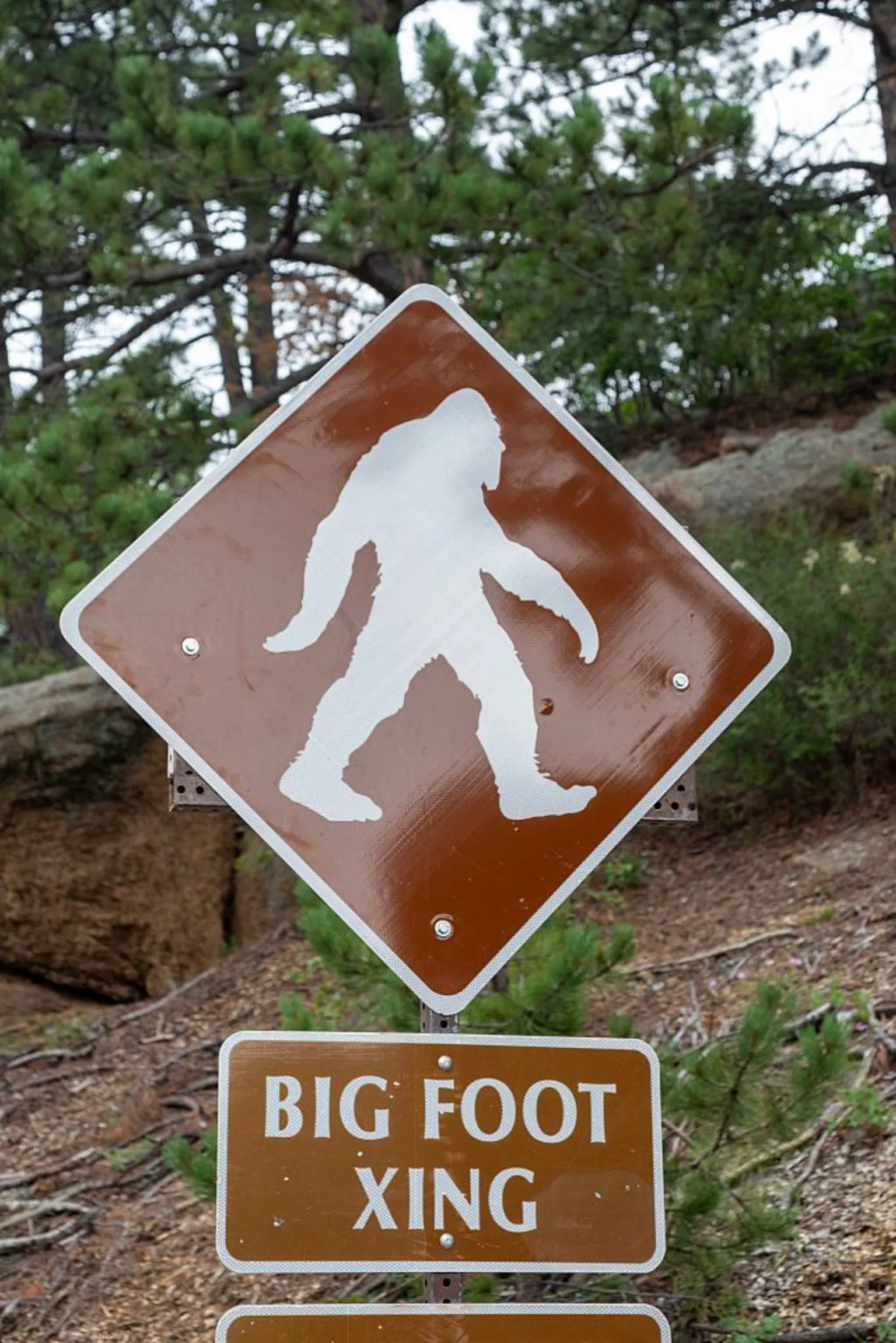
Washington state, often called the Bigfoot capital of the world, has 730 sightings recorded on BRFO.
However, Bigfoot research is not limited to North America; there are investigators in Australia and even the UK.
Challenges and Community Dynamics
Bartlett noted that Bigfooters are generally open to the idea that many sightings may be misidentifications.
"It can be people being spooked by a bear or a moose as they are just not familiar with the woods.
"They are aware are people spoiling the well, so to speak, with hoaxes and frauds - manufacturing footprints."
The research faces risks from individuals seeking quick online attention, Bartlett said, alongside others who fabricate evidence to deceive Bigfooters.
Lewis acknowledged that some witness accounts were compelling and affected him emotionally before his rational skepticism prevailed.
Describing himself as a "romantic sceptic," Lewis said a lot of the people he spoke to "were remarkably articulate."
"An interview wasn't completely illogical, some of it was logical... their dedication came across.
"There were certainly some of them who were open to the idea Bigfoot doesn't exist, but just wanted science to take them seriously.
"I found the qualifying work they did in positioning themselves as a believer, but a serious believer, quite compelling.
"And that to me was one of the more convincing aspects of listening to people."

Bigfoot Culture and Events
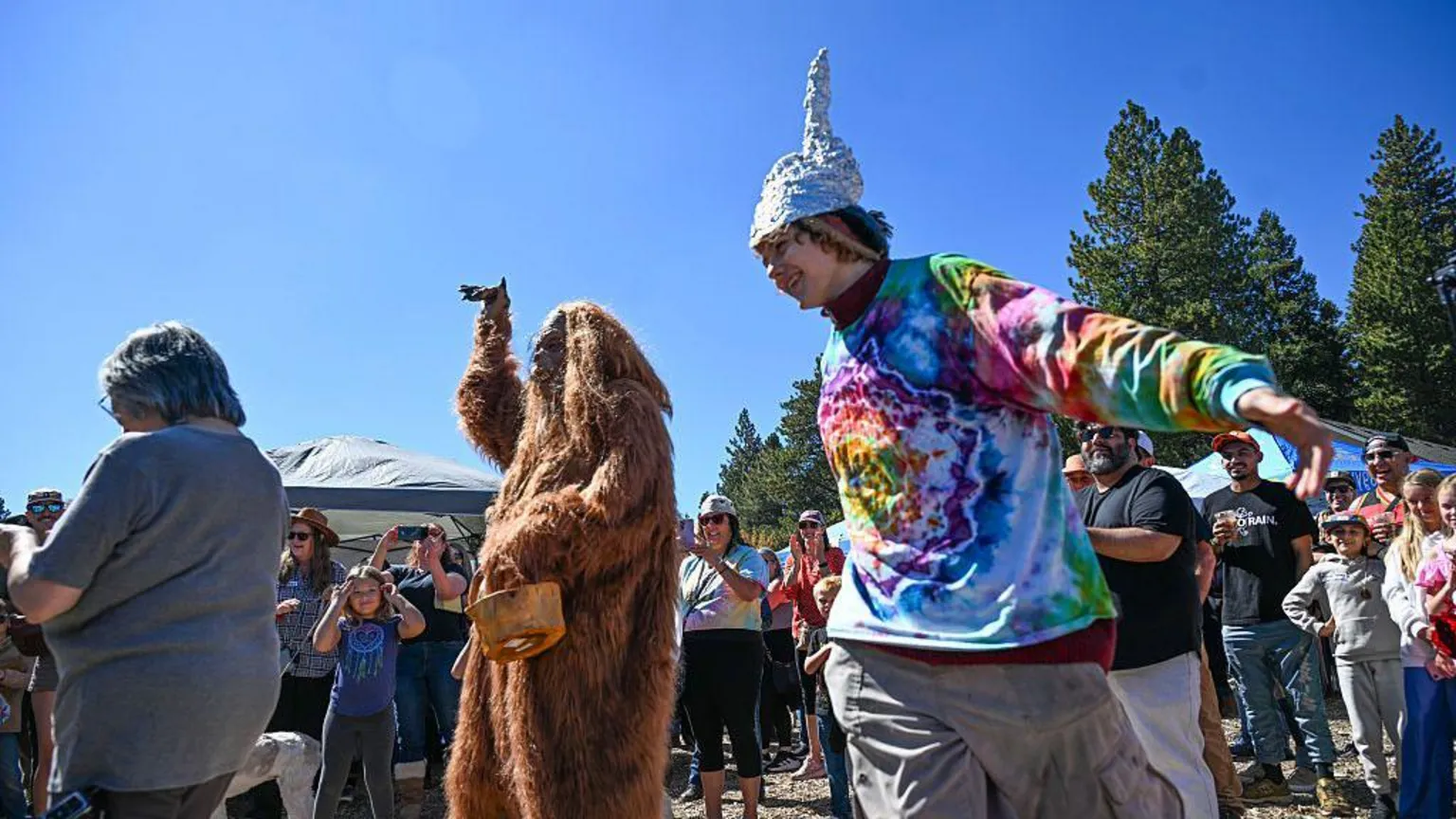
Bigfoot festivals are common in the United States, with places like Running Springs, California, celebrating their first annual festival in 2025.