Iconic Duke of Wellington Cone Sparks Nationwide Trend
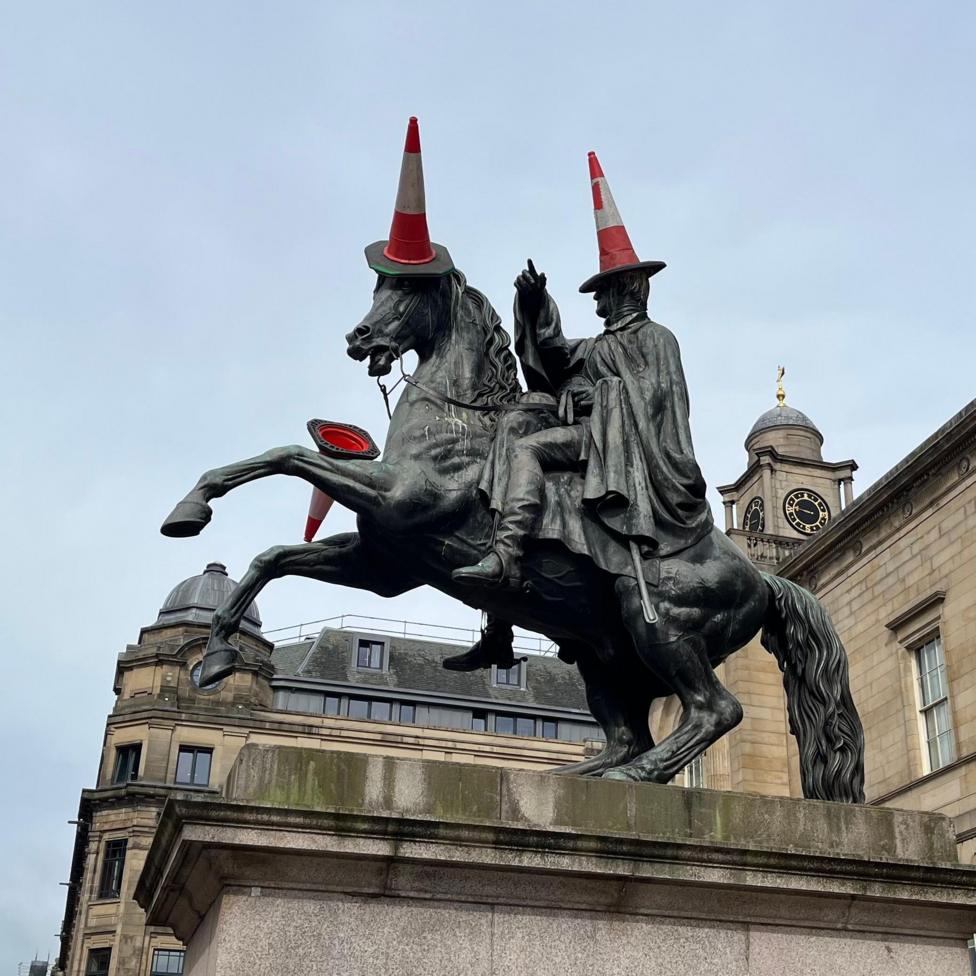
The Duke of Wellington's traffic cone has been a distinctive symbol in Glasgow for over four decades.
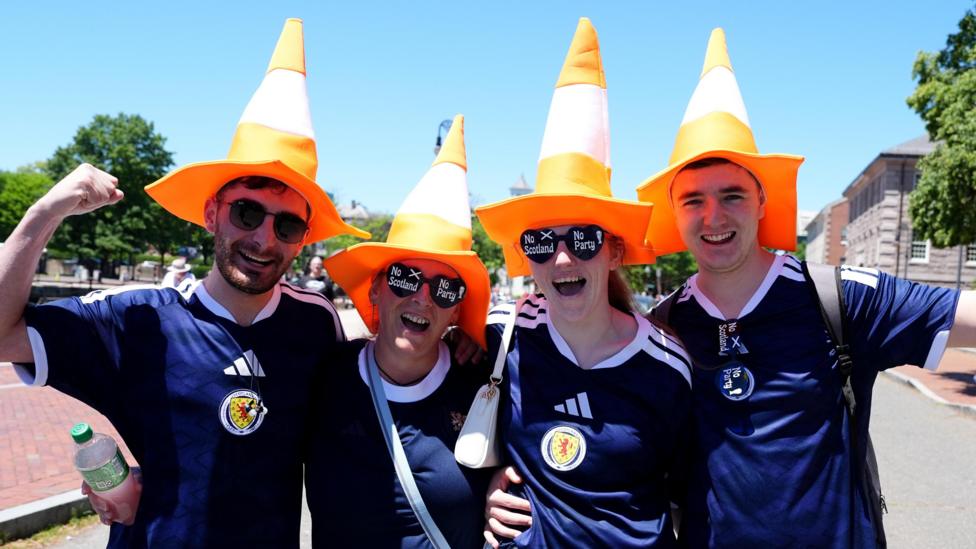
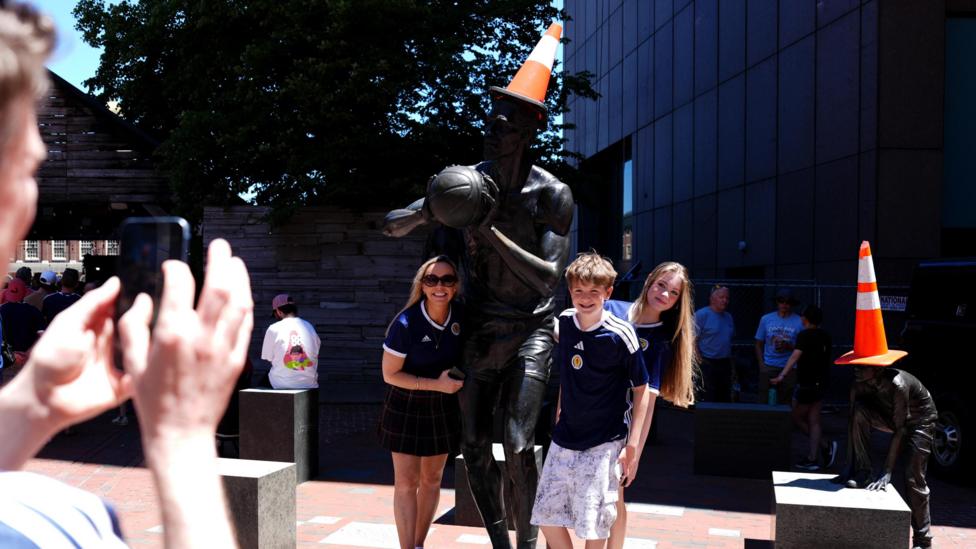
The Tartan Army's recent practice of placing traffic cones on statues during the World Cup, notably in Boston, has intrigued both locals and international observers, while eliciting mixed reactions within Scotland.
Statues throughout Scotland have now been adorned with cones, a tradition originally associated with the Duke of Wellington statue in Glasgow.
The question remains whether this is a fleeting expression of World Cup enthusiasm or a lasting emblem of Scottish football culture.
Origins of the Duke of Wellington Cone
The coning of the Duke of Wellington statue, depicting Arthur Wellesley on his horse Copenhagen outside the Glasgow Gallery of Modern Art (GoMA), is believed to have started in the 1980s by students returning from nights out.
The statue, created by Italian artist Carlo Marochetti and erected in 1844, commemorates Wellington's victory over Napoleon at the Battle of Waterloo.
Local Government and Community Responses
For three decades, Glasgow City Council and some residents contested the cone's presence. Each removal by the council, which incurred costs, was met with the cone's swift return, and appeals to cease the practice only strengthened the resolve of those placing the cone.
After a failed attempt to raise the statue's plinth height, the council ceased efforts to remove the cone.
The cone has since become an iconic city symbol, even earning praise from artist Banksy, who named it his "favourite" artwork.
Expansion of the Tradition Across Scotland
Edinburgh's Duke of Wellington statue outside Register House has recently been spotted with an orange cone atop it.
Monuments to philosophers David Hume and economist Adam Smith on the Royal Mile have also been adorned with plastic cones.

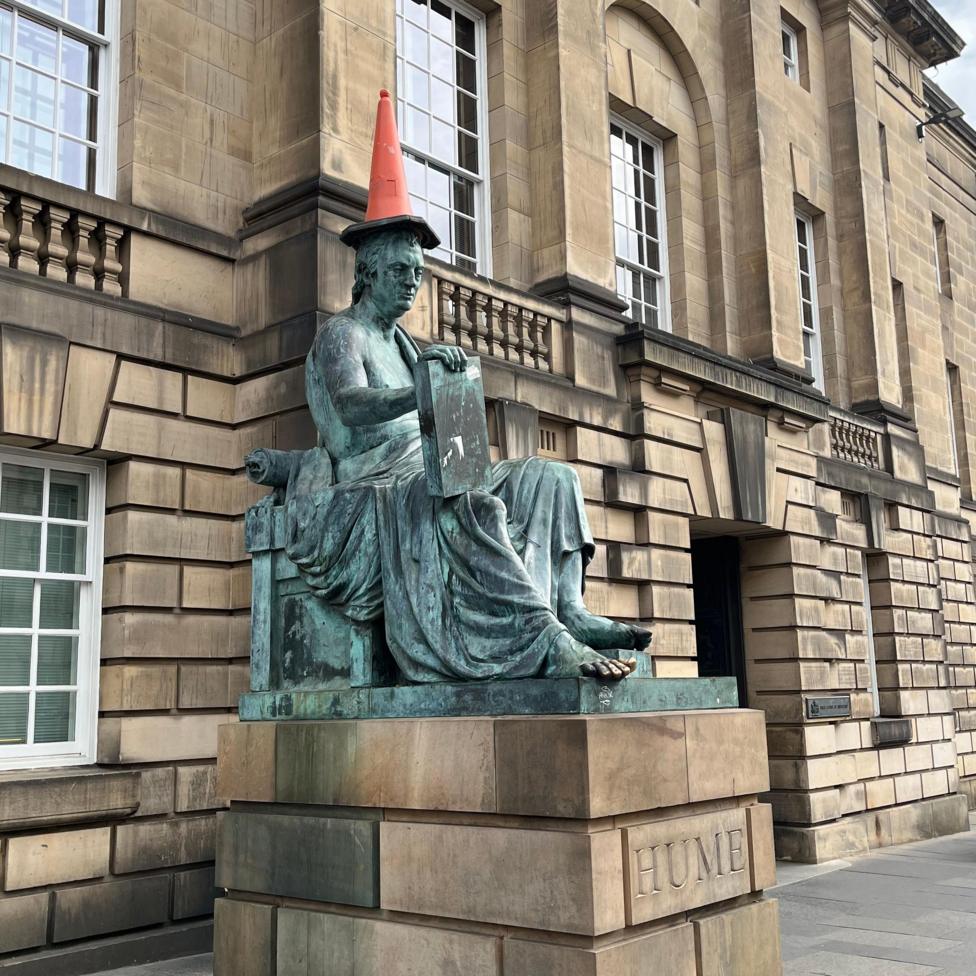
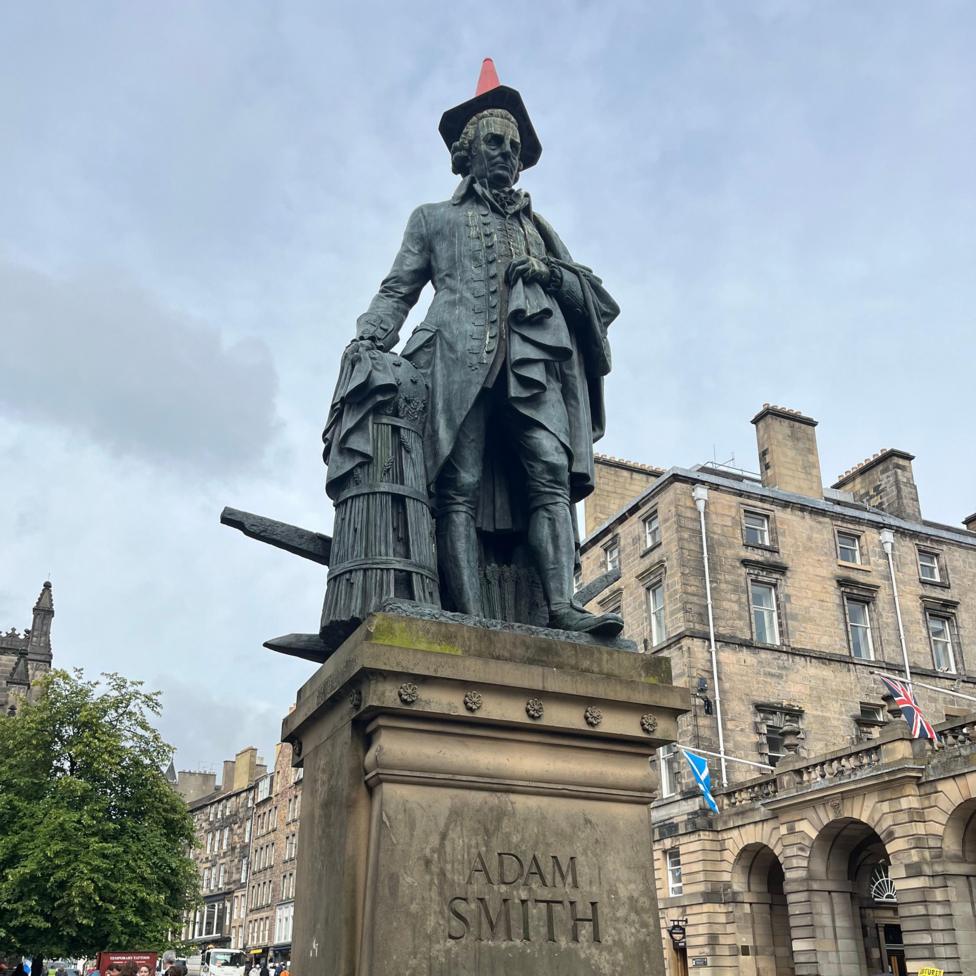
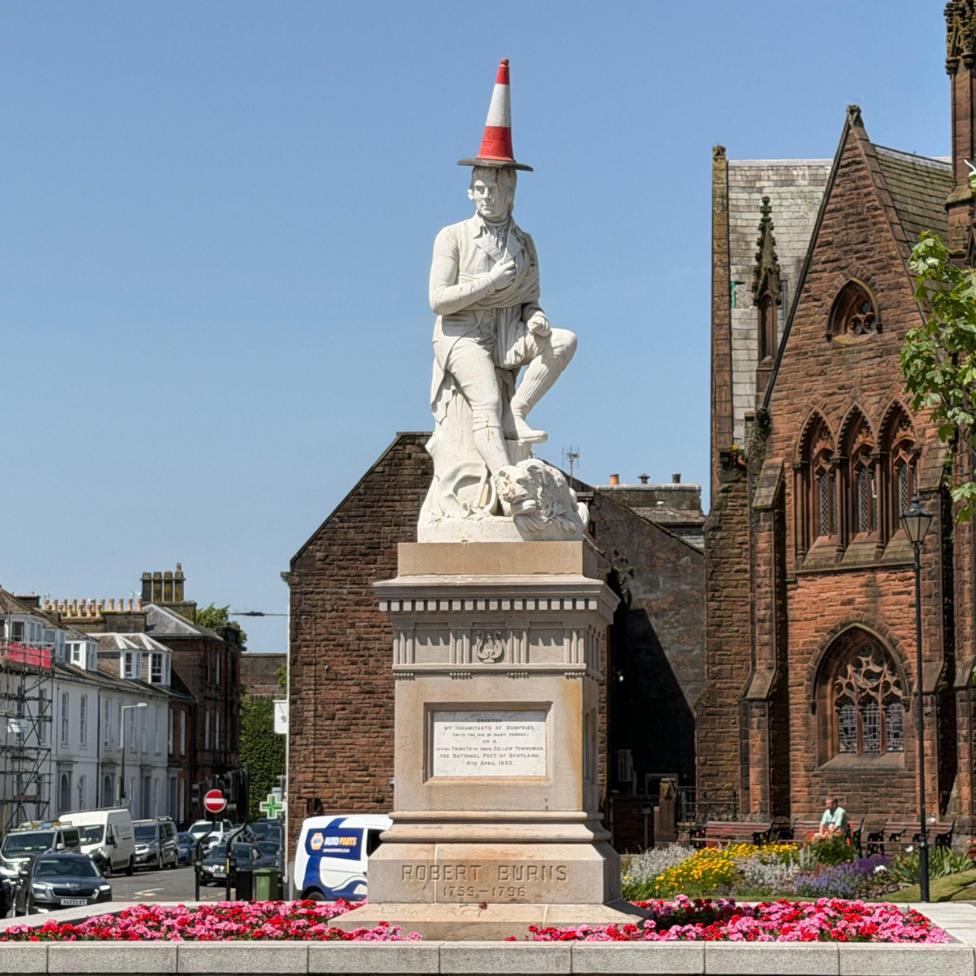
In Dumfries, the Robert Burns statue was given a cone to shield the poet from recent heatwaves.
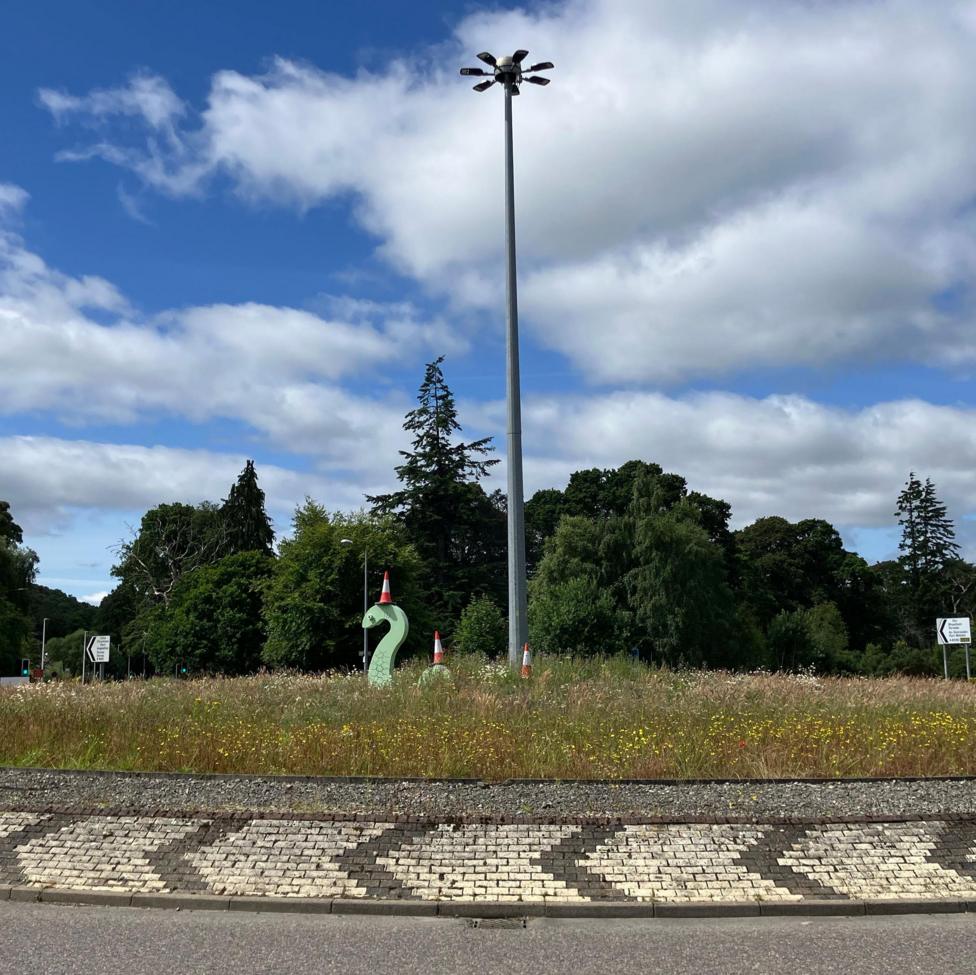
Even the famous Loch Ness Monster sculpture in Inverness has been decorated with cones on a roundabout.
International Influence and Local Reactions
When the Tartan Army visited Boston, they noticed the city's statues lacked cones and proceeded to introduce the tradition. The gesture was well received, leading to a proposed twinning of Glasgow and Boston, symbolised by gifting a signed cone from Glasgow to the American city known for its revolutionary history.
However, some in Scotland, particularly in Edinburgh, view the practice less favourably.
Edinburgh city centre councillor Jo Mowatt expressed her disapproval on BBC Radio Scotland's Mornings programme:
"I think I would much rather it stayed the other side of the M8. I wouldn't tell Glasgow what they should and shouldn't do, that's up to them, but in the middle of where it's happening, in Edinburgh, it's just totally inappropriate."
Commercialisation and Cultural Significance
The cone tradition has extended beyond public statues into merchandise and events.
At Glasgow's TRNSMT festival, attendees were seen wearing felt cone hats.
Visitors to GoMA can purchase Duke of Wellington tote bags for £15 or T-shirts for £20 featuring the coned statue. Socks priced at £9.50 with the Duke's image have sold out.
During the upcoming Commonwealth Games in Glasgow, the mascot Finnie, a unicorn, will sport a traffic cone on its head.
Historical Perspective and Future Outlook
Historian and tour guide Alistair Heather commented on the evolution of the cone's symbolism:
"It started off in a proper 'us v them', tit for tat thing between the people and the council. Where I think it got really brutally unfunny was, once the Commonwealth Games in 2014. It got gentrified. All the corporate hotels in Glasgow would all have stencils of traffic cones on the wall. Once that happens, I think the thing is flat dead."
He added that the Tartan Army has revitalised the image:
"I've fallen right back in love with it as a folk image. It's the signature of the Tartan Army. It's World Cup fever and I think that will die down. But I would love to go and cone London next time we play at Wembley."
Meanwhile, the traffic cone tradition has also been applied to the statue of basketball legend Bill Russell in Boston.