Elizabeth Andrews: A Forgotten Welsh Political Activist
Elizabeth Andrews was one of the most influential Welsh female political activists of the early 20th century, yet campaigners argue her contributions have largely been overlooked.
Born in 1882 in the former mining village of Hirwaun in the Cynon Valley, Andrews was an internationalist and suffragist who championed the rights of women and children.
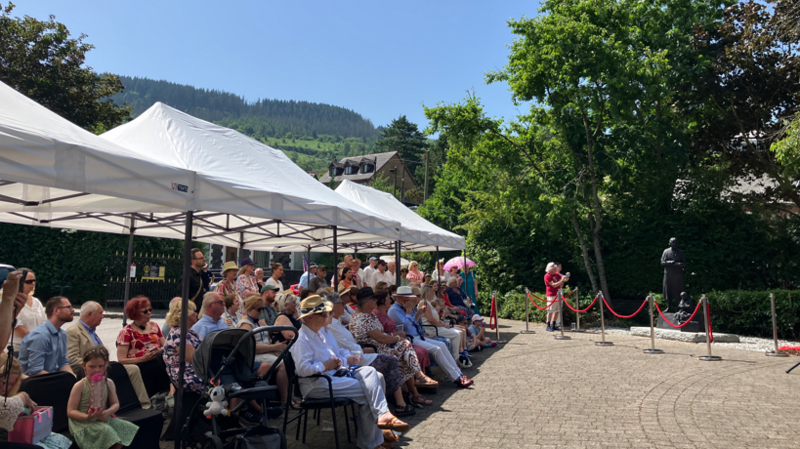
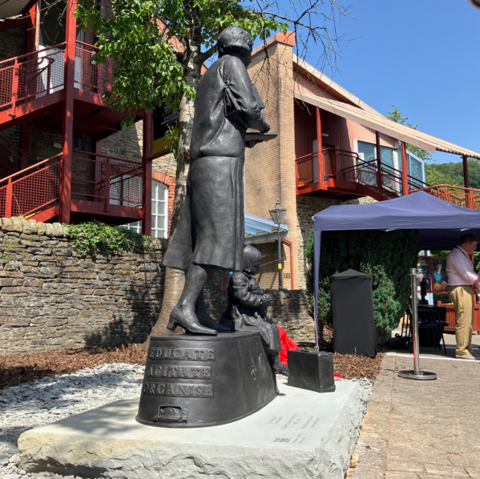
On Thursday, a statue commemorating her achievements was unveiled at Rhondda Heritage Park. This statue is the fifth and final in the Monumental Welsh Women campaign, which honors real, named women from Wales.
The campaign has already recognized Betty Campbell, Elaine Morgan, Sarah Jane Rees (known as Cranogwen), and Lady Rhondda.
Elizabeth Andrews was one of eleven children born into a poor, working-class mining family in Hirwaun, Rhondda Cynon Taf.
She left school at the age of 13 to assist her parents financially.
"The people of Hirwaun were not really aware of her," said community councillor Eryl O'Neill. "I've got to confess, I didn't know anything about her either."
'Educate, agitate, organise'
Andrews became involved in politics early in life, according to her great-great-niece Melinda Hawthorne.
"She started quite young because she sat at her father's knee, and there was a lot of discussion about politics," Hawthorne said.
"She wasn't fully educated, but she was able to go out and talk to people. She was amazing, and quite a remarkable woman.
"She was a suffragist, she was the first secretary for the women's guild in the Rhondda, the first woman Labour Party Organiser for Wales.
"But she's another one of these women that have been hidden."
Hawthorne explained that local women referred to Andrews as "Our Elizabeth" because of her dedication to achieving better equality.
"Her motto was 'educate, agitate, organise'," she added.
"This is really about educating people about what their rights are, what is available to them. Agitate is getting people out there on the streets to get the things they need, and then organising that."
Andrews advocated for improved maternity and childcare services and helped establish one of the earliest nursery schools in Wales.
As the first Labour Party Women's Organiser for Wales—a position created after some women gained the vote in 1918—Andrews established women's sections, which she described as "working women's universities."

One of her initial responsibilities was translating leaflets from English to Welsh to encourage women to exercise their newly acquired voting rights.
She successfully campaigned for the introduction of pit-head baths for miners, communal washing facilities that eliminated the need for women to carry heavy tin baths filled with scalding water from home.
Andrews also played a crucial role during the 1926 General Strike and the subsequent six-month miners' lockout, a period marked by significant unrest and wage reductions.
"She was involved in trying to get food parcels, in sewing organisations," historian and professor Angela V. John explained.
"She also gave endless talks in the Rhondda, trying to encourage women in particular to pull together and to work, to try and alleviate the hardship that existed even before 1926."
Alongside fellow campaigner Beatrice Green from Abertillery, Andrews organised a relief effort to ease financial strain on families by arranging for children from mining communities to be temporarily housed with volunteer families in cities such as London following the strike.
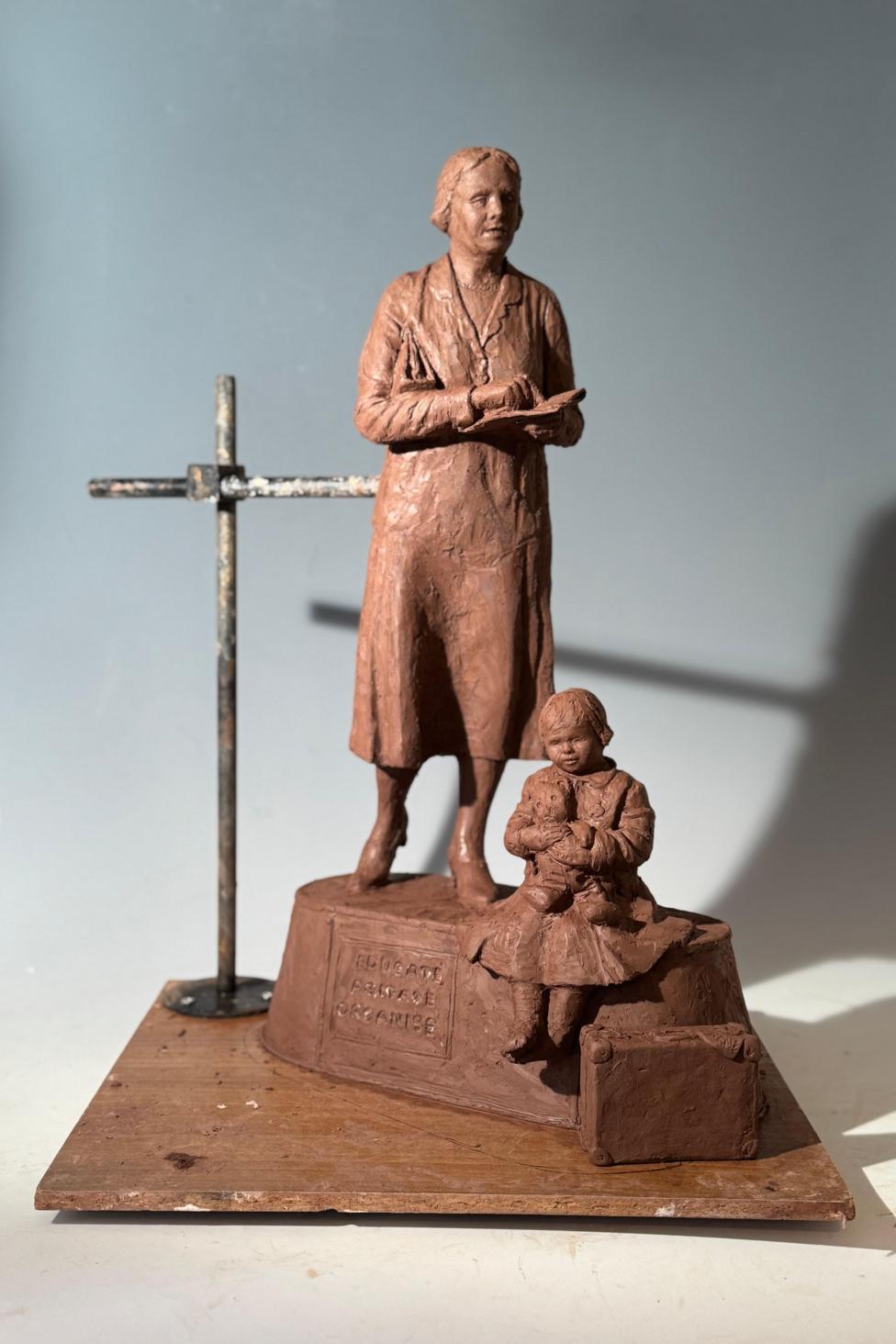
Sculptor Billie Bond cited this story as a source of inspiration when designing the 6.5ft (2m) bronze statue, which includes a young child.
The child depicted in the statue is Rhona Allen, born into a large mining family in Llwynypia, Rhondda.
"A child had to be a part of it," Bond said.
"What struck me when I first learned about what she achieved was what she did for the mining community and families.
"Her achievements with the compulsory pit-head baths, that was another thing that stood out for me, so I have her standing on an upturned tin bath.
"She's very accessible, you can go up to her and touch her. This is the first life-size public statue that I've done. It's been so interesting and fascinating."
Andrews passed away in Ton Pentre in 1960.
Helen Molyneux, chair of Monumental Welsh Women, stated that the statues—including Andrews'—will serve as inspiration for women and girls.
"Before the statue of Betty Campbell was unveiled in Cardiff, there was not a single statue of a named Welsh woman in Wales.
"Now Wales has five statues telling the stories of these wonderful women who stand as an example to everyone of what can be achieved when women use their voices to speak up for change."
Additional reporting by Tony Brown