

Bronze Age Shield Returns to Scotland
A Bronze Age shield discovered in a peat bog has been returned to Scotland for the first time in over 230 years.
The "spectacular and intricate" combat guard was found during labouring work in a field in Beith, North Ayrshire, around 1779. It was subsequently presented to the Society of Antiquaries of London in 1791, where it has remained since then.
The shield has now been loaned to the National Museum of Scotland (NMS) for the first time as part of an exhibition titled "Scotland's First Warriors," scheduled to open this summer.
This shield will be displayed alongside five other shields from the same period, which experts have described as a "once-in-a-lifetime" opportunity.
Context of the Bronze Age in Scotland
The Bronze Age in Scotland covers a 1,400-year period from approximately 2200 BC to 800 BC. This era encompasses the early production of bronze, an alloy of copper and tin, through to the initial use of iron.
Details of the Shield
The shield measures approximately 60-70 cm (23-27 inches) in diameter and is decorated with hammered bosses and ribs. It bears damage consistent with spear and other weapon strikes, indicating it was likely used in combat.
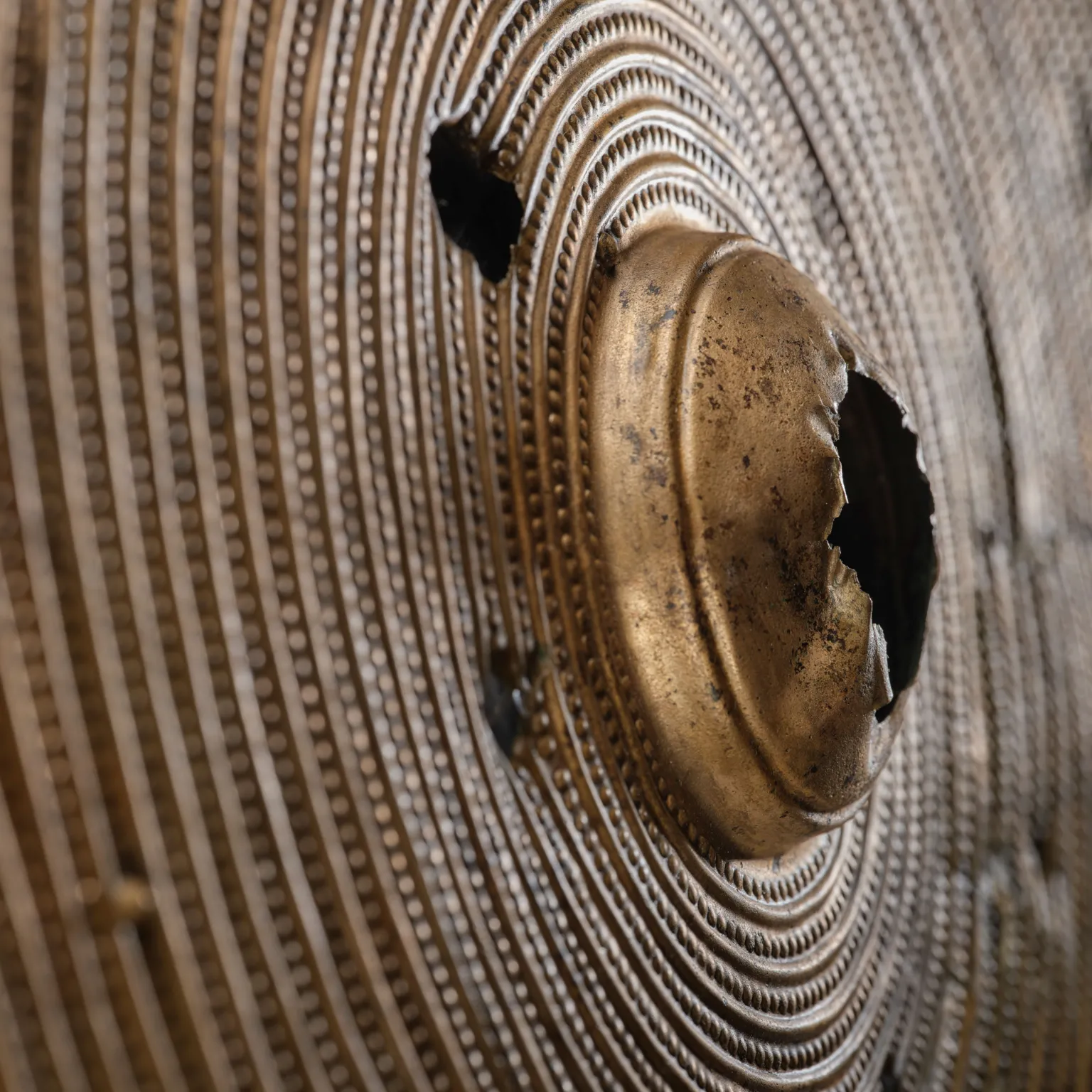
Historical records indicate that the shield was found buried upright in peat alongside six others; however, the current whereabouts of those additional shields are unknown.

Expert Insights
Dr Matthew Knight, senior curator of prehistory at NMS, stated that the reason for the shield’s burial remains unclear, but its unique design suggests it belonged to an individual of "high status."
"We know that because they're so hard to make and they're quite rare objects, whoever owned it was probably someone quite special.
When you think about the idea that it was one of five or six that were buried in a bog, it makes you think that there must have been this group of high-status people who came together to bury their shields together.
We can only speculate about what that sort of ceremony might have been like, or what the meaning behind it would have been, where maybe this was a group of communities who were giving up their defensive objects. Perhaps it was a sign of peace."
Additional Shields and Exhibition Details
Other shields discovered in the Borders and Aberdeenshire during the 19th century will be exhibited alongside the Beith shield as part of the exhibition. Curators have arranged all of them together for the first time to examine their similarities and differences.
Rare Spearhead and Exhibition Highlights
Dr Knight noted that most of the shields share a similar appearance, possibly indicating they were crafted by the same artisan or workshop. While wooden or leather shields were more common during that era, rare bronze shields served both defensive purposes and as symbols of the warriors’ status.
"Bronze shields from this period are exceptional to Britain and by bringing all six of these incredibly rare shields together, we can gain a deeper understanding of life and conflict in Bronze Age Scotland and beyond.
It really is a once-in-a-lifetime opportunity."
The exhibition in Edinburgh explores thousands of years of history, from the Neolithic (late Stone Age) to the arrival of the Romans.
The four shields will be displayed alongside internationally significant archaeological finds from across Scotland, including the Carnoustie Hoard. This hoard contains a rare spearhead decorated with gold and a bronze sword in a wooden scabbard, dating from approximately 1120-920 BC.
The exhibition opens on 27 June and is scheduled to run until May 2027.
Statements from the Society of Antiquaries of London
Alexandra Ault, head of collections at the Society of Antiquaries of London, commented on the loan of the shield:
"We are delighted to lend the Beith shield to the National Museums of Scotland.
This loan marks the first time in over 235 years the shield has been back to Scotland and is an exciting opportunity to see it alongside other important Scottish Bronze Age artefacts."


