Discovery of Ancient Symbol Patterns on Mammoth Tusks
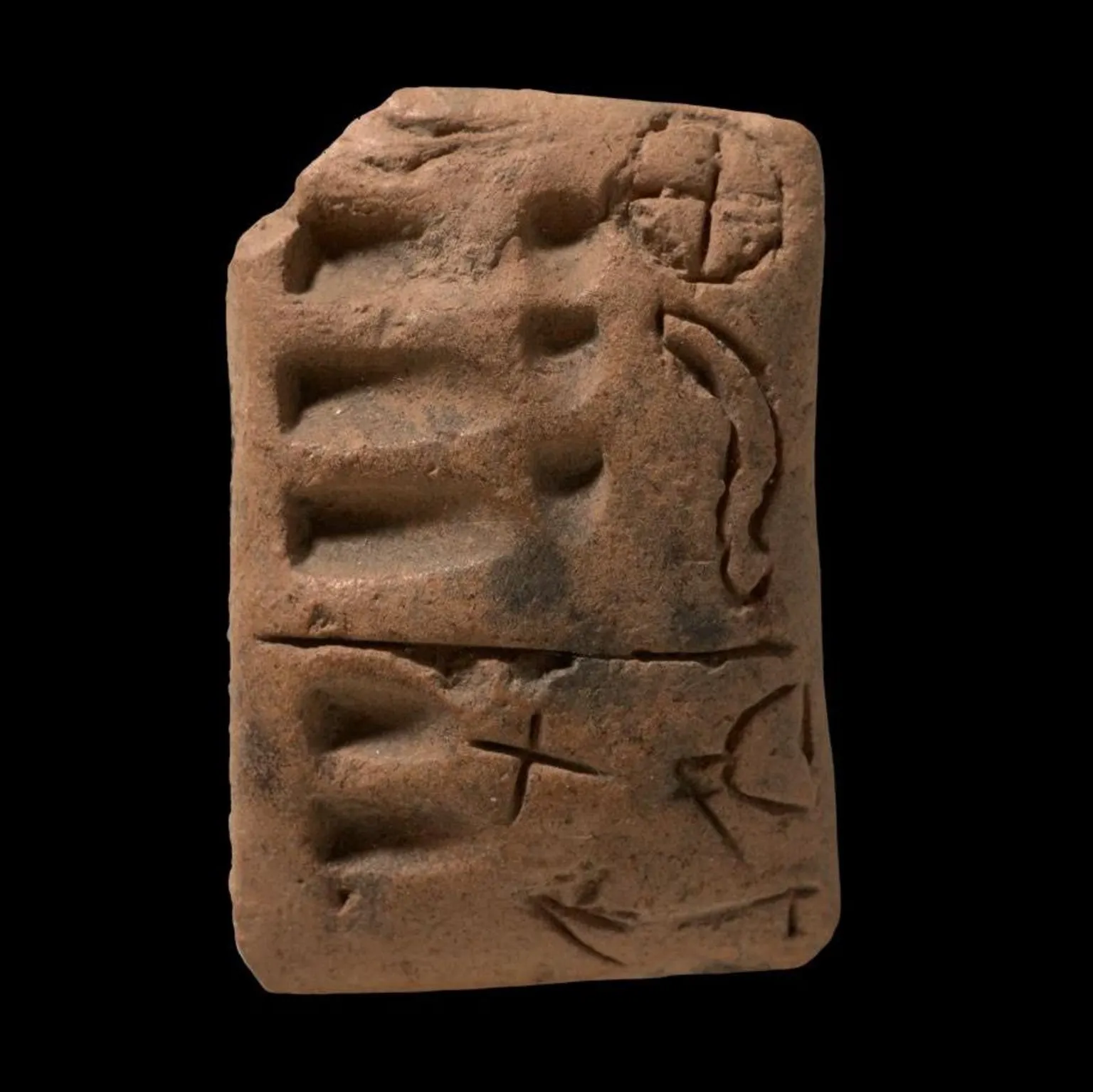
The history of recording thoughts and emotions may extend tens of thousands of years further back than previously understood, according to archaeologists who have made a significant discovery. Researchers identified meaningful patterns in lines, notches, dots, and crosses engraved on objects such as mammoth tusks dating back as far as 45,000 years, found in caves located in Germany.
Context of Writing Origins
Conventionally, historians have dated the earliest written words to proto-cuneiform scripts created approximately 5,000 years ago in ancient Iraq, also known as Mesopotamia. However, the exact interpretation of the symbols found in Germany remains unknown. These objects originate from a period just before Homo sapiens migrated from Africa into Europe, where they encountered Neanderthals.
Previously, it was believed that writing systems developed first in Mesopotamia around 3,000 BCE, followed by the emergence of hieroglyphics in Egypt, and later writing systems in China and Mesoamerica.
Insights from Researchers
"The Stone Age sign sequences are an early alternative to writing,"
states Professor Christian Bentz from Saarland University, a contributor to the new research.
Researcher Ewa Dutkiewicz from Berlin's Museum of Prehistory and Early History adds that the findings suggest Stone Age humans possessed cognitive abilities comparable to modern humans.
"So far, we've only scratched the surface of what can be found in terms of symbol sequences on a wide variety of artifacts,"
she explains.
Analysis of Symbol Sequences
The research team examined over 3,000 characters across 260 artifacts to identify what they describe as the "DNA of writing." Some of these artifacts were recovered from the Lonetal cave system, a 37-kilometer-long network in Baden-Württemberg, southern Germany.

On a small mammoth figurine carved from tusk, the researchers studied carefully engraved rows of crosses and dots. Additionally, on an artifact known as the "adorant" from the Geißenklösterle cave in the Achtal valley, they identified rows of dots and notches on an ivory plaque depicting a lion-human figure.
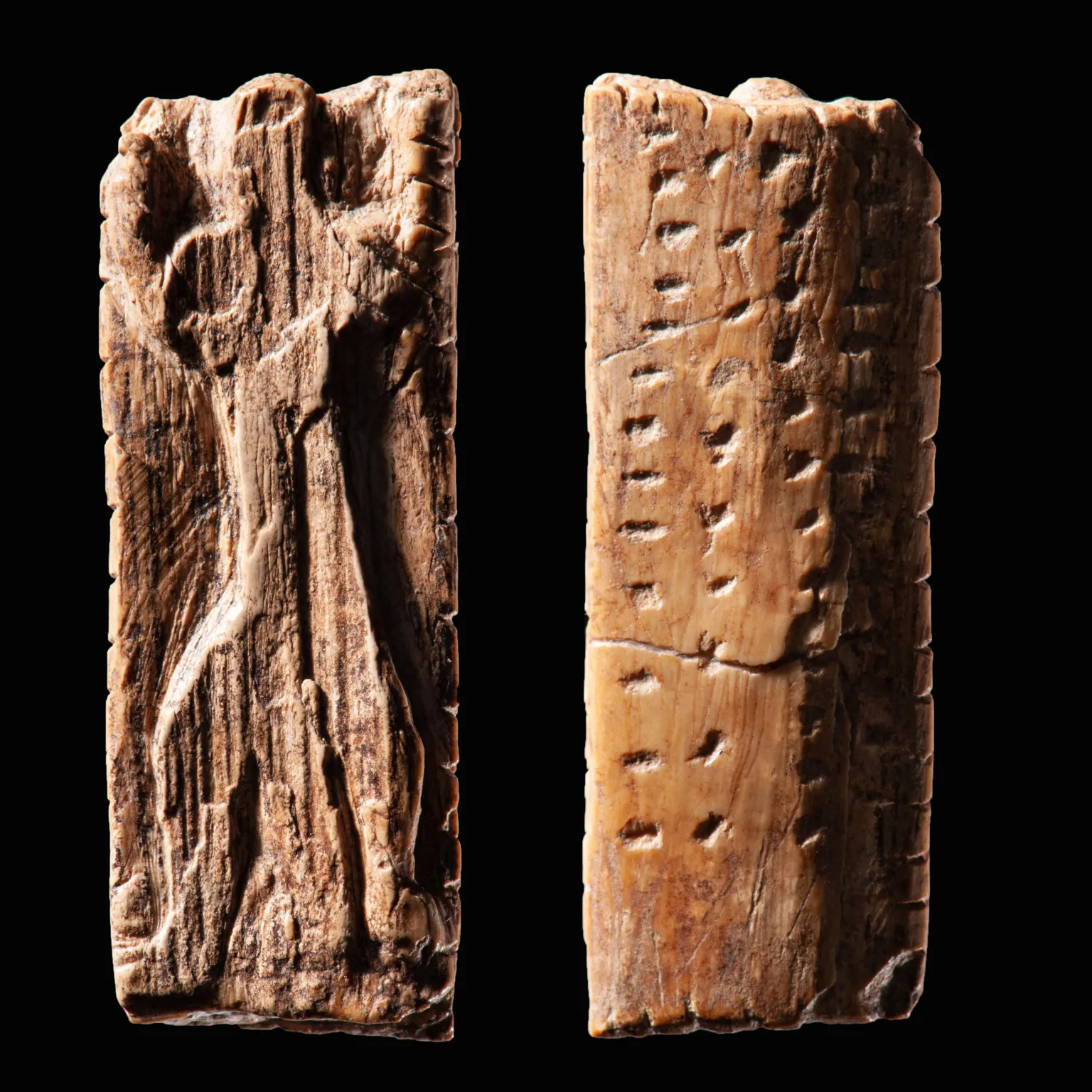
The researchers interpret the arrangement of these marks, particularly the dots on the back of the figurine, as serving communicative functions.
They propose that Stone Age people intentionally carved these symbols to convey messages, meanings, and thoughts.
"Our results also show that the hunter-gatherers of the Paleolithic era developed a symbol system with a statistically comparable information density to the earliest proto-cuneiform tablets from ancient Mesopotamia – a full 40,000 years later,"
Professor Bentz explains.
Symbol Density and Communication
The key to interpreting the symbols lies in their density. The team found a high frequency of repeated signs and predictability in the sequence of symbols, characteristics that are "comparable to much later proto-cuneiform," according to Bentz.
They observed that denser symbol patterns appeared on figurines compared to tools, indicating the importance of information transmission for Paleolithic people.
"They were skilled craftspeople. You can tell they carried the objects with them. Many of them fit very well in the hand, just the right size to fit in the palm,"
remarks Dutkiewicz.
Publication and Significance
The research findings have been published in the journal Proceedings of the National Academy of Sciences (PNAS).