Rising Costs of Orange Juice at British Breakfast Tables
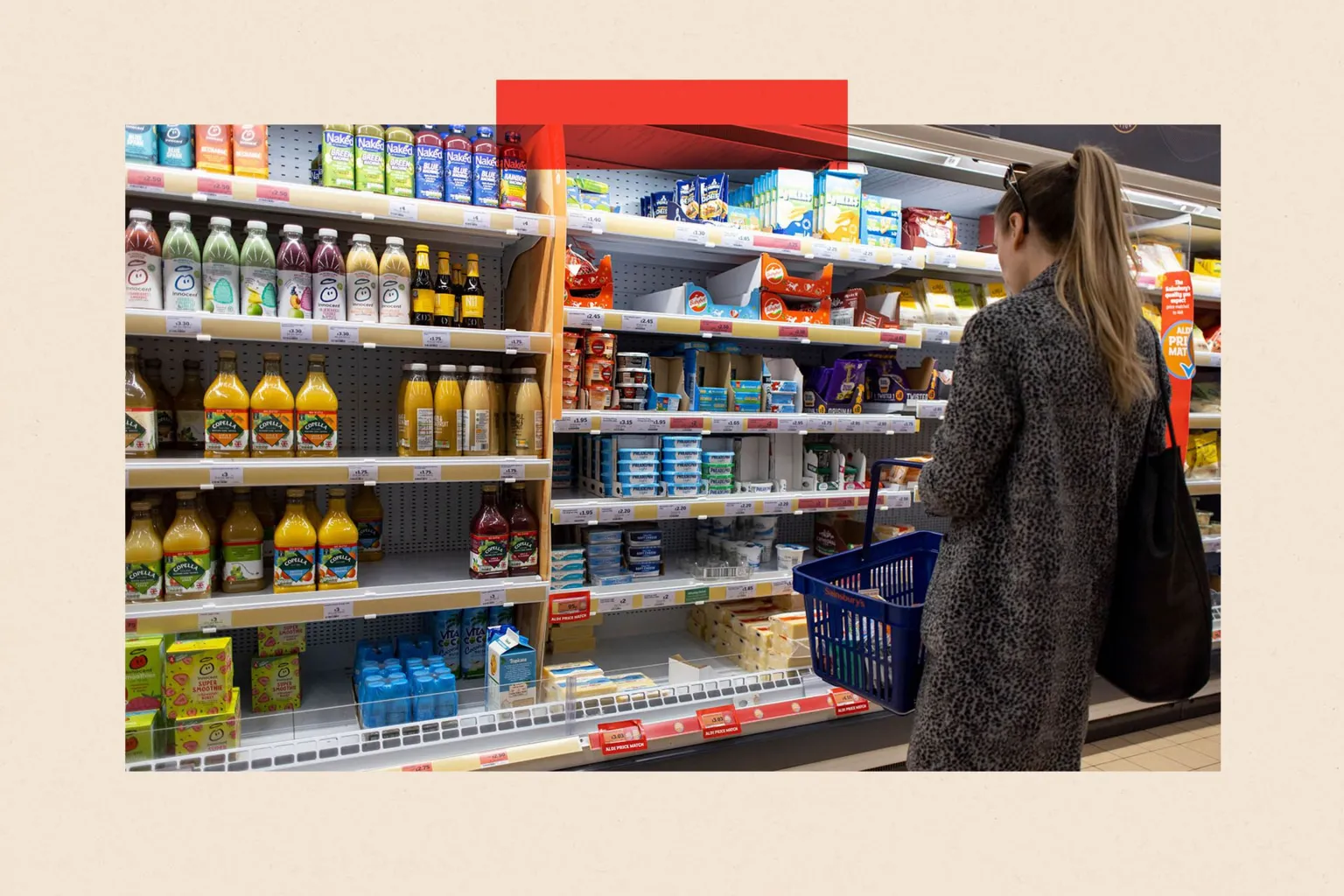
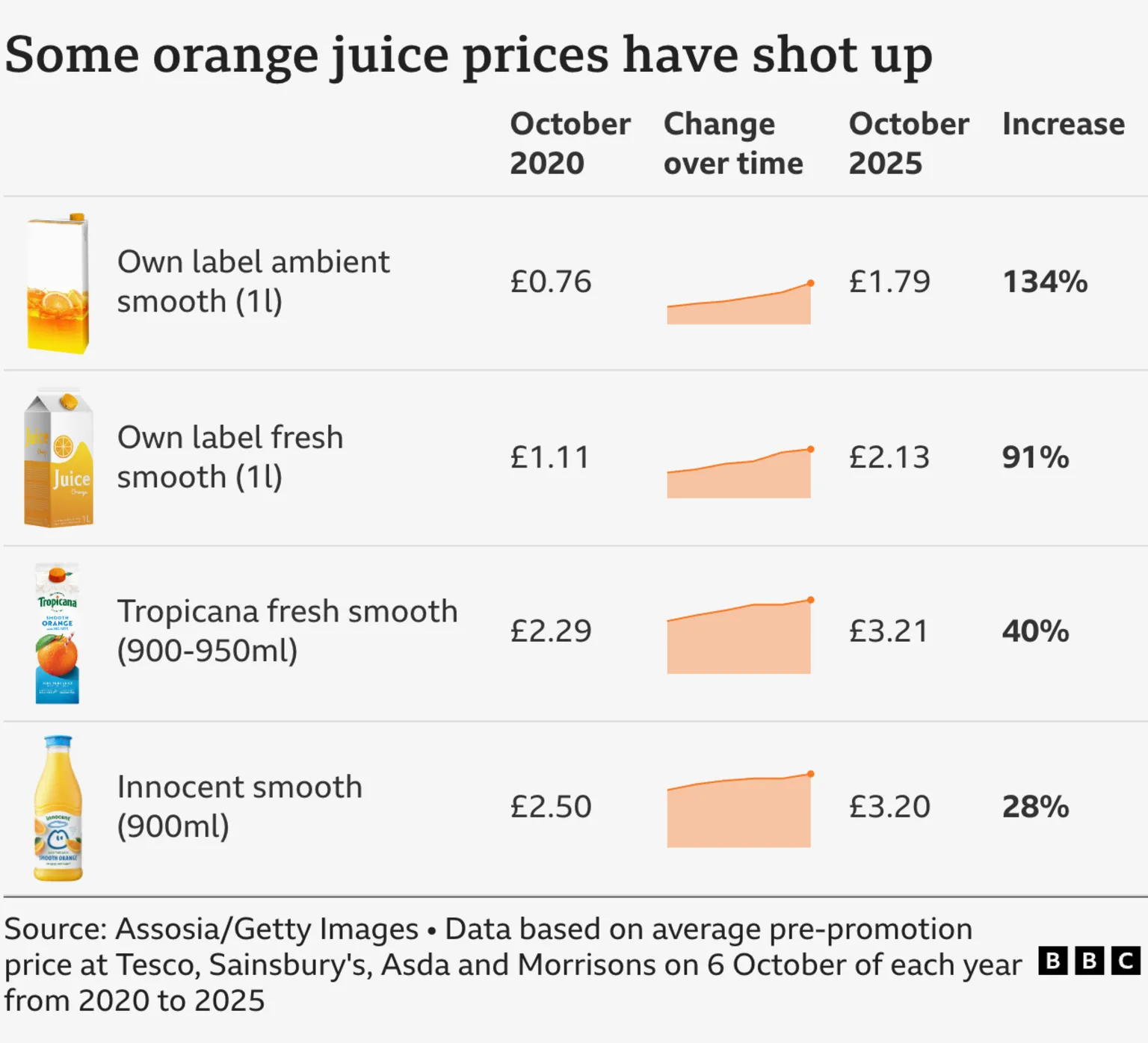
There has been a significant increase in the price of orange juice in the UK over recent years. Five years ago, a typical supermarket own-label 1-litre carton of orange juice cost 76p; it now costs £1.79. This represents a 134% increase since 2020 and a 29% rise in the past year alone.
Prices in cafes and restaurants have similarly increased, with £3.50 to £4 now common for a glass of basic orange juice. One individual was charged £9 for a glass of orange juice and lemonade at a small restaurant in Kent, with £5.30 attributed to the freshly squeezed orange juice alone.
Alongside rising costs, the taste of orange juice is changing. Some manufacturers have substituted oranges with mandarins to reduce expenses. Consumers are effectively experiencing the impact of these price and quality changes.
Multiple factors contribute to these price increases, including crop diseases, extreme weather events, over-reliance on supply from a single country, new packaging regulations, trade tensions, and the effects of Brexit on import tariffs.
Grocery price inflation, which peaked at 17.5% in 2023, had decreased to approximately 5.7% by August but is now rising again. Additionally, overall inflation was reported at 3.8% in recent figures, marking the twelfth consecutive month above the Bank of England’s 2% target.
This issue extends beyond orange juice; many grocery items have experienced similar price patterns. Understanding the factors behind orange juice price changes provides insight into the broader rise in grocery bills.
This raises the question of whether these price increases are temporary or likely to persist, and if consumers should prepare for sustained higher costs.
The Bing Crosby Effect
The story of orange juice pricing begins in Florida, where industrial-scale orange juice production originated during World War II as a US Army initiative. The military sought a portable source of vitamin C for troops that did not taste unpleasant.
Orange juice is approximately 90% water. By gently evaporating water to create concentrate and freezing it, the product became transportable and retained better taste when reconstituted.
Although the war ended before troops used it, the product was commercialized by Minute Maid, which later became part of a major American soft drink company.
Bing Crosby, a significant shareholder, popularized frozen orange juice through advertisements and radio jingles promoting its health benefits.
Consumption of orange juice increased substantially in Western countries. Currently, an estimated 2.5 billion gallons of orange juice are consumed annually worldwide, with about 10% of that volume in the UK, where demand continues to grow.


Drought, Disease, and Flooding Impact Supply
At an industrial facility in Basildon, Essex, green steel drums of frozen orange concentrate arrive from Brazil under the supervision of Maxim McDonald. His company, Gerald McDonald and Co, named after his great-grandfather who imported orange concentrate from British-mandate Palestine in the 1940s, produces juices and blends for supermarkets and restaurants.
Global market prices for orange concentrate have surged dramatically, rising from $1 (75p) to $1.50 (£1.12) per pound over the last decade, reaching a record $5.30 per pound by the end of last year.
This increase followed five years of poor harvests caused by severe drought and citrus greening disease, a bacterial infection spread by insects. Brazil experienced its worst orange crop since 1988, with up to two-thirds of orange trees affected in some regions.
"Around September of last year the price shot up to crazy levels," Maxim McDonald said. "At the worst time I was being offered $7 a kilo. For such a major commodity to go from $2 to $7 is insane, but it took a while to filter through to consumers."
Until 2023, the rise in orange juice prices was masked within general food inflation, according to Philip Coverdale, an industry expert at consultancy GlobalData.
Producers have sought alternatives outside South America, but Brazil dominates orange supply more thoroughly than Saudi Arabia controls crude oil markets.
Other orange-producing countries such as Morocco, Egypt, and South Africa have limited supplies. Spain grows oranges primarily for fruit export rather than concentrate production. Spain also suffered weather-related production setbacks, including flooding in Valencia last October.


Within Brazil, the market is controlled by large industrial conglomerates. In a truly competitive market, prices might stabilize, but this has not occurred, and the industry does not expect it to. Similar price dynamics affect many other grocery items.
Oranges Becoming Less Sweet
Florida, another traditional orange exporter, has experienced its lowest output since the Great Depression due to hurricanes and ongoing citrus greening problems.
Citrus greening reduces sugar content, resulting in less sweet oranges.
"Not many are buying Florida oranges any more unless it is a requirement to label the juice 'Florida Orange'," Maxim McDonald explained. "It's very difficult to get oranges out of Florida [because of the shortages] and it's too expensive."
One major supplier to Tropicana sold some land earlier this year for housing development. Tropicana itself restructured its debts in 2023, and Pepsi sold most of its stake.
Tropicana recently launched a lower-priced "essentials" brand of orange juice blends combining orange, apple, and pear juice.
Similar trends appear on UK shelves, with orange juice mixed with mango, mandarins, and clementine juice. Mango purée is currently inexpensive due to a good harvest in India, while mandarin concentrate is cheaper than orange due to lower demand.

These substitutions reduce costs while maintaining traditional sweetness.
Tariffs: Trade Tensions Affect Orange Juice
Trade tensions have also impacted orange juice prices. Since President Trump introduced tariffs, oranges have been a focal point.
US orange juice exports to Canada have fallen to a 20-year low after Canada imposed counter-tariffs. Former Canadian Prime Minister Justin Trudeau warned that Canadians might have to "forgo Florida orange juice."
The Trump administration imposed a 10% tariff on orange juice imports from Brazil, contributing to higher US supermarket prices.
In 2024, the UK removed tariffs on some fruit imports grown outside Britain, but tariffs on certain sweeter, cheaper varieties and blends remained.
While tariff reductions may have helped, they were overshadowed by the underlying price increases.
New packaging regulations, known as Extended Producer Responsibility, have introduced weight-based fees to improve recycling rates, affecting juice producers, especially those using glass bottles.
A Bank of England report in August noted that high food price inflation is partly driven by such regulations.

Changing Demand and Consumption Patterns
Brazil's orange harvest has somewhat recovered, offering hope for price normalization. However, global orange juice consumption has declined by 30% from its peak two decades ago.
This decline may be partly due to high prices and changing perceptions regarding sugar content and health benefits of fruit juice.
"When young children are not regularly given juice from an early age, they are less likely to be regular juice drinkers in later years," Philip Coverdale of GlobalData suggested.
Demand is rising in countries with expanding middle classes such as China, South Africa, and India, while other fruit juices like mango, pear, and pomegranate gain popularity elsewhere.
Orange juice remains a staple traditionally sold at low prices. Price spikes to around £2 per carton could reverse if weather conditions improve.
"The volatility in the harvest appears to have reduced," said Giles Hurley, UK CEO of Aldi. "Our buying team are doing everything they can to ensure that that saving is passed on to consumers."
Some supply chain participants remain skeptical due to large quantities of frozen concentrate purchased at high prices last year and the market dominance of a few large producers.
Major commercial producers, including Coca-Cola (owner of Minute Maid and Innocent), have contributed to a project called Save the Orange, which uses artificial intelligence to combat citrus greening.
This is a long-term initiative, and even if successful, it may take time before benefits affect grocery prices.
The orange price story also illustrates how price increases propagate globally faster than price decreases.
Price Increases in Other Food Items
Orange juice is not unique in experiencing price spikes. Prices for beef and veal increased nearly 25% in a year; butter rose almost 19%; chocolate and coffee increased 15%; and milk rose over 12%, according to the Office for National Statistics.
These trends suggest broader factors at play. Consumers may have been shielded from the worst price increases for a period, but now costs are being passed on.
"It might be the retailers didn't full pass through the cost increase in the first place and therefore it's a way of recouping some of the margin they would otherwise have got," said Steve McCorriston, Professor of Agricultural Economics at the University of Exeter.
Determining precise reasons for food and drink pricing is complex, with many factors and supply chain relationships remaining opaque.
There is a broader question beyond orange juice: whether UK consumers must accept that as a densely populated country with limited agriculture, climate change will increasingly expose the UK to food price shocks.
A 2024 government report on food security stated: "The UK continues to be highly dependent on imports to meet consumer demand for fruit, vegetables and seafood... Many of the countries the UK imports these foods from are subject to their own climate-related challenges and sustainability risks."
Consequently, this may be the beginning of ongoing volatility in food and drink prices.

Update 28 March: This article was amended to include import tariffs as a factor contributing to rising orange juice prices post-Brexit.
BBC InDepth provides detailed analysis and reporting on major issues. Readers can for notifications to receive alerts when new InDepth stories are published.