

Primark Owner Confirms Plan to Spin Off Fashion Chain
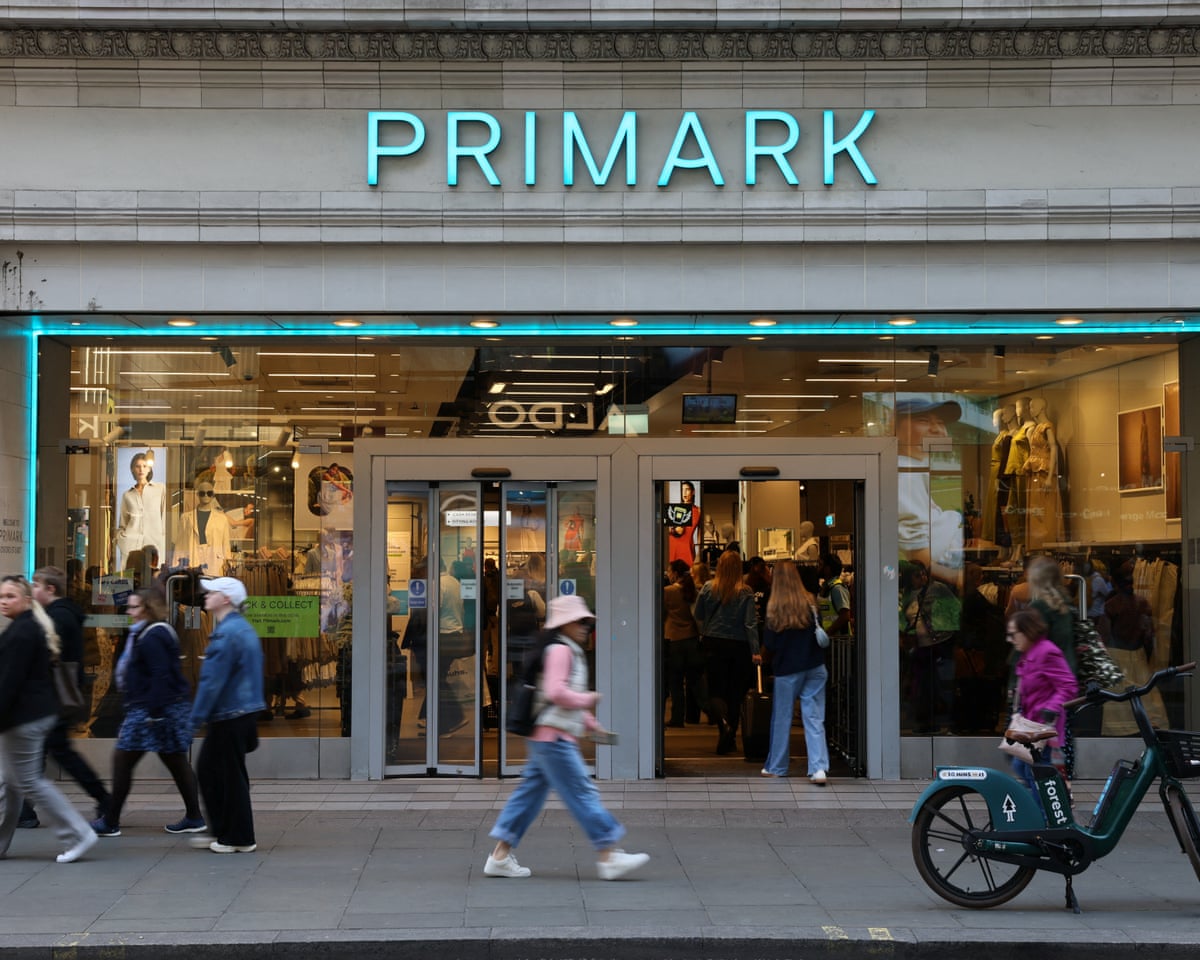
Earlier today, the owner of Primark announced plans to demerge the fashion retailer from its parent group.
Associated British Foods (ABF), which also owns brands such as Kingsmill bread and Twinings tea, revealed its intention to dismantle its conglomerate structure by the end of 2027, following a five-month consultation with shareholders.
This move could see Primark join the FTSE 100, the UK’s index of leading blue-chip companies, if it proceeds with a stock market listing.
Dan Coatsworth, head of markets at broker AJ Bell, commented:
"For years, ABF said it would never split Primark from the group, arguing that a conglomerate structure provided added benefits. To some extent that is true, as evidenced by ABF regularly having one of its many component parts fall behind and the rest of the group picking up the slack. However, the bigger Primark has got, the stronger the call to let it stand on its own. ABF has finally buckled and pressed the button on the demerger.
…Demerging from a conglomerate parent could lead to faster decision making and freedom to explore new growth opportunities. That could involve expanding into new countries or adding smaller stores in high footfall locations that only stock the most popular items.
…Primark is currently experiencing a few bumps in the road amid tougher market conditions. A prolonged Middle East conflict could exacerbate the situation if the oil price stays higher for longer, leading to cost pressures for Primark and weighing on consumer sentiment. While that suggests uncertainty ahead, investors looking at the demerger will be judging Primark on its long-term growth potential, not the next few months."
Labour Market Data and Impact of Middle East Conflict
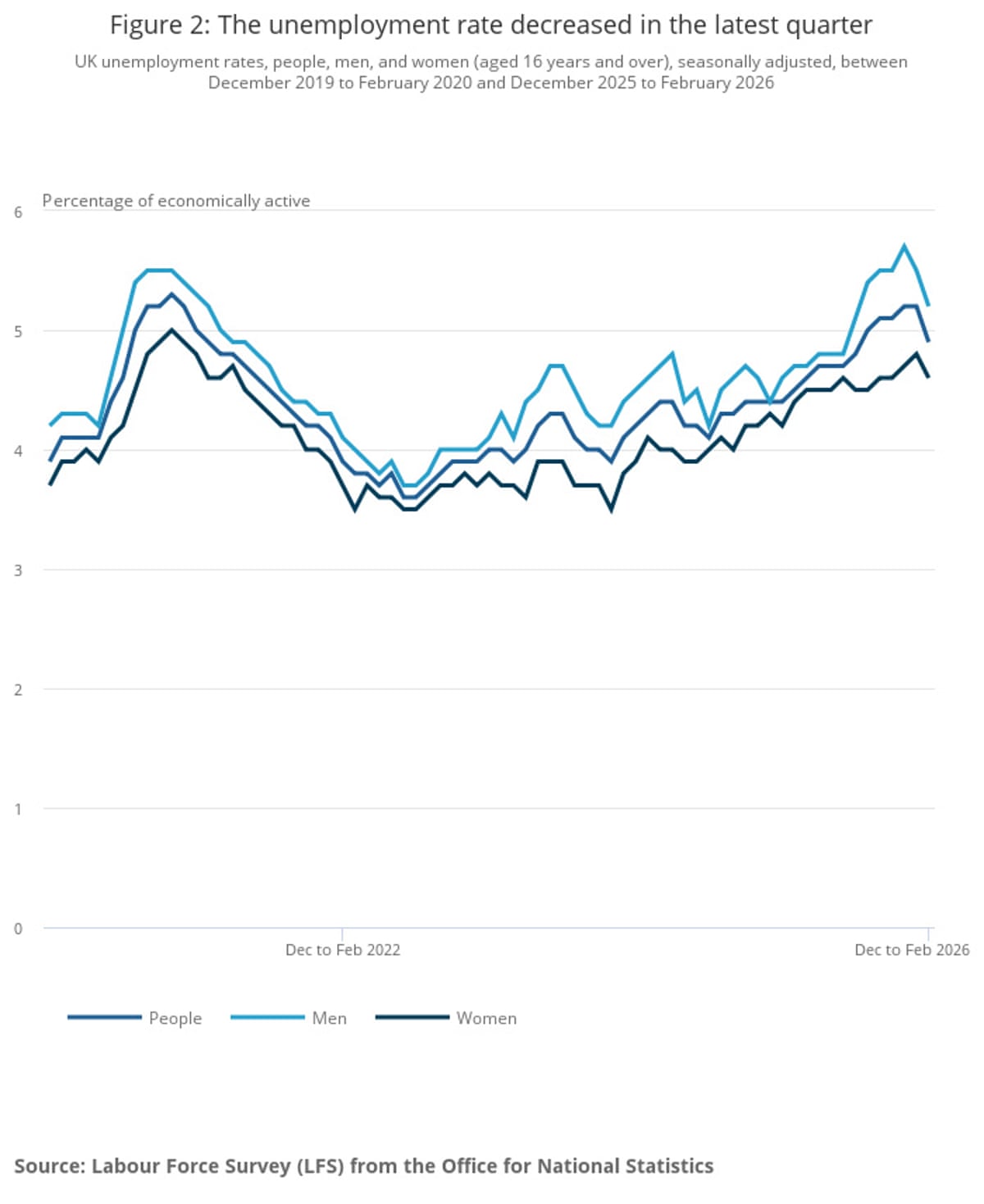
The Office for National Statistics (ONS) released data showing an unexpected decline in the UK’s unemployment rate to 4.9% for the three months ending in February, down from 5.2% in the previous quarter. However, this data does not reflect the effects of the Iran war, which began at the end of February.
The conflict is anticipated to negatively affect the labour market in the coming months. The EY Item Club forecasts that unemployment could rise by nearly 250,000 due to the Middle East crisis, pushing the total number of jobseekers above 2.1 million.
Last week, the International Monetary Fund (IMF) warned that UK economic growth is expected to slow to 0.8% in 2026, down from the 1.3% forecast in January.
Despite the fall in unemployment, economists express concerns about the health of the UK labour market. Thomas Pugh, chief economist at audit and tax firm RSM, noted:
"Indeed, employment only rose by 24,000 in the three months to February, well below population growth. What’s more, the number of people on payrolls contracted slightly in February. Private sector pay growth ex-bonus also slowed slightly from 3.3% to 3.2%. All this suggests that despite the fall in the headline unemployment rate, the labour market remained weak going into the energy crisis."
Provisional data for March indicates further weakening, with payrolls falling by 11,000 and vacancies declining again. Rising energy prices may lead to reduced consumer demand and increased business input costs, potentially pushing unemployment higher. Current projections estimate the unemployment rate could peak around 5.5%, and if energy prices rise further over summer due to constrained supply, it could approach 6%.
The subdued labour market reduces the likelihood of energy price increases translating into higher wages as seen in 2022. Workers are in a weaker bargaining position and may struggle to increase nominal wages to maintain real incomes, which could diminish the second-round inflation effects that concern the Monetary Policy Committee (MPC). This scenario may reduce the necessity for aggressive interest rate hikes.

The prevailing expectation is for a prolonged period of stable interest rates rather than multiple increases, unless inflation rises significantly.
Unemployment Still Expected to Rise This Year, BCC Warns
Despite the recent fall in unemployment, business groups caution that the rate is likely to increase over the course of the year.
Patrick Milnes, head of people and work at the British Chambers of Commerce (BCC), stated:
"While unemployment has seen a surprise fall to 4.9%, the expectation is that it will rise this year as business uncertainty caused by the Iran War overshadows the UK economy.
With the cost of employment also high, and expected to rise as the Employment Rights Act comes into effect, our latest forecast expects unemployment to hit 5.5% this year. The slow-down in wage growth indicates businesses are taking their foot off the gas and the labour market will continue to loosen.
With the conflict in Iran likely to drive higher inflation and weaken growth, the spectre of stagflation is beginning to grow.
This has upended expectations at the start of the year of further interest rate cuts by the Bank of England, increasing the level of uncertainty still further.
The government must move swiftly to show that it understands the problems firms face. Action to ease the cost burdens they face, such as help with electricity bills and reform of business rates would go a long way to demonstrating this."
Introduction: Wage Growth Hits Lowest Level Since November 2020
Welcome to our ongoing coverage of business, financial markets, and the global economy.
UK unemployment fell from a post-pandemic peak during the three months ending in February, according to the latest data.
The unemployment rate unexpectedly declined to 4.9% in February, down from 5.2% in the previous quarter, as reported by the Office for National Statistics (ONS).
However, wage growth was minimal, reaching its lowest level since November 2020, with regular earnings excluding bonuses rising by just 3.6%. Total pay, which includes bonuses, also fell to a five-year low of 3.8%.
Liz McKeown, director of economic statistics at the ONS, explained:
"The number of workers on payroll remained broadly flat in recent periods, reflecting ongoing weak hiring.
Vacancies fell to their lowest level in almost five years, but with unemployment also falling the number of vacancies per unemployed person remains broadly unchanged.
Alongside falling unemployment, the number of people not actively seeking work increased, with data suggesting fewer students seeking work alongside their studies.
Regular wage growth has slowed further with growth at its lowest rate in over five years."
Jonathan Raymond, investment manager at Quilter Cheviot, noted that the current data does not yet reflect the impact of the Middle East conflict.
"Given today’s data does not capture the initial impact of the conflict in the Middle East, we can expect the labour market to soften even more from here on out. Businesses have had hiring plans largely on hold since before the budget, and many will have swiftly put the brakes on again at the outbreak of the war. When combined with other factors including ongoing wage pressures, national insurance increases and changes to business rates, it is difficult to see the labour market making a swift recovery any time soon.
The Bank of England’s monetary policy committee will reconvene next week to deliver its next interest rate decision, and today’s data, as well as what is expected to be an unpleasant inflation print tomorrow, will only further cement expectations for a hold. The conflict in the Middle East has seen energy prices soar, and the full effects will take some time to feed through, adding a fresh inflation risk and complicating the Bank’s decision-making process. It will soon have to make a call on how much it looks through any inflation spike and look instead to potential growth implications."
In other market news, oil prices declined slightly this morning, with Brent crude, the international benchmark, down by just under 1% to $94.63 per barrel. This reflects cautious optimism that former US President Donald Trump may secure a peace deal in Iran, despite his recent comments suggesting it is "highly unlikely" that the current ceasefire agreement, which expires on Wednesday, will be extended.
The Agenda
- 10am BST: ZEW’s Germany/eurozone economic confidence survey
- 10am BST: Social media and gaming firms provide evidence on screen time
- 1.30pm BST: US retail sales for March
- 6pm BST: NatWest virtual shareholder event


