

UK Inflation Rate Increases Amid Middle East Conflict
The UK inflation rate rose by 3.3% in the year to March, marking an increase from 3.0% in the year to February. This rise follows the US-Israel conflict involving Iran, which caused the largest jump in petrol and diesel prices in over three years.
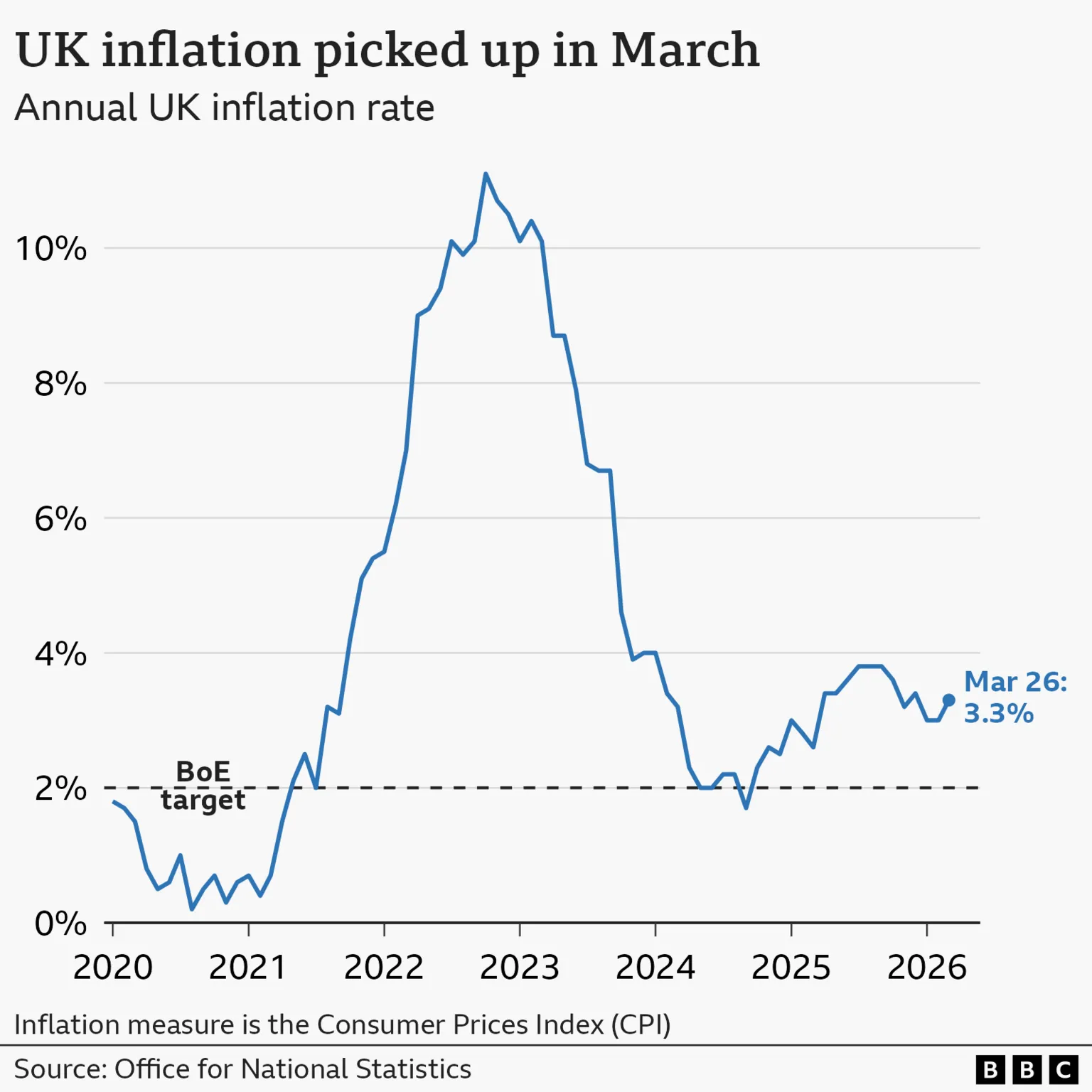
The Office for National Statistics (ONS) attributed the inflation increase primarily to higher fuel prices, with air fares also contributing to the overall rise. These figures represent the first official assessment of how the Middle East conflict has impacted the cost of living in the UK.
Impact of Middle East Conflict on Energy Prices
Wholesale energy prices have surged since the war began on 28 February. The production and transportation of energy across the Middle East have slowed or halted entirely due to missile strikes and drone attacks, leading to supply disruptions.
As a result, inflation is now expected to be higher throughout the year. Elevated energy costs may also slow economic growth, as both consumers and businesses will have less disposable income to spend.

Expert Analysis on Inflation Drivers
ONS Chief Economist Grant Fitzner highlighted the significant increase in fuel prices, stating:
"Fuel prices had seen their largest increase for over three years."
He also noted that rising airfares and food prices contributed to inflation, while clothing costs provided some relief, with prices rising less than they did the previous year.
"The only significant offset came from clothing costs, where prices rose by less than this time last year."
Additionally, Fitzner explained that the monthly costs of raw materials for businesses and goods leaving factories rose substantially, driven by higher crude oil and petrol prices.
"The monthly cost of both raw materials for businesses and goods leaving factories rose substantially, driven by higher crude oil and petrol prices,"
Government Response to Rising Costs
Chancellor Rachel Reeves addressed the situation, emphasizing the government's priorities in response to the inflationary pressures caused by the conflict. She stated:
"This is not our war, but it is pushing up bills for families and businesses. That's why it's my number one priority to keep costs down.
Our economic plan is the right one and has put us in a stronger position to support families in the face of this new crisis."
Reeves further explained that the government plans to protect consumers from unfair price increases and aims to reduce food prices at the point of sale. Additionally, efforts are underway to enhance long-term energy security.
"The government would protect people from unfair price rises if they occur to bring down food prices at the till,"
"and was boosting long-term energy security."


